 JAZZPROFILES lives in the music 1,146 Jazz Artists fully Profiled!
 Rimona Francis
Last updated September 10, 2026
Listen on Spotify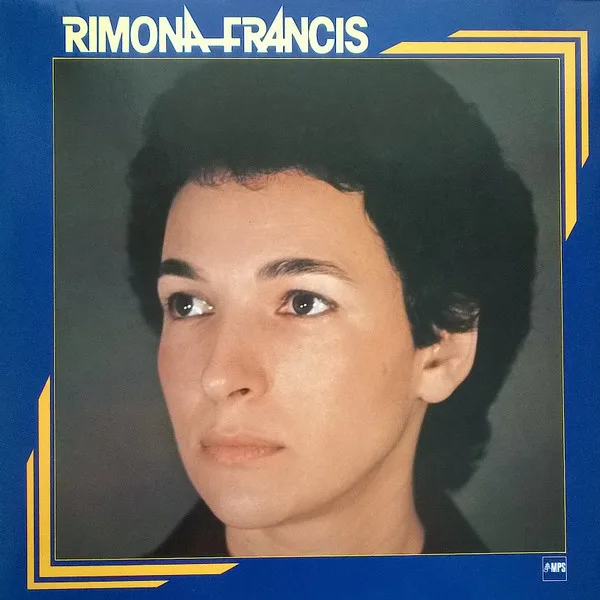
Cover art of *Rimona Francis* (MPS, 1978), her self-titled solo album, recorded in New York with an international jazz band. No CC-licensed or public-domain photograph of Francis could be found; this cover is used as the only available image connected to her, per the site's disclosed album-cover fallback convention. Saved locally as `portrait.jpg`. Album cover art (not a CC-licensed artist photo), used as the only available image connected to the artist. Copyright is held by MPS Records and/or the release's credited designer (Michael Behr, per Discogs cover-art credit) and photographer (Anno Wilms, liner photography). This is an honestly disclosed editorial stand-in, not a free-licensed image. — Retrieved from the Discogs master release's image asset via the public Discogs API, https://api.discogs.com/masters/368269. Release page: https://www.discogs.com/master/368269-Rimona-Francis-Rimona-Francis.
Rimona Francis is a jazz vocalist best known for a specific and, for its time, unusual technique: vocalise, using her voice as a horn substitute rather than a lyric instrument. Around 1967 she met arranger and multi-instrumentalist Stu Hacohen; they married and became a lasting musical partnership. Their first joint recording, a Kol Israel radio version of Mattityahu Shelem's song "Shibolet BaSade," had Francis singing vocalise well enough — recreating jazz horn solos by Charlie Parker and Clifford Brown note for note — that friends nicknamed her "the trumpet." The National Library of Israel's catalog records for her recordings consistently use the authority heading "Francis, Rimona, 1945–," which is the strongest available source for her birth year, though it is a library catalog convention rather than a biographical account.
That vocalise approach became the basis of two 1969 albums: Rimona Francis With Stu Hacohen's Orchestra (Israphon), marketed explicitly as "Jazz Vocalise," on which she is the featured vocalist with Hacohen's orchestra backing and arranging; and Badabada... (Hed-Arzi), a second, more Latin and Afro-Cuban-facing record from the same year, co-credited to both of them. The couple toured with other Israeli jazz musicians of the era, reportedly including Albert Piamenta, performing mainly at the Tzavta club and on kibbutzim to introduce jazz to Israeli audiences. Dizzy Gillespie met them during a visit to Israel and reportedly encouraged their mid-1970s move to the United States; while there, Francis appeared as a guest — vocals, ARP Solina string-ensemble synthesizer, electric piano — on bassist Miroslav Vitous's 1976 album Majesty Music (Arista Records), and separately recorded her own self-titled solo album for the German jazz label MPS, tracked in New York in October 1977 and released in 1978, with a band including pianist Jasper van't Hof, guitarist Barry Finnerty and saxophonist Leszek Żądło, produced by Joachim Ernst Berendt.
The couple returned to Israel in the late 1980s. Independent biographical material about Francis apart from her connection to Hacohen is thin — nearly every available source discusses her through the lens of "Stu Hacohen's wife and collaborator," a discography listing, or a record-collector description, rather than an interview or journalistic profile of her specifically. Stu Hacohen died in August 2006; no parallel information — death notice, obituary, or any dated activity — exists for Francis after that point, and her current living status could not be confirmed.
Francis's signature is the vocalise technique she and Hacohen developed together: using her voice to double or replace a jazz horn line rather than sing conventional lyrics, drawing on Charlie Parker and Clifford Brown solos as direct source material. That approach, set against Hacohen's Bulgarian-and-Romani-inflected arranging, gave her recorded work a distinct identity within late-1960s Israeli jazz — a scat/vocalise tradition applied to material that was itself already a fusion of jazz and Balkan folk rhythm.
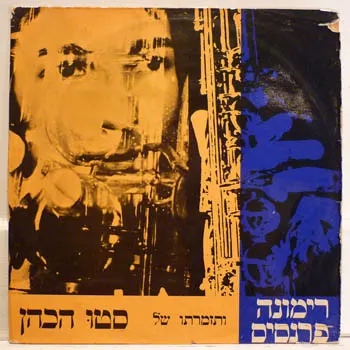
- Rimona Francis With Stu Hacohen's Orchestra (1969, Israphon) — marketed as "Jazz Vocalise," the record that best documents her signature technique.
- Badabada... (1969, Hed-Arzi) — a second 1969 LP with Hacohen, more Latin/Afro-Cuban in character.
- Rimona Francis (1978, MPS) — her one true solo album, recorded in New York with an international jazz band.
- Majesty Music (1976, Arista, Miroslav Vitous) — a guest appearance as vocalist, ARP Solina and electric piano on the bassist's own album.
Rimona Francis: Full Discography
Verified against Discogs records surfaced during research (direct HTML page fetch was blocked; data below is drawn from Discogs master/release pages indexed via search and cross-checked against label/retailer sources — recommend a manual live-page check before treating catalog numbers as final). Discogs artist ID 41404.
As Featured/Co-Billed Artist (with Stu Hacohen)
| Year | Title | Label | Catalog | Role | Notes |
|---|---|---|---|---|---|
| 1969 | Rimona Francis With Stu Hacohen's Orchestra | Israphon (Israel) | AP 335 | Lead vocalist | Marketed as "Jazz Vocalise." Reissued as CD, Helicon HL 02-94136 (2000). |
| 1969 | Badabada... | Hed-Arzi (Israel) | BAN 14170 | Co-credited vocalist | More Latin/Afro-Cuban material. Reissued 2024. |
As Solo Artist
| Year | Title | Label | Catalog | Notes |
|---|---|---|---|---|
| 1978 | Rimona Francis (self-titled) | MPS (Germany) | 0068.187 / MPS 15.508 | Recorded New York, Oct 1977. Vocals and piano. Stu Hacohen: arranger. Full band per Discogs: Frank Tusa (bass), Buddy Williams (drums), Barry Finnerty (guitar), Jasper van't Hof (piano/keyboards/synthesizer), Leszek Żądło (tenor/soprano sax, flute). Producer: Joachim Ernst Berendt. |
As Sideman/Guest
| Year | Title (Artist) | Label | Role | Notes |
|---|---|---|---|---|
| 1976 | Majesty Music (Miroslav Vitous) | Arista (US), catalog AL 4099 | ARP Solina synthesizer, electric piano, vocals | Vitous's own album as leader; Francis is a session contributor, not co-billed. |
| 1976 (reported) | Futures Passed (David Friedman) | — | Vocals | Single-sourced to a secondary aggregator (jazzrocksoul.com); could not be independently cross-checked against a primary Discogs/label page in this research pass. |
Spotify
Artist ID 0b2bwrTKzQeNxelMAfLsyR (open.spotify.com/artist/0b2bwrTKzQeNxelMAfLsyR), independently confirmed matching via Wikidata. One album listed at low monthly-listener count at time of research.
Data hazards
- Discogs' HTML pages returned a 403 to automated fetch throughout this research; all release/master data above is drawn from search-indexed snippets of Discogs URLs rather than a direct page read. Recommend a manual verification pass on discogs.com before treating catalog numbers as final.
- The David Friedman Futures Passed (1976) credit rests on a single secondary source and is not independently confirmed — flagged, not omitted, since it's a plausible and specific lead.
- Miroslav Vitous does not appear on Rimona Francis's own 1978 MPS solo album — that connection belongs to the separate, earlier 1976 Vitous-led Arista album listed above. Do not conflate the two records.
- Stu Hacohen — her husband and primary musical partner, arranger and bandleader on nearly all of her recorded work.
- Miroslav Vitous — the bassist whose 1976 album Majesty Music she appeared on as a guest.
- Jasper van't Hof, Barry Finnerty, Leszek Żądło — her backing band on the 1978 MPS solo album.
- Yehuda Poliker — credited as composer of one track on the 1978 MPS album, a notable early connection to a musician who later became a major figure in Israeli popular music.
More Vocal Jazz Artists
See all 76 Vocal Jazz artists →More Israeli Jazz Artists
See all 228 Israeli artists →- Ben Shalev, "Rest Comes to the Weary," Haaretz, Aug 8, 2007 — a first-person interview with Francis, the richest source for the couple's shared career and the vocalise technique's origin
- National Library of Israel catalog authority heading "Francis, Rimona, 1945–," surfaced across multiple music-catalog records, e.g. nli.org.il/he/items/NNL_MUSIC_AL990023012430205171/NLI
- Wikidata: Q2153265, giving Tel Aviv as birthplace (sourced there only as "imported from German Wikipedia," a weaker provenance — see notes.md)
- MPS Records: Rimona Francis
- Discogs: Rimona Francis, artist 41404 and Miroslav Vitous, Majesty Music, release 3156401
- stereo-ve-mono.com, Israeli discography listing, source for the Yehuda Poliker composing credit