 JAZZPROFILES lives in the music 3,006 Jazz Artists fully Profiled!
Kai Ewans
Last updated November 18, 2026
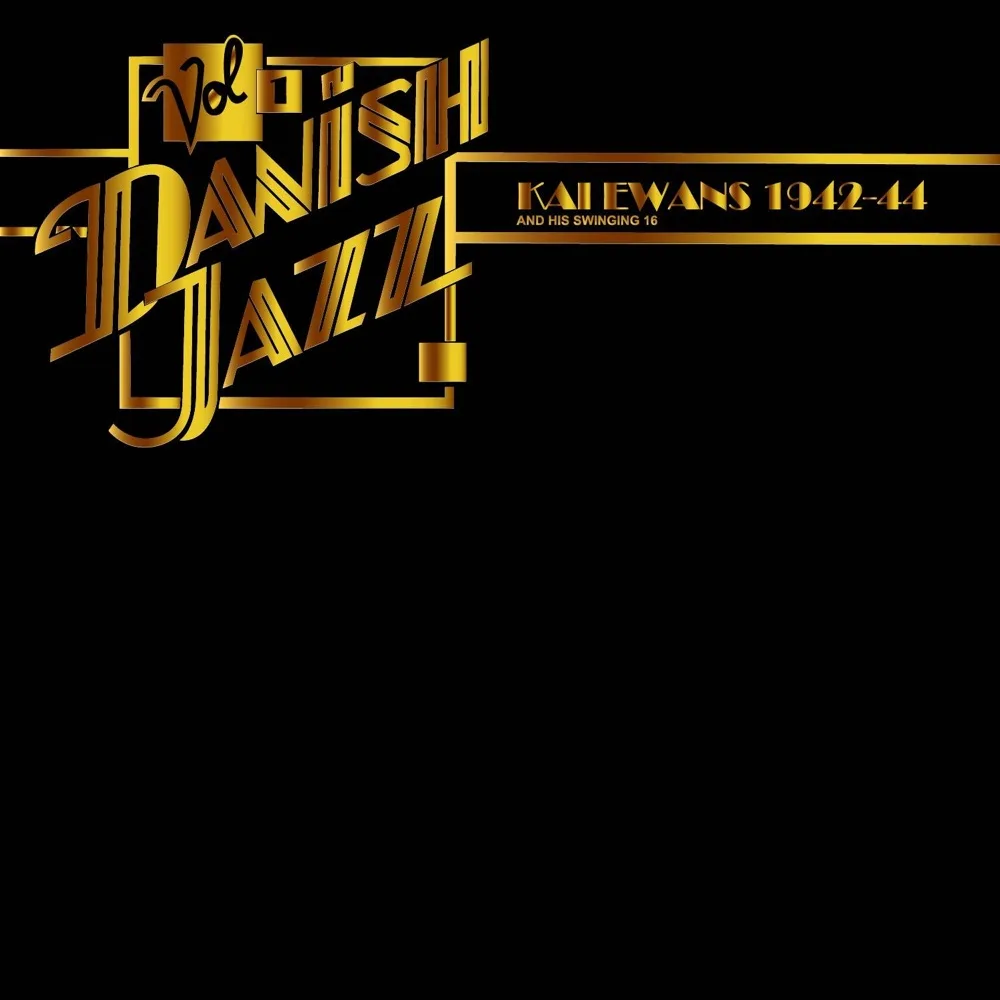
Cover of *Danish Jazz, Vol. 1* by Kai Ewans and His Swinging 16 (Storyville Archive, 2015), a digital reissue of the 1977 Storyville LP *Danish Jazz Vol. 1* (SLP 410). The cover is lettering only and shows no photograph of Kai Ewans. Standard copyright, all rights reserved, held by Storyville Archive. This is not a Creative Commons or public-domain image; it is an album cover shown as an honestly disclosed editorial identification image. — Apple Music, https://music.apple.com/dk/album/danish-jazz-vol-1/1046858560 (artwork served by Apple at 1000 x 1000 px)
Kai Ewans was a Danish alto saxophonist, clarinettist, singer and bandleader, born Kai Peter Anthon Nielsen in Hørsholm, Denmark, on April 10, 1906. Dansk Biografisk Leksikon says he played banjo and guitar as a boy, and that a short stint as an office apprentice at Shell showed him that his future lay in the new music, jazz, which Danes first heard from Valdemar Eiberg's orchestra. He switched to saxophone and clarinet, and English Wikipedia says he formed the Blues Jazz Band in 1923 and played in Eiberg's group from 1924 to 1926. The Danish Jazz Discography puts him on record in that circle early: on alto and tenor saxophone in a session by Eiberg's jazz orchestra on August 27, 1924, in a duo record with the pianist and singer Victor Cornelius in about March 1925 (listed under his birth name, as Kai Nielsen), and in Eiberg's Midnight Follies Band in October 1926.
He adopted the name Ewans in 1927. According to Dansk Biografisk Leksikon, at twenty he presented his own orchestra at the Arena dance hall in Copenhagen, the first large Danish jazz orchestra, and then moved to Restaurant Wivel; Leo Mathisen was the intermission pianist at the Arena that year. English Wikipedia says he then led bands in Belgium and Germany until 1931, and the Danish biographical dictionary adds that he also made a short trip to the United States. In early April 1931 the Danish Jazz Discography lists him on alto saxophone and clarinet in Bernard Etté's orchestra in Berlin. Back in Denmark he joined Kai Julian's orchestra, which recorded in October 1931 and April 1932, and from 1932 to 1936 he was one of the main players in Erik Tuxen's orchestra, with Mathisen on piano and arrangements. On November 6, 1935 he played clarinet on Svend Asmussen's sextet coupling of "Tiger Rag" and "My Blue Heaven" (HMV X 4570), and the same day he is listed on clarinet and alto saxophone on Bernhard Christensen's "Den grimme Ellington" with the vocal trio De Tre.
When Tuxen's orchestra dissolved in 1936, Ewans formed a new band, drawing largely on its musicians. Dansk Biografisk Leksikon calls it Denmark's leading jazz orchestra from then until the middle of the 1940s, and Lex says its 1936 to 1947 run, with a series of notable soloists, is counted as the best Danish jazz and dance orchestra of its day. A Lex photograph from Restaurant Nimb in 1936 shows the trombonist Peter Rasmussen, the pianist Christian Jensen, the trumpeters Axel Skouby and Olof Carlsson, Ewans on alto saxophone, the drummer Erik Kragh and the saxophonists Evald Andersen and Otto Banner-Jansen. The band's first records, for HMV in the summer of 1936, were followed on August 25 to 29 by sessions in Copenhagen with the visiting American saxophonist and arranger Benny Carter: "Bugle Call Rag", "Blue Interlude", "Memphis Blues" and "When Lights Are Low", issued under billings such as Benny Carter and Kai Ewans Band. The Danish Jazz Discography credits Mathisen with arrangements on "Bugle Call Rag" and "Memphis Blues" and notes that the participants' later memories of the personnel differ from the original HMV leaflet. The orchestra also accompanied the American singer Adelaide Hall in Copenhagen in August 1937 (Tono), recorded the soundtrack of the film En lille tilfældighed in the autumn of 1938 with Svend Asmussen on violin, and made the Scala hall, in the words of Dansk Biografisk Leksikon, the place where Copenhagen went to hear good jazz in fine arrangements.
The best-documented recordings come from the war years. From 1941 the orchestra recorded for Tono, with the singers Raquel Rastenni, Ingelise Rune and Freddy Albeck among the vocalists named by Danish Wikipedia. That article also names the trombonist Peter Rasmussen, the trumpeter and singer Erik Parker and the tenor saxophonist Henry Hagemann among the band's players, and Discogs calls the band a career starting point for Parker and Hagemann. On March 23, 1942 Ewans led a small Swingtet with Parker, the vibraphonist Kjeld Bonfils and the guitarist Børge Ring, and between March 1942 and March 1944 the 16-piece Kai Ewans and His Swinging 16 made the sides that later formed the Storyville LP Danish Jazz Vol. 1: "Limehouse Blues", "Japanese Sandman", "Georgia", "St. Louis Blues", "Mood Indigo", "A Glorious Dream", "Scala Stomp" and "One Night Stand". Dansk Biografisk Leksikon ranks the early 1940s recordings, among them "One Night Stand", "Scala Stomp" and "Limehouse Blues", as his best. It also credits him with the melodies for several Fifferrevy numbers ("Jitter-Bach", "Åh Mogens", "Det bli'r aldrig det samme igen" and "Det bedste lille sted i verden"). Discogs lists Tono singles by Kai Ewans' Danseorkester through 1946, and Eddie Russell is among the singers by December 1944.
Ewans stopped leading the orchestra in 1947 and, according to English Wikipedia, went into business in the United States, moving to California in 1956; Dansk Biografisk Leksikon says he went to Hollywood that year on an offer to write film music, but the film company collapsed. From 1960 to 1964 he ran a restaurant in Beverly Hills with Benny Carter. In the later 1960s he returned to Copenhagen to play again, led the Adlon for a time, ran restaurants, and in 1970 revived his old orchestra for three months at the Swinging Palace; the same source lists a long run of other occupations, among them circus director, advertising man, impresario and nightclub owner. He retired to Connecticut and passed away there on April 4, 1988, six days before his 82nd birthday. Dansk Biografisk Leksikon says he was buried in the United States and that a memorial to him stands at Vestre Cemetery in Copenhagen. His wartime sides are still reissued, among them the 2015 digital release of Danish Jazz, Vol. 1 by Storyville Archive.
Ewans was a section player and soloist on alto saxophone and clarinet who sang on many of his own records, and his lasting importance is as a bandleader. AllMusic describes him as a potent force behind Danish interest in jazz, and in particular big-band, swing-era music, whose bands were disciplined, well-rehearsed and enthusiastic. Dansk Biografisk Leksikon says he stamped his orchestras with elegance, humor and exacting standards, and that he was a good clarinet and alto soloist himself. The repertoire ran from Danish refrain songs and revue numbers, many sung by Danish vocalists, through American standards of the Swing Era to features such as "Scala Stomp" and "One Night Stand". The Swinging 16 sides include Duke Ellington's "Mood Indigo", "Sophisticated Lady" and "Don't Get Around Much Anymore", and his 1936 sessions with Benny Carter were the most direct contact with a leading American swing arranger. Because much of his output was dance-band material for a Danish audience, his place in jazz rests on the swing sides and small-group records, which have been reissued in Danish series such as Dansk Guldalder Jazz.
- "Bugle Call Rag" / "Memphis Blues" (1936, HMV X 4698) - the Benny Carter and Kai Ewans Band sessions of August 25 and 29, 1936, with arrangements credited to Leo Mathisen and the best-known documentation of Ewans's orchestra. On Apple Music: Dansk Guldalder Jazz 1933-1938, Vol. 1.
- "Blue Interlude" / "When Lights Are Low" (1936, HMV X 4699) - the second Carter coupling, recorded August 26 and 29, 1936. On Apple Music: Jazz Club, Vol. 1. Listen
- Svend Asmussen sextet, "Tiger Rag" / "My Blue Heaven" (1935, HMV X 4570) - recorded in Copenhagen on November 6, 1935, with Ewans on clarinet beside Svend Asmussen, Olof Carlsson, Ulrik Neumann, Niels Foss and Erik Kragh.
- "Hvad er swing" (1938, Odeon D 377) - recorded on December 10, 1938, with Ewans singing; the song is also on the soundtrack of En lille tilfældighed. On Apple Music: Vi stiller om til (Vol. 3) Nimb. Listen
- "There's a Small Hotel" / "Home" (1942, Tono SP 4104) - from the March 23, 1942 session of Kai Ewans' Swingtet, with Erik Parker, Kjeld Bonfils and Børge Ring.
- "Limehouse Blues" and "Japanese Sandman" (1942, Tono) - Kai Ewans and His Swinging 16, recorded September 24, 1942. Both are on Danish Jazz, Vol. 1. Listen
- "Scala Stomp" and "One Night Stand" (1944, Tono Z 18008 and Z 18009) - recorded on March 21, 1944 with "A Glorious Dream" and "Don't Get Around Much Anymore", and named by Dansk Biografisk Leksikon among his best records. Both are on Danish Jazz, Vol. 1. Listen
- Adelaide Hall with Kai Ewans' orchestra, "Stormy Weather" (1937, Tono K 6002) - recorded in Copenhagen in August 1937 with the American singer.
Kai Ewans: Full Discography
Danish alto saxophonist, clarinettist, singer and bandleader, born April 10, 1906 in Hørsholm, Denmark. Discogs lists Kai Ewans as artist 1330774 and files his bands under separate entries (Kai Ewans' Danseorkester, Kai Ewans Og Hans Orkester, Kai Ewans And His Swinging 16, Kai Ewans Og Hans Stjerne-Solister and others). Nearly all of his output was issued as 78 rpm singles between 1936 and 1946, so this list gives the singles as sessions, drawn from the Danish Jazz Discography 1900-1944 of the Center for Dansk Jazzhistorie (dates, personnel and catalog numbers), with years and later issues checked against Discogs release pages. It is a selection of the best-documented recordings rather than every title. The Danish Jazz Discography ends in 1944, so his 1945 and 1946 singles are listed from Discogs by year only. Where a detail could not be checked the cell reads "Not confirmed". A fuller list is on Discogs.
78 rpm records and sessions as leader (selection)
| Record | Year | Label and catalog | Personnel | Notes | Listen | Buy |
|---|---|---|---|---|---|---|
| Min kær'ste har såd'n et dejligt smil (Kai Ewans Orkester) | 1936 | HMV, X 4681 (78 rpm) | Probably Axel Skouby (trumpet, violin), Olof Carlsson and Kurt Pedersen (trumpet), Peter Rasmussen (trombone), Kai Ewans (clarinet, alto saxophone, vocals, arrangements), Poul Christiansen (alto saxophone), Knut Knutssøn and probably Henry Hagemann (tenor saxophone), Svend Asmussen (violin), Christian Jensen (piano), Ulrik Neumann (guitar), Kelof Nilsson (bass), Erik "Spjæt" Kragh (drums), Anne Miller (vocals) | Recorded in Copenhagen in the summer of 1936; the first record of his new orchestra in the Danish Jazz Discography. | not found | - |
| Swing mig her / Der var engang; Aah, hvor er jeg glad i dag | 1936 | HMV, X 4718 and X 4702 (78 rpm) | Similar, with Arthur Young (arrangements), the vocal trio De Tre (Grete and Inga Kordt, Ellen Nielsen) and Miss Tommi (Clara Thomsen) | Recorded August 22, 1936; Ewans and the band sing on "Aah, hvor er jeg glad i dag". | not found | - |
| Bugle Call Rag / Memphis Blues (Benny Carter and Kai Ewans Band) | 1936 | HMV, X 4698 (78 rpm) | Axel Skouby, Olof Carlsson, Kurt Pedersen (trumpet), Peter Rasmussen, Palmer Traulsen (trombone), Kai Ewans (clarinet, alto saxophone, vocals), Benny Carter (alto saxophone, trumpet, clarinet, arrangements), Poul Christiansen, Aage Voss (alto saxophone, clarinet), Knut Knutssøn, Henry Hagemann (tenor saxophone, clarinet), Christian Jensen (piano), Ulrik Neumann (guitar), Kelof Nilsson (bass), Erik "Spjæt" Kragh (drums), Leo Mathisen (arrangements) | "Bugle Call Rag" was recorded August 25, 1936 and "Memphis Blues" on August 29; Mathisen arranged both. The Danish Jazz Discography notes that participants remembered the personnel differently from the HMV leaflet it follows. Also issued as Benny Carter med Kai Ewans Orkester. | Apple Music: Jazz Club, Vol. 1 | - |
| Blue Interlude / When Lights Are Low (Benny Carter and Kai Ewans Band) | 1936 | HMV, X 4699 (78 rpm) | Same orchestra without Mathisen; Carter (alto saxophone, trumpet, clarinet, vocals, arrangements), with Ewans on alto saxophone on "Blue Interlude" | "Blue Interlude" was recorded August 26, 1936 and "When Lights Are Low" on August 29. Discogs confirms the X 4699 coupling. | Apple Music: Jazz Club, Vol. 1 | - |
| Skæbnen var mig imod, Jeg hørte en sang i en taxi, Æn og æn er to | 1936 | HMV, X 4755 and X 4754 (78 rpm) | Axel Skouby, Olof Carlsson (trumpet), Peter Rasmussen (trombone), Kai Ewans (alto saxophone, arrangements), Evald Andersen (alto saxophone), Otto Banner-Jansen (tenor saxophone), Svend Asmussen (violin), Christian Jensen (piano), Ulrik Neumann (guitar), probably Kelof Nilsson (bass), Erik Kragh (drums), Gerda Neumann and Børge Rosenbaum (vocals) | Recorded November 6, 1936. | Apple Music: Københavnerliv Vol. 8 | - |
| Komme hvad der komme vil, Hvorfor er lykken saa lunefuld, Jeg vil ud, jeg vil bort, Alle himlens stjerner | 1937 | HMV, X 4787, X 4788 and X 4786 (78 rpm) | Bertel Skjoldborg replaces Neumann on guitar; Ewans plays alto saxophone and clarinet, arranges and sings | Recorded January 7, 1937. | not found | - |
| Paa en lille strandbred, Good-Night My Love, Smil til ham du elsker | 1937 | Tono, X 5002 and X 5003 (78 rpm) | Skouby, Carlsson (trumpet), Peter Rasmussen (trombone), Ewans (alto saxophone, clarinet, vocals), Evald Andersen (alto saxophone), Otto Banner-Jansen, Winstrup Olesen (tenor saxophone), Leo Mathisen (piano), Bertel Skjoldborg (guitar), Erik Kragh (drums), Kaj Møller (arrangements), Herbert Rossing (vocals) | Recorded May or June 1937; Ewans plays Hawaiian guitar on "Smil til ham du elsker". | not found | - |
| En sommerbuket (two parts), En lille een paa guitaren | 1937 | HMV, XC 4885 and XC 4886 (78 rpm) | As above, with Amdi Riis (piano) replacing Mathisen and Grete Hemmeshøj Frederiksen and Helge Rungwald added on vocals | Recorded July 6, 1937; medleys of revue tunes. | not found | - |
| There's a Lull in My Life, Stormy Weather, Where or When, medley (Adelaide Hall with Kai Ewans Orkester) | 1937 | Tono, K 6001 and K 6002 (78 rpm) | Skouby, Carlsson (trumpet), Peter Rasmussen (trombone), Ewans (alto saxophone, clarinet, arrangements, vocals), Aage Voss, Evald Andersen (alto saxophone), Otto Banner-Jansen, Kaj Møller (tenor saxophone), Amdi Riis (piano), Bertel Skjoldborg (guitar), Willy Sørensen (bass), Erik Kragh (drums), Adelaide Hall (vocals) | Recorded in Copenhagen in August 1937 with the American singer; Tono X 5030 and X 5031 were not issued. | not found | - |
| Night and Day, The Toy Trumpet, You Can't Stop Me from Dreaming, Nattergalens sang | 1937 | Tono, X 5036 to X 5038, X 5047 and X 5059 (78 rpm) | The August 1937 orchestra without Adelaide Hall | Recorded August and September 1937; Ewans sings "Night and Day". | not found | - |
| Kom lad os fløjte / Spil min melodi; Hvad er swing; Sweet Sue; Et lille tilfældigt smil | 1938 | Odeon, D 370, D 375 and D 377 (78 rpm) | Skouby (trumpet, violin), Carlsson, Kurt Pedersen (trumpet), Peter Rasmussen (trombone), Ewans (clarinet, alto saxophone, arrangements, vocals), Aage Voss, Evald Andersen (alto saxophone, clarinet), Kaj Møller (tenor saxophone, clarinet), Hans Schreiber (piano, arrangements), Willy Sørensen (bass), Erik Kragh (drums), Peter Sørensen (vocals) | Recorded September or October and on December 10, 1938; Ewans sings "Hvad er swing" and "Sweet Sue". Two of the titles were also recorded for the film En lille tilfældighed with Svend Asmussen, Helge Jacobsen and Niels Foss added. | Apple Music: Vi stiller om til (Vol. 3) Nimb | - |
| Jeg maa ha' ringet til Lis, My Melancholy Baby, My Prisoner's Song, Langebro er gaaet op, Honeysuckle Rose | 1939 | Odeon, D 378, D 382 and D 383 (78 rpm) | The 1938 orchestra | Recorded in the spring of 1939. | not found | - |
| Tonernes A.B.C., Den lille ræv, Hab' ein blaues Himmelbett | 1940 | Odeon, D 437 and D 438 (78 rpm) | Kurt Pedersen, Olof Carlsson, Leif Johansen (trumpet), Peter Rasmussen (trombone), Ewans (clarinet, alto saxophone, arrangements, vocals), Georg Olsen (alto saxophone), Knut Knutssøn, Otto Banner-Jansen (tenor saxophone), Børge Nordlund (piano), Erik Kirschner (bass), Erik Frederiksen (drums), Peter Sørensen (vocals), Kaj Møller and Hans Schreiber (arrangements) | Recorded November 20, 1940. | not found | - |
| Lover Come Back to Me, Killy-Ka-Lee, Leda og svanen, Murder in the Madhouse | 1941 | Odeon, D 461 and D 462 (78 rpm) | Same, with Raquel Rastenni added on vocals | Recorded January 4, 1941; "Murder in the Madhouse" was reissued on the Odeon series Dansk Guldalder Jazz. | not found | - |
| Ol' Man River, Pardon Madame, (Polka) Dots and Moonbeams, My Heart Belongs to Daddy | 1941 | Odeon, D 473 and D 474 (78 rpm) | Tage Rasmussen replaces Johansen on trumpet | Recorded February 1941. | not found | - |
| I Can't Give You Anything But Love, Swing It, hr. Lærer, Swing It | 1941 | Tono, SP 4033 and SP 4034 (78 rpm) | Pedersen, Carlsson, Johansen (trumpet), Peter Rasmussen (trombone), Ewans (clarinet, alto saxophone, arrangements, vocals), Olsen (alto saxophone), Knutssøn, Henry Hagemann (tenor saxophone), Nordlund (piano), Helge Jacobsen (guitar), Willy Frederiksen (bass), Kragh (drums), Aase Werrild (vocals), strings | Recorded March 1, 1941; Ewans sings the first title. | not found | - |
| Dolores / Alexander's Ragtime Band (Kai Ewans og hans Stjerne-Solister) | 1941 | Tono, SP 4062 (78 rpm) | Tage Rasmussen (trumpet), Peter Rasmussen (trombone), Kai Ewans (clarinet, alto saxophone, arrangements, vocals), Henry Hagemann (tenor saxophone, clarinet), Hans Schreiber (piano, arrangements), Willy Sørensen (bass, violin), Erik Kragh (drums) | Recorded October 15, 1941; a small group drawn from the orchestra. | not found | - |
| Kærlighed ved første blik, Vi ses i aften paa Broadway; For din skyld, Amapola; What Shall I Say, Yours | 1941 to 1942 | Tono, SP 4054, SP 4073, SP 4074 and SP 4099 (78 rpm) | The orchestra with Raquel Rastenni and Helge Jacobsen on vocals; Otto Stampe replaces Hagemann in 1942 | Recorded September 11 and December 22, 1941 and February 27, 1942. | not found | - |
| There's a Small Hotel / Home (Kai Ewans' Swingtet) | 1942 | Tono, SP 4104 (78 rpm) | Erik Parker (trumpet, vocals), Kai Ewans (clarinet), Poul Olsen (violin), Kjeld Bonfils (vibraphone), Børge Nordlund (piano), Helge Jacobsen, Børge Ring (guitar), Willy Sørensen (bass), Erik Frederiksen (drums), Ingelise Rune (vocals), Børge Roger Henrichsen (arrangements) | Recorded March 23, 1942. | not found | - |
| Swing Medley (two parts) (Kai Ewans and His Swinging 16) | 1942 | Tono, B 15002 (78 rpm, 12 inch); also Sonora (Sweden) E 5000 | Erik Parker, Tage Rasmussen, Leif Johansen, Kai Hill (trumpet), Peter Rasmussen, Julius Jacobsen, Palmer Traulsen (trombone), Kai Ewans (clarinet, alto saxophone, arrangements), Jonny Campbell, Otto Banner-Jansen (alto saxophone), Henry Hagemann, Otto Stampe (tenor saxophone), Aage Voss (baritone saxophone), Hans Schreiber (piano, arrangements), Børge Ring (guitar), Carlo Jensen (bass), Erik Frederiksen (drums), Ingelise Rune (vocals) | Recorded March 24 and 25, 1942; the second part has a different rhythm section and includes "To Be or Not to Be" and "Swingin' the Riff". | Apple Music: Danish Jazz, Vol. 1 | - |
| Kom og Swing, Shepherd Serenade, I Dreamed (Raquel Rastenni with Kai Ewans' Danseorkester) | 1942 | Tono, SP 4145 and SP 4146 (78 rpm) | Tage Rasmussen (trumpet), Peter Rasmussen (trombone), Ewans (clarinet, alto saxophone, arrangements, vocals), Aage Voss, Eigil Stegger (alto saxophone), Peter Sieben (tenor saxophone), Børge Nordlund (piano, arrangements), Willy Sørensen (bass), Kragh (drums), Raquel Rastenni (vocals), Hans Schreiber and Kaj Møller (arrangements) | Recorded August 31, 1942. | not found | - |
| Limehouse Blues, Japanese Sandman, Deep in the Heart of Texas, The Battle of Jericho, Bye, Bye, Blackbird, Georgia (Kai Ewans and His Swinging 16) | 1942 | Tono, Z 1800, Z 1801, SP 4157, Z 18000 and Z 18001 (78 rpm) | The Swinging 16 with Egon Esbensen added on tenor saxophone, Raquel Rastenni on vocals, and Freddy Albeck on vocals for the September 29 titles | Recorded September 24 and 29, 1942; "Georgia" and "Bye, Bye, Blackbird" are also on Sonora in Sweden. Discogs pairs "Georgia" with "Limehouse Blues" and "Bye Bye, Blackbird" with "Japanese Sandman" on its Tono singles. | Apple Music: Danish Jazz, Vol. 1 | - |
| In the Mood, Sophisticated Lady (Kai Ewans' Danseorkester) | 1943 | Tono, SP 4240 (78 rpm) | Tage Rasmussen, Kurt Pedersen, Lejf Johansen (trumpet), Peter Rasmussen (trombone), Ewans (clarinet, alto saxophone), Aage Voss (alto saxophone), Egon Esbensen (tenor saxophone), Børge Nordlund (piano, arrangements), Willy Sørensen (bass), Erik Kragh (drums), Gøsta Theselius (arrangements) | Recorded April 20, 1943. | Apple Music: Danish Jazz, Vol. 1 | - |
| Bye Bye Blues, I Love You, I Ain't Got Nobody, St. Louis Blues, Mood Indigo, Flamingo (Kai Ewans and His Swinging 16) | 1943 | Tono, Z 18002, Z 18003 and Z 18004 (78 rpm) | The Swinging 16 with Uffe Baadh on drums; Freddy Albeck, Raquel Rastenni and Ingelise Rune on vocals | Recorded June 10 and 17, 1943. | Apple Music: Danish Jazz, Vol. 1 | - |
| A Glorious Dream, Don't Get Around Much Anymore, Scala Stomp, One Night Stand, En dejlig drøm (Kai Ewans and His Swinging 16) | 1944 | Tono, Z 18008 and Z 18009 (78 rpm); SP 4339 | Erik Parker, Tage Rasmussen, Leif Johansen, Kai Hill (trumpet), Svend Aage Nielsen, Palmer Traulsen, Georg Wilkenschildt (trombone), Ewans (clarinet, alto saxophone, vocals, arrangements), possibly Julius Dupont (alto saxophone), Egon Esbensen, possibly Orla Olsen (tenor saxophone), Børge Nordlund (piano, arrangements), Helge Jacobsen (guitar), Willy Sørensen (bass), Vagn Nors (drums), Ingelise Rune (vocals) | Recorded March 21, 1944; "Scala Stomp" and "One Night Stand" are the pieces Dansk Biografisk Leksikon singles out. | Apple Music: Danish Jazz, Vol. 1 | - |
| Moonlight and Stardust, Walking the Line, Se dog, hvor skoven er grøn, Sig det med swing, Listen | 1944 | Tono, SP 4360, SP 4361 and SP 4347 (78 rpm) | The 1943 to 1944 orchestra with strings on the first title; a small group on "Sig det med swing" and "Listen" | Recorded May 10, 1944; "Listen" is listed as unissued in the Danish Jazz Discography, although Discogs lists a Tono 78 pairing it with "In the Mood". | not found | - |
| Candlelight and Wine, A Nightingale Sang in Berkeley Square, Lille pige, tak for hvad du var, En op og to i mente, Blue Madonna, It's Love, Love, Love, My Guy's Come Back | 1944 | Tono, SP 4383, SP 4384, SP 4399 and SP 4425 (78 rpm) | Svend Aage Nielsen (trombone), Ewans (clarinet, alto saxophone, vocals, arrangements), Egon Esbensen, Svend Aage Blankholm (tenor saxophone), Bertrand Bech (piano, arrangements), Børge Ring (guitar), Willy Sørensen (bass), Vagn Nors (drums), Ingelise Rune and Eddie Russell (vocals), strings on some titles | Recorded October 9 and December 14, 1944; the personnel may not be complete. | not found | - |
| Don't Fence Me In / It Could Happen to You; I'm Beginnin' to See the Light / Let Me Call You Sweetheart; The Gipsy / Chickery Chick | 1945 and 1946 | Tono (78 rpm); catalog numbers not confirmed | Not confirmed | Listed on Discogs under Kai Ewans' Danseorkester with the singer Herbert Rossing on the first coupling; the 1945 and 1946 session dates and personnel are not documented in the sources checked. | not found | - |
LP and CD issues of his recordings
| Release | Year | Label and catalog | Contents | Notes | Listen | Buy |
|---|---|---|---|---|---|---|
| Danish Jazz Vol. 1 (Kai Ewans And His Swinging 16) | 1977 | Storyville, SLP 410 (LP, Denmark) | 14 Swinging 16 sides recorded in Copenhagen between March 25, 1942 and March 21, 1944: "To Be or Not to Be", "Limehouse Blues", "Japanese Sandman", "Bye, Bye Blackbird", "Georgia", "Sophisticated Lady", "Bye, Bye Blues", "I Ain't Got Nobody", "St. Louis Blues", "Mood Indigo", "A Glorious Dream", "Don't Get Around Much Anymore", "Scala Stomp", "One Night Stand" | The one album built around his orchestra; Discogs credits Birger Jørgensen with the liner notes and lists the full personnel by instrument. | Apple Music: Danish Jazz, Vol. 1 | - |
| Danish Jazz, Vol. 1 (digital reissue) | 2015 | Storyville Archive (digital) | The same 14 titles | Released October 23, 2015. | Apple Music | - |
| Swingtime | Not confirmed | Tono, LPB 31051 (10 inch LP, per the Danish Jazz Discography) | Swinging 16 sides of 1942 to 1944 with recordings by other Danish bands | Discogs lists a 1963 master credited to Kai Ewans, Leo Mathisen and Svend Asmussen. | not found | - |
| Den gyldne swingtid | 1969 | Tono, LPM 30007 (LP, compilation) | Sides by Kai Ewans, Leo Mathisen, Peter Rasmussen and others | Year from Discogs, catalog number from the Danish Jazz Discography. | not found | - |
| Dansk Guldalder Jazz, Vol. 1: 1933-1938 | 1988 (CD); Apple Music 2009 | EMI (CD, various artists) | Includes the Benny Carter and Kai Ewans sides of 1936 | The series is a reissue of Danish swing-era sides; "Murder in the Madhouse" is on Vol. 2 (1940 to 1941). | Apple Music | - |
| Benny Carter in Europe 1936-1937 and other Benny Carter reissues | Not confirmed | Pearl Flapper PASTCD 7023, Classics 541, Affinity AFS 1022-3, Masters of Jazz MJCD 81 and others (CD) | The August 1936 Copenhagen sessions | Listed in the Danish Jazz Discography. | not found | - |
| An Evening in Copenhagen with Kai Ewans | Not confirmed | Norsemen, D-1200 (LP, United States) | "Det bedste lille sted i verden" and eight other Danish and English-titled tracks | Discogs gives no year and no credits; whether Ewans plays or sings on it is Not confirmed. | not found | - |
As sideman and band member (selected)
| Year | Project (Leader) | Title | Label | Catalog | Role | Notes |
|---|---|---|---|---|---|---|
| 1924 | Valdemar Eiberg og hans Jazz Orkester | In Bluebird Land / I've Got a Cross-Eyed Papa | HMV | X 2122 | Alto saxophone, C-melody saxophone, tenor saxophone | Recorded in Copenhagen on August 27, 1924. |
| 1925 | Victor Cornelius | Don't Bring Lulu / I Miss My Swiss | Polyphon | XS 47008 | Alto saxophone | Duo with the pianist and singer Cornelius, c. March 1925, listed as Kai Nielsen (Ewans). |
| 1926 | Valdemar Eiberg's Midnight Follies Band | Lonesome and Sorry, Summerrain Brings the Roses Again | Polyphon | Not confirmed (unissued) | Alto saxophone, C-melody saxophone, tenor saxophone | Recorded October 16, 1926; the Danish Jazz Discography marks "Lonesome and Sorry" as unissued. |
| 1931 | Bernard Etté und sein Orchester | Hasch' mich mein Liebling, hasch' mich, Wer weiss, ob du mich noch liebst | Kristall | 3167 and 3171 | Alto saxophone, clarinet | Recorded in Berlin in early April 1931. |
| 1931 | Kai Julians Danse Orkester | Kransekagen | Polyphon | XS 41946 | Alto saxophone, vocals | Recorded in Copenhagen on October 8, 1931; the orchestra also recorded on April 5, 1932 with Leo Mathisen on piano. |
| 1932 | Erik Tuxen og hans Orkester | De to slips | Polyphon | XS 43211 | Clarinet, alto saxophone | Recorded September 9, 1932 with Mathisen on piano; the Danish Jazz Discography also lists Ewans with arrangements and vocals on later Tuxen sessions. |
| 1935 | Svend Asmussen Sextet | Tiger Rag / My Blue Heaven | HMV | X 4570 | Clarinet | Recorded in Copenhagen on November 6, 1935 with Olof Carlsson, Asmussen, Ulrik Neumann, Niels Foss and Erik Kragh. |
| 1935 | Bernhard Christensen with De Tre | Den grimme Ellington | HMV | X 4547 | Clarinet, alto saxophone | Recorded November 6, 1935 with Tage Rasmussen, Anker Skjoldborg and the vocal trio De Tre. |
| 1944 | Leo Mathisen's orchestra | Sweet Sue | Little Beat Records (CD reissue) | LBRCD 11002 | Alto saxophone solo | Soundtrack of a razor-blade commercial, c. September 1944; the Danish Jazz Discography names Ewans among the brass and reed soloists. |
- Benny Carter - American saxophonist, trumpeter and arranger; recorded with Ewans's orchestra in Copenhagen in August 1936 and was his partner in a Beverly Hills restaurant from 1960 to 1964, according to English Wikipedia.
- Svend Asmussen - Danish violinist; Ewans played clarinet in Asmussen's sextet of November 6, 1935, and Asmussen is listed as a member of the orchestra on records of 1936 and 1938.
- Leo Mathisen - Danish pianist and arranger; intermission pianist in Ewans's first orchestra at the Arena in 1927, a bandmate in Kai Julian's and Erik Tuxen's orchestras, arranger of two of the August 1936 Carter sides, and pianist in the orchestra in 1937.
- Kjeld Bonfils - Danish pianist and vibraphonist; vibraphone in Kai Ewans' Swingtet on March 23, 1942.
- Adelaide Hall - American singer; recorded four sides with the orchestra in Copenhagen in August 1937.
- Raquel Rastenni, Ingelise Rune and Freddy Albeck - singers with the orchestra on its Tono records of 1941 to 1944.
- Erik Parker and Henry Hagemann - trumpeter and singer, and tenor saxophonist and clarinettist; Discogs calls the band a career starting point for both; Parker is on trumpet and vocals in the Swinging 16 sessions of 1942 to 1944 and Hagemann on tenor saxophone.
- Peter Rasmussen, Axel Skouby and Olof Carlsson - trombonist and trumpeters in the orchestra's front line from 1936.
- Christian Jensen, Hans Schreiber and Børge Nordlund - pianists on the orchestra's records from 1936 to 1944, with Schreiber and Kaj Møller also arranging.
- Børge Ring - guitarist; in the Swingtet of March 1942 and in the orchestra's records of autumn 1944.
- Erik Tuxen, Kai Julian and Bernard Etté - bandleaders whose orchestras Ewans played in between 1931 and 1936.
- Valdemar Eiberg and Victor Cornelius - early associates on his first recordings in 1924 to 1926.

More Swing Artists
See all 363 Swing artists →More Danish Jazz Artists
See all 114 Danish artists →- Discogs: Kai Ewans
- AllMusic: Kai Ewans
- MusicBrainz: Kai Ewans
- Lex: Kai Ewans
- Wikipedia: Kai Ewans
- Apple Music: Kai Ewans and His Swinging 16
- Kai Ewans on JazzProfiles.com
- English Wikipedia: Kai Ewans
- Danish Wikipedia: Kai Ewans
- Lex (Den Store Danske): Kai Ewans
- Dansk Biografisk Leksikon: Kai Ewans
- Center for Dansk Jazzhistorie: Danish Jazz Discography 1900-1944
- AllMusic: Kai Ewans biography
- Discogs: Kai Ewans and the individual release pages cited
- MusicBrainz: Kai Ewans
- Wikidata: Kai Ewans