 JAZZPROFILES lives in the music 2,303 Jazz Artists fully Profiled!
Bebo Valdés
Last updated November 3, 2026
Listen on Spotify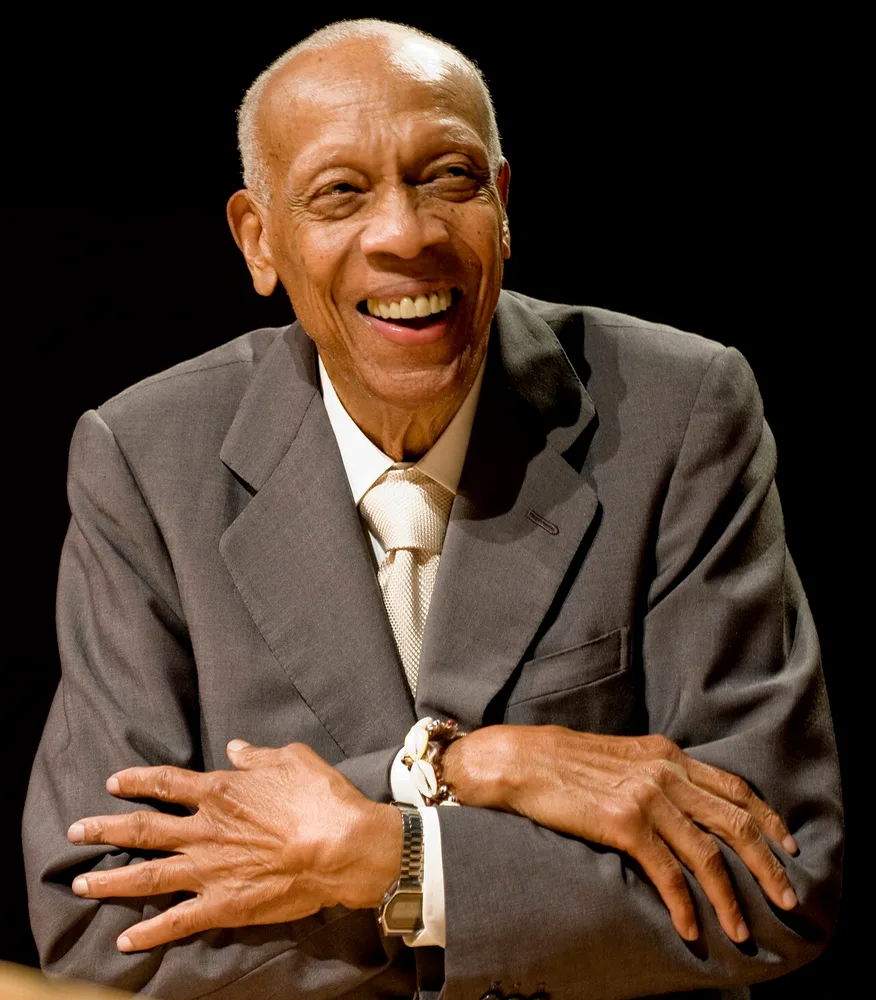
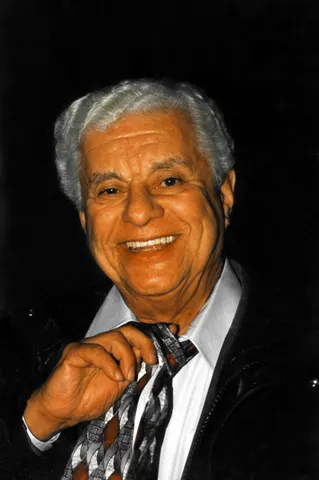
Bebo Valdés, photographed on October 23, 2008 (cropped version) CC BY-SA 3.0 — Wikimedia Commons: https://commons.wikimedia.org/wiki/File:Bebo_Vald%C3%A9s_-_2008_%28cropped%29.jpg (photographer credited as livepict.com)

Bebo Valdés was born Dionisio Ramón Emilio Valdés Amaro on October 9, 1918, in the village of Quivicán, near Havana. He studied at Havana's municipal conservatory and began working as a pianist in the city's nightclubs in the 1940s. In Julio Cueva's band he took over the piano and arranging chair from René Hernández, and in October 1946 that band recorded "Rareza del siglo," one of his best-known mambos. He also directed the house band at the Havana radio station Mil Diez.
From 1948 to 1957 he worked at the Tropicana cabaret, first as pianist and arranger for the vedette Rita Montaner and then as a bandleader whose orchestra alternated with Armando Romeu's, backing singers such as Benny Moré and Pío Leyva. He helped carry the mambo from the charanga into the big-band format and, to compete with Pérez Prado's version of it, devised a rhythm of his own, the batanga, which premiered at the Tropicana in 1952 and was soon overtaken by the chachachá. He was just as much a figure of Havana's early Afro-Cuban jazz scene: in 1952 he took part in sessions commissioned by the American producer Norman Granz that yielded the improvised piece "Con poco coco," a forerunner of the descarga jam-session records Panart issued later in the decade.
In 1957 he left the Tropicana and formed his own big band, Sabor de Cuba, which recorded with singers such as Rolando Laserie as well as instrumentally. His son Jesús, later known as Chucho, began his career at sixteen as the pianist in that band. In 1958 Valdés took part in the Havana recording of Cole Español by Nat King Cole, and in 1959 he cut a series of descarga sessions for Gema and the album Cuban Dance Party, an early stereo record by a Cuban ensemble. In 1960 he left Cuba for Mexico with Laserie, leaving behind his wife, Pilar, and their five children. He briefly lived in the United States, worked in Spain as arranger and conductor for singers including Lucho Gatica and Monna Bell, and toured Europe with the Lecuona Cuban Boys. On that tour he stopped in Stockholm in 1963, met Rose Marie Pehrson, married her the same year and settled in Sweden.
The next three decades were quiet ones. Valdés played piano in Swedish hotels and on cruise ships and spread Cuban music and Latin jazz technique among local musicians, while his name faded outside Cuban circles. When Chucho Valdés and Irakere played Carnegie Hall in 1977, he crossed the Atlantic to see his son, the start of a reconciliation that led to later joint work. His return to recording came after a phone call on November 25, 1994, from the saxophonist Paquito D'Rivera, who invited him to record in Germany. The result, Bebo Rides Again (Messidor, 1995), was made when he was 76 and led to a late career in his own name.
The revival was documented on film and disc. Fernando Trueba's documentary Calle 54 (2000) put him on screen at the piano with the double bassist Israel López "Cachao," in a performance of "Lágrimas negras," and with his son Chucho in "La Comparsa." In March 2000 he recorded El Arte del Sabor in New York with Cachao and the conguero Carlos "Patato" Valdés, a trio session of Cuban boleros, sones, congas and guarachas with Paquito D'Rivera as guest on three tracks. It won the Latin Grammy for Best Traditional Tropical Album in 2002 and the Grammy for Best Traditional Tropical Latin Album at the 45th Grammy Awards in 2003. Produced by Trueba and Javier Limón, Lágrimas Negras (2003) paired him with the flamenco singer Diego El Cigala; it won the Latin Grammy for Best Traditional Tropical Album in 2004 and, by the end of that year, had reportedly sold more than 700,000 copies. Bebo de Cuba (2004) won the 2005 Latin Grammy for Best Latin Jazz Album and the 2006 Grammy for Best Traditional Tropical Latin Album, and Juntos para siempre (2008), a two-piano album with Chucho, won the Grammy for Best Latin Jazz Album at the 52nd Grammy Awards in January 2010 as well as a Latin Grammy. Public-radio obituaries counted three Grammys and six Latin Grammys across his career.
Other late projects included the 2007 trio album Live at the Village Vanguard with the bassist Javier Colina, Carlos Carcas's documentary Old Man Bebo (2008), which had its North American premiere at the Tribeca Film Festival, and the original score for Trueba's animated film Chico & Rita (2010), which ends with a dedication to him. Berklee College of Music awarded him an honorary doctorate in May 2011. After living in Stockholm until 2007 he spent his last years in Benalmádena, near Málaga, Spain, and returned to Stockholm a few weeks before his death. Bebo Valdés passed away there on March 22, 2013, at the age of 94, after several years of treatment for Alzheimer's disease. His wife Rose Marie had died in 2012.
Most of Valdés's career was spent in Afro-Cuban dance music, not in the jazz trade, and that is the right way to hear him: a conservatory-trained arranger of mambo, chachachá and bolero for cabaret orchestras, a long stretch of hotel and cruise-ship piano in Sweden, and in old age a singer's accompanist on a flamenco and bolero record that sold far beyond the jazz audience. His jazz credentials are nonetheless specific and documented: the 1952 Havana descarga session with Norman Granz's circle, his Sabor de Cuba orchestra's jam-session recordings for Gema, the trio and duo albums of his later years, a Village Vanguard engagement recorded live, and a run of Latin jazz awards. He named Fats Waller, Art Tatum and Bill Evans among his influences. He is also credited with bringing Afro-Cuban sacred rhythms into popular dance music, and his arrangements sit behind the descarga tradition that Cuban jazz musicians built on. His son Chucho, the leading Cuban jazz pianist of the following generation, learned the piano from him.
- Cubano! (1952, Clef, as Andrés All-Stars) - The Havana session produced in the circle of Norman Granz that includes the improvised "Con poco coco," an early landmark of Cuban jazz improvisation.
- Cuban Dance Party (1959, Everest) - Sabor de Cuba in an early stereo recording of Cuban dance music, including the standard "Sasauma."
- Bebo Rides Again (1995, Messidor) - The comeback record, made with Paquito D'Rivera after more than three decades of near-silence on the international scene.
- El Arte del Sabor (2001, Blue Note) - Piano trio with Cachao and Patato Valdés, recorded in New York in March 2000; winner of both a Latin Grammy and a Grammy. Spotify - El Arte del Sabor Listen
- Lágrimas Negras (2003, Calle 54 / BMG España) - Piano and voice with Diego El Cigala, setting Cuban bolero repertoire against flamenco singing; the commercial high point of his late career. Spotify - Lágrimas Negras Listen
- Bebo de Cuba (2004, Calle 54) - A large-scale set with a big brass section, issued with a documentary DVD; winner of a Latin Grammy for Best Latin Jazz Album and a Grammy. Spotify - Bebo de Cuba Listen
- Live at the Village Vanguard (2007, Calle 54) - Piano and bass music with Javier Colina, recorded live at the New York club. Spotify - Live at the Village Vanguard Listen
- Juntos para siempre (2008, Sony Music Latin) - The two-piano album with his son Chucho Valdés, winner of the Grammy for Best Latin Jazz Album in 2010. Spotify - Juntos para siempre Listen
Bebo Valdés: Full Discography
Discogs artist: Bebo Valdés (678554) · Born October 9, 1918, Quivicán, Cuba · Died March 22, 2013, Stockholm, Sweden
Valdés recorded for more than sixty years, in two distinct careers: Cuban dance-band and jam-session records made in Havana between 1952 and 1960, and the albums of his late revival, from Bebo Rides Again in 1995 to Juntos para siempre in 2008. The tables below list his leader and co-leader albums and a selection of his sideman and arranger credits, in release order. Compilations and reissues are not itemized.
Leader and Co-Leader Albums
| Album | Year | Label | Personnel & Notes | Listen | Buy |
|---|---|---|---|---|---|
| Cubano! (as Andrés All-Stars) | 1952 | Clef | Recorded in Havana. Gustavo Más (tenor saxophone), Alejandro "El Negro" Vivar (trumpet), Kiki Hernández (bass), Guillermo Barreto (timbales), Rolando Alfonso (conga), Valdés (piano). Includes the improvised "Con poco coco." | — | — |
| Your Musical Holiday in Havana | 1956 | Decca | Valdés with his Havana orchestra. | — | — |
| Music for the Girlfriend: She Adores the Latin Type | 1956 | Decca | Mambo, chachachá, bolero and jazz descarga. Also issued as Hot Cha Chas. | — | — |
| Los mejores músicos de Cuba | 1959 | Gema | Descarga sessions with Sabor de Cuba, including "Special del Bebo." | — | — |
| Cuban Dance Party | 1959 | Everest | An early stereo album by a Cuban ensemble, including the standard "Sasauma." | — | — |
| Todo ritmo | 1959 | Panart | Dance recordings. | — | — |
| Mucho sabor | 1960 | Bonita | Also issued as Este es Bebo Valdés (Venevox). | — | — |
| Chachachás y charangas | 1961 | Decca | Dance recordings. | — | — |
| Bebo Rides Again | 1995 | Messidor (15834-2) | Recorded at Bauer Studios, Ludwigsburg, November 1994. Paquito D'Rivera (alto saxophone, clarinet), Diego Urcola (trumpet, flugelhorn) and others. The comeback record. | — | — |
| Recuerdos de Habana | 1999 | Naíve | The second album of his late career. | Spotify | — |
| El Arte del Sabor (Bebo Valdés Trio) | 2001 | Blue Note | Recorded March 13 to 16, 2000, at Current Sounds, New York. Valdés (piano), Israel López "Cachao" (bass), Carlos "Patato" Valdés (congas), with Paquito D'Rivera (alto saxophone) on three tracks. Produced by Nat Chediak. Latin Grammy, Best Traditional Tropical Album (2002); Grammy, Best Traditional Tropical Latin Album (2003). | Spotify | — |
| Lágrimas Negras (with Diego El Cigala) | 2003 | Calle 54 / BMG España | Valdés (piano), Diego El Cigala (vocals), Javier Colina (bass), with guests including Paquito D'Rivera (alto saxophone), Tata Gúines (congas), Changuito (timbales), Federico Britos (violin), Niño Josele (guitar), and Caetano Veloso (vocals, one duet with El Cigala). Produced by Fernando Trueba and Javier Limón. Latin Grammy, Best Traditional Tropical Album (2004). | Spotify | — |
| We Could Make Such Beautiful Music Together (with Federico Britos) | 2003 | Calle 54 | Piano and violin duo. Nominated for the Latin Grammy for Best Latin Jazz Album (2004). | — | — |
| Blanco y negro: Bebo y Cigala en vivo (with Diego El Cigala) | 2004 | Calle 54 | Live recording of the Cigala concerts. | — | — |
| Bebo de Cuba | 2004 | Calle 54 (82876642022) | Two CDs and a documentary DVD with a large brass section, collecting the suites Suite cubana, El solar de Bebo and Cuadernos de Nueva York. Latin Grammy, Best Latin Jazz Album (2005); Grammy, Best Traditional Tropical Latin Album (2006). | Spotify | — |
| Bebo | 2005 | Calle 54 | Latin Grammy, Best Instrumental Album (2006). | Spotify | — |
| Live at the Village Vanguard (with Javier Colina) | 2007 | Calle 54 | Valdés (piano) and Javier Colina (bass), recorded live at the New York club. Nominated for the Latin Grammy for Best Instrumental Album (2008). | Spotify | — |
| Juntos para siempre (with Chucho Valdés) | 2008 | Sony Music Latin (88697408162) | Two-piano duets with his son, recorded in Madrid in 2007. Grammy, Best Latin Jazz Album (2010); Latin Grammy, Best Latin Jazz Album (2009). | Spotify | — |
Soundtracks
| Film | Year | Label | Notes | Listen | Buy |
|---|---|---|---|---|---|
| Calle 54 | 2000 | Calle 54 | Fernando Trueba's Latin jazz documentary; Valdés appears with Cachao in "Lágrimas negras" and with his son Chucho in "La Comparsa." | — | — |
| El milagro de Candeal | 2004 | Calle 54 | Trueba's documentary filmed in Salvador, Bahia. | — | — |
| Chico & Rita | 2011 | Calle 54 / Sony Music | Original score for Trueba's animated film, with a New York band. | — | — |
Sideman, Guest and Arranger Credits (selected)
| Year | Project (Leader) | Title | Label | Valdés's credit |
|---|---|---|---|---|
| 1958 | Nat King Cole | Cole Español | Capitol | Took part in the Havana recording of the orchestral backing tracks, which Nelson Riddle also worked on |
| 1961 | Monna Bell | Nuevos éxitos | Hispavox | Director and arranger of the backing orchestra |
| 1961 | Monna Bell | III Festival de Benidorm | Hispavox | Director and arranger of the backing orchestra |
| 1962 | Monna Bell | IV Festival de Benidorm | Hispavox | Director and arranger of the backing orchestra |
| 1998 | Eladio Reinón | Acere | Fresh Sound | Guest member of Reinón's octet and big band |
| 1999 | Eladio Reinón | Afro Cuban Jazz Suite Nó 1 | Fresh Sound | Guest member of Reinón's octet and big band |
- Chucho Valdés - his son and the leading Cuban jazz pianist of the next generation; Chucho began in Sabor de Cuba at sixteen, played "La Comparsa" with his father in Calle 54 (2000), and recorded the two-piano album Juntos para siempre (2008) with him.
- Paquito D'Rivera - the saxophonist who persuaded him to record Bebo Rides Again in 1994 and guested on El Arte del Sabor (2001).
- Israel López "Cachao" - double bassist; his partnership with Valdés on record began with Calle 54 and El Arte del Sabor.
- Carlos "Patato" Valdés - conga player on El Arte del Sabor.
- Diego El Cigala - flamenco singer on Lágrimas Negras (2003) and the live album Blanco y negro (2004).
- Fernando Trueba - director of Calle 54 and Chico & Rita, and co-producer of Lágrimas Negras.
- Javier Colina - bassist on Lágrimas Negras and on Live at the Village Vanguard (2007).
- Federico Britos - violinist on We Could Make Such Beautiful Music Together (2003).
- Nat King Cole - the 1958 Havana sessions for Cole Español, with orchestral backing tracks arranged with Nelson Riddle.
- Rita Montaner - the Tropicana vedette he accompanied as pianist and arranger from 1948 to 1957.
- Benny Moré and Pío Leyva - Tropicana singers backed by his orchestra.
- Rolando Laserie - Sabor de Cuba's lead singer and his companion on the 1960 trip to Mexico.
- Armando Romeu - the other Tropicana bandleader, whose orchestra alternated with Valdés's.
- Norman Granz - the American producer behind the 1952 Havana jazz session.
- Eladio Reinón - Valdés guested with his octet and big band on two Fresh Sound albums, Acere (1998) and Afro Cuban Jazz Suite Nó 1 (1999).

More Afro-Cuban Jazz Artists
See all 49 Afro-Cuban Jazz artists →More Cuban Jazz Artists
See all 16 Cuban artists →- Wikipedia: Bebo Valdés
- Wikipedia (Spanish): Bebo Valdés
- Wikipedia: El Arte del Sabor
- Wikipedia: Lágrimas Negras (album)
- Wikipedia: Calle 54
- Wikipedia: Chico and Rita
- Wikipedia: Grammy Award for Best Latin Jazz Album
- Wikipedia: Grammy Award for Best Tropical Latin Album
- Wikipedia: Latin Grammy Award for Best Latin Jazz Album
- Wikipedia: Latin Grammy Award for Best Traditional Tropical Album
- NPR: Bebo Valdés, Giant Of Cuban Music, Is Dead (2013)
- KNKX: A giant of Cuban music, Bebo Valdes dies (2013)
- Associated Press obituary via Boston.com (2013)
- Pollstar: Bebo Valdes Dies (2013)
- MusicBrainz: Bebo Valdés
- Discogs: Bebo Valdés