 JAZZPROFILES lives in the music 1,002 Jazz Artists fully Profiled!
 Paul Butterfield
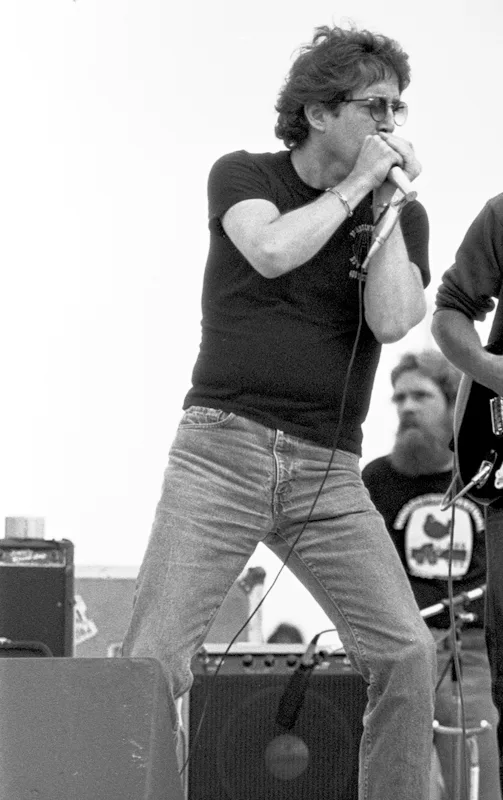
Paul Butterfield at Woodstock Reunion, Parr Meadows, Ridge, NY, September 7, 1979. CC BY-SA 3.0 — Wikimedia Commons — https://commons.wikimedia.org/wiki/File:Paul_Butterfield_79.jpg

Paul Vaughn Butterfield was born December 17, 1942, in Chicago's Hyde Park neighborhood, the son of a lawyer father and a painter mother. He attended the University of Chicago Laboratory Schools and studied classical flute there under Walfrid Kujala of the Chicago Symphony Orchestra; a knee injury cost him a track scholarship to Brown University and redirected him toward music full time. By the late 1950s he had traded flute for blues harmonica, working Chicago's South and West Side clubs alongside guitarist Nick Gravenites and coming up under the informal patronage of Muddy Waters, Howlin' Wolf, Little Walter, and Otis Rush, who let the young white players sit in. He partnered with guitarist Elvin Bishop in the early 1960s, and by 1963 the two had landed a standing gig at Big John's, a folk club in Old Town, recruiting bassist Jerome Arnold and drummer Sam Lay, both alumni of Howlin' Wolf's band, to complete the core group.
Producer Paul Rothchild caught the band at Big John's and signed it to Elektra Records; during the sessions he brought in guitarist Mike Bloomfield, whom he had also seen working the same rooms, and the Paul Butterfield Blues Band's classic lineup was set. Their self-titled 1965 debut announced a bracingly authentic Chicago blues band fronted by a white harmonica player, and that July the group's set at the Newport Folk Festival was strong enough that Bob Dylan hired three of them, including Bloomfield, to back his first electric performance the next night. The band's second album, East-West (recorded July 1966 at Chess Studios in Chicago, released that August on Elektra), pushed further: its 13-minute modal title track, built on a drone bass pattern and shifting through a series of moods and keys, grew out of Bloomfield's fascination with John Coltrane's raga-influenced improvising and Miles Davis's modal writing, and stands as one of the earliest fusions of Chicago electric blues with jazz-derived modal improvisation and Indian classical structure. It is the record most responsible for the band's reputation as a bridge between blues, rock, and jazz.
Bloomfield left in 1967 to form the Electric Flag, and Butterfield rebuilt the band around a horn section, adding saxophonists David Sanborn and Gene Dinwiddie, trumpeter Keith Johnson, drummer Phillip Wilson, and bassist Bugsy Maugh. That expanded group cut The Resurrection of Pigboy Crabshaw (1967), the band's commercial peak at number 52 on the Billboard chart, and played the Monterey Pop Festival on June 17, 1967. In My Own Dream (1968) and Keep On Moving (1969) leaned further into horn-driven soul and R&B, with Elvin Bishop and keyboardist Mark Naftalin exiting along the way; a 1970 live double album, recorded at the Troubadour in West Hollywood, documented the horn-band edition at full strength before Sometimes I Just Feel Like Smilin' (1971) closed out the group's run. In between, Butterfield took part in one of his most celebrated sideman dates: an April 1969 session organized by producer Norman Dayron reuniting Muddy Waters with Otis Spann, Bloomfield, Sam Lay, Donald "Duck" Dunn, and Buddy Miles, released as Fathers and Sons (Chess, 1969). Waters himself said it was as close as he'd gotten to his original feel since first cutting the songs.
After the Blues Band broke up in 1971, Butterfield settled in Woodstock, New York, and formed Paul Butterfield's Better Days with guitarist Amos Garrett, singer-guitarist Geoff Muldaur, pianist Ronnie Barron, bassist Billy Rich, and drummer Chris Parker. Better Days recorded two albums for Albert Grossman's Bearsville label, Paul Butterfield's Better Days (1973) and It All Comes Back (1973), trading the horn-band sound for a looser, roots- and folk-inflected blues that let each member's outside influences show; a 1973 Winterland Ballroom performance was later released as Live at Winterland Ballroom (1999). After Better Days dissolved, Butterfield worked increasingly as a Woodstock-scene sideman and occasional soloist: he rejoined Muddy Waters for The Muddy Waters Woodstock Album (Chess, 1975), cut at Levon Helm's Woodstock studio with Garth Hudson and Waters's touring band; appeared at The Band's farewell concert, "The Last Waltz," on November 25, 1976, backing the group on "Mystery Train" and Muddy Waters on "Mannish Boy"; and toured and recorded with Levon Helm and the RCO All-Stars (1977) and with the Band's Rick Danko. His solo studio albums from this period were Put It in Your Ear (Bearsville, 1975), featuring Levon Helm, Garth Hudson, and David Sanborn again alongside guitarist Eric Gale, and North South (Bearsville, 1980), a more produced record built around strings and funk arrangements that departed from his blues-band sound.
Butterfield's final years were shadowed by illness. Beginning around 1980 he underwent repeated surgeries for peritonitis, and he developed a heroin addiction that friends and biographers tied to managing chronic pain, compounded by financial strain and grief over Bloomfield's 1981 death and manager Albert Grossman's 1986 death. He attempted a comeback with The Legendary Paul Butterfield Rides Again (Amherst Records, 1986) and performed at a B.B. King all-star concert in April 1987 alongside Eric Clapton, Albert King, Etta James, and Stevie Ray Vaughan. He was found dead in his North Hollywood apartment on May 4, 1987, at age 44; a coroner's autopsy attributed the death to an accidental overdose combining morphine (heroin), codeine, and the tranquilizer Librium, against a backdrop of long-term peritonitis and heavy drinking. He was inducted into the Blues Hall of Fame in 2006, and the classic Paul Butterfield Blues Band lineup entered the Rock and Roll Hall of Fame in 2015. The 2017 documentary Horn from the Heart: The Paul Butterfield Story revisited his career to strong reviews on its 2018 theatrical release.
Butterfield treated the harmonica the way Chicago's Black harp players did, as a horn: favoring single-note lines over chords, bending pitches hard, and building long, sustained solos rather than short fills, with a tone critics consistently described as intense, concise, and unusually pure. AllMusic's Steve Huey credited him with breaking a pattern in which white American musicians approached the blues "with cautious respect, afraid of coming off as inauthentic," arguing that Butterfield's "storming sound was a major catalyst in bringing electric Chicago blues to white audiences" and cleared a path for bands like Cream, whose induction by the Blues Foundation cited exactly that lineage. Bandmate Mike Bloomfield's absorption of John Coltrane's modal and raga-based improvising, channeled through the Butterfield band's 1966 recording of "East-West," gave the group a genuine claim on jazz-fusion territory years before "fusion" was a marketing term, and the band's later horn-section incarnation, with David Sanborn and Gene Dinwiddie on saxophones, pushed it further toward a big-band, R&B-and-jazz hybrid sound. Butterfield played Hohner Marine Band diatonic harmonicas, worked primarily in cross-harp (second position), and, reportedly left-handed, held the harp in his right hand while using his left for cupping and muting effects; he later documented his technique in the instructional book and CD Paul Butterfield Teaches Blues Harmonica Master Class (1997).
- East-West (1966, Elektra) - The Paul Butterfield Blues Band's second album; its 13-minute modal title track, inspired by Mike Bloomfield's interest in John Coltrane's raga-influenced improvising, is a landmark early fusion of Chicago blues with jazz-derived modal structure. Spotify - East-West Listen
- The Paul Butterfield Blues Band (1965, Elektra) - The band's self-titled debut, the record that brought amplified Chicago blues to a national rock audience for the first time.
- The Resurrection of Pigboy Crabshaw (1967, Elektra) - The band's commercial peak (No. 52, Billboard 200), the first studio album with the expanded horn section including David Sanborn.
- Fathers and Sons (1969, Chess) - As a sideman: Muddy Waters's reunion session with Otis Spann, Mike Bloomfield, Sam Lay, and others, one of Butterfield's most acclaimed non-leader dates.
- Paul Butterfield's Better Days (1973, Bearsville) - His post-Blues Band group with Amos Garrett and Geoff Muldaur, trading the horn-band sound for a roots- and folk-inflected blues.
- Put It in Your Ear (1975, Bearsville) - Solo studio album recorded with Levon Helm, Garth Hudson, and David Sanborn at Bearsville Studios. Listen
- The Last Waltz (1978, Warner Bros.) - As a guest: Butterfield's appearance at The Band's November 1976 farewell concert, backing the group on "Mystery Train" and Muddy Waters on "Mannish Boy."
Paul Butterfield: Full Discography
Identity confirmed via the live Discogs API. Butterfield's catalog is split across three related Discogs artist entities that must be read together: solo artist ID 273348 ("Paul Butterfield," matching the Wikipedia birth/death dates), group entity 437880 ("The Paul Butterfield Blues Band," which credits Butterfield, Mike Bloomfield, Elvin Bishop, David Sanborn, and other band members as its listed members), and 1995045 ("Paul Butterfield's Better Days"). The table below covers the band's studio and official live albums, the two Better Days albums, and Butterfield's post-Better Days solo studio records as "leader" entries, plus a representative set of his most significant sideman and guest credits; it does not attempt to itemize the hundreds of compilation, reissue, and various-artist appearances also logged under these three entities.
As Leader / Co-Leader
| Album Title | Recording Date(s) | Release Date | Label | Catalog Number | Format(s) | Personnel | Role | Reissue History | Spotify | Buy | Notes |
|---|---|---|---|---|---|---|---|---|---|---|---|
| The Paul Butterfield Blues Band | Not specified in Discogs data; 1965 | October 1965 | Elektra | EKL 294 (mono) | Vinyl, LP, Album, Mono | Paul Butterfield (harmonica, vocals), Mike Bloomfield (guitar), Elvin Bishop (guitar), Jerome Arnold (bass), Sam Lay (drums), Mark Naftalin (organ, added during sessions) | Leader | Reissued multiple times by Elektra/Rhino; included in the 2015 box set Complete Albums 1965-1980 | Not found on Spotify as a standalone album under this exact title on the artist's primary page | — | Debut album; reached No. 123, Billboard 200 |
| East-West | Recorded July 1966, Chess Studios, Chicago | August 1966 | Elektra | EKL-315 (mono) / EKS-7315 (stereo) | Vinyl, LP, Album, Mono | Paul Butterfield (harmonica, vocals), Mike Bloomfield (guitar), Elvin Bishop (guitar, lead vocal on "Never Say No"), Jerome Arnold (bass), Billy Davenport (drums), Mark Naftalin (piano, organ) | Leader | Reissued on CD and in the 2015 Complete Albums box set | Spotify - East-West | — | Title track is a 13-minute modal/raga-influenced instrumental credited with pioneering extended improvised rock/jazz soloing; reached No. 65, Billboard 200 |
| The Resurrection of Pigboy Crabshaw | Not specified in Discogs data; 1967 | 1968 | Elektra | EKL-4015 (mono) | Vinyl, LP, Album, Mono | Paul Butterfield (harmonica, vocals), Elvin Bishop (guitar), Mark Naftalin (keyboards), Bugsy Maugh (bass), Phillip Wilson (drums), David Sanborn and Gene Dinwiddie (saxophones), Keith Johnson (trumpet) | Leader | Reissued on CD; combined with In My Own Dream on a 2004 two-fer | Not confirmed as a standalone Spotify album link | — | Band's commercial peak, No. 52 Billboard 200; first studio album with the expanded horn section |
| In My Own Dream | Not specified in Discogs data; 1968 | 1968 | Elektra | EKS-74025 | Vinyl, LP, Album, Stereo | Paul Butterfield (harmonica, vocals), Elvin Bishop, Mark Naftalin, David Sanborn, Gene Dinwiddie, Phillip Wilson, Bugsy Maugh | Leader | Reissued with Pigboy Crabshaw on a 2004 two-fer | Not confirmed as a standalone Spotify album link | — | Reached No. 79, Billboard 200; Bishop and Naftalin departed around this period |
| Keep On Moving | Not specified in Discogs data; 1969 | 1969 | Elektra | EKS 74053 | Vinyl, LP, Album | Paul Butterfield (harmonica, vocals) with the horn-band lineup; produced by Jerry Ragovoy | Leader | None found | Not confirmed as a standalone Spotify album link | — | Reached No. 102, Billboard 200; a commercial and critical disappointment relative to prior records |
| Live | Recorded March 21-22, 1970, the Troubadour, West Hollywood | 1970 | Elektra | 7E-2001 | Vinyl, LP, Double Album | Paul Butterfield (harmonica, vocals) with a four-piece horn section | Leader | None found | Not confirmed as a standalone Spotify album link | — | Double live album documenting the horn-band edition of the group at full strength |
| Sometimes I Just Feel Like Smilin' | Not specified in Discogs data; 1971 | 1971 | Elektra/Bearsville | EKS-75013 | Vinyl, LP, Album, Stereo | Paul Butterfield (harmonica, vocals) with the band's final horn-era lineup | Leader | None found | Not confirmed as a standalone Spotify album link | — | Final studio album before the Paul Butterfield Blues Band's 1971 breakup |
| Paul Butterfield's Better Days | Not specified in Discogs data; 1972-1973 | 1973 | Bearsville | BR 2119 | Vinyl, LP, Album, Stereo | Paul Butterfield (harmonica, vocals), Amos Garrett (guitar), Geoff Muldaur (guitar, vocals), Ronnie Barron (piano), Billy Rich (bass), Chris Parker (drums) | Leader (Paul Butterfield's Better Days) | Combined with It All Comes Back on a 2012 Edsel two-fer | Not confirmed as a standalone Spotify album link | — | Reached No. 145, Billboard 200; first post-Blues Band album, in a rootsier, folk-inflected style |
| It All Comes Back | Not specified in Discogs data; 1973 | 1973 | Bearsville | BR 2170 | Vinyl, LP, Album | Same Better Days lineup as above | Leader (Paul Butterfield's Better Days) | Combined with Paul Butterfield's Better Days on a 2012 Edsel two-fer | Not confirmed as a standalone Spotify album link | — | Reached No. 156, Billboard 200; Better Days' second and final studio album |
| Live at Winterland Ballroom | Recorded 1973, Winterland Ballroom, San Francisco | 1999 | Not specified in Discogs data | Not specified in Discogs data | CD | Paul Butterfield's Better Days lineup | Leader | Posthumous release | Not confirmed | — | Live document of the Better Days band, issued twelve years after Butterfield's death |
| Put It in Your Ear | Recorded 1975, Bearsville Studios | December 1975 (US) | Bearsville | BR 6960 | Vinyl, LP, Album | Paul Butterfield (harmonica, vocals), Levon Helm and Garth Hudson (The Band), David Sanborn, Eric Gale, Fred Carter, Rick Bell | Leader | None found | Spotify - Put It In Your Ear | — | First solo studio album after Better Days; reviewed by Robert Christgau |
| North South | Not specified in Discogs data | 1980 | Bearsville | XBR 6995 | Vinyl, LP, Album | Paul Butterfield (harmonica, vocals) with studio musicians; more heavily produced, with strings, synthesizers, and funk arrangements | Leader | None found | Spotify - North South | — | A stylistic departure from his blues-band sound; some sources give a January 1981 release, Discogs and most databases date it 1980 |
| The Legendary Paul Butterfield Rides Again | Not specified in Discogs data | 1986 | Amherst Records | AMH 3305 | Vinyl, LP, Album, Stereo | Paul Butterfield (harmonica, vocals) with contemporary session musicians | Leader | None found | Not confirmed as a standalone Spotify album link | — | Final album, a comeback attempt with updated 1980s rock production, released the year before his death |
As Sideman / Guest (selected major credits)
| Year | Project (Leader) | Title | Label | Catalog | Role | Notes |
|---|---|---|---|---|---|---|
| 1969 | Muddy Waters | Fathers and Sons | Chess (LPS 127) | Harmonica | Recorded April 1969 with Otis Spann, Mike Bloomfield, Sam Lay, Donald "Duck" Dunn, and Buddy Miles; widely regarded as one of Butterfield's finest non-leader recordings | |
| 1972 | Various (film) | Steel Yard Blues (Original Motion Picture Soundtrack) | Not specified in Discogs data | Harmonica | Soundtrack credit | |
| 1975 | Muddy Waters | The Muddy Waters Woodstock Album | Chess | Harmonica | Recorded at Levon Helm's Woodstock studio with Garth Hudson and Waters's touring band; Waters's final Chess album | |
| 1976 | The Band | The Last Waltz | Warner Bros. | Harmonica, vocals (guest) | The Band's November 25, 1976 farewell concert; Butterfield backed the group on "Mystery Train" and Muddy Waters on "Mannish Boy" | |
| 1977 | Levon Helm and the RCO All-Stars | Levon Helm and the RCO All-Stars | ABC Records | Harmonica | Toured and recorded with this Helm-led group | |
| 2018 | Danko / Butterfield | Danko & Butterfield Live at the Golden Bear, Huntington Beach 21.11.78 | Floating World Records, Retroworld | Harmonica, co-billed | Posthumous release of a 1978 duo performance with Rick Danko |
Butterfield's Discogs sideman/guest log (logged across all three artist entities) also includes appearances on records by Nick Gravenites, John Mayall (a 1966 UK session later issued as an EP), Maria Muldaur, Elizabeth Barraclough, the Felix Pappalardi & Creation album, and numerous Woodstock-scene sessions from the mid-1970s through the early 1980s. These are not itemized exhaustively here. A number of catalog numbers and precise recording dates above are marked "not specified in Discogs data" because the API's release-level metadata was incomplete for those entries; these are recorded as gaps rather than guessed.
- Mike Bloomfield - lead guitarist of the original Paul Butterfield Blues Band, 1965-1967; brought the modal/raga concept behind "East-West" and later reunited with Butterfield on Muddy Waters's Fathers and Sons (1969); his 1981 death, along with Albert Grossman's, weighed on Butterfield's final years.
- Elvin Bishop - co-founder and second guitarist of the original band, 1963-1968.
- David Sanborn - saxophonist in the Butterfield Blues Band's horn section from around 1967 through the band's 1971 breakup, appearing on The Resurrection of Pigboy Crabshaw, In My Own Dream, Keep On Moving, and the 1970 live album, and returning as a guest on Butterfield's 1975 solo album Put It in Your Ear.
- Amos Garrett, Geoff Muldaur, Ronnie Barron, Billy Rich, and Chris Parker - the lineup of Paul Butterfield's Better Days, 1972-1973.
- Muddy Waters - an early mentor in Chicago's blues clubs; Butterfield later appeared as a sideman on Waters's Fathers and Sons (1969) and The Muddy Waters Woodstock Album (1975).
- Levon Helm and Garth Hudson (The Band) - collaborators on Put It in Your Ear (1975) and The Muddy Waters Woodstock Album sessions at Helm's Woodstock studio; Butterfield also toured with Levon Helm and the RCO All-Stars (1977) and appeared at The Band's 1976 farewell concert, "The Last Waltz."