 JAZZPROFILES lives in the music 2,303 Jazz Artists fully Profiled!
Nduduzo Makhathini
Last updated November 7, 2026
Listen on Spotify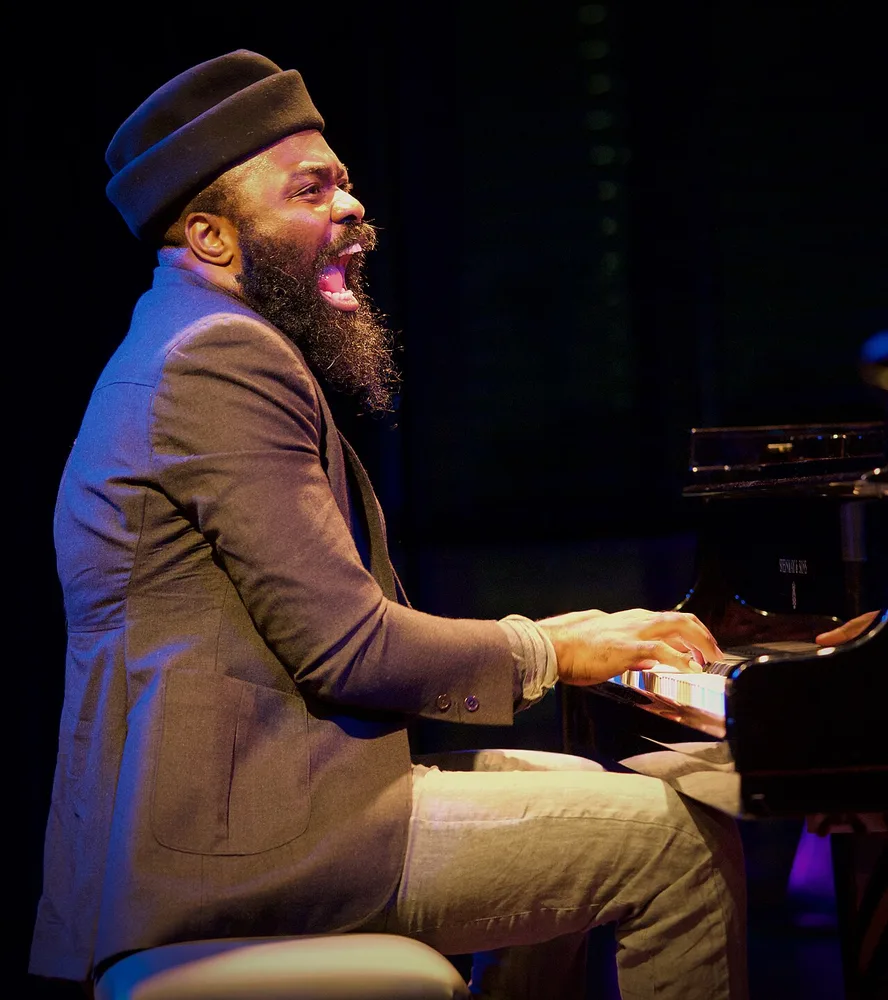
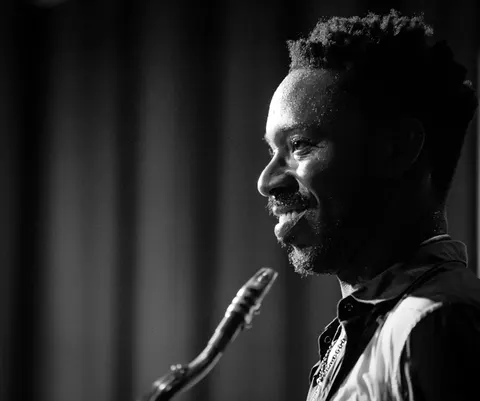
Nduduzo Makhathini performing with his quartet in Amsterdam, October 28, 2021, photographed by Dirk Neven CC BY 2.0 (https://creativecommons.org/licenses/by/2.0/), photographer Dirk Neven; the Flickr source page license was confirmed by Wikimedia Commons' automated Flickr review — Wikimedia Commons — https://commons.wikimedia.org/wiki/File:Nduduzo_Makhathini_Quartet_28_october_2021_BIM_Amsterdam_-_Nduduzo_Makhathini.jpg

Nduduzo Makhathini was born on September 24, 1982, in Pietermaritzburg, the seat of the uMgungundlovu district in KwaZulu-Natal, and grew up in the surrounding hill country, the site of the Zulu king Dingane's kingdom in the 1830s. His mother, Nomajerusalema, gave him his first piano lessons, and his late father, Sibusiso, played guitar and sang in the maskandi style. The family was strictly Christian, and as a boy he walked from church to church to hear the music, often leaving before the sermon. He has described arriving at jazz late and almost by accident: he went to study music in Durban, entered the jazz programme at what was then the Durban Institute of Technology in 2001, and earned a diploma in jazz piano in 2005. At about eighteen he met the pianist Bheki Mseleku, who became his mentor and introduced him to the records of John Coltrane's classic quartet with McCoy Tyner.
After appearances at the National Arts Festival in Grahamstown in 2005 and 2006, he toured Europe in 2006 with the singer Simphiwe Dana and played at the Avo Session festival in Basel. From 2007 he toured for years in saxophonist Zim Ngqawana's Zimology Quartet, which gave him his first recording credit, the 2007 album Live at Bird's Eye, Switzerland, and he is also heard on bassist Herbie Tsoaeli's African Time (2012). In 2014 he and his wife, the singer Omagugu Makhathini, founded the label Gundu Entertainment, and on September 5 of that year he released two albums at once, Mother Tongue and Sketches of Tomorrow. Listening to the Ground and Matunda Ya Kwanza, Vol. 1 followed in 2015, the year he won the Standard Bank Young Artist Award for jazz, and Icilongo: The African Peace Suite in 2016, with Shabaka Hutchings on tenor saxophone. Inner Dimensions, made with his Umgidi Trio and the One Voice Vocal Ensemble, won the South African Music Award for best jazz album in May 2017, and the same year he took the best jazz artist prize at the All Africa Music Awards. He is also on Wisdom of Elders (2016), by Hutchings's group Shabaka and the Ancestors.
His 2017 album Ikhambi, licensed from Gundu to Universal Music South Africa, won the best jazz album award at the South African Music Awards again in 2018, and he went on to become the first South African artist signed to Blue Note Records. By 2017 he was head of the music department at the University of Fort Hare in the Eastern Cape. In 2019 he made his first appearances at the Blue Note club in New York and at Jazz at Lincoln Center, where he was a featured guest of Wynton Marsalis and the Jazz at Lincoln Center Orchestra. His Blue Note debut, Modes of Communication: Letters from the Underworlds (April 3, 2020), set compositions about healing and ancestral worlds for a multi-horn band that included the American altoist Logan Richardson, tenor saxophonist Linda Sikhakhane, trumpeter Ndabo Zulu, bassist Zwelakhe-Duma Bell le Pere and drummer Ayanda Sikade. The New York Times named it one of the best jazz albums of 2020. In the same year he played Fender Rhodes on two tracks of Shabaka and the Ancestors' We Are Sent Here by History.
Makhathini is also a practicing sangoma, a traditional Zulu healer. He has said he first sensed the calling at thirteen and accepted it about a decade later, and his healing practice informs his albums. In the Spirit of Ntu (May 27, 2022), conceived during the 2021 unrest in Durban and the pandemic, was the first release on Blue Note's new imprint Blue Note Africa and used a young South African band: Sikhakhane, trumpeter Robin Fassie Kock, vibraphonist Dylan Tabisher, bassist Stephen de Souza, percussionist Gontse Makhene and drummer Dane Paris, with the American altoist Jaleel Shaw and the singers Omagugu Makhathini and Anna Widauer as guests. In March 2023 he received a PhD in music from Stellenbosch University, and that June he stepped down as head of the Fort Hare music department and moved back to KwaZulu-Natal. The trio album uNomkhubulwane (June 7, 2024), a three-movement suite named for a Zulu deity and drawn from a song that came to him during his healer's initiation, was recorded with bassist Bell le Pere and drummer Francisco Mela. On June 13, 2025, at the Deutscher Jazzpreis ceremony in Cologne, he won the award for international live act of the year. His fourth Blue Note album, The Myth We Choose, appeared on June 26, 2026, co-produced with his son Thingo, with his working trio of bassist Dalisu Ndlazi and drummer Lukmil Perez (and Ayanda Sikade on some tracks) and guests including Hutchings, the producer Black Coffee and Omagugu Makhathini.
Makhathini plays piano in the modal, rhythmically driving manner of McCoy Tyner, a lineage he traces through Mseleku, and blends it with the gospel-tinged melodic warmth of Abdullah Ibrahim and the dance rhythms of Zulu and Afro-Cuban music. He also names Moses Molelekwa, Andrew Hill, Randy Weston and Don Pullen among his influences. Reviewers place his records between spiritual jazz and post-bop: London Jazz News heard in Modes of Communication slow-building solos over repeated rhythm figures in the Coltrane tradition, while uNomkhubulwane strips the sound to a trio and The Myth We Choose adds neo-soul and electronic touches that he credits to his son. He treats a performance as a ritual and an album as a record of messages received from ancestral worlds, writes his own liner notes and essays, and sings on his later albums. His career has run in parallel as an educator and researcher, and his doctorate combined artistic practice with written research. He has gathered a younger generation of South African players around him, among them Linda Sikhakhane, Ayanda Sikade and Zwelakhe-Duma Bell le Pere.
- Inner Dimensions (2016, Gundu Entertainment) - Recorded with his Umgidi Trio and the One Voice Vocal Ensemble; it won the South African Music Award for best jazz album in 2017, his first win.
- Ikhambi (2017, Universal Music South Africa) - His first album issued through a major label, licensed from Gundu, and the winner of the best jazz album prize at the 2018 South African Music Awards.
- Modes of Communication: Letters from the Underworlds (2020, Blue Note) - His Blue Note debut, a multi-horn album of compositions about healing and ancestral worlds; named one of the best jazz albums of 2020 by The New York Times. Spotify - Modes of Communication: Letters from the Underworlds Listen
- In the Spirit of Ntu (2022, Blue Note Africa) - The first release on the Blue Note Africa imprint, played by a young South African septet with guests Jaleel Shaw and Anna Widauer. Spotify - In The Spirit Of Ntu Listen
- uNomkhubulwane (2024, Blue Note) - A three-movement trio suite with bassist Zwelakhe-Duma Bell le Pere and drummer Francisco Mela, named for a Zulu deity.
- The Myth We Choose (2026, Blue Note) - His fourth Blue Note album, co-produced with his son Thingo and featuring Shabaka Hutchings and Black Coffee as guests. Spotify - The Myth We Choose Listen
- We Are Sent Here by History (2020, Impulse!) - A sideman credit on Fender Rhodes (tracks 2 and 4) with Shabaka and the Ancestors, the South African and British band led by Hutchings.
Nduduzo Makhathini: Full Discography
Discogs artist ID 5269178 ("Nduduzo Makhathini") was read in full on Discogs, and the leader releases below were checked individually on Discogs for label, catalog number and credits, with Blue Note and AllMusic supplying personnel where Discogs lists none. He has led twelve albums since 2014, six of them on his own Gundu Entertainment label, and has recorded for Universal Music South Africa and, since 2020, Blue Note. His first album under Blue Note, Modes of Communication, lists only his own credit on Discogs, so its personnel come from the London Jazz News review; the personnel for The Myth We Choose come from Blue Note. The sideman table is a selection of the credits Discogs confirms at track or release level, not an exhaustive list. A digital-only 2022 album, Abasemkhathini Vol - I, appears on his Bandcamp page but not on Discogs, and a 2021 EP, The Blues of a Zulu Spirit, is not itemized.
As Leader / Co-Leader
| Album Title | Recording Date(s) | Release Date | Label | Catalog Number | Format(s) | Personnel | Role | Reissue History | Spotify | Buy | Notes |
|---|---|---|---|---|---|---|---|---|---|---|---|
| Mother Tongue | Not specified in Discogs data | September 5, 2014 | Gundu Entertainment | No catalog number | Digital (FLAC) | Nduduzo Makhathini (piano), Mthunzi Mvubu (alto saxophone, flute), Linda Sikhakhane (tenor saxophone), Sakhile Simani (trumpet, flugelhorn), Ariel Zamonsky and Benjamin Jeptha (bass), Ayanda Sikade (drums) | Leader | Digital release on Gundu Entertainment; also on Bandcamp | — | — | Issued the same day as Sketches of Tomorrow. Includes "Nomajerusalema" and "Blessings to My Late Father (Sibusiso)," named for his parents; nominated for a 2015 South African Music Award. |
| Sketches of Tomorrow | Not specified in Discogs data | September 5, 2014 | Self-released | No catalog number | Digital (FLAC) | Nduduzo Makhathini (piano), Mthunzi Mvubu (alto saxophone), Sakhile Simani (trumpet), Jonathan Crossley (guitar), Zwelakhe-Duma Bell le Pere (bass), Ayanda Sikade (drums), with guests including Mbuso Khoza, Omagugu Makhathini, Lindiwe Maxolo and Daniel Nhlanhla Mahlangu | Leader | Digital release; also on Bandcamp | — | — | Released the same day as Mother Tongue. |
| Listening to the Ground | Not specified in Discogs data | June 25, 2015 | Gundu Entertainment | GUNDPR003 | CD | Nduduzo Makhathini (piano), Robin Fassie Kock (trumpet, flugelhorn), Karl-Martin Almqvist (tenor saxophone), Magne Thormodæter (bass), Ayanda Sikade (drums), Omagugu Makhathini (vocals) | Leader | Also on Bandcamp | — | — | Sequel in spirit to Mother Tongue; includes "Waltz for Trane" and "King Fela." Nominated for a 2016 South African Music Award. |
| Matunda Ya Kwanza, Vol. 1 | Not specified in Discogs data | November 18, 2015 | Gundu Entertainment | No catalog number | Digital (FLAC) | Nduduzo Makhathini (piano), Magne Thormodæter (bass), Claude Cozens (drums) | Leader | Also on Bandcamp | — | — | Piano trio; includes "Tyner's Visit." |
| Icilongo (The African Peace Suite) | Not specified in Discogs data | March 8, 2016 | Gundu Entertainment | No catalog number | Digital (FLAC) | Nduduzo Makhathini (piano, vocals), Justin Bellairs (alto saxophone), Shabaka Hutchings (tenor saxophone), Benjamin Jeptha (bass), Ayanda Sikade (drums), Sakhile Moleshe (vocals) | Leader | Also on Bandcamp | — | — | Nine tracks, billed as a peace suite. |
| Inner Dimensions | Not specified in Discogs data | 2016 (May 14, 2016 per MusicBrainz) | Gundu Entertainment | GUNDPR006 | CD | Nduduzo Makhathini (piano), Fabien Iannone (bass), Dominic Egli (drums), with the One Voice Vocal Ensemble (including Anna Widauer) | Leader (billed with Umgidi Trio and One Voice Vocal Ensemble) | Also on Bandcamp | — | — | Winner of the best jazz album prize at the 2017 South African Music Awards. |
| Reflections | Not specified in Discogs data | February 22, 2017 | Gundu Entertainment | GUNDPR008 | CD | Nduduzo Makhathini (piano) | Leader | Also on Bandcamp | — | — | Solo piano. |
| Ikhambi | Not specified in Discogs data | 2017 | Universal Music South Africa | CDRBL 895 | CD | Nduduzo Makhathini (piano, vocals), James Mainwaring (alto saxophone), James Allsopp (tenor saxophone), Eddie Parker (flute, bass flute), Magne Thormodæter (bass), Ayanda Sikade (drums), Thebe Lipere (percussion), Omagugu Makhathini and Sakhile Moleshe (vocals) | Leader | None listed | — | — | His first release on Universal Music South Africa; best jazz album at the 2018 South African Music Awards. The saxophones and flute play on most, not all, of the 13 tracks. |
| Modes of Communication: Letters from the Underworlds | Not specified in Discogs data | April 3, 2020 | Blue Note | B003157502 | CD | Nduduzo Makhathini (piano, vocals), Logan Richardson (alto saxophone), Linda Sikhakhane (tenor saxophone), Ndabo Zulu (trumpet), Zwelakhe-Duma Bell le Pere (bass), Ayanda Sikade (drums), Gontse Makhene (percussion), Omagugu Makhathini and Msaki (vocals) | Leader | None listed | Spotify - Modes of Communication: Letters From The Underworlds | — | His Blue Note debut. Personnel from the London Jazz News review. One of The New York Times's best jazz albums of 2020. |
| In the Spirit of Ntu | Not specified in Discogs data | May 27, 2022 | Blue Note (Blue Note Africa imprint) | B003526602 | CD | Nduduzo Makhathini (piano, vocals), Linda Sikhakhane (tenor and soprano saxophones), Robin Fassie Kock (trumpet, flugelhorn), Dylan Tabisher (vibraphone), Stephen de Souza (bass), Gontse Makhene (percussion), Dane Paris (drums); guests Jaleel Shaw (alto saxophone), Anna Widauer and Omagugu Makhathini (vocals) | Leader | None listed | Spotify - In The Spirit Of Ntu | — | The first release on the Blue Note Africa imprint; "Re-Amathambo" reworks a track from Ikhambi. |
| uNomkhubulwane | Not specified in Discogs data | June 7, 2024 | Blue Note | ST-85232 (LP) | Vinyl LP, CD, digital | Nduduzo Makhathini (piano, vocals), Zwelakhe-Duma Bell le Pere (bass), Francisco Mela (drums) | Leader | None listed | — | — | Trio suite in three movements (Libations, Water Spirits, Inner Attainment), eleven tracks. |
| The Myth We Choose | Not specified in Discogs data | June 26, 2026 | Blue Note | 00199957431088 (LP) | Vinyl LP, CD, digital | Nduduzo Makhathini (piano), Dalisu Ndlazi (bass), Lukmil Perez (drums; Ayanda Sikade on some tracks); guests including Shabaka Hutchings, Black Coffee, Robin Fassie Kock (trumpet), Keenan Ahrends (guitar), Thando Zide, Muneyi and Omagugu Makhathini (vocals) | Leader | None listed | Spotify - The Myth We Choose | — | Co-produced with his son Thingo Makhathini; sixteen tracks on the Discogs listing. Personnel from Blue Note. |
As Sideman (selected major credits)
| Year | Project (Leader) | Title | Label | Catalog | Role | Notes |
|---|---|---|---|---|---|---|
| 2007 | Zimology Quartet (Zim Ngqawana) | Live at Bird's Eye Switzerland | Zimology | ZIMCD001 | Piano, vocals | His first recording credit. |
| 2009 | Zim Ngqawana, Zimology Quartet | Anthology of Zimology Volume One: European Tour Heidelberg | Zimology | ZIMCD003 | Quartet member (instrument not itemized) | Billed with Shane Cooper and Ayanda Sikade alongside Ngqawana. |
| 2012 | Herbie Tsoaeli | African Time | Sheer Sound | SLCD 223 | Piano (tracks 4 to 9 and 11) | Andile Yenana plays piano on the other tracks. |
| 2016 | Shabaka and the Ancestors | Wisdom of Elders | Brownswood Recordings | BWOOD0155CD | Piano, electric piano (Rhodes) | With Shabaka Hutchings (tenor saxophone). |
| 2017 | Salim Washington | Sankofa | Self-released | Not listed | Piano | None |
| 2020 | Shabaka and the Ancestors | We Are Sent Here by History | Impulse! | B0031632-02 | Fender Rhodes (tracks 2 and 4) | Thandi Ntuli plays piano on tracks 2 and 11. |
| 2020 | Linda Sikhakhane | An Open Dialogue (Live in New York) | Self-released | LINDS002 | Vocals (track 1) | Lex Korten is the pianist. |
| 2021 | Nicola Conte and Gianluca Petrella | People Need People | Schema | SCCD491 | Electric piano (tracks 8 and 10) | With Nicola Conte and Gianluca Petrella. |
| 2022 | Somi | Zenzile: The Reimagination of Miriam Makeba | Salon Africana | 270527 | Piano (track 17) | None |
| 2023 | Mbuso Khoza | Ifa Lomkhono | Ropeadope | RAD-730 | Piano | None |
| 2024 | Karl-Martin Almqvist Ababhemu Quartet | The Travelers | Ropeadope | RAD-733 | Grand piano, voice | None |
Co-Billed Releases
| Year | Billing | Title | Label | Catalog | Format | Notes |
|---|---|---|---|---|---|---|
| 2021 | Boom Diwan featuring Nduduzo Makhathini | Minarets | Not on a label | Not listed | Vinyl LP, three tracks | Released November 5, 2021. |
| 2023 | Rorisang Sechele, Nduduzo Makhathini and Shuri | Koma: a songbook through the years | African Orchid Productions | Not listed | CD | Released January 13, 2023; Sechele is the lead vocalist, and the songs include "Izinkonjana" and "Blessings to My Late Father," also on his own albums. |
| 2025 | Moor Mother, Nicole Mitchell and Nduduzo Makhathini | One For Archie | Enjoy Jazz Records | EJR 003 | 12-inch single, 45 rpm | Two-track single, released October 25, 2025. |
Production, Remix and Writing Credits
These are non-performing credits (production, remix and liner notes), listed separately from the playing credits above.
| Year | Project (Leader) | Title | Label | Role | Notes |
|---|---|---|---|---|---|
| 2021 | Jimmy Dludlu | History in a Frame | Universal Music | Producer, writer; featured on track 16 | Digital release. |
| 2021 | Bheki Mseleku | Beyond the Stars | Tapestry Works | Liner notes | Archival release of Mseleku's recordings. |
| 2024 | Various artists | Mixmag Presents Sef Kombo x Kitty Amor | Mixmag | Remix (Da Capo and Nduduzo Makhathini remix of "Yehla Moya") | Opens the compilation. |
| 2013 to 2022 | Sisa Sopazi, Tumi Mogorosi, Omagugu, Linda Sikhakhane, Ayanda Sikade | Images & Figures (2013), Project Elo (2014), Uthingo LweNkosazana (2016), Two Sides, One Mirror (2017), Movements (2018), Isambulo (2022) | Various | Producer or co-producer | Production credits as listed on Discogs; he also produced Thandiswa Mazwai's Sankofa. |
- Bheki Mseleku - the late pianist who became his mentor after they met when Makhathini was about eighteen, and through whom he came to Tyner and Coltrane.
- Omagugu Makhathini - his wife and longtime collaborator, a singer who co-founded Gundu Entertainment with him in 2014 and appears on Modes of Communication, In the Spirit of Ntu and The Myth We Choose.
- Zim Ngqawana - saxophonist whose Zimology Quartet he joined in 2007; the group's Live at Bird's Eye, Switzerland (2007) was his first recording.
- Shabaka Hutchings - saxophonist and clarinettist whose band Shabaka and the Ancestors includes Makhathini, heard on piano and Rhodes on Wisdom of Elders (2016, Brownswood Recordings) and on Fender Rhodes on two tracks of We Are Sent Here by History (2020, Impulse!); Hutchings plays tenor saxophone on Makhathini's Icilongo (2016) and is a guest on The Myth We Choose.
- Wynton Marsalis - featured Makhathini as a guest with the Jazz at Lincoln Center Orchestra in 2019.
- Linda Sikhakhane - tenor saxophonist on Mother Tongue, Modes of Communication and In the Spirit of Ntu.
- Ayanda Sikade - drummer on Sketches of Tomorrow, Icilongo, Modes of Communication and part of The Myth We Choose.
- Zwelakhe-Duma Bell le Pere - bassist on Modes of Communication and, with drummer Francisco Mela, on the trio album uNomkhubulwane.
- Dalisu Ndlazi, Lukmil Perez - bassist and drummer of his working trio on The Myth We Choose.
- Logan Richardson, Jaleel Shaw - American alto saxophonists, guests on Modes of Communication and In the Spirit of Ntu respectively.
- Herbie Tsoaeli, Simphiwe Dana, Feya Faku, McCoy Mrubata - South African musicians he has played with, including bassist Tsoaeli's African Time (2012).
- Nicola Conte, Gianluca Petrella - Italian producer-guitarist and trombonist who co-led People Need People (2021), on which Makhathini plays electric piano on two tracks.
- Mbuso Khoza, Salim Washington, Somi, Karl-Martin Almqvist - leaders on whose albums he plays piano: Ifa Lomkhono (2023), Sankofa (2017), Zenzile: The Reimagination of Miriam Makeba (2022) and The Travelers (2024).
- Thingo Makhathini - his son, a producer and multi-instrumentalist, who co-produced The Myth We Choose.
- Thandiswa Mazwai - singer whose album Sankofa he produced.
More Spiritual Jazz Artists
See all 62 Spiritual Jazz artists →More South African Jazz Artists
See all 4 South African artists →- Wikipedia: Nduduzo Makhathini
- AllMusic: Nduduzo Makhathini
- Blue Note Records: Nduduzo Makhathini, Modes of Communication
- Blue Note Records: Nduduzo Makhathini, In the Spirit of Ntu
- Blue Note Records: Nduduzo Makhathini artist page, including The Myth We Choose
- OkayAfrica: interview ahead of the Blue Note debut
- London Jazz News: review of Modes of Communication
- The Conversation: on In the Spirit of Ntu
- Daily Dispatch: Fort Hare jazz head wins first SAMA, May 30, 2017
- Daily Dispatch: Makhathini leaves Fort Hare, June 3, 2023
- News24: PhD from Stellenbosch University, March 2023
- Deutscher Jazzpreis: winners
- Discogs: Nduduzo Makhathini (artist 5269178)
- MusicBrainz: Nduduzo Makhathini
- JazzProfiles.com: Shabaka Hutchings