 JAZZPROFILES lives in the music 3,006 Jazz Artists fully Profiled!
Tony Proteau
Last updated November 17, 2026

Cover of the EP O Cangaceiro, credited to Tony Proteau et son orchestre (BnF collection reissue, Believe Digital), one of the recordings recommended in the profile. Standard copyright, all rights reserved, held by the label or rights holder. This is not a Creative Commons or public-domain image; it is an album cover shown as an honestly disclosed editorial identification image. — https://music.apple.com/fr/album/o-cangaceiro-mono-version-ep/916826772 (Apple Music artwork, 1000 px version)
Tony Proteau (born Antoine Pierre Proteau) was a French saxophonist, arranger and bandleader who led one of the first large orchestras in France to take an interest in bebop. He was born in Vannes, in the Morbihan, on May 28, 1921, the son of Pierre Proteau, a senior civil servant who was then secretary general of the Morbihan prefecture, according to French Wikipedia. He passed away in New York on February 15, 1988, at the age of 66. Everything documented about his working life as a bandleader happened in France, from a military jazz band in 1945 to a weekend residency at the Club Saint-Germain in 1954; the sources found say nothing about when or why he went to the United States.
Near the end of the Second World War he played in the military band of the United States Seventh Army, and he was then posted to the French Air Force, where around 1945 he led the Jazz de l'Armée de l'Air. The Swiss magazine Hot Revue praised that eighteen-piece band of young musicians in February 1946, naming the trumpeter Bernard Hulin, the baritone saxophonist Jean Fourmanoir and the trombonist and arranger Jean Gruyer. His first record is the Blue Star single Hey-Ba-Ba-Re-Bop / How High's the Moon (B.S. 22), billed to Tony Proteau et son orchestre with the singer Louie Williams on the first side and recorded in Paris in 1946. Discogs lists Hulin among its four trumpets, the trombonist André Paquinet among its three trombones, Proteau himself in a five-man saxophone section, and a rhythm section of Jean-Pierre Landreau on piano, M. Lux on guitar, Pierre Delvincourt on bass and Gaston Léonard on drums. Discogs files the record under jazz and bop, and "Hey-Ba-Ba-Re-Bop" was reissued with "Kitchenette Across the Hall", another of his Louie Williams sides, on the 1976 Barclay compilation Le Jazz parisien... Libéré ! 1945-1947.
In 1947, French Wikipedia records, he played with his orchestra and the drummer Kenny Clarke at the Armenonville pavilion, appeared with the Peters Sisters at the Salle Pleyel on November 30, and on December 28 was billed at the Salle Gaveau as the first large European jazz formation. In 1949 he formed a nineteen-piece big band, one of the first in France to look at bebop. That article places him in February 1953 at the Cinéma Rex accompanying Sidney Bechet, and a few weeks later Django Reinhardt. The Django concert is the one documented on record: Frémeaux & Associés' Intégrale Django Reinhardt Saison 3 (FA 323, 2009) credits Reinhardt with Tony Proteau et son orchestre on three tracks of its eleventh disc, "Annonce & Time After Time", "Blues" and an incomplete "Fine and Dandy" labelled as a jam session at the Rex. The same year he took part in a concert at the Festival des Arènes de Lutèce.
His best-documented records are the Vogue sessions of 1952 and 1953 that backed the American tenor saxophonist Don Byas, then living in Europe. Discogs lists the singles Sentimental / Si Tu Savais (V. 3356, 1952), Limelight / Less Boss (V. 3343, 1953) and Nuages Argentés / Personne pour m'aimer (V. 3392, 1953), the Vogue 10-inch album At His Best (LD 145, 1953), which gathers eight of the titles including Moulin Rouge and Sables Chauds, and the 2006 Classics CD Don Byas 1952-1953 (Classics 1414), which carries the same eight as Byas with Tony Proteau et son orchestre. The Limelight side was taken from the film that France knew as Les Feux de la rampe, and the Discogs entry for Sentimental notes that it comes from the film Bonjour Paris. In 1953 he also recorded "Cascades en mi bémol" with the pianist Martial Solal, which the Le Chant du Monde set Les Trésors du jazz 1953 (2004) credits to Solal and Proteau.
Alongside the jazz, his orchestra made dance-band and film-theme records. Discogs dates a 1953 single of Brazilian baiao themes from the film O Cangaceiro to his orchestra, "Lua Bonita / Mulher Rendeira", and Apple Music carries a four-title O Cangaceiro EP, a 1954 Columbia record in the Surprise-partie series, and "Shoo Fly Pie" on the Frémeaux compilation Swing Surprise-Partie (1945-1957). A US EP on King Records, Progressive Jazz from France (EP-311, undated), shows that his orchestra was also pressed for the American market.
From October 1954, French Wikipedia says, he led a group at the Club Saint-Germain on Saturdays and Sundays at 4:30 p.m. The saxophonists named in that group are Hubert Fol, Bobby Jaspar, Jean-Louis Chautemps and Jay Cameron, with Maurice Vander on piano, Benoît Quersin on bass and Jack David on drums. Nothing in the sources found documents his career after that residency; the next dated fact is his death in New York in 1988.
No interview or liner note in which he describes his own influences was found, so this section keeps to what the records and the French press show. In 1946 he was already recording a vocal number with a large band that Discogs tags as bop, and French Wikipedia credits his nineteen-piece band of 1949 with being among the first in France to take the style seriously. His own horn is listed simply as saxophone, with no recorded solos singled out in the sources found. On the Vogue sessions he is the leader of the backing orchestra for Don Byas, a role that puts the emphasis on arranging and ensemble work rather than on his own playing.
He was never only a jazz bandleader: the same orchestra recorded Brazilian film themes, dance music and songs for the Paris variety market. The profile is therefore that of a working French band leader of the late 1940s and early 1950s whose jazz credentials rest on the 1946 bop single, the 1953 Django Reinhardt and Don Byas sessions and the Club Saint-Germain residency, rather than on a long run of albums under his own name.
- Hey-Ba-Ba-Re-Bop / How High's the Moon (1946, Blue Star B.S. 22) - his first record, a Paris big-band bop single with the singer Louie Williams. Discogs - release
- Don Byas with Tony Proteau et son orchestre, At His Best (1953, Vogue LD 145) - the 10-inch album collecting the Byas sessions, including "Limelight", "Moulin Rouge" and "Sables Chauds". Discogs - release
- Don Byas with Tony Proteau et son orchestre, Limelight / Less Boss (1953, Vogue V. 3343) - the film-theme single and its flip side, which Discogs tags as bop. Discogs - release
- Don Byas with Tony Proteau et son orchestre, Sentimental / Si Tu Savais (1952, Vogue V. 3356) - the earliest of the Byas singles. Discogs - release
- Django Reinhardt, Intégrale Django Reinhardt Saison 3 (2009, Frémeaux & Associés FA 323) - the jam session at the Rex with Proteau's orchestra, on disc eleven. Discogs - release
- Progressive Jazz from France (undated, King Records EP-311) - a four-title US EP of his orchestra. Discogs - release
- O Cangaceiro (EP, BnF collection reissue) - his orchestra playing the baiao themes of the 1953 film. Apple Music - O Cangaceiro Listen
- "Shoo Fly Pie" on Swing Surprise-Partie (1945-1957) (2011, Frémeaux & Associés FA 5299) - a dance-band swing track from his orchestra. Apple Music - Shoo Fly Pie Listen
Tony Proteau: Full Discography
French saxophonist, arranger and bandleader. Born May 28, 1921 in Vannes, passed away February 15, 1988 in New York. His recordings are filed on Discogs under two artist entries, Tony Proteau (artist 1210055) and Tony Proteau Et Son Orchestre (artist 1430370); both entries are covered below. He has no albums under his own name outside the 1953 Vogue At His Best, so this is a list of singles, EPs, one 10-inch album and compilation appearances, mostly credited to his orchestra. Where a year, label or catalogue number could not be confirmed it says "Not confirmed".
Names on record: Tony Proteau, Tony Proteau Et Son Orchestre, Tony Proteau & His Orchestra.
Identity check: the Blue Star single of 1946 credits Tony Proteau on saxophone beside the trumpeter Bernard Hulin and the trombonist André Paquinet, the same orchestra the Swiss magazine Hot Revue described in 1946, and the Frémeaux Django Reinhardt set credits the same orchestra at the Rex in 1953. Release credits, not the name alone, were used.
Leader and billed releases (Tony Proteau et son orchestre)
| Release | Year | Label | Personnel | Notes | Listen | Buy |
|---|---|---|---|---|---|---|
| Hey-Ba-Ba-Re-Bop / How High's the Moon (single) | 1946 | Blue Star, B.S. 22 | Tony Proteau (saxophone, leader); saxophones Cléo Plateaux, George Kennedy, René Leroux, René Pierre, Robert Bagnères; trumpets Bernard Hulin, René Mille, Robert Fassin, Yves Lalouette; trombones André Paquinet, Charles Laurent, Georges Janniaud; Jean-Pierre Landreau (piano), M. Lux (guitar), Pierre Delvincourt (double bass), Gaston Léonard (drums); Louie Williams (vocal, side A) | Made in France, recorded in Paris in 1946. Discogs files it as jazz, style bop. | Discogs | — |
| Skyliner / Kitchenette Across the Hall (single) | Not confirmed | Blue Star, catalogue number Not confirmed | Not confirmed | "Kitchenette Across the Hall" is credited to Louie Williams with the orchestra on the 1976 Barclay compilation. | Discogs | — |
| Sentimental / Si Tu Savais (single, with Don Byas) | 1952 | Vogue Productions, V. 3356 | Don Byas (tenor saxophone) with the orchestra; other personnel Not confirmed | Discogs notes that "Sentimental" is from the soundtrack of Bonjour Paris. | Discogs | — |
| Limelight / Less Boss (single, with Don Byas) | 1953 | Vogue Productions, V. 3343 | Don Byas (tenor saxophone) with the orchestra; other personnel Not confirmed | Side A is from the film known in France as Les Feux de la rampe. Discogs style: bop. | Discogs | — |
| Nuages Argentés / Personne pour m'aimer (single, with Don Byas) | 1953 | Vogue Productions, V. 3392 | Don Byas (tenor saxophone) with the orchestra; other personnel Not confirmed | The B side is the same piece as "Got No One to Love Me" on the album. | Discogs | — |
| At His Best (10-inch album, Don Byas with Tony Proteau et son orchestre) | 1953 | Vogue Productions, L.D. 145 | Don Byas (tenor saxophone) with the orchestra; personnel Not confirmed | Eight tracks: "Limelight", "Si Tu Savais", "Got No One to Love Me", "Less Boss", "Moulin Rouge", "Sables Chauds", "Sentimental" and "Nuages Argentès". The Classics CD below carries the same eight. | Discogs | — |
| Moulin Rouge / Sables Chauds (single) | 1953 | Label Not confirmed | Not confirmed | Year from the Discogs master entry; no pressing was read. | Discogs | — |
| Lua Bonita / Mulher Rendeira (single) | 1953 | Label Not confirmed | Not confirmed | Brazilian baiao themes associated with the film O Cangaceiro. Year from the Discogs master entry; no pressing was read. | Discogs | — |
| O Cangaceiro (EP, BnF collection reissue) | Not confirmed | Believe Digital, BnF collection | Not confirmed | Four titles on Apple Music: "Mulher Rendeira", "Meu Piao", "Lua Bonita" and "Meu Bem Sodade" (all labelled "from O Cangaceiro"). Apple Music dates it 1954; Discogs dates the related master to 2014. | Apple Music | — |
| Mulher Rendeira / Meu Piao (digital single, Tony Proteau & His Orchestra) | Not confirmed | Veloso | Not confirmed | Apple Music dates it 1953; Discogs lists a 2019 release. | Apple Music | — |
| Toi qui disais, qui disais, qui disais / Tôt ou tard (single) | Not confirmed | Vogue Productions, catalogue number Not confirmed | Not confirmed | Listed on Discogs without a year. | Discogs | — |
| Holiday (Pour ta fête) / Double Talk (Tous les mots) (single) | Not confirmed | King Records, catalogue number Not confirmed | Not confirmed | US pressing listed on Discogs without a year. | Discogs | — |
| Progressive Jazz from France (EP) | Not confirmed | King Records, EP-311 (KEP-311) | Not confirmed | US release. Four tracks: "Double Talk", "Holiday", "Co Co Coconut" and "Cuban Jaunt". No year on Discogs. | Discogs | — |
Compilation and ensemble appearances
Chronological. Each row below was read on the Discogs release record, which names the track or tracks; a few further compilations that Discogs lists for him but whose track credits were not read are listed afterwards.
| Year | Release | Leader or compiler | Label | His credit and details | Listen | Buy |
|---|---|---|---|---|---|---|
| 1976 | Le Jazz parisien... Libéré ! 1945-1947 | Various | Barclay, 81.004/05 | Tony Proteau et son orchestre with Louie Williams on "Hey Ba-Ba-Re-Bop" (B1) and "Kitchenette Across the Hall" (B2). | Discogs | — |
| 2004 | Les Trésors du jazz 1953 | Various | Le Chant du Monde, 574 1271.80 | Credited with the pianist Martial Solal on "Cascades en mi bémol" (disc 29, track 10). | Discogs | — |
| 2006 | 1952-1953 | Don Byas | Classics, Classics 1414 | Tony Proteau et son orchestre, orchestra, on tracks 3 to 10 ("Moulin Rouge", "Sables Chauds", "Personne pour m'aimer", "Limelight", "Sentimental", "Si Tu Savais", "Nuages Argentés", "Less Boss"). The other tracks are Byas with a rhythm section including Martial Solal. Recorded for Vogue in Paris, 1952 and 1953. | Discogs | — |
| 2009 | Intégrale Django Reinhardt Saison 3: The Complete Django Reinhardt (1947-1953) | Django Reinhardt | Frémeaux & Associés, FA 323 | Tony Proteau et son orchestre with Reinhardt on disc 11, track 6 "Annonce & Time After Time", track 7 "Blues" and track 8 "Fine and Dandy (Jam Session at 'Rex', incomplete)". | Discogs | — |
| 2011 | Surprise-Partie: Swing 1945-1957 (also issued as Swing Surprise-Partie) | Various | Frémeaux & Associés, FA 5299 | Tony Proteau et son orchestre, "Shoo Fly Pie" (disc 1, track 13). | Apple Music | — |
| Not confirmed | Jazz Variétés | Various | Vogue France / Swing, M 33.307 | Credited as Tony Proteau on "Rex Parade" (A1) and "Wedding Day" (A8). No year on Discogs. | Discogs | — |
Further compilations on which Discogs lists the orchestra, with the track credit Not confirmed: Musiques de films par André Hodeir (Autour d'un récif, Saint-Tropez) (Swing M. 33.343, 1953; the release has no credit block), Surprise-Partie à Bagatelle (Columbia, 1954), Les Zazous: Swing Obsession 1938-1946 (Frémeaux & Associés, 2005), Pour que ma vie demeure (Frémeaux & Associés, 2005), Jazz on Disques Vogue (Legacy, 2013), 1948-1953 (Nec Plus Ultra, Vogue, 1982), Jazz Giants (Curcio, 1980), Europa Jazz (1981) and My New Celebrity Is You, Volume III (1976).
- Don Byas - American tenor saxophonist and the featured soloist on the 1952 and 1953 Vogue singles and the album At His Best, all with Tony Proteau et son orchestre, and on tracks 3 to 10 of the Classics CD Don Byas 1952-1953.
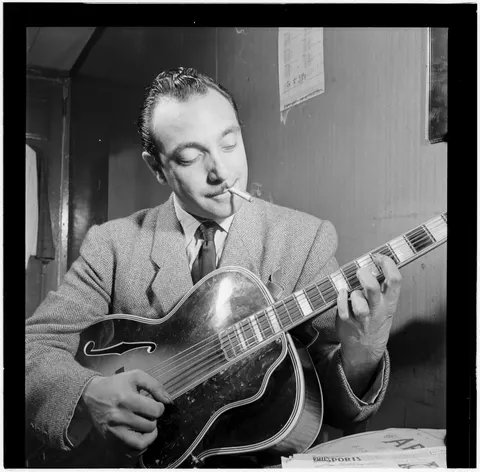
- Django Reinhardt - credited with Tony Proteau et son orchestre on three tracks of the Rex jam session in the Frémeaux Intégrale Django Reinhardt Saison 3 (FA 323); French Wikipedia places the concert a few weeks after his February 1953 date with Sidney Bechet.
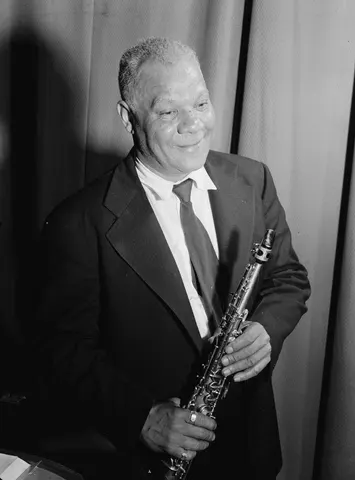
- Sidney Bechet - according to French Wikipedia, accompanied by Proteau's orchestra at the Cinéma Rex in February 1953. No record of that concert was found.
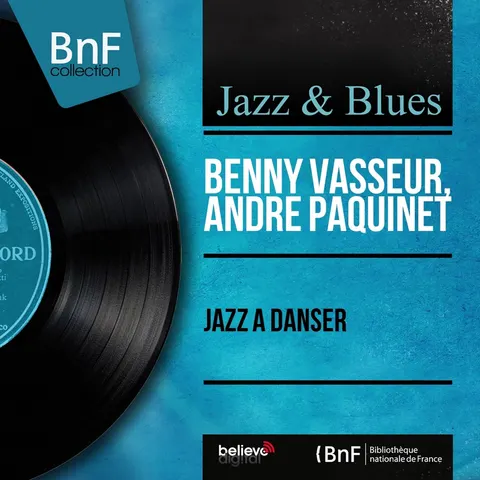
- André Paquinet - trombonist credited on Discogs on the 1946 Blue Star single Hey-Ba-Ba-Re-Bop / How High's the Moon.
- Martial Solal - pianist credited with Proteau on "Cascades en mi bémol", on Les Trésors du jazz 1953 (Le Chant du Monde, 2004).
- Kenny Clarke - according to French Wikipedia, played with Proteau's orchestra at the Armenonville pavilion in 1947.
- Hubert Fol, Jean-Louis Chautemps and Maurice Vander - named by French Wikipedia in the line-up of his group at the Club Saint-Germain from October 1954, alongside Bobby Jaspar, Jay Cameron, Benoît Quersin and Jack David.
- Bernard Hulin, Jean Fourmanoir and Jean Gruyer - trumpeter, baritone saxophonist and trombonist-arranger praised in Hot Revue in February 1946 in his Air Force orchestra; Hulin is also credited on trumpet on the 1946 Blue Star single.
- Louie Williams - singer on "Hey-Ba-Ba-Re-Bop" (Blue Star, 1946).
- Jean-Pierre Landreau, M. Lux, Pierre Delvincourt and Gaston Léonard - piano, guitar, bass and drums on the 1946 Blue Star single.
More Bebop Artists
See all 285 Bebop artists →More French Jazz Artists
See all 511 French artists →- Wikipedia (French): Tony Proteau
- Wikidata: Tony Proteau
- Discogs: Tony Proteau
- Discogs: Tony Proteau Et Son Orchestre
- MusicBrainz: Tony Proteau
- BnF data: Tony Proteau
- Apple Music: Tony Proteau et son Orchestre
- Tony Proteau on JazzProfiles.com
- Wikipedia (French): Tony Proteau
- Wikidata: Tony Proteau (Q16680418)
- BnF data: Tony Proteau
- Discogs: Tony Proteau, artist 1210055
- Discogs: Tony Proteau Et Son Orchestre, artist 1430370
- Discogs: Tony Proteau Et Son Orchestre and Louie Williams, Hey-Ba-Ba-Re-Bop / How High's The Moon, Blue Star B.S. 22
- Discogs: Don Byas and Tony Proteau Et Son Orchestre, At His Best, Vogue LD 145
- Discogs: Don Byas and Tony Proteau Et Son Orchestre, Limelight / Less Boss, Vogue V. 3343
- Discogs: Don Byas and Tony Proteau Et Son Orchestre, Sentimental / Si Tu Savais, Vogue V. 3356
- Discogs: Don Byas, 1952-1953, Classics 1414
- Discogs: Django Reinhardt, Intégrale Django Reinhardt Saison 3, Frémeaux & Associés FA 323
- Discogs: Les Trésors du jazz 1953, Le Chant du Monde
- Discogs: Le Jazz parisien... Libéré ! 1945-1947, Barclay 81.004/05
- Discogs: Swing Surprise-Partie (1945-1957), Frémeaux & Associés FA 5299
- Discogs: Progressive Jazz from France, King Records EP-311
- Apple Music: O Cangaceiro EP
- Apple Music: "Shoo Fly Pie"