 JAZZPROFILES lives in the music 3,006 Jazz Artists fully Profiled!
Gérard Siracusa
Last updated November 17, 2026
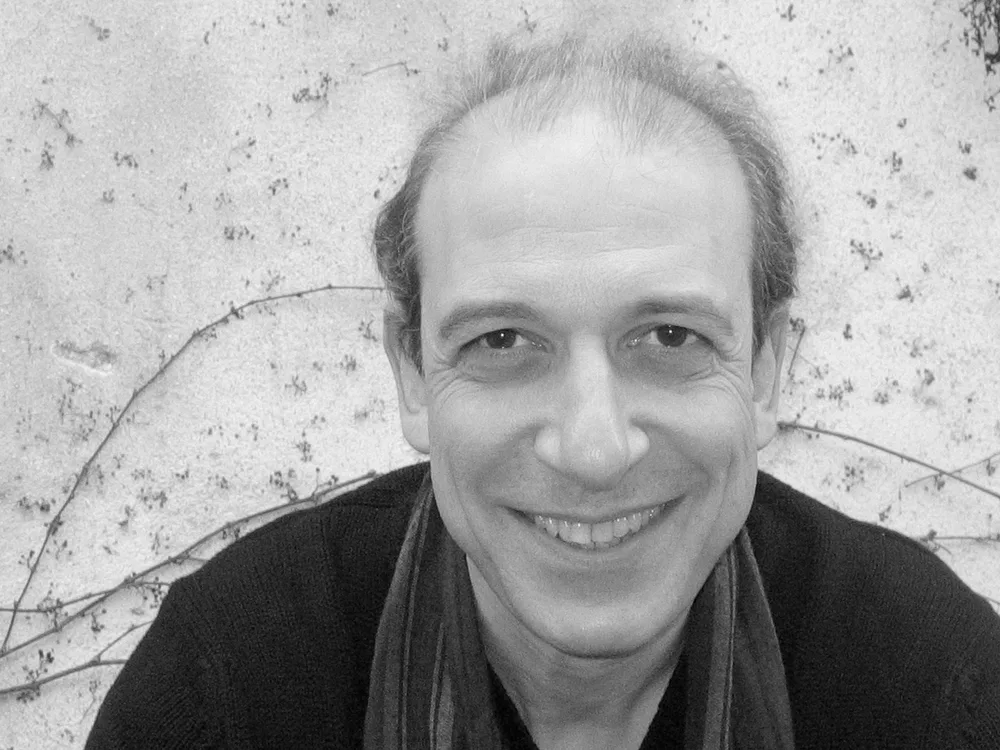
Gérard Siracusa, photographed on February 18, 2007. CC BY-SA 3.0. The photographer released the file under CC BY-SA 3.0; attribution and share-alike apply. — https://commons.wikimedia.org/wiki/File:G%C3%A9rard_Siracusa%E2%89%A01.jpg (the 1200 x 900 px file as uploaded to Wikimedia Commons on July 31, 2011, the image named in Wikidata as the picture of him)

Gérard Siracusa is a French percussionist, drummer and composer whose work sits between free jazz, improvised music and contemporary-music percussion. He was born in Tunis on October 6, 1957, and made his career in France. He studied music in Marseille, at Rueil-Malmaison and in San Diego, joined the Marseille improvisers' scene in the mid-1970s and settled in Paris in the mid-1980s. At the Rueil-Malmaison conservatoire he won a gold medal in percussion in the class of Gaston Sylvestre, and he holds the CA teaching certificate in percussion and has taught percussion and drums at the conservatoire of Argenteuil.
In Marseille he met the saxophonist and clarinettist André Jaume, his main partner for about ten years. With Jaume he formed the improvising group Nommo in 1975, soon joined by the guitarist Raymond Boni, and the trio's record Dans le caprice amer des sables, takes its title from a poem by René Char and was made in May 1976 at Studio Palm for Jef Gilson. Nommo led to the Groupe de Recherche et d'Improvisation Musicales (GRIM), the association of Marseille musicians founded in 1978 that included the guitarist Jean-Marc Montera. Alongside it he played in Jaume's street-theatre troupe Blaguebolle and worked with the Groupe de Musique Expérimentale de Marseille. In 1983 GRIM issued its own first records: Anna S. et autres histoires, a trio with Montera and the trombonist Yves Robert recorded at the Dunois theatre in Paris on April 11 and 12, and Jardins de paille, his solo percussion LP, recorded in Marseille on June 19 to 22. French Wikipedia describes it as the first solo percussion album by a French improvising composer.
In the early 1980s he belonged to the younger generation of French improvisers whom Louis Sclavis gathered for his 1981 Tour de France, a project that put musicians from different regions on one stage, with Michel Doneda, Philippe Deschepper, Alain Gibert, Yves Robert and Beñat Achiary. A dossier titled Le groupe des six in the magazine Jazz Ensuite in 1984 covered him with Sylvain Kassap, Doneda, Robert, Thierry Maucci and Montera, and the same circle met at the Rencontres du Havre in 1985. He recorded Incontru (Nato, 1984), Jaume's quartet with Bruno Chevillon and Montera joined by the Corsican polyphonic group Tavagna, and Terra (Nato, 1985) with Doneda, Achiary, Didier Masmalet and the violinist Philipp Wachsmann, and he is the percussionist on Jaume's records for the Swiss label hat ART, Musique pour 8: L'Oc and Musique pour 3 & 8: Errance. In 1986, now in Paris, he led a quartet with Sclavis, Robert and the American double bassist Mark Dresser. Their record Slumberland (Nato NATO 1039, released in December 1986) is called a pivotal disc in the history of the label in Nato's own biography of him. He was also a member of the group Alma Ata with Achiary, Chevillon, Doneda and Deschepper, and for a time belonged to Un Drame Musical Instantané, the collective of Jean-Jacques Birgé, Bernard Vitet and Francis Gorgé, as a close collaborator in its large orchestra from 1981 to 1986 and on its film concerts. Discogs credits him on its records Kind Lieder (1991) and Crasse-Tignasse (1993).
By 1989 he was leading quartets of his own. One paired him with Michael Riessler, Michel Godard and Renaud Garcia-Fons (François Corneloup sometimes replaced Riessler), and another, for which he wrote the extended piece Changes, brought together Kassap, the clarinettist Thierry Madiot and Claude Tchamitchian. He co-led a quintet with Claude Barthélemy, which was joined by the German string quartet Auryn for his composition m'Arco Polo, and he was invited as a soloist by the Orchestre National de Jazz under Barthélemy; the band's 1991 record Jack-Line (Label Bleu LBLC 6538) credits him with body percussion. The trio of Siracusa, Riessler and Godard was invited by the hurdy-gurdy player Valentin Clastrier to record Hérésie (Silex, recorded in November 1991, with Sclavis and the accordionist Jean-Louis Matinier), and together they founded Le Bûcher des Silences in 1991, which Matinier and then the percussionist Carlo Rizzo joined. The group's album Le Bûcher des Silences (Silex Y225040, 1994) is credited by Wikipedia with a Grand Prix of the Académie Charles Cros. He also appears on Riessler's Héloïse (Wergo, recorded at Donaueschingen on October 17, 1992) and Les Tentations d'Abélard (Wergo, recorded in Paris in March 1994), and from 1997 to 1999 he and Riessler worked as a duo on Les Champs magnétiques, a work after André Breton and Philippe Soupault made for Radio France and the Saarländischer Rundfunk. In free improvisation he played with Joëelle Léandre and took part in her Musique de tous les dangers; French Wikipedia lists encounters with Butch Morris, Joe McPhee, Barre Phillips and John Surman, and McPhee is on Jacques Diennet and Christian Tarting's Mante (hat ART, 1987), on which Siracusa also plays. In November 1993 he recorded at Studio Carfat with the singer and composer Nelly Pouget for Le Vivre, a record that also brought together the pianist Horace Tapscott, the bassist Kent Carter, the drummer Andrew Cyrille, Godard and Jean-François Jenny-Clark.
From 2003 he developed a solo concert for drum kit, and in 2008 he recorded Drums Immersion (Signature, Radio France SIG 11065) in Radio France's studios 104 and 103 between February 26 and March 9, a suite of seven pieces for drums, cymbals and bells with no re-recording. Reviewing it in Citizen Jazz in February 2009, Diane Gastellu wrote that he plays with sticks only, avoids heavy masses of sound and treats silence as part of the material. He has also improvised with the violist Garth Knox, the accordionist Pascal Contet, Beñat Achiary and Régis Huby, played in a drum trio with François Merville and Éric Grosleau and in duo with the composer François Rossé.
His second field is contemporary music. He has played Stravinsky, Messiaen, Boulez, Varèse, Berio and Zimmermann with Diego Masson's Musique Vivante (alongside Jean-François Jenny-Clark, Vinko Globokar and Claude Barthélemy), Ars Nova, Serenata de Genève, Entretemps, Les Musiciens amoureux, Laborintus and Les Jeunes Solistes, and he is a member of the percussion quartet Touchers, which plays John Cage and Jean-Pierre Drouet. As a soloist he took part in creations by Michel Redolfi, Luc Ferrari, Luigi Nono, Frederic Rzewski, Georges Aperghis and others, premiered Nicolas Vérin's Métalmorphose for percussion and fixed sounds in the acousmonium of the Maison de la Radio, and toured the solo programme Solibrius from 1986 to 2002. His piece Discontinuo, for a large percussion ensemble, dates from 1997. He has also worked in music theatre, dance, radio and poetry, among others with the theatre directors Claude Régy and Jorge Lavelli, the writers Enzo Cormann and Zéno Bianu and, in dance, Santiago Sempere; Constellation des voix (2008) was made with Bianu and the actor Denis Lavant. The book-and-disc Beatiho (2012), with Guylaine Renaud, Beñat Achiary and Dominique Regef, sets poems by Teresa of Ávila and John of the Cross, and Wikipedia reports a Coup de cœur of the Académie Charles Cros for it in 2013.
Siracusa moves between the jazz and the contemporary-music stage on equal terms, as Nato's biography puts it, and his own records are the clearest picture of his language: unaccompanied drums and percussion on Jardins de paille and Drums Immersion, small improvising groups with reeds, trombone, guitar and bass on the Nato and GRIM records, and composed-and-improvised projects for large ensembles. The Citizen Jazz review of Drums Immersion describes a spare, exact style built on silence, nuance and clean attacks, with a first piece, "Rouge", that the reviewer hears as a link to two Max Roach solos played in five beats, and a closing "Hommage" that returns to Roach. Much of his work as a composer is for the stage, dance and radio, and his best-known ensemble projects (Nommo, Le Bûcher des Silences, the quartets with Louis Sclavis, Riessler and Michel Godard) put him in the French improvised-music movement that grew out of Marseille, GRIM and the Nato label in the late 1970s and 1980s. His record is mainly one of jazz and improvised music, with a second career in contemporary-music percussion alongside it. Awards listed on Wikipedia are a Grand Prix of the Académie Charles Cros for Le Bûcher des Silences and a Coup de cœur of the same academy in 2013 for Beatiho.
- Slumberland (1986, Nato NATO 1039) - his quartet with Louis Sclavis, Yves Robert and Mark Dresser, recorded at Nato's studio in 1986 and described by the label as a turning point in its history.
- Jardins de paille: Percussion solo (1983, GRIM Musiques 2) - his first solo record, nine pieces for drums and percussion recorded in Marseille in June 1983.
- Drums Immersion (2008, Signature SIG 11065) - seven solo drum pieces made at Radio France, 50 minutes with no overdubbing. Apple Music - Drums Immersion Listen
- Valentin Clastrier and others, Le Bûcher des Silences (1994, Silex Y225040) - the album of the group he founded with Riessler and Michel Godard, with Clastrier, Matinier and Rizzo; a Charles Cros Grand Prix is listed for it on Wikipedia.
- Valentin Clastrier, Hérésie (1992, Silex Y225402) - Clastrier's hurdy-gurdy record with Sclavis, Riessler, Godard, Matinier and Siracusa on percussion and drums, recorded in November 1991.
- Nommo, Dans le caprice amer des sables (1976, Palm PALM 29) - the trio of André Jaume, Raymond Boni and Siracusa and its record of two side-long improvisations, made in May 1976.
- Jean-Marc Montera, Yves Robert and Gérard Siracusa, Anna S. et autres histoires (1983, GRIM Musiques 1) - a trio of guitar, trombone and percussion recorded in Paris on April 11 and 12, 1983.
- Michael Riessler, Héloïse (1993, Wergo WER 8008-2) - a Donaueschingen concert recording of Riessler's group with Godard, Garcia-Fons, Matinier, Clastrier, Rizzo and Siracusa.
Gérard Siracusa: Full Discography
French percussionist, drummer and composer of free jazz, improvised music and contemporary music. Born October 6, 1957 in Tunis. Discogs artist 402974.
Name variations on record: G. Siracusa, Gerard Siracusa, Siracusa.
Groups on Discogs: Orchestre National de Jazz, Série B, André Jaume Quartet, Thierry Maucci Quartet, Tentet Franco Italien. His own records are billed under his name, under Nommo (Siracusa, Jaume, Boni), under a trio with Jean-Marc Montera and Yves Robert, and under Le Bûcher des Silences, a group credited on Discogs to Valentin Clastrier and five others.
Years are the years Discogs gives for the release; where Wikipedia dates a record differently, the Discogs year is used and the recording dates are given in the notes. Cells that read "Not confirmed" could not be checked against a release page.
Leader and co-leader
| Album | Year | Label | Personnel | Notes | Listen | Buy |
|---|---|---|---|---|---|---|
| Nommo - Dans le caprice amer des sables (Siracusa, Jaume, Boni) | 1976 | Palm, PALM 29 | Gérard Siracusa (percussion), André Jaume (reeds), Raymond Boni (guitar) | Recorded in May 1976 at Studio Palm; recorded by Jef Gilson. Two pieces of about 24 minutes, "Dans le caprice amer des sables" and "Avant-propos de l'écrevisse à reculons, à reculons"; the title piece is from a poem by René Char. All three are credited as composers. | — | — |
| Anna S. et autres histoires (Jean-Marc Montera, Yves Robert, Gérard Siracusa) | 1983 | GRIM Musiques, 1 | Jean-Marc Montera (guitar), Yves Robert (trombone), Gérard Siracusa (percussion) | Recorded at the Dunois, Paris, on April 11 and 12, 1983. Ten pieces, including "Anna S.", "Tokonoma" and "Le réve d'Antiochus", all credited as composed by the three players. | — | — |
| Jardins de paille - Percussion solo (Gérard Siracusa) | 1983 | GRIM Musiques, 2 | Gérard Siracusa (drums, percussion) | Recorded in Marseille on June 19 to 22, 1983 at GRIM, except "Arrivée d'air chaud", recorded on March 23 at the Groupe de Musique Expérimentale de Marseille. Nine pieces, including "Jardins de paille", "Don't Let the Ghost Drum Get You Down" and "Collines intimes". Cover by Serge Plagnol. | — | — |
| Slumberland (Gérard Siracusa) | 1986 | Nato, NATO 1039 | Gérard Siracusa (percussion), Louis Sclavis (clarinet, bass clarinet, soprano and baritone saxophones), Yves Robert (trombone), Mark Dresser (double bass) | Recorded at Nato's studio in 1986; Discogs gives a release date of December 18, 1986. Six pieces by Siracusa, including "Drôle d'endroit pour régler sa montre", "Slumberland", "Misty Misty" and "Yellow Monk". Recorded by Daniel Deshays. | — | — |
| Jamais tranquille ! (Rude journée pour les mouflets) (Pied de Poule avec Gérard Siracusa) | 1993 | Unidisc, U 310053 (Zéro de conduite) | Michèle Buirette (accordion, voice), Geneviève Cabannes (double bass, voice), Youenn Le Berre (flute, alto saxophone), Gérard Siracusa (percussion and voice) | A record for children, 19 pieces. Siracusa wrote the music for six of them and the lyrics for one, "Le dîner percutant"; Dominique Fonfrède wrote most of the words. | — | — |
| Le Bûcher des Silences (Valentin Clastrier, Michel Godard, Jean-Louis Matinier, Michael Riessler, Carlo Rizzo, Gérard Siracusa) | 1994 | Silex, Y225040 | Valentin Clastrier (hurdy-gurdy, voice, percussion), Michael Riessler (clarinets, sopranino saxophone), Michel Godard (tuba, serpent), Jean-Louis Matinier (accordion), Carlo Rizzo (tambourine), Gérard Siracusa (percussion, drums) | Eleven pieces, including "Et la roue de la vie", "New Délit" and "Nemesis". Wikipedia lists a Grand Prix of the Académie Charles Cros for the album. | — | — |
| Drums Immersion (Gérard Siracusa) | 2008 | Signature (Radio France), SIG 11065 | Gérard Siracusa (drums, cymbals, hi-hat, bells) | Recorded and mixed in studios 104 and 103 of Radio France between February 26 and March 9, 2008, with no re-recording; 50 minutes. Seven pieces: "Rouge", "Flagrance", "Monologue", "Immersion", "Émergence", "Illusion" and "Hommage". Liner notes by Christian Tarting, cover photograph by Marie-Françoise Plissart. Reviewed in Citizen Jazz on February 9, 2009. | Apple Music | — |
| Beatiho (Guylaine Renaud, Beñat Achiary, Dominique Regef, Gérard Siracusa) | 2012 | Association d'idées / Muséon Arlaten / Actes Sud (book and disc) | Not confirmed | Settings of poems by Teresa of Ávila and John of the Cross. Year and label as given on Wikipedia; no entry on Discogs. | — | — |
Sideman, guest and ensemble appearances
Chronological. Where Discogs credits an instrument or role it is named; where the page for a release was not read in full, the cell says the instrument is not itemized.
| Year | Release | Actual leader | Label | His credit and details | Listen | Buy |
|---|---|---|---|---|---|---|
| 1978 | Blaguebolle | Blaguebolle (street-theatre troupe with André Jaume) | L'Oiseau Musicien, 112209 | Not confirmed. Year and label as given on Wikipedia; the troupe is named in his biography on the Nato site. | — | — |
| 1982 | Musique pour 8: L'Oc | André Jaume | hat ART, 1989/90 | Percussion. Recorded on October 1 and 2, 1981 at the Artist House Boswil in Switzerland, with Yves Robert (trombone), Jean-François Canape (trumpet), Jacques Veillé (bass trombone), François Méchali (bass) and two cellists. | — | — |
| 1982 | À travail égal, salaire égal | Un Drame Musical Instantané | GRRR, 1005 | Listed among the performers on Wikipedia; instrument not itemized. | — | — |
| 1983 | Patiences | André Jaume | GRIM Musiques, 3 | Duos with Jaume, according to Wikipedia; instrument not itemized. | — | — |
| 1983 | Les bons contes font les bons amis | Un Drame Musical Instantané | GRRR, 1006 | Listed among the performers on Wikipedia; instrument not itemized. | — | — |
| 1984 | L'Homme à la caméra | Un Drame Musical Instantané | GRRR, 1007 | Listed among the performers on Wikipedia; instrument not itemized. Reissued in 2020 with La Glace à trois faces (Klanggalerie). | — | — |
| 1984 | Musique pour 3 & 8: Errance | André Jaume | hat ART, 2003 (Hat Hut) | Percussion. Part one recorded at IRCAM, Paris, on April 16, 1983 and part two at the Abbaye de l'Epau, Le Mans, on December 3, 1983; with Bruno Chevillon, François Méchali, Jean-Charles Capon, Norbert Bordetti, Blaise Catala and Bruno Girard. | — | — |
| 1984 | Incontru | André Jaume Quartet and the Corsican group Tavagna | Nato, 194 | Percussion, in the quartet with Jaume (reeds, flute), Jean-Marc Montera (guitar) and Bruno Chevillon (double bass). Recorded on April 13 and 14, 1984 at the church of Talasani, Haute-Corse; Discogs gives a release date of September 20, 1984. | — | — |
| 1985 | Terra | Michel Doneda | Nato, 532 | Percussion, with Doneda (soprano saxophone), Beñat Achiary (voice), Didier Masmalet (bass clarinet, synthesizer) and Philipp Wachsmann (violin, electronics). Recorded on June 4 to 6, 1985 at Nato's studio in Chantenay-Villedieu. | — | — |
| 1985 | Rencontres au Havre | Jean-Marc Montera, Yves Robert, Gérard Siracusa and Michel Doneda | Phonolithe, PP 0185 | Not itemized. Discogs files it as a Various Artists release; Wikipedia lists the four players. | — | — |
| 1986 | Le Bal de la contemporaine | Transes Européennes | Transes Européennes, TE 1001 | Listed among the performers on Wikipedia, with Sylvain Kassap and François Méchali; instrument not itemized. | — | — |
| 1986 | Elogio dell'ombra | Thierry Maucci Quartet | GRIM Musiques, 4 | Listed on Wikipedia with Thierry Maucci, Jean-Marc Montera and Bruno Chevillon; instrument not itemized. | — | — |
| 1987 | Aubracs | Jacques Diennet | GMEM, AL03 | A duo record with Diennet, according to Wikipedia; instrument not itemized. | — | — |
| 1987 | Mante | Jacques Diennet and Christian Tarting | Hat Art, 2035 | Listed with Joe McPhee and Jean-Marc Montera on Wikipedia; instrument not itemized. | — | — |
| 1990 | Due fois cinq / Full Metal Drums | Toni Rusconi and the Tentet Franco-Italien | VM Boxes, VMB CD 112 | Listed on Wikipedia with André Jaume, Jean-Marc Montera, Raymond Boni and Yves Robert; instrument not itemized. | — | — |
| 1991 | Urgent Meeting | Un Drame Musical Instantané | No Man's Land / GRRR, nml / GRRR 2018 CD | Listed on Wikipedia among the players; Discogs files it under the group's name. Instrument not itemized. | — | — |
| 1991 | Kind Lieder | Un Drame Musical Instantané | GRRR, GRRR 2017 | Percussion and voice; credited as a co-composer with Jean-Jacques Birgé, Bernard Vitet and Francis Gorgé, and for sequencing on one piece. Created at the MANCA 91 festival organized by the CIRM in Nice. | — | — |
| 1991 | Café noir | Pied de Poule | GRRR, 2019 | Listed on Wikipedia with Michèle Buirette, Geneviève Cabannes, Dominique Fonfrède, Youenn Le Berre and Carlos Zingaro; instrument not itemized. | — | — |
| 1991 | Jack-Line | Claude Barthélemy and the Orchestre National de Jazz | Label Bleu, LBLC 6538 | Body percussion, among Jean-Louis Matinier, Michael Riessler, Renaud Garcia-Fons, Michel Godard and others. Recorded at Studios Charles Cros and Davout. | — | — |
| 1991 | What a Time | Michael Riessler | Label Bleu, LBLC 6537 | Listed on Wikipedia with Riessler, Claude Barthélemy and Vinko Globokar; instrument not itemized. | — | — |
| 1992 | Hérésie | Valentin Clastrier | Silex, Y225402 | Percussion and drums, with Clastrier (hurdy-gurdy), Louis Sclavis (clarinets, soprano saxophone), Michael Riessler (reeds), Michel Godard (tuba, serpent) and Jean-Louis Matinier (accordion). Recorded in November 1991. | — | — |
| 1993 | Héloïse | Michael Riessler | Wergo, WER 8008-2 | Percussion, with Carlo Rizzo (percussion), Michel Godard, Renaud Garcia-Fons, Jean-Louis Matinier, Valentin Clastrier, Rabih Abou-Khalil (oud) and others. Recorded by Südwestfunk at Donaueschingen on October 17, 1992. | — | — |
| 1993 | Crasse-Tignasse | Un Drame Musical Instantané | Unidisc, U 310043 (Zéro de conduite) | Credited as a co-composer with Jean-Jacques Birgé and Bernard Vitet; a children's record based on Heinrich Hoffmann's Struwwelpeter, in a French text by Cavanna. | — | — |
| 1994 | Le Vivre | Nelly Pouget | Minuit Regards, LH 27 292 | Performer (instrument not specified), with Horace Tapscott, Kent Carter, Andrew Cyrille, Michel Godard and Jean-François Jenny-Clark. Recorded at Studio Carfat on November 18 and 19, 1993; Wikipedia dates it 1993. | — | — |
| 1994 | Sarajevo (Suite) | Various artists | L'Empreinte Digitale, ED 13039 | Wikipedia lists him on Lindsay Cooper's "Nightmare", with Phil Minton and Thomas Bloch; instrument not itemized. | — | — |
| 1995 | Les Tentations d'Abélard | Michael Riessler | Wergo, WER 8009-2 | Percussion, with Carlo Rizzo, Michel Godard, Renaud Garcia-Fons, Jean-Louis Matinier, Valentin Clastrier and others. Recorded at Studio Acousti, Paris, on March 3 to 6, 1994. | — | — |
| 1997 | Une soirée Vian | Denys Bouliane (Série B) | col legno, 31888 | Listed on Wikipedia with Michael Riessler; instrument not itemized. | — | — |
| 1997 | Vielle à roue au pays cathare | Valentin Clastrier | Silex | Credited on Discogs; instrument not itemized. | — | — |
| 1998 | A View from the Bridge (Composed Works) | Lindsay Cooper | Impetus Records, IMP CD 29831 | Wikipedia lists him on "Nightmare"; instrument not itemized. | — | — |
| 1998 | Stations avant l'oubli | Hélène and Jacques Labarrière, Dominique Labarrière | Quoi de neuf docteur, DOC 046 | Listed on Wikipedia with Benoît Delbecq, Hélène Labarrière and Bruno Chevillon; instrument not itemized. Wikipedia dates it 1999. | — | — |
| 1999 | La Jardinière de légumes | Françoise Gerbaulet and Gérard Siracusa | Compacts Radio France / France Culture, 211802-HM CD 57x2 | Children's record. Year and label as given on Wikipedia; no entry on Discogs. | — | — |
| 2004 | Ondes Martenot - Music for Ondes Martenot | Thomas Bloch | Naxos, 8.555779 | Wikipedia lists him on Lindsay Cooper's "Nightmare" as in the 1994 Sarajevo suite. | — | — |
| 2005 | Quatre pièces pour solistes et sons fixés | Nicolas Vérin | INA-GRM, 475122 | Soloist on "Métalmorphose" for percussion and fixed sounds, a piece dedicated to him. | — | — |
| 2009 | Miserere Hominibus | Klaus Huber (Les Jeunes Solistes) | Soupir éditions, NT098 | Wikipedia lists him among the ensemble's players. | — | — |
| 2020 | L'Homme à la caméra / La Glace à trois faces | Un Drame Musical Instantané | Klanggalerie | Reissue of the 1984 record; credited on Discogs. | — | — |
- André Jaume - saxophonist and clarinettist, his partner of about ten years from Marseille: founder with him of Nommo and member of his quartet, and the leader of the hat ART records Musique pour 8: L'Oc (1982) and Musique pour 3 & 8: Errance (1984) and of Incontru (Nato, 1984), on all of which Siracusa plays percussion.
- Yves Robert - trombonist, a member of the Slumberland quartet (1986) and of the trio with Jean-Marc Montera on Anna S. et autres histoires (1983).
- Louis Sclavis - reed player who gathered him into his 1981 Tour de France and joined him on Slumberland and on Clastrier's Hérésie.
- Michel Godard - tubist and serpent player, in his quartet with Riessler and Garcia-Fons, on Le Bûcher des Silences, Hérésie and Riessler's Wergo records, and on Nelly Pouget's Le Vivre.
- Renaud Garcia-Fons - double bassist in his quartet with Riessler and Godard and on Riessler's Héloïse and Les Tentations d'Abélard.
- Claude Barthélemy - guitarist and composer, co-leader of a quintet with Siracusa and leader of the Orchestre National de Jazz on whose Jack-Line (1991) Siracusa plays body percussion.
- Sylvain Kassap - clarinettist, in the quartet Molto Mobile with Vitet and in a later quartet with Madiot and Tchamitchian.
- Claude Tchamitchian - double bassist in the quartet for which he wrote Changes.
- Bruno Chevillon - double bassist in Jaume's quartet, in Incontru and in the group Alma Ata.
- Bernard Vitet - trumpeter and member of Un Drame Musical Instantané, in the Molto Mobile quartet and on Kind Lieder and Crasse-Tignasse.
- Joëelle Léandre - double bassist with whom he improvised and in whose Musique de tous les dangers he took part.
- Jean-François Jenny-Clark - double bassist, with him on Nelly Pouget's Le Vivre (1994) and in Diego Masson's Musique Vivante.
- Jef Gilson - producer and bandleader for whom Nommo recorded in 1976 at Studio Palm.
- Raymond Boni - guitarist of the Nommo trio with Jaume.
- Jean-Marc Montera - guitarist, with him in GRIM, in the trio with Yves Robert and in Jaume's quartet.
- Michel Doneda - soprano saxophonist, with him on Terra (1985), in Alma Ata and on Louis Sclavis's Tour de France.
- Beñat Achiary - singer, on Terra, in Alma Ata and in the Beatiho book-and-disc (2012).
- Michael Riessler - German clarinettist and composer, his duo partner from 1997 to 1999 and the leader of Héloïse and Les Tentations d'Abélard.
- Valentin Clastrier - hurdy-gurdy player, leader of Hérésie and co-founder of Le Bûcher des Silences.
- Jean-Jacques Birgé and Francis Gorgé - fellow members of Un Drame Musical Instantané.
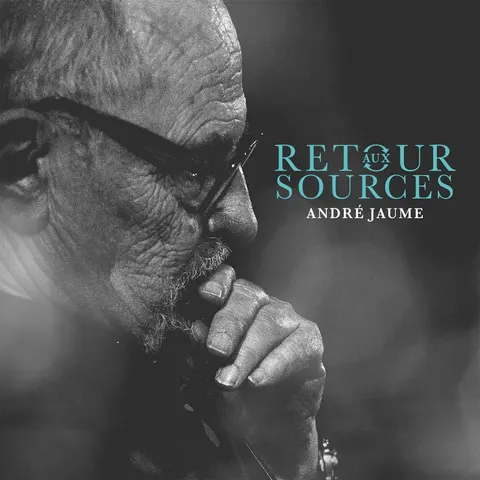
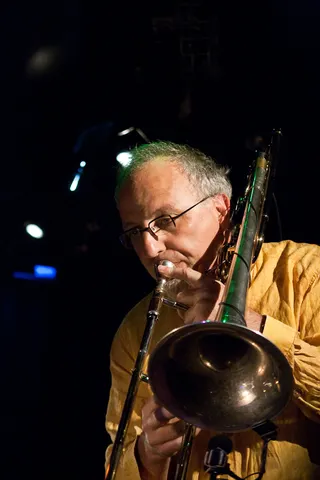
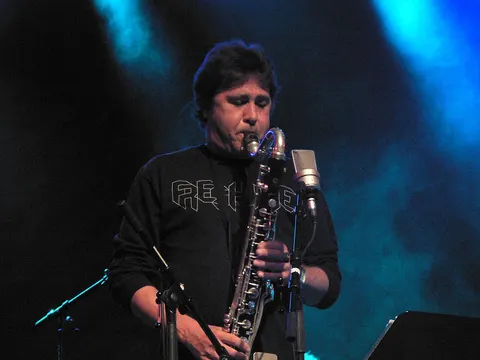
More European Free Jazz Artists
See all 136 European Free Jazz artists →More French Jazz Artists
See all 511 French artists →- Wikipedia (French): Gérard Siracusa
- Discogs: Gérard Siracusa
- MusicBrainz: Gérard Siracusa
- Apple Music: Gérard Siracusa
- Nato: Gérard Siracusa, biography by Sylvie Levesque
- Citizen Jazz: review of Drums Immersion
- BnF data: Gérard Siracusa
- Gérard Siracusa on JazzProfiles.com
- Wikipedia (French): Gérard Siracusa
- Wikipedia (French): Discographie de Gérard Siracusa
- Wikidata: Gérard Siracusa (Q1383733)
- Discogs: Gérard Siracusa, artist 402974
- Discogs: Nommo, Dans le caprice amer des sables, Palm PALM 29
- Discogs: Montera, Robert, Siracusa, Anna S. et autres histoires, GRIM Musiques 1
- Discogs: Gérard Siracusa, Jardins de paille, GRIM Musiques 2
- Discogs: Gérard Siracusa, Slumberland, Nato NATO 1039
- Discogs: Valentin Clastrier and others, Le Bûcher des Silences, Silex Y225040
- Discogs: Valentin Clastrier, Hérésie, Silex Y225402
- Discogs: Gérard Siracusa, Drums Immersion, Signature SIG 11065
- Discogs: Nelly Pouget and others, Le Vivre, Minuit Regards LH 27 292
- Discogs: Michael Riessler, Héloïse, Wergo WER 8008-2
- Nato: Gérard Siracusa, biography by Sylvie Levesque
- Citizen Jazz: Diane Gastellu, Drums Immersion (February 9, 2009)
- MusicBrainz: Gérard Siracusa
- BnF data: Gérard Siracusa
- Wikimedia Commons: Gérard Siracusaé1.jpg, by Sylvie Levesque (CC BY-SA 3.0)