 JAZZPROFILES lives in the music 1,002 Jazz Artists fully Profiled!
 Cornell Dupree
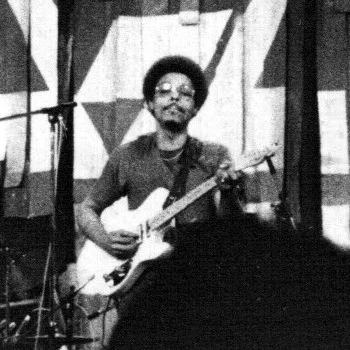
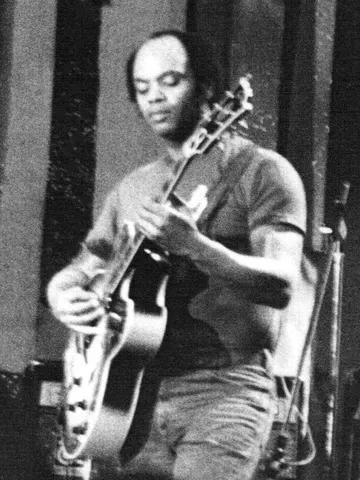
Cornell Dupree performing in Montreux, Switzerland, July 2, 1976 CC BY-SA 3.0 — Wikimedia Commons, own-work photograph by Lioneldecoster, File:Cornell Dupree.jpg, https://commons.wikimedia.org/wiki/File:Cornell_Dupree.jpg

Cornell Luther Dupree was one of the most recorded guitarists in American popular music, and one of the least recognized. The industry nickname was Mr. 2500, after the number of sessions he reputedly played. The surviving credit trail runs to more than 450 distinct records by 232 different artists, and that is only what got written down.
He was born in Fort Worth, Texas on December 19, 1942, and graduated from I.M. Terrell High School there. He grew up around a saxophonist from the same city, King Curtis, who reached New York first and then sent for the guitarist he remembered from home. Dupree took the first airplane flight of his life and arrived in Manhattan on October 1, 1962. The following night he was onstage with Curtis's band, and he stayed with that group through 1966, backing the soul singers who passed through it.
His breakthrough as a studio player came with Brook Benton's "Rainy Night in Georgia," recorded for Brook Benton Today in 1969 and produced by Arif Mardin. The record is built mostly out of space, and the guitar part exists to fill that space without ever crowding the singer. That instinct, for playing exactly enough, became the reason producers kept calling.
From 1967 to 1976 he was a member of Aretha Franklin's touring band. He is on Aretha Live at Fillmore West (1971), Amazing Grace (1972), Young, Gifted and Black (1972) and "Rock Steady," and on King Curtis's own Live at Fillmore West from the same 1971 run. Alongside that he worked constantly across the New York studios: Donny Hathaway's Live (1972), Paul Simon's There Goes Rhymin' Simon (1973), Miles Davis's Get Up with It (1974), Rahsaan Roland Kirk's Blacknuss (1972), Archie Shepp's Attica Blues (1972), Barbra Streisand's Guilty (1980) and Mariah Carey's Emotions (1991).
Atlantic gave him a record of his own in 1974. Teasin' (Atlantic SD 7311) is the clearest single statement of where he sat musically, and the personnel list makes the case on its own: Richard Tee on keyboards, Chuck Rainey on bass, Bernard Purdie on drums, Ralph MacDonald on percussion, and David "Fathead" Newman and Joe Farrell splitting the tenor solos. Rainey arranged the horns for the first three tracks and Tee took the remaining five. It is a room full of improvisers making a record aimed at radio, which is the working definition of crossover jazz.
Two more leader albums followed on the Versatile label, both arranged and conducted by Mario E. Sprouse: Cornell Dupree's Saturday Night Fever (1977), an all-instrumental reading of the Bee Gees songs from the Saturday Night Fever soundtrack, and Shadow Dancing (1978), which brought in Hank Crawford on alto saxophone as a special guest, with Will Lee on bass and Chris Parker on drums.
The band that made his name visible was Stuff. It grew out of a standing gig at Mikell's in Manhattan and became one of the odder propositions of the decade: two guitars, two drummers, and no singer. Dupree and Eric Gale shared the guitar chairs, Richard Tee played keyboards, Gordon Edwards played bass, and Steve Gadd and Chris Parker traded the drum seat. Five albums came out on Warner Bros. between 1976 and 1980. The self-titled 1976 debut, produced by Herb Lovelle and Tommy LiPuma, went platinum in Japan, and More Stuff (1977) drew a Grammy nomination for the band.
Stuff played the Casino at the Montreux Jazz Festival on July 2, 1976. That performance is the only known concert footage of the group playing on its own, and it was finally issued on DVD in 2008, thirty-two years later. The photograph on this profile was taken by Lionel decoster at Montreux on the same day.
Stuff broke up in 1982. New York session work contracted around the same time, so Dupree moved to Los Angeles, where he recorded the theme music for The Cosby Show, and returned to New York in 1985 when the work did.
His own recording career continued on a smaller scale and on better terms. Coast to Coast (Antilles, 1988), with Richard Tee on piano and Chris Parker on drums, earned the single Grammy nomination of his career, at the 31st Annual Grammy Awards in 1989, for Best R&B Instrumental Performance. He co-led Return to the Wide Open Spaces (1990) with David "Fathead" Newman and Ellis Marsalis, recorded live at the Caravan of Dreams in his home town of Fort Worth. Can't Get Through (1991) and Child's Play (1993) were both co-produced with his wife, Erma Dupree, the latter featuring Paul Shaffer on piano and Randy Brecker on flugelhorn. Bop 'N' Blues (1995) is his most straight-ahead jazz date, with Herbie Mann contributing rhythm arrangements and liner notes.
He appeared on Late Night with David Letterman, wrote an instructional book called Rhythm and Blues Guitar, and in 2002 Yamaha built him a signature model based on the Fender Telecaster he had been modifying since 1971.
In 2003, at 60, he joined Roy Hargrove's band The RH Factor for Hard Groove (Verve, released May 20, 2003), cut at Electric Lady Studios in New York alongside D'Angelo, Erykah Badu, Meshell Ndegeocello, Common and Q-Tip. Thirty years earlier he had played on Lightnin' Rod's Hustlers Convention (1973), a record regularly named among the direct ancestors of rap. He is on both ends of that lineage.
Cornell Dupree passed away at home in Fort Worth on May 8, 2011, aged 68, from emphysema, while awaiting a lung transplant. His wife Erma and his daughter Celestine were with him. Roughly eight weeks earlier he had recorded I'm Alright at Public Hi-Fi in Austin, Texas, playing through the sessions on oxygen, with George Porter Jr. of the Meters on bass. It was released the year he passed away.
Dupree played rhythm and lead simultaneously, which is the single technical fact that explains his career. His vocabulary was built on parallel-fourth double stops and parallel-sixth fills drawn from blues rhythm playing, delivered with a hybrid picking technique that alternated downstrokes with upstroke finger brushes. One producer described the effect as one man taking the place of three.
The tone was clean, vocal in its phrasing, and deliberately unhurried. He came out of Texas blues guitar and spent a decade absorbing New York studio discipline, and both are audible: "Okie Dokie Stomp" on Teasin' is a Texas blues instrumental played by someone with a session player's sense of restraint.
His main instrument from 1971 onward was a heavily modified Fender Telecaster, its unused screw holes filled with large metal bolts, fitted with a Gretsch-style DeArmond pickup in the middle position and an extra control plate. He ran it through a Standel thinline into a blackface Fender Twin Reverb. Earlier he played a Guild Starfire III with King Curtis, and before that a Gibson Les Paul Custom that was lost in a fire.
He was not a soloist by temperament. His skill was making the person in front of the microphone sound better, which is why his name is on thousands of records and on very few marquees.
- Brook Benton Today (1969, Cotillion) - The album containing "Rainy Night in Georgia," the session that established him. Produced by Arif Mardin. Spotify - Brook Benton Today Listen
- Teasin' (1974, Atlantic SD 7311) - His leader debut and the best single argument for his place in this genre, made with Richard Tee, Chuck Rainey, Bernard Purdie, Ralph MacDonald and David "Fathead" Newman. Spotify - Teasin' Listen · Buy
- More Stuff (1977, Warner Bros.) - The Grammy-nominated second album by the two-guitar band he shared with Eric Gale and Richard Tee. Spotify - More Stuff Listen · Buy
- Shadow Dancing (1978, Versatile MSG 6004) - The second of his two Versatile albums, with Hank Crawford guesting on alto. Spotify - Shadow Dancing Listen · Buy
- Can't Get Through (1991, Amazing Records) - A later leader date, co-produced with his wife Erma Dupree. Spotify - Can't Get Through Listen · Buy
- I'm Alright (2011, Dialtone) - The last record, cut in Austin roughly eight weeks before he passed away, with George Porter Jr. on bass. Spotify - I'm Alright Listen · Buy
Cornell Dupree: Full Discography
Cornell Luther Dupree (December 19, 1942, Fort Worth, Texas, to May 8, 2011, Fort Worth, Texas).
Leader Albums
| Album | Year | Label | Personnel | Notes | Listen | Buy |
|---|---|---|---|---|---|---|
| Teasin' | 1974 | Atlantic SD 7311 | Cornell Dupree (guitar, sitar), Richard Tee (keyboards), Chuck Rainey (bass), Bernard Purdie (drums), Ralph MacDonald (percussion), David "Fathead" Newman, Joe Farrell, Seldon Powell (tenor sax), Trevor Koehler (baritone sax), Garnett Brown (trombone), Ernie Royal (trumpet), George Stubbs, Paul Griffin (piano) | Leader debut. Produced by Mark Meyerson and Michael Cuscuna. Horns arranged by Chuck Rainey on tracks 1 to 3 and Richard Tee on 4 to 8. Mastered by George Piros. Eight tracks including "Okie Dokie Stomp," "Jamaican Lady" and "Plain Ol' Blues" | Spotify | Amazon |
| Cornell Dupree's Saturday Night Fever | 1977 | Versatile MSG 6001 | Cornell Dupree (electric guitar), Buster Williams (bass), Doug Wilson (drums), Mario E. Sprouse (keyboards, arranger, conductor), Alex Foster (sax), Kiane Zawadi (trombone), Earl Gardner (trumpet), Elliot Rosoff, Irving Spice (violin), Sally Rosoff (cello) | An instrumental reading of the Bee Gees material from the Saturday Night Fever soundtrack: every song written by Barry, Robin and Maurice Gibb. Produced by Vic Chirumbolo, arranged and conducted by Mario E. Sprouse | not found | Amazon |
| Shadow Dancing | 1978 | Versatile MSG 6004 | Cornell Dupree (electric guitar), Hank Crawford (alto sax, credited as special guest), Will Lee (electric bass), Chris Parker (drums), James Alan Smith (Rhodes), Karen Joseph (flute), Charles McCracken, Mark Shuman, Seymour Barab (cello) | Arranged and conducted by Mario E. Sprouse. Mastered by Vlado Meller. Seven tracks | Spotify | Amazon |
| Coast to Coast | 1988 | Antilles New Directions / Island AN 8733 | Cornell Dupree (guitar), Richard Tee (piano, Fender Rhodes), Frank Canino (bass), Chris Parker (drums), Lou Marini (sax) | The only Grammy-nominated record of his career: 1989, 31st Annual Grammy Awards, Best R&B Instrumental Performance. Did not win. Produced by Jean-Pierre Weiller-Letourneur, mastered by Greg Calbi | not found | Amazon |
| Can't Get Through | 1991 | Amazing Records AMCD 1025 | Cornell Dupree (guitar), Mitch Margold (piano), Frank Canino (bass), Eric Parker (drums), Steve Greenfield (alto sax), Scott Kreitzer, Barry Danielian, Randy Andos (horns) | Produced by Cornell Dupree and Erma Dupree, his wife. Liner notes by Michael Point | Spotify | Amazon |
| Child's Play | 1993 | Amazing Records AMZ-1034.2 | Cornell Dupree (guitar), Paul Shaffer (piano), Mitch Margold (piano, organ), Will Lee (bass), Eric Parker (drums, percussion), Randy Brecker (flugelhorn), Steve Greenfield (alto sax), Scott Kreitzer (tenor sax), Barry Danielian (trumpet), Randy Andos (trombone) | Produced by Cornell Dupree and Erma Dupree. Horn arrangements by Richard Tee. Mastered by Jerry Tubb | not found | Amazon |
| Bop 'N' Blues | 1995 | Kokopelli Records KOKO 1302 | Cornell Dupree (guitar), Chuck Rainey (bass), Ricky Sebastian (drums), Ronnie Cuber (baritone sax) | Horn arrangements by Leon Pendarvis, rhythm arrangements shared by Dupree, Herbie Mann and Ricky Sebastian. Liner notes by Herbie Mann and Janeal Arison. His most straight-ahead jazz date as a leader | not found | Amazon |
| Uncle Funky | 1998 | Victor VICJ-60203 | Cornell Dupree (guitar), Richard Tee (keyboards), Will Lee (bass), Eric Parker (drums), Steve Greenfield (sax) | Japanese Victor release. Liner notes by Jim Geisler and Tadashi Narita | not found | Amazon |
| Double Clutch | 1998 | TKO Magnum Music CDMT 502 | Cornell Dupree (guitar), Mitch Margold (piano), Eric Parker (drums), Randy Brecker (trumpet), Steve Greenfield (alto sax), Scott Kreitzer, Barry Danielian, Randy Andos (horns), Windell Capel (vocals) | Arranged by Richard Tee. Two-disc set | not found | Amazon |
| Mr. 2500 / Live at Birdland | 2003 | Birdland Records BR 012 | Cornell Dupree (guitar) | Live at Birdland, New York. Titled after the nickname he carried for most of his career | not found | Amazon |
| I'm Alright | 2011 | Dialtone Records DT0023 | Cornell Dupree (guitar), George Porter Jr., Larry Fulcher, Ronnie James Weber (bass), Barry "Frosty" Smith (drums), Nick Connolly (piano, Rhodes), Mike Flanigin (B-3 organ), Mark Kazanoff (sax) | His last album, cut at Public Hi-Fi in Austin, Texas roughly eight weeks before he passed away, while he was on oxygen. Produced by Eddie Stout and Randy Reagan. George Porter Jr. of the Meters plays bass. Zach Ernst is credited as assistant to Mr. Dupree | Spotify | Amazon |
Co-Leader Albums
| Album | Year | Label | Co-billed with | Personnel | Notes | Listen | Buy |
|---|---|---|---|---|---|---|---|
| Return to the Wide Open Spaces | 1990 | Amazing Records AMCD-1021 | David "Fathead" Newman and Ellis Marsalis | Cornell Dupree (guitar), David "Fathead" Newman (alto sax, flute), Ellis Marsalis (piano), James Clay (tenor sax), Leroy Cooper (baritone sax), Chuck Rainey (bass), George Rains (drums) | Live, recorded at the Caravan of Dreams in Fort Worth, his home town. Arranged by Roger Boykin, produced by Jim Yanaway, engineered by Richard Mullen | not found | Amazon |
Band Membership: Stuff
Dupree was one of two guitarists in Stuff, alongside Eric Gale, with Richard Tee on keyboards, Gordon Edwards on bass, and Steve Gadd and Chris Parker on drums. The band grew out of a standing gig at Mikell's in Manhattan and recorded for Warner Bros.
| Album | Year | Label | Notes | Listen | Buy |
|---|---|---|---|---|---|
| Stuff | 1976 | Warner Bros. | Debut. Produced by Herb Lovelle and Tommy LiPuma. Certified platinum in Japan | not found | Amazon |
| More Stuff | 1977 | Warner Bros. | Grammy-nominated. Made with Charles Kipps and Van McCoy | Spotify | Amazon |
| Live Stuff | 1978 | Warner Bros. | Live | not found | Amazon |
| Stuff It! | 1979 | Warner Bros. | not found | Amazon | |
| Live in New York | 1980 | Warner Bros. | The last Warner Bros. album. The band broke up in 1982 | not found | Amazon |
| Live at Montreux 1976 | 2008 | Eagle Vision | Recorded at the Casino, Montreux Jazz Festival, July 2, 1976. The only known concert footage of Stuff playing on its own. Released on DVD and CD 32 years after the performance | not found | Amazon |
Later reunion and archival releases under the Stuff name include Made in America (A Remembrance of Richard Tee) (1994), The Right Stuff (1996), Now! (2001, Skip Records), Rolling Coconut Revue Japan Concert 1977 (2020, Super Fuji Discs) and NY Sweetness: Best Works (2021, Warner Music Japan).
Other Band Memberships (Discogs group entities)
| Group | Notes |
|---|---|
| King Curtis & The Kingpins | Dupree joined King Curtis in October 1962 and stayed through 1966 |
| Harlem River Drive | Eddie Palmieri's Latin-soul project. Harlem River Drive (1971), plus the Recorded Live at Sing Sing albums (1972 and 1974) |
| The Gadd Gang | Steve Gadd's band. The Gadd Gang (1986), Here & Now (1988), Live at the Bottom Line (1994) |
| The RH Factor | Roy Hargrove's soul and hip-hop project. Hard Groove (Verve, May 20, 2003) |
| Cornell Dupree & Friends | Live at the Lonestar Roadhouse Cafe (Columbia, 1999) |
| The Nineteenth Whole | Smilin' (1972) |
| Rainbow (17) | Crystal Green (1978), featuring Will Boulware |
| Snooky Young Septet | The Boys from Dayton |
| The Post-Pop Space-Rock Be-Bop Gospel Tabernacle Orchestra and Chorus | Webster Lewis's On the Town (1976) |
Compilations and Reissues Under His Own Name
| Title | Year | Label | Notes |
|---|---|---|---|
| Special Digest | 1977 | MPS / Versatile E-2-3 | Promo sampler, split with The Singers Unlimited and Grant Green |
| Guitar Legends | 1982 | Accord SN-7164 | Split compilation with Grant Green |
| Guitar Riffs for DJs Vol. 1 | 1993 | Tuff City TUF LP 0591 | Sample-source library record |
| Guitar Riffs for DJs Vol. 2 | 1993 | Tuff City TUF LP 0592 | Sample-source library record |
| Night Fever: The Versatile Sessions | 2006 | Empire Musicwerks | Remastered compilation of the two 1977-1978 Versatile albums |
| Groove with Dupree (The Dave Cash Collection) | Spotify |
Sideman Work: Selected Chronology
Dupree is credited on more than 450 distinct records by 232 different artists. What follows is a chronological selection covering the landmark sessions and his longest-running working relationships.
1960s
| Year | Artist | Release |
|---|---|---|
| 1964 | King Curtis | Soul Twine |
| 1966 | King Curtis | Live at Small's Paradise |
| 1966 | King Curtis | Pots & Pans |
| 1966 | Brother Jack McDuff | A Change Is Gonna Come |
| 1967 | Howard Tate | Get It While You Can |
| 1969 | Brook Benton | Brook Benton Today (contains "Rainy Night in Georgia") |
| 1969 | Joe Bataan | Singin' Some Soul |
| 1969 | Bernard "Pretty" Purdie | Fickle Finger of Fate / Genuine John |
1970s
| Year | Artist | Release |
|---|---|---|
| 1970 | Aretha Franklin | Spirit in the Dark |
| 1970 | Esther Phillips | Burnin' (Live at Freddie Jett's Pied Piper, L.A.) |
| 1970 | King Curtis | Get Ready |
| 1970 | King Curtis & The Kingpins | Whole Lotta Love |
| 1970 | Freddie King | My Feeling for the Blues |
| 1970 | Lena Horne & Gabor Szabo | Lena & Gabor |
| 1970 | Laura Nyro | Christmas and the Beads of Sweat |
| 1970 | Eddie Harris | Come On Down! |
| 1971 | Aretha Franklin | Rock Steady |
| 1971 | Aretha Franklin | Live at Fillmore West |
| 1971 | King Curtis | Live at Fillmore West |
| 1971 | Donny Hathaway | Donny Hathaway |
| 1971 | Esther Phillips | From a Whisper to a Scream |
| 1971 | Hank Crawford | It's a Funky Thing to Do |
| 1971 | Harlem River Drive | Harlem River Drive |
| 1971 | Herbie Mann | Push Push |
| 1971 | Eddie Harris & Les McCann | Second Movement |
| 1972 | Donny Hathaway | Live |
| 1972 | Aretha Franklin | Amazing Grace |
| 1972 | Aretha Franklin | Young, Gifted and Black |
| 1972 | Grover Washington Jr. | All the King's Horses |
| 1972 | Rahsaan Roland Kirk | Blacknuss |
| 1972 | Archie Shepp | Attica Blues |
| 1972 | Stanley Turrentine with Milt Jackson | Cherry |
| 1972 | Hank Crawford | Help Me Make It Through the Night |
| 1972 | Hank Crawford | We Got a Good Thing Going |
| 1972 | Esther Phillips | Alone Again, Naturally |
| 1972 | Eddie Palmieri with Harlem River Drive | Recorded Live at Sing Sing |
| 1972 | B.B. King | Guess Who |
| 1972 | Les McCann | Invitation to Openness |
| 1972 | David "Fathead" Newman | Lonely Avenue |
| 1973 | Paul Simon | There Goes Rhymin' Simon |
| 1973 | Donny Hathaway | Extension of a Man |
| 1973 | Lightnin' Rod | Hustlers Convention |
| 1973 | Archie Shepp | The Cry of My People |
| 1973 | Stanley Turrentine | The Baddest Turrentine |
| 1973 | Yusef Lateef | Hush 'N' Thunder |
| 1973 | Bette Midler | Bette Midler |
| 1974 | Miles Davis | Get Up with It |
| 1974 | Aretha Franklin | Let Me in Your Life |
| 1974 | Billy Cobham | Total Eclipse |
| 1974 | Lou Donaldson | Sweet Lou |
| 1974 | Joe Cocker | I Can Stand a Little Rain |
| 1974 | Ashford & Simpson | I Wanna Be Selfish |
| 1974 | Arif Mardin | Journey |
| 1974 | Charles Earland | The Dynamite Brothers (soundtrack) |
| 1975 | Robert Palmer | Sneakin' Sally Through the Alley |
| 1975 | Rahsaan Roland Kirk | The Case of the 3 Sided Dream in Audio Color |
| 1975 | Buddy Rich | Big Band Machine |
| 1975 | Big Mama Thornton | Sassy Mama! |
| 1976 | Stuff | Stuff |
| 1976 | Ian Hunter | All American Alien Boy |
| 1976 | Stanley Turrentine | The Man with the Sad Face |
| 1976 | Elvin Jones | The Prime Element |
| 1976 | Cedar Walton | Beyond Mobius |
| 1976 | Jimmy McGriff | The Mean Machine |
| 1977 | Stuff | More Stuff |
| 1977 | Ringo Starr | Ringo the 4th |
| 1977 | Gladys Knight & The Pips | Still Together |
| 1977 | Carla Bley | Dinner Music |
| 1977 | Dizzy Gillespie | Sweet Soul |
| 1977 | Stanley Turrentine | Nightwings |
| 1978 | Stuff | Live Stuff |
| 1978 | Chaka Khan | Chaka |
| 1978 | Carly Simon | Boys in the Trees |
| 1978 | Average White Band | Warmer Communications |
| 1978 | Etta James | Deep in the Night |
| 1978 | Hiroshi Fukumura with Sadao Watanabe | Hunt Up Wind |
| 1978 | Stanley Turrentine | West Side Highway |
| 1979 | Stuff | Stuff It! |
| 1979 | David "Fathead" Newman | Scratch My Back |
| 1979 | Aretha Franklin | La Diva |
| 1979 | Cheryl Lynn | In Love |
| 1979 | Galt MacDermot | Hair (soundtrack) |
1980s and 1990s
| Year | Artist | Release |
|---|---|---|
| 1980 | Barbra Streisand | Guilty |
| 1980 | Stuff | Live in New York |
| 1980 | Aretha Franklin | Aretha |
| 1980 | Spinners | Love Trippin' |
| 1980 | Carmen McRae | I'm Coming Home Again |
| 1980 | Lou Rawls | Shades of Blue |
| 1984 | The Crusaders | Ghetto Blaster |
| 1985 | The Crusaders | Soul Shadows |
| 1986 | The Gadd Gang | The Gadd Gang |
| 1986 | Esther Phillips | Set Me Free |
| 1987 | Michael Franks | The Camera Never Lies |
| 1987 | Hank Crawford | Mr. Chips |
| 1988 | The Gadd Gang | Here & Now |
| 1989 | Lou Rawls | At Last |
| 1991 | Mariah Carey | Emotions |
| 1992 | David Sanborn | Upfront |
| 1992 | Herbie Mann | Deep Pocket |
| 1992 | Delbert McClinton | Never Been Rocked Enough |
| 1993 | Wilson Pickett | In the Midnight Hour |
| 1994 | The Gadd Gang | Live at the Bottom Line |
| 1994 | Stuff | Made in America (A Remembrance of Richard Tee) |
| 1995 | James Brown | Reality |
| 1995 | T-Square | Miss You in New York |
| 1996 | Stuff | The Right Stuff |
| 1997 | Bernard Purdie | Bernard Purdie's Soul to Jazz II |
| 1998 | Elvin Jones | At This Point in Time |
| 1999 | Cornell Dupree & Friends | Live at the Lonestar Roadhouse Cafe |
2000s
| Year | Artist | Release |
|---|---|---|
| 2001 | Stuff | Now! |
| 2002 | Peter Wolf | Sleepless |
| 2002 | Sam Moore | Plenty Good Lovin': The Lost Solo Album |
| 2003 | The RH Factor | Hard Groove |
| 2006 | Siggi Loch | Love of My Life |
| 2007 | Louie Vega | In the House |
| 2008 | Stuff | Live at Montreux 1976 |
| 2009 | Lucky Peterson | Organ Soul Sessions (four volumes) |
Longest-Running Relationships by Credit Count
| Artist | Distinct releases |
|---|---|
| Aretha Franklin | 12 |
| Stuff | 13 |
| King Curtis | 9 |
| Donny Hathaway | 8 |
| Joe Cocker | 8 |
| Esther Phillips | 7 |
| Lou Rawls | 7 |
| Rahsaan Roland Kirk | 6 |
| Stanley Turrentine | 5 |
| Miles Davis | 5 |
| Brook Benton | 4 |
| Hank Crawford | 4 |
| Archie Shepp | 4 |
| The Gadd Gang | 4 |
| Grant Green | 4 |
Other Work
He wrote an instructional book, Rhythm and Blues Guitar, and appeared on the Hot Licks instructional DVD Learn Chicago Blues Guitar Chords with 6 Great Masters! (2005) alongside Buddy Guy, Arlen Roth, Ronnie Earl, J. Geils and Otis Rush. Yamaha produced a Cornell Dupree signature guitar in 2002. He played the theme music for The Cosby Show, cut in Los Angeles between 1982 and 1985.
- King Curtis & The Kingpins (1962-1966) - guitar. The band he joined the night after arriving in New York. Soul Twine (1964), Live at Small's Paradise (1966), Pots & Pans (1966), Get Ready (1970), Live at Fillmore West (1971).
- Aretha Franklin (1967-1976, touring band) - guitar. Twelve distinct credits, including Spirit in the Dark (1970), Live at Fillmore West (1971), Young, Gifted and Black (1972), Amazing Grace (1972), Let Me in Your Life (1974) and La Diva (1979).
- Stuff (1976-1980, and reunion dates through 2001) - guitar, one of two guitarists alongside Eric Gale, with Richard Tee, Gordon Edwards, Steve Gadd and Chris Parker.
- Harlem River Drive - guitar, in Eddie Palmieri's Latin-soul project. Harlem River Drive (1971) and the Recorded Live at Sing Sing albums (1972, 1974).
- The Gadd Gang - guitar, in Steve Gadd's band. The Gadd Gang (1986), Here & Now (1988), Live at the Bottom Line (1994).
- The RH Factor - guitar, in Roy Hargrove's soul and hip-hop project. Hard Groove (2003).
- Donny Hathaway - eight distinct credits, including Donny Hathaway (1971), Live (1972) and Extension of a Man (1973).
- Esther Phillips - seven distinct credits, from Burnin' (1970) and From a Whisper to a Scream (1971) through Alone Again, Naturally (1972).
- Stanley Turrentine - five distinct credits, including Cherry (1972, with Milt Jackson), The Man with the Sad Face (1976), Nightwings (1977) and West Side Highway (1978).
- Hank Crawford - four distinct credits: It's a Funky Thing to Do (1971), Help Me Make It Through the Night (1972), We Got a Good Thing Going (1972) and Mr. Chips (1987). Crawford also guested on Dupree's own Shadow Dancing.
- David "Fathead" Newman - across five decades, from Lonely Avenue (1972) and the Teasin' session to the co-led Return to the Wide Open Spaces (1990).
- Chuck Rainey, Bernard Purdie, Richard Tee - the New York rhythm-section core he recorded with most often, across his own albums and hundreds of sessions.
- Grover Washington Jr. - All the King's Horses (1972).
- The Crusaders - Ghetto Blaster (1984) and Soul Shadows (1985).
- David Sanborn - Upfront (1992).
- Michael Franks - The Camera Never Lies (1987).
- Billy Cobham - Total Eclipse (1974).
- Randy Brecker - Child's Play (1993) and Double Clutch (1998), both Dupree's own dates.