 JAZZPROFILES lives in the music 1,002 Jazz Artists fully Profiled!
 Chris Anderson
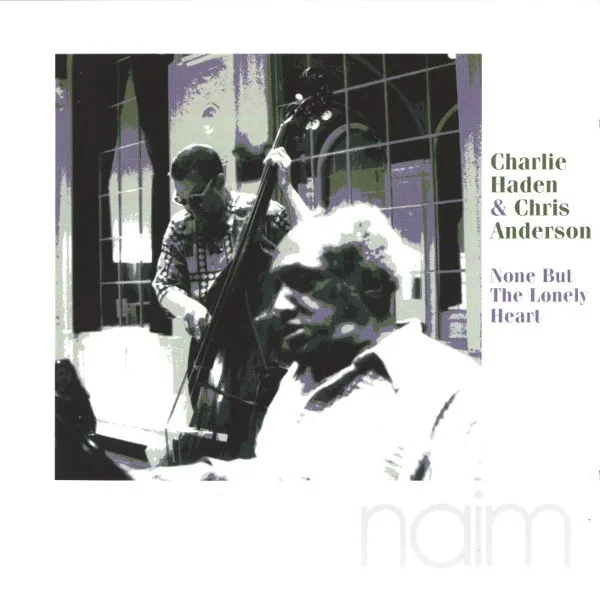
Chris Anderson at the piano with bassist Charlie Haden, from the back-cover photograph of their 1997 Naim Label duo album *None but the Lonely Heart* Album cover art (not a CC-licensed artist photo) — used as the only available image showing the artist — Discogs — https://www.discogs.com/release/2414644-Charlie-Haden-Chris-Anderson-5-None-But-The-Lonely-Heart
Chris Anderson was born February 26, 1926, in Chicago, with osteogenesis imperfecta, a brittle-bone disorder, and limited vision that progressed to complete blindness by cataracts by the time he was twenty. He never took a piano lesson in his life; he taught himself by ear as a child, picking out melodies and harmonies at the family piano after a boyhood fascination with movie scores. He left high school early to play blues gigs in South Side Chicago bars, and a job at a record store introduced him to Nat "King" Cole, Art Tatum, and Duke Ellington, cementing his direction toward jazz.
Through the 1940s and 1950s Anderson worked as a house pianist in Chicago's jazz clubs, most notably the Pershing Ballroom, accompanying a remarkable list of touring and local musicians: Charlie Parker, Sonny Stitt, Howard McGhee, Clifford Brown, Sonny Rollins, Gene Ammons, Stan Getz, Max Roach, and Roland Kirk, among others. He later recalled working with Parker on three occasions, including one arranged by tenor saxophonist Claude McLin, who called Anderson to come sit in with Bird; both men appear together, along with guitarist George Freeman and drummer Buzz Freeman, on the privately recorded An Evening at Home with the Bird (Savoy, 1961). Fellow Chicago pianist Von Freeman called Anderson's ear for harmony the best he had ever heard. By October 1959, financial hardship compounded by two broken legs in a single year, a recurring cost of his brittle bones, led fellow musicians and promoter Joe Segal to organize a benefit concert for him at Chicago's Preview Lounge.
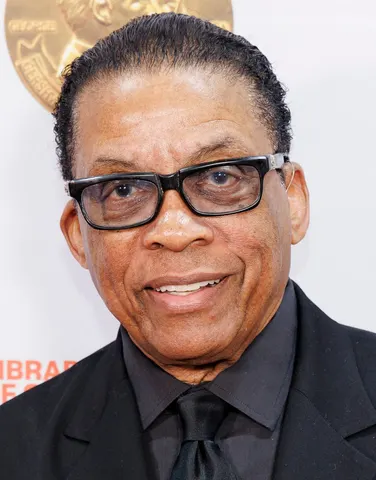
Anderson's harmonic conception left its clearest mark on a young pianist newly arrived in Chicago. In 1960, Herbie Hancock heard Anderson play once and, in his own oft-repeated account, "begged him to let me study with him," later calling Anderson "a master of harmony and sensitivity" whose "music has affected the core of my music very deeply." The claim was not a later embellishment: Mapleshade Records' own 1990 reissue of Anderson's Love Locked Out billed him on its front cover as "the legendary teacher of Herbie Hancock," meaning the relationship was already common knowledge in the jazz press decades before it resurfaced in Herbie Hancock's later interviews and his 2014 memoir Possibilities. Writers have traced Anderson's reharmonizing influence directly into Hancock's own early recorded playing, on records such as My Point of View (1963) and Fat Albert Rotunda (1969); secondary sources also credit Anderson more broadly with shaping other pianists who passed through the Chicago scene in the same years, including Ahmad Jamal and Denny Zeitlin.
In 1961 Anderson toured for six weeks as pianist with Dinah Washington's band, playing dates including Pep's in Philadelphia, the Howard Theatre in Washington, and the Apollo, and decided to settle permanently in New York City afterward. He recorded as a leader for the first time around this period: My Romance, cut with bassist Bill Lee and drummer Art Taylor on February 10, 1960, and Inverted Image, recorded with Bill Lee and drummers "Philly" Joe Jones and Walter Perkins and released in March 1962 on Riverside's Jazzland subsidiary, produced by Orrin Keepnews. My Romance did not appear on record until a 1983 Vee Jay reissue; no earlier commercial edition is documented. Anderson then went unrecorded as a leader for more than two decades, a gap widely attributed to the professional discrimination his blindness caused him despite the consistent admiration of his peers.
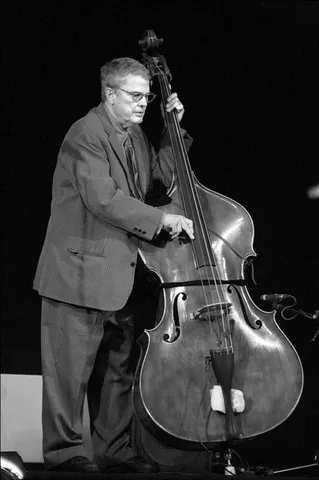
His recording career resumed in 1990 with the solo Love Locked Out (Mapleshade) and continued through the 1990s and into the 2000s: Blues One (1991, DIW, a trio with bassist Ray Drummond and drummer Billy Higgins), Solo Ballads (1996, Alsut), None but the Lonely Heart (1997, Naim, a duo with bassist Charlie Haden, who also produced the session, recorded at New York's Cami Hall), You Don't Know What Love Is (1998, Naim, with vocalist Sabina Sciubba, bassist David Williams, and Higgins on percussion), Live at Bradley's (2000, Alsut), Solo Ballads Two (2001, Alsut), and From the Heart (2002, Naim), his final studio recording. Through these years he was a regular presence at pianist Barry Harris's annual New York concerts and at clubs including Bradley's, the Jazz Gallery, and the Village Vanguard, continuing to perform despite ongoing hip fractures. His last well-documented studio sideman date was as pianist on Roni Ben-Hur and Amy London's co-billed Two for the Road (1994, Fivecat). Chris Anderson passed away in Manhattan on February 4, 2008, at age 81, from the effects of a stroke; a memorial was held March 31, 2008, at Saint Peter's Church in New York.
Anderson was, first and foremost, a harmonic innovator: a self-taught ear that generated dense, deeply personal reharmonizations and chord voicings unlike anything he could have learned from a teacher, since he never had one. His reputation rested less on technical display than on that harmonic imagination, most audible in his solo ballad playing and in intimate trio and duo settings, where he could reshape a standard's changes from the inside without disturbing its melody. That reputation circulated for decades almost entirely by word of mouth among musicians, since his own recorded discography stayed thin, interrupted for more than twenty years between his early-1960s trio dates and his return to the studio in 1990; peers including Von Freeman and, most famously, Herbie Hancock credited him as a singular harmonic source rather than merely an influence among many.
- Inverted Image (1962, Jazzland) - Anderson's first trio date as a leader, recorded with Bill Lee, "Philly" Joe Jones, and Walter Perkins and produced by Orrin Keepnews. Spotify - The Chris Anderson Trio Listen
- My Romance (rec. 1960, first issued 1983, Vee Jay) - A trio session with Bill Lee and Art Taylor that sat unreleased for over two decades before its first documented commercial edition. Listen
- Love Locked Out (1990, Mapleshade) - Anderson's return to recording after more than twenty years away, a solo piano date whose own cover called him "the legendary teacher of Herbie Hancock."
- None but the Lonely Heart (1997, Naim) - A duo album with bassist Charlie Haden, who produced the session, recorded live at New York's Cami Hall.
- Blues One (1991, DIW) - A trio date with Ray Drummond and Billy Higgins.
- An Evening at Home with the Bird (1961, Savoy) - As a sideman: a privately recorded Chicago session with Charlie Parker, documenting the working relationship Anderson described in his own later interviews.
- Two for the Road (1994, Fivecat) - As a sideman: piano on Roni Ben-Hur and Amy London's co-billed leader debut.
Chris Anderson: Full Discography
Identity confirmed via the live Discogs API: artist ID 603748 ("Chris Anderson (5)," profile text "American jazz pianist, born February 26, 1926 in Chicago, Illinois, died February 04, 2008 in Manhattan, New York City" - an exact match to Wikipedia and Wikidata Q943061, and distinct from the many other same-named Discogs entities, including a technology writer/editor of the same name with no music career). Discogs credits this artist on 37 releases; Anderson's small leader catalog reflects a discography interrupted for over two decades between his early trio dates and his return to recording in 1990, not a lack of documented activity. Every table row below was checked against its own individual Discogs release or master page, not the coarser artist-releases endpoint, per this sweep's standing rule that role and personnel data are only reliable at that level.
As Leader / Co-Leader
| Album Title | Recording Date(s) | Release Date | Label | Catalog Number | Format(s) | Personnel | Role | Reissue History | Spotify | Buy | Notes |
|---|---|---|---|---|---|---|---|---|---|---|---|
| Inverted Image | Not specified in Discogs data | March 1962 | Jazzland (Riverside) | JLP 957 | Vinyl, LP, Album, Stereo | Chris Anderson (piano), Bill Lee (bass), "Philly" Joe Jones & Walter Perkins (drums) | Leader (trio) | Later paired with My Romance on a Fresh Sound Records CD reissue | Spotify - The Chris Anderson Trio | — | Produced by Orrin Keepnews; billed to "The Chris Anderson Trio." Cover art is a Rorschach-style inkblot graphic matching the album's title, not a photograph. |
| My Romance | February 10, 1960 | Discogs' earliest catalogued edition is 1983 | Vee Jay | RJL-2669 (1983); reissued 1987 as 22YB-2087 and 1998 as PVCP-8184 | Vinyl LP (1983, 1987); CD (1998, remastered, limited edition) | Chris Anderson (piano), Art Taylor (drums), Bill Lee (bass), per Discogs release notes | Leader (trio) | Reissued twice more by Vee Jay (1987, 1998); later paired with Inverted Image on a Fresh Sound Records CD | Spotify - The Chris Anderson Trio | — | Recorded in 1960 but not documented on Discogs in any edition earlier than 1983; unclear whether an original, contemporaneous release ever existed. |
| Love Locked Out | Not specified in Discogs data | 1990 (Discogs); Wikipedia's own discography lists 1987 for the same album | Mapleshade | Not confirmed (catalog number "512692 L" printed on the sleeve) | Not confirmed | Chris Anderson, solo piano | Leader (solo) | None found | — | — | The two sources disagree on release year and are stated rather than silently resolved. The cover billed Anderson as "the legendary teacher of Herbie Hancock," marking Anderson's return to recording after more than two decades away. |
| Blues One | Not specified in Discogs data | 1991 | DIW | DIW-607 | CD, Album | Chris Anderson (piano), Ray Drummond (bass), Billy Higgins (drums) | Leader (trio) | None found | — | — | Recorded and mixed with engineer Paul Wickliffe; produced by Mickey Bass. |
| Solo Ballads | Not specified in Discogs data | 1996 | Alsut Records | AS 0197 | CD | Chris Anderson, solo piano | Leader (solo) | None found | — | — | — |
| None but the Lonely Heart | July 5-7, 1997, Cami Hall, New York | 1997 | Naim Label | naimcd022 | CD, Album | Charlie Haden (bass), Chris Anderson (piano) | Co-leader (duo) | None found | — | — | Haden also produced the session; the album's photography (front and back cover) shows both musicians performing together. |
| You Don't Know What Love Is | Not specified in Discogs data | 1998 | Naim Label | naimcd030 | CD, Album | Chris Anderson (piano), Sabina Sciubba (vocals), David Williams (double bass), Billy Higgins (percussion) | Leader (with featured vocalist) | None found | — | — | — |
| Live at Bradley's | Not specified in Discogs data | 2000 | Alsut Records | AS 0195 | CD | Chris Anderson (piano), Ray Drummond (bass), Billy Higgins & Frank Gant (drums) | Leader | None found | — | — | Recorded at the New York club Bradley's, where Anderson performed regularly in his later years. |
| Solo Ballads Two | Not specified in Discogs data | 2001 | Alsut Records | AS 0198 | CD | Chris Anderson, solo piano | Leader (solo) | None found | — | — | — |
| From the Heart | Not specified in Discogs data | 2002 | Naim Label | naimcd035 | CD, Album, Stereo | Chris Anderson, solo piano | Leader (solo) | None found | — | — | Anderson's final studio recording. |
One additional release, an undated cassette catalogued on Discogs simply as "Untitled" (Not On Label, producer Al Sutton), is not independently datable or verifiable beyond the Discogs entry itself and is omitted from this table rather than guessed at.
As Sideman (selected major credits)
| Year | Project (Leader) | Title | Label | Catalog | Role | Notes |
|---|---|---|---|---|---|---|
| 1961 | Charlie Parker | An Evening at Home with the Bird | Savoy Records | MG-12152 | Piano | Confirmed at the release level: extraartists list Charlie Parker (alto saxophone), Chris Anderson (piano), Claude McLin (tenor saxophone), George Freeman (guitar), Buzz Freeman (drums), and Leroy Jackson (bass). A privately recorded Chicago home session; Anderson himself recalled being brought to play with Parker by McLin. |
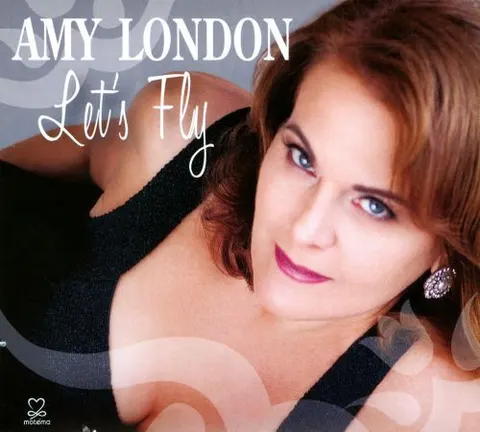
| 1994 | Roni Ben-Hur & Amy London | Two for the Road | Fivecat | 001CD | Piano | Confirmed at the release level (Discogs 25927063): extraartists credit Roni Ben-Hur (guitar), Chris Anderson (piano), and Amy London (vocals) on this genuinely co-billed leader date. |
Two further Discogs "Appearance" credits from later reissue/compilation projects (The Unheard of Charlie Parker: Bird Seed, 1995, Stash Records, and the Savoy label's own complete-edition reissues of the 1961 Parker material) reproduce performances already covered by the An Evening at Home with the Bird entry above and are not listed separately.
- Herbie Hancock - student/mentee relationship beginning 1960, after Hancock heard Anderson play once and asked to study with him; Hancock has credited Anderson's harmonic influence throughout his own career.
- Charlie Haden - duo partner and producer on None but the Lonely Heart (1997).
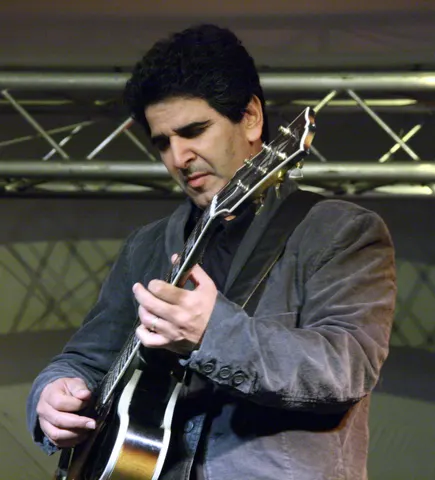
- Roni Ben-Hur & Amy London - piano on their co-billed Two for the Road (1994).
- Billy Higgins - drums or percussion on Blues One (1991), You Don't Know What Love Is (1998), and Live at Bradley's (2000).
- Barry Harris - regular performer at Harris's annual New York concerts in Anderson's later years.
- Charlie Parker - Chicago-era working relationship, documented on An Evening at Home with the Bird (1961), a private recording made through fellow saxophonist Claude McLin.
- Dinah Washington - six-week band pianist during her 1961 tour, the trip that led Anderson to settle permanently in New York.