 JAZZPROFILES lives in the music 1,002 Jazz Artists fully Profiled!
 Wadada Leo Smith
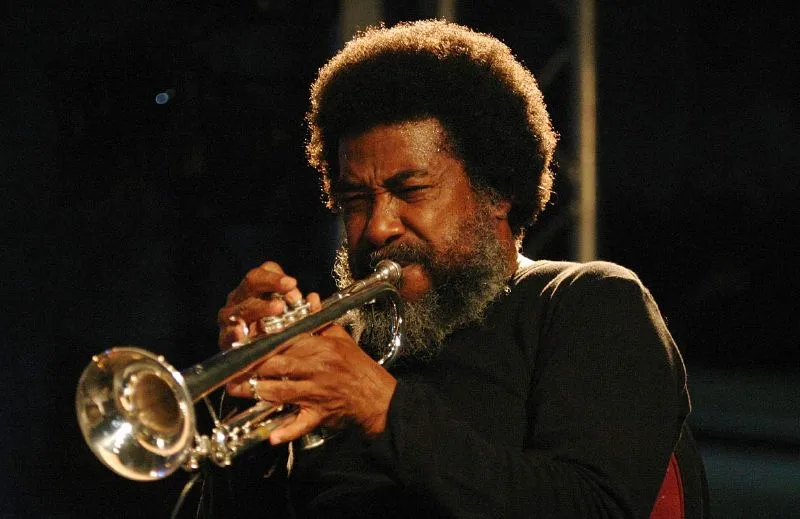
Wadada Leo Smith, portrait photograph CC BY 2.0 — Wikimedia Commons (originally from Flickr, photo by Tom Beetz) — https://commons.wikimedia.org/wiki/File:Wadada_Leo_Smith.jpg

Ishmael Wadada Leo Smith was born December 18, 1941, in Leland, Mississippi. He began playing drums, mellophone, and French horn in his high school's concert and marching bands before settling on trumpet, absorbing the Mississippi Delta blues and improvisational traditions around him from an early age. His early musical training came from his stepfather, guitarist Alex Wallace, followed by the U.S. Military Band program in 1963 and Chicago's Sherwood School of Music from 1967 to 1969. After playing in R&B combos and Army bands through the early 1960s, he became a member of Chicago's Association for the Advancement of Creative Musicians (AACM) by 1967 and co-founded the trio Creative Construction Company with violinist Leroy Jenkins and saxophonist Anthony Braxton, which toured Europe in the late 1960s. In 1971 he founded his own label, Kabell Records, to release his music, starting with the solo album Creative Music - 1 the following year. He also formed the New Dalta Ahkri, a band whose shifting membership included Henry Threadgill, Anthony Davis, and Oliver Lake. By the early 1970s he had begun developing the graphic notation system he calls Ankhrasmation, formally dated by Wikipedia's sourced account to 1970.
From 1975 to 1976, Smith studied ethnomusicology at Wesleyan University while teaching at the University of New Haven, and it was during this period that Creative Construction Company reunited to record a self-titled album with Ornette Coleman supervising the session. After leaving Wesleyan he again played with Braxton and recorded with guitarist Derek Bailey's improvising collective Company. He released Spirit Catcher on Nessa Records in 1979 and signed a non-exclusive deal with Manfred Eicher's ECM label the same year, which issued the widely praised Divine Love. Through the 1980s he worked extensively in Europe with bassist Peter Kowald and percussionist Günter Sommer, recording Touch the Earth (1980) and If You Want the Kernels, You Have to Break the Shells (1983) for the German FMP label, and taking up the mbira (African thumb piano) as a recurring voice in his music. In the mid-1980s he became a Rastafarian and adopted the name Wadada, releasing Human Rights (1986) on Kabell/Gramm with Kowald and Sommer. He taught at Bard College from 1987 to 1993, when he moved to the California Institute of the Arts' Herb Alpert School of Music, remaining on the CalArts faculty until 2014 and directing its MFA program in African American Improvisation; his second ECM album, the solo Kulture Jazz, appeared in 1993.
Smith began his long association with John Zorn's Tzadik label in 1996 with Tao-Njia, and in 1998 he and guitarist Henry Kaiser launched Yo Miles!, an electric ensemble devoted to Miles Davis's then-underappreciated 1970s electric period, releasing a self-titled debut that year followed by Sky Garden and Upriver (both Cuneiform, 2004-2005). In 2000 he formed the Golden Quartet for its Tzadik debut with Jack DeJohnette on drums, Anthony Davis on piano, and Malachi Favors on bass; the group's personnel rotated over the years to include bassist John Lindberg, drummer Pheeroan akLaff, pianist Vijay Iyer, and drummer Ronald Shannon Jackson, expanding at times into a Golden Quintet. He reunited with Braxton for Organic Resonance (2003) and Saturn, Conjunct the Grand Canyon in a Sweet Embrace (2004) on Pi Recordings, both issued as the two men's leader catalogs kept expanding on separate but overlapping paths.
Smith's most acclaimed large-scale work arrived in 2012 with Ten Freedom Summers, a four-disc oratorio for his Golden Quartet and the Southwest Chamber Music ensemble addressing the American civil rights era; it was named one of three finalists for the 2013 Pulitzer Prize for Music. He continued in that vein with America's National Parks (2016, Cuneiform), an extended work marking the National Park Service centennial performed by his Golden Quintet, and Rosa Parks: Pure Love, An Oratorio of Seven Songs (2019, TUM), which debuted at The Kitchen in New York with four ensembles, video, and butoh dance. Beginning with Tabligh (2008), Smith built a parallel relationship with the Finnish label TUM Records that produced Great Lakes Suites (2014, with Henry Threadgill, Jack DeJohnette, and John Lindberg), Celestial Weather and Ancestors (2018), and, marking his 80th birthday in 2021, a run of multi-disc box sets including Trumpet (solo), Sacred Ceremonies (a trio with Milford Graves and Bill Laswell), and The Chicago Symphonies with his Great Lakes Quartet, followed in 2022 by The Emerald Duets and String Quartets Nos. 1-12. In 2016 he also returned to ECM for the first time since Kulture Jazz, recording the duo album A Cosmic Rhythm with Each Stroke with Vijay Iyer, and in 2018 appeared as a sideman on Andrew Cyrille's ECM trio album Lebroba alongside guitarist Bill Frisell.
Smith's honors include a 2009 Guggenheim Fellowship in music composition, a 2016 Doris Duke Artist Award, and the Hammer Museum's 2016 Mohn Award for Career Achievement, which recognized both his music and his decades of work developing the Ankhrasmation notation system exhibited at the Hammer and the Renaissance Society at the University of Chicago. The Jazz Journalists Association has repeatedly honored him, including as its 2017 Musician of the Year. In 2023 he was elected to the American Academy of Arts and Letters. He has lived for many years in New Haven, Connecticut, where he has helped sustain a creative-music scene, and he remains active into his eighties, releasing Two Centuries (2022) and Fire Illuminations (2023) on Red Hook Records, Central Park's Mosaics of Reservoir, Lake, Paths and Garden (2024) with Amina Claudine Myers, and Angel Falls (2025, Intakt) among recent work, alongside a 2025 duo release with Vijay Iyer.
Smith emerged from the AACM's mid-1960s wave of experimentalism as one of its most theoretically ambitious voices, building his entire practice around Ankhrasmation, a system of rhythm-units, sound-units, improvisation-units, and symbolic-units that replaces conventional notation with graphic scores open to a performer's interpretation. His trumpet playing favors spaciousness and silence over density, using long tones, extreme dynamic control, and an unhurried sense of time that traces back to the Delta blues he heard as a boy in Mississippi as much as to the AACM's collective-improvisation ethos. Over six decades he has moved fluidly between austere solo trumpet recitals, electric ensembles indebted to Miles Davis's 1970s bands, chamber and orchestral works performed by groups including the Kronos Quartet and the California EAR Unit, and large-scale civil-rights-themed suites, while adding koto, kalimba, mbira, and the Ghanaian atenteben flute to an already wide instrumental palette. Spiritual and social themes run through much of his catalog, from Divine Love to Ten Freedom Summers and Rosa Parks: Pure Love, and his influence extends directly to younger collaborators such as pianist Vijay Iyer, who has described Smith as a formative mentor. Ten Freedom Summers' 2013 Pulitzer Prize finalist nod, alongside a Guggenheim Fellowship, a Doris Duke Artist Award, and election to the American Academy of Arts and Letters, mark him as one of the most critically honored figures to emerge from the AACM's original generation.
- Divine Love (1979, ECM) - Smith's first album for ECM, a spacious, meditative session that established his long relationship with the label. Spotify - Divine Love Listen
- Kulture Jazz (1993, ECM) - A completely solo album on which Smith plays trumpet, flugelhorn, koto, mbira, harmonica, and bamboo flute. Spotify - Kulture Jazz Listen
- Golden Quartet (2000, Tzadik) - The debut recording of Smith's long-running Golden Quartet, with Jack DeJohnette, Anthony Davis, and Malachi Favors. Spotify - Golden Quartet Listen
- Ten Freedom Summers (2012, Cuneiform) - A four-disc civil rights oratorio for the Golden Quartet and Southwest Chamber Music, named a finalist for the 2013 Pulitzer Prize for Music. Spotify - Ten Freedom Summers Listen
- America's National Parks (2016, Cuneiform) - A large-scale work for his Golden Quintet marking the National Park Service centennial, part of the body of work recognized with a 2016 Doris Duke Artist Award. Spotify - America's National Parks Listen
- A Cosmic Rhythm with Each Stroke (2016, ECM) - A duo album with pianist Vijay Iyer, Smith's first ECM release since Kulture Jazz. Spotify - A Cosmic Rhythm with Each Stroke Listen
- Lebroba (2018, ECM) - As a sideman: Andrew Cyrille's trio album with Smith and guitarist Bill Frisell.
- Creative Construction Company (recorded 1970, Muse) - The trio recording with Anthony Braxton and Leroy Jenkins that documented the group Smith co-founded within the AACM.
Wadada Leo Smith: Full Discography
Identity confirmed via the live Discogs API - artist ID 347445 ("Wadada Leo Smith," realname Ishmael Wadada Leo Smith, born December 18, 1941, Leland, Mississippi - matching Wikipedia and AllMusic). Discogs has already consolidated both name forms used across his career ("Leo Smith" and "Wadada Leo Smith," among other variants) under this single artist ID, along with the many named ensembles he leads or has led (Golden Quartet, Golden Quintet, Great Lakes Quartet, Organic, Mbira, Silver Orchestra, N'Da Kulture, and others), which are cross-referenced from the main artist page. Smith is a hugely prolific bandleader with close to 100 titles as a leader or co-leader spanning 1972-2025, plus several hundred additional sideman and compilation-appearance credits; per this catalog's practice for prolific bandleaders, the table below curates roughly 30 of his most significant, acclaimed, or historically important leader/co-leader releases rather than itemizing the complete catalog, plus a representative set of major sideman credits. Several Discogs entries for this artist carry type: master; each was resolved to its main_release and checked against its own title and personnel before being used here.
As Leader / Co-Leader
| Album Title | Recording Date(s) | Release Date | Label | Catalog Number | Format(s) | Personnel | Role | Reissue History | Spotify | Buy | Notes |
|---|---|---|---|---|---|---|---|---|---|---|---|
| Creative Music - 1 (Six Solo Improvisations) | Not specified in Discogs data | 1972 | TMS Records | TMS 1000 | Vinyl, LP, Album | Wadada Leo Smith (trumpet, flugelhorn, horn, harmonica, percussion, gong, bells, drums, cymbal, autoharp) | Leader | Reissued as part of Kabell Years: 1971-1979 (Tzadik, 2004) | — | — | Smith's debut as a leader, released on his own Kabell/associated label |
| Silence | Recorded 1969 | 1974 | Freedom Records | FLP 40123 | Vinyl, LP, Album, Stereo | Wadada Leo Smith (trumpet, misc. instruments), Anthony Braxton (reeds, misc. instruments), Leroy Jenkins (violin, misc. instruments) | Co-leader (trio billing) | — | — | — | Trio recording billed to all three members of Creative Construction Company |
| Divine Love | Recorded 1978 | 1979 | ECM Records | ECM 1143 | Vinyl, LP, Album, Stereo | Wadada Leo Smith (trumpet, flugelhorn, percussion, gongs), Dwight Andrews (alto flute, bass clarinet, tenor sax, mbira), Bobby Naughton (vibraphone, marimba, bells), with Charlie Haden (bass), Lester Bowie and Kenny Wheeler (trumpet) on select tracks | Leader | — | Spotify - Divine Love | — | Smith's first ECM album, produced by Manfred Eicher |
| Spirit Catcher | Recorded 1979 | 1979 | Nessa Records | n-19 | Vinyl, LP, Album | Wadada Leo Smith (trumpet, flugelhorn), Wes Brown (bass, wooden flute), Dwight Andrews (clarinet, tenor sax, wooden flute, conductor), Bobby Naughton (vibraphone), Pheeroan akLaff (drums) | Leader | — | — | — | Recorded at Van Gelder Studio; produced by Chuck Nessa |
| Solo Music: Ahkreanvention | Not specified in Discogs data | 1979 | Kabell Records | Kabell 4 | Vinyl, LP | Wadada Leo Smith (trumpet, flugelhorn, F trumpet, piccolo trumpet, flute, marimba, gong, steel-o-phone) | Leader | Reissued as part of Kabell Years: 1971-1979 (Tzadik, 2004) | — | — | Solo recording |
| Touch the Earth | Not specified in Discogs data | 1980-05-27 | FMP | FMP 0730 | Vinyl, LP | Wadada Leo Smith (trumpet, flugelhorn, mbira), Peter Kowald (bass), Günter Sommer (drums, percussion, organ pipes) | Co-leader (trio) | — | — | — | First of several FMP collaborations with Kowald and Sommer |
| If You Want the Kernels You Have to Break the Shells | Not specified in Discogs data | 1983-01-21 | FMP | FMP 0920 | Vinyl, LP, Album | Wadada Leo Smith (trumpet, flugelhorn, flute, thumb piano), Peter Kowald (bass), Günter Sommer (drums, percussion) | Co-leader (trio) | — | — | — | All compositions credited jointly to the trio |
| Human Rights | Not specified in Discogs data | 1986 | Kabell Records / Gramm | Kabell/Gramm 24 | Vinyl, LP, Album | Wadada Leo Smith (trumpet, flugelhorn, percussion, vocals, mbira), Peter Kowald (bass, tuba, percussion), Günter Sommer (drums, percussion), Tadao Sawai (koto, percussion), James Emery (electric guitar), Michele Navazio (guitar, synthesizer), Thurman Barker (drums) | Leader | — | — | — | Recorded during the years Smith was becoming Rastafarian and adopting the name Wadada |
| Cosmos Has Spirit | Not specified in Discogs data | 1992 | Scissors | SCISSORS-001 | CD, Album | Wadada Leo Smith (trumpet, bamboo flute, kalimba), Sabu (Yoshisaburo) Toyozumi (percussion) | Co-leader (duo) | — | — | — | Duo recording with Japanese percussionist Sabu Toyozumi |
| Kulture Jazz | Recorded October 1992 | 1993-05 | ECM Records | ECM 1507 | CD, Album | Wadada Leo Smith solo (trumpet, flugelhorn, koto, mbira, harmonica, bamboo flute, percussion, vocals) | Leader | — | Spotify - Kulture Jazz | — | Smith's second ECM album, entirely solo |
| Tao-Njia | Not specified in Discogs data | 1996 | Tzadik | TZ 7017 | CD, Album | Wadada Leo Smith (trumpet, flugelhorn) with the California E.A.R. Unit (chamber ensemble) | Leader | — | — | — | First release for John Zorn's Tzadik label |
| Yo Miles! | Not specified in Discogs data | 1998 | Shanachie | 5046 | CD, Album | Henry Kaiser and Wadada Leo Smith (co-leaders) with a large rotating cast including Michael Manring, John Medeski, Nels Cline | Co-leader (with Henry Kaiser) | — | — | — | Debut release of the Kaiser/Smith project reworking Miles Davis's 1970s electric period |
| Light Upon Light | Not specified in Discogs data | 1999 | Tzadik | TZ 7038 | CD, Album | Wadada Leo Smith (trumpet, flugelhorn) | Leader | — | — | — | — |
| Reflectativity | Not specified in Discogs data | 2000 | Tzadik | TZ 7060 | CD, Album | Wadada Leo Smith (trumpet, flugelhorn), Anthony Davis (piano), Malachi Favors (bass) | Leader | — | — | — | Not to be confused with the 1975 Kabell release of the same title |
| Golden Quartet | Not specified in Discogs data | 2000 | Tzadik | TZ 7604 | CD, Album | Wadada Leo Smith (trumpet, flugelhorn), Anthony Davis (piano), Malachi Favors (bass), Jack DeJohnette (drums) | Leader | — | Spotify - Golden Quartet | — | Debut recording of Smith's long-running Golden Quartet |
| The Year of the Elephant | Not specified in Discogs data | 2002 | Pi Recordings | PI04 | CD, Album | Wadada Leo Smith's Golden Quartet: Wadada Leo Smith (trumpet, flugelhorn), Anthony Davis (piano, synth), Malachi Favors (bass), Jack DeJohnette (drums, synth) | Leader | — | — | — | — |
| Organic Resonance | Not specified in Discogs data | 2003-07 | Pi Recordings | PI06 | CD, Album | Wadada Leo Smith (trumpet, flugelhorn) and Anthony Braxton (alto, soprano, sopranino sax) | Co-leader (duo) | — | — | — | Cover painting by Ornette Coleman |
| Sky Garden | Not specified in Discogs data | 2004 | Cuneiform Records | Rune 191/192 | SACD, Hybrid Album | Henry Kaiser, Wadada Leo Smith and the Yo Miles! ensemble, including Greg Osby, Steve Smith, Michael Manring | Co-leader (Yo Miles!) | — | — | — | Second Yo Miles! release |
| Tabligh | Recorded 2006 | 2008 | Cuneiform Records | Rune 270 | CD, Album | Wadada Leo Smith's Golden Quartet: Wadada Leo Smith (trumpet), Vijay Iyer (piano, Fender Rhodes, synth), John Lindberg (bass), Ronald Shannon Jackson (drums) | Leader | — | — | — | Documents the Golden Quartet lineup with Vijay Iyer and John Lindberg |
| Spiritual Dimensions | Not specified in Discogs data | 2009 | Cuneiform Records | Rune 290/291 | 2xCD, Album | Wadada Leo Smith with his Golden Quintet and Organic bands, including John Lindberg, Pheeroan akLaff, Vijay Iyer, Nels Cline, Brandon Ross | Leader | — | — | — | Double-disc set in quintet and nonet settings |
| Ten Freedom Summers | Recorded over several years | 2012 | Cuneiform Records | Rune 350/351/352/353 | 4xCD, Album | Wadada Leo Smith's Golden Quartet/Quintet (John Lindberg, bass; Pheeroan akLaff and/or Susie Ibarra, drums) with Southwest Chamber Music | Leader | — | Spotify - Ten Freedom Summers | — | Civil-rights-era oratorio; finalist, 2013 Pulitzer Prize for Music; commissioning supporters credited on the release include the Doris Duke Charitable Foundation, the Guggenheim Foundation, and the National Endowment for the Arts |
| Ancestors | Not specified in Discogs data | 2012-10-16 | TUM Records | TUM CD 029 | CD, Album | Wadada Leo Smith (trumpet, percussion) and Louis Moholo (drums, percussion, voice) | Co-leader (duo) | — | — | — | — |
| Occupy the World | Not specified in Discogs data | 2013-06-18 | TUM Records | TUM CD 037-2 | 2xCD, Album | Wadada Leo Smith (trumpet, conductor) with John Lindberg and the Finnish big band TUMO | Leader | — | — | — | — |
| The Great Lakes Suites | Not specified in Discogs data | 2014-08 | TUM Records | TUM CD 041-2 | CD, Album | Wadada Leo Smith (trumpet), Henry Threadgill (alto sax, flute, bass flute), John Lindberg (bass), Jack DeJohnette (drums) | Leader | — | — | — | — |
| Najwa | Not specified in Discogs data | 2017-10-20 | TUM Records | TUM CD 049 | CD, Album | Wadada Leo Smith (trumpet) with an electric band including Bill Laswell (bass), Pheeroan akLaff (drums), Henry Kaiser, Brandon Ross, Michael Gregory Jackson and Lamar Smith (guitars) | Leader | — | — | — | — |
| A Cosmic Rhythm with Each Stroke | Not specified in Discogs data | 2016-03-11 | ECM Records | ECM 2486 | CD, Album | Vijay Iyer (piano, Fender Rhodes, electronics) and Wadada Leo Smith (trumpet) | Co-leader (duo) | — | Spotify - A Cosmic Rhythm with Each Stroke | — | Smith's first ECM release since Kulture Jazz (1993) |
| America's National Parks | Recorded May 5, 2016 | 2016-10-14 | Cuneiform Records | Rune 430/431 | CD, Album | Wadada Leo Smith's Golden Quintet: Wadada Leo Smith (trumpet), Anthony Davis (piano), John Lindberg (bass), Pheeroan akLaff (drums), Ashley Walters (cello) | Leader | — | Spotify - America's National Parks | — | Long-form work marking the National Park Service centennial, recorded in a single day |
| Rosa Parks: Pure Love. An Oratorio of Seven Songs | Not specified in Discogs data | 2019 | TUM Records | TUM CD | CD, Album | Wadada Leo Smith with multiple ensembles | Leader | — | — | — | Debuted at The Kitchen, New York City, with video and butoh dance |
| Trumpet | Not specified in Discogs data | 2021-05-21 | TUM Records | TUM BOX 002 | 3xCD, Album, Box | Wadada Leo Smith, solo trumpet | Leader | — | — | — | One of several multi-disc box sets TUM issued to mark Smith's 80th birthday |
| Sacred Ceremonies | Not specified in Discogs data | 2021-05-21 | TUM Records | TUM BOX 003 | 3xCD, Album, Box | Wadada Leo Smith (trumpet), Milford Graves (drums, percussion), Bill Laswell (bass) | Co-leader (trio) | — | — | — | 80th-birthday box set |
| The Chicago Symphonies | Not specified in Discogs data | 2021-11-19 | TUM Records | TUM BOX 004 | CD, Album, Box | Wadada Leo Smith's Great Lakes Quartet: Wadada Leo Smith (flugelhorn), Henry Threadgill / Jonathon Haffner (saxophones), John Lindberg (bass), Jack DeJohnette (drums); liner notes contributors credited include Barack Obama and Abraham Lincoln (archival text) | Leader | — | — | — | — |
| The Emerald Duets | Not specified in Discogs data | 2022-06-17 | TUM Records | TUM BOX 006 | CD, Album, Box | Wadada Leo Smith (trumpet, piano) in duets with Andrew Cyrille, Jack DeJohnette, Pheeroan akLaff and Han Bennink (drums) | Leader | — | — | — | — |
| Two Centuries | Not specified in Discogs data | 2022 | Red Hook Records | — | Digital | Wadada Leo Smith with Qasim Naqvi and Andrew Cyrille | Co-leader | — | — | — | — |
| Angel Falls | Not specified in Discogs data | 2025 | Intakt Records | — | CD, Album | Wadada Leo Smith with Sylvie Courvoisier | Co-leader | — | — | — | Recent release; personnel not further itemized here |
As Sideman (selected major credits)
| Year | Project (Leader) | Title | Label | Catalog | Role | Notes |
|---|---|---|---|---|---|---|
| 1968 | Anthony Braxton | 3 Compositions of New Jazz | Delmark (DS-415) | Trumpet | Braxton's debut as a leader | |
| 1970 | Creative Construction Company | Creative Construction Company | Muse (MR 5071) | Trumpet | Co-founding trio release with Anthony Braxton and Leroy Jenkins, recorded 1970 | |
| 1970 (rel. 1974) | Muhal Richard Abrams | Young at Heart / Wise in Time | Delmark | Trumpet | Smith and Abrams were both founding-generation AACM members | |
| 1973 | Marion Brown | Geechee Recollections | Impulse! | Trumpet, percussion | — | |
| 1975 | Leroy Jenkins | For Players Only | JCOA Records | Trumpet | — | |
| 1976 | Anthony Braxton | Creative Orchestra Music 1976 | Arista | Trumpet | Large-ensemble Braxton date | |
| 2018 | Andrew Cyrille | Lebroba | ECM (ECM 2589) | Trumpet | Trio session with Cyrille and guitarist Bill Frisell |
Smith's Discogs sideman log (spanning 1968 to the present, including numerous compilation and festival-sampler appearances) also includes further AACM-era dates with Anthony Braxton (Silence, This Time..., Trio and Duet, Creative Orchestra (Köln) 1978), saxophonist Maurice McIntyre's Humility in the Light of the Creator (Delmark, 1969), Frank Lowe's The Flam (Black Saint, 1975), Roscoe Mitchell's Sketches from Bamboo (Moers Music, 1979), Matthew Shipp's New Orbit (Thirsty Ear, 2001), and multiple John Zorn Tzadik projects (50th Birthday Celebration Volume 8, The Unknown Masada, both 2003) - not itemized exhaustively here.
- Anthony Braxton - co-founded Creative Construction Company with Leroy Jenkins in the AACM's late-1960s circle; reunited decades later for Organic Resonance (2003) and Saturn, Conjunct the Grand Canyon in a Sweet Embrace (2004) on Pi Recordings.
- Muhal Richard Abrams - Smith appears as a sideman on Abrams's Delmark leader date Young at Heart/Wise in Time; both were founding-era members of Chicago's AACM. Abrams profiled separately on JazzProfiles.com.
- Jack DeJohnette - founding drummer of Smith's Golden Quartet from its 2000 Tzadik debut, and co-leader of the duo album America (2009, Tzadik).
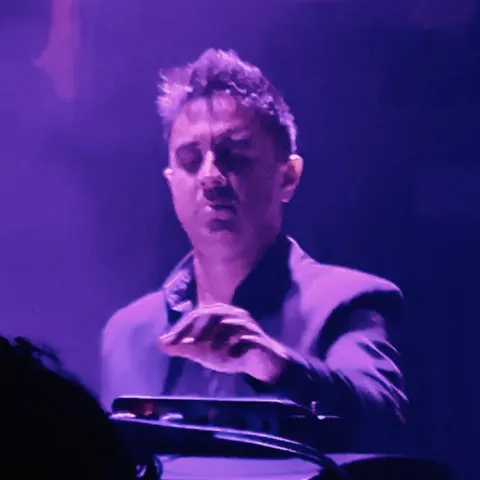
- Vijay Iyer - longtime pianist in the Golden Quartet/Quintet lineups from the mid-2000s, and duo partner on the ECM album A Cosmic Rhythm with Each Stroke (2016); Iyer has cited Smith as a major mentor.
- Andrew Cyrille - led the 2018 ECM trio session Lebroba with Smith and guitarist Bill Frisell.
- Henry Threadgill - fellow member of Smith's 1970s New Dalta Ahkri band, later a co-leader on The Great Lakes Suites (2014, TUM).
- John Zorn - signed Smith to Tzadik Records in 1996, releasing more than a dozen of his albums over the following decades.
- Henry Kaiser - co-led the Miles Davis-inspired electric project Yo Miles! from 1998 through several further releases.
- Wikipedia: Wadada Leo Smith
- Discogs: Wadada Leo Smith (artist 347445)
- AllMusic: Wadada Leo Smith biography, by Thom Jurek
- John Simon Guggenheim Memorial Foundation: Wadada Leo Smith
- Hammer Museum / UCLA Newsroom: Hammer Museum Announces Three Artists as Recipients of Mohn Awards (2016)
- Wikipedia: List of members of the American Academy of Arts and Letters Department of Music
- Wikipedia: Ten Freedom Summers
- The Pulitzer Prizes: 2013 Music Citation