 JAZZPROFILES lives in the music 1,002 Jazz Artists fully Profiled!
 Skippy Williams
No portrait on file yet. Drop portrait.jpg and a media.md caption/license into this profile's folder.
Elmer "Skippy" Williams (some sources give his first name as Elbert) was born July 27, 1916, in Tuscaloosa, Alabama, younger brother of fellow saxophonist Pinky Williams. The family relocated to Cleveland, where Williams took up soprano saxophone in his early teens and led a band of his own while still a local player. By the late 1930s he had moved into the touring big-band circuit, working brief stints with Count Basie's orchestra and, in the summer of 1939, joining Earl Bostic's orchestra in New York. His earliest documented studio work dates from that period: a July 12, 1939 session with Earl Hines and His Orchestra in New York that produced "Ridin' and Jivin'" and "Grand Terrace Shuffle" for Bluebird, on which he is also credited as arranger. Through the early 1940s he passed through the reed sections of Jimmy Mundy's and Lucky Millinder's orchestras, recording with Mundy's band in 1940 and with Sam Price's Texas Blusicians in 1941, and he is also documented in period sources as having worked with Fletcher Henderson, Chick Webb, Claude Hopkins, and Edgar Hayes during these years, though specific recorded sessions with those leaders are not clearly dated in the surviving discographical record.
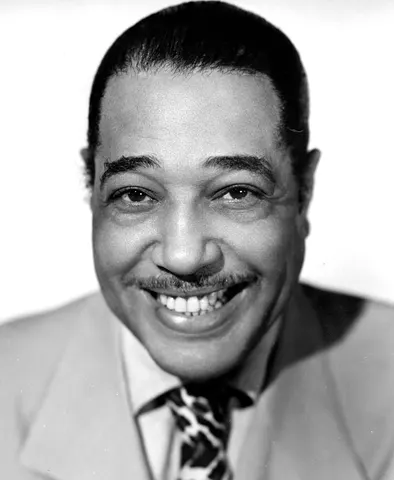
Williams's best-documented engagement began in 1943, when he joined Duke Ellington's orchestra as the direct replacement for Ben Webster on tenor saxophone. He appears on Ellington's second Carnegie Hall concert, recorded live on December 11, 1943, a broadcast-derived recording later issued commercially on multiple labels (Prestige, Queen-disc, Circle, and Storyville among them). It was around this same period, while the Ellington band toured and Williams was based nearby, that he gave informal saxophone lessons in Rochester, New York, to a teenage Pepper Adams. Williams left Ellington in May 1944 to try leading a band of his own; Al Sears took over his chair.
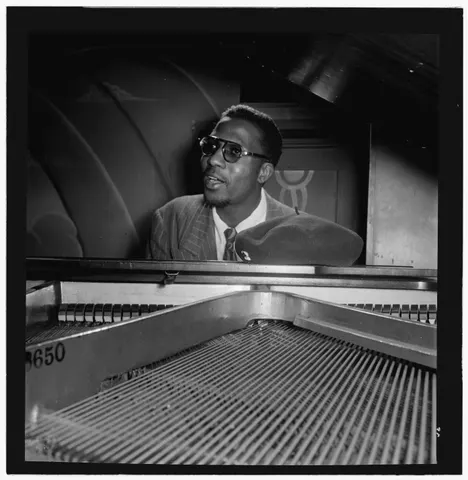
After Ellington, Williams continued as a sideman and occasional bandleader, working through the mid-1940s with Jimmy Mundy, Bob Chester, Tommy Reynolds, and Claude Hopkins. In 1946 he led a band on an engagement that included the young Thelonious Monk, a booking-only arrangement in which Williams held the leader contract while Monk played piano in the group. Later in the decade he kept a small combo working in Florida, and by the 1950s he had returned to New York, where period sources describe him leading small ensembles and performing around New York, Cleveland, and Florida into the 1960s. No leader recordings from any of these bands have been located; his career as an active performer thins out in the available record after that point. Skippy Williams passed away February 28, 1994, in New York City, at age 77.
Williams built his career as a section and solo tenor player inside other men's big bands rather than as a stylist who left a distinct critical footprint of his own; no leader recording survives against which to assess his individual voice, and none of the standard jazz critical references (AllMusic, DownBeat retrospectives, contemporary reviews) offer a developed account of his playing. His historical significance rests on the two verifiable facts that anchor this profile: stepping into Ben Webster's chair in Duke Ellington's orchestra during a pivotal 1943-44 transition in the band's reed section, and, on the teaching side, giving informal early instruction to a 12- and 13-year-old Pepper Adams, who would go on to become one of the defining voices on baritone saxophone in postwar jazz.
- Duke Ellington at Carnegie Hall, December 11, 1943 (rec. 1943, various reissue labels) - Williams's best-documented recorded appearance, cut during his stint in Ellington's reed section as Ben Webster's replacement. Spotify - Duke Ellington at Carnegie Hall December 11, 1943 (Live)
- Earl Hines and His Orchestra - "Ridin' and Jivin'" / "Grand Terrace Shuffle" (1939, Bluebird) - Williams's earliest documented studio credit, on tenor saxophone and as arranger, recorded July 12, 1939 in New York.
- Jimmy Mundy and His Orchestra - "Sunday Special" / "All Aboard" (1940, Varsity) - From his run through the big-band circuit in the run-up to the Ellington years.
- Sam Price and His Texas Blusicians - "Do You Dig My Jive" / "Boogie Woogie Moan" (1941, Decca) - A further documented sideman date from the same period.
Skippy Williams: Full Discography
Identity confirmed via the live Discogs API - artist ID 683130 ("Elmer Williams," realname "Elmer (or) Elbert Williams," born July 27, 1916 in Tuscaloosa, Alabama, died February 28, 1994 in New York City - matching Wikipedia, AllMusic, and Wikidata). Discogs lists Williams on 171 total credited releases, every one of them tagged "Appearance" (sideman) - there is no "Main" (leader) credit anywhere in his catalog, and no evidence of any commercially issued leader recording was found in any other source consulted. This is a sideman-only discography; no "As Leader" table is included.
The table below itemizes the handful of his sideman credits with a specific, confirmed recording date and personnel context. The great majority of his 171 Discogs "Appearance" credits are latter-day reissues and box-set compilations (RCA, Classics, Frémeaux & Associés, Mosaic, Storyville, and many others, issued from the 1970s through the 2020s) of big-band material from the 1930s-40s, credited to him at the artist level without a session-by-session breakdown of which specific tracks he plays on. Those are not itemized individually here.
As Sideman (dated sessions)
| Year | Project (Leader) | Title | Label | Catalog | Role | Notes |
|---|---|---|---|---|---|---|
| 1939 | Earl Hines and His Orchestra | "Ridin' and Jivin'" / "Grand Terrace Shuffle" | Bluebird | B-10351 | Tenor saxophone, arranger | Recorded July 12, 1939, New York, NY; Williams's earliest documented studio credit |
| 1940 | Jimmy Mundy and His Orchestra | "Sunday Special" / "All Aboard" | Varsity | — | Saxophone | 10" shellac single |
| 1941 | Sam Price and His Texas Blusicians | "Do You Dig My Jive" / "Boogie Woogie Moan" | Decca | — | Saxophone | 10" shellac single |
| 1943 | Duke Ellington and His Orchestra | Carnegie Hall, December 11, 1943 (live) | Various reissues: Prestige, Queen-disc, Circle, Storyville, D.E.T.S. | Various | Tenor saxophone | Second of Ellington's Carnegie Hall concerts; Williams occupied the chair vacated by Ben Webster earlier that August; recording first circulated from surviving broadcast transcriptions and has been reissued repeatedly since the 1970s under multiple titles |
Broader sideman affiliations (not individually dated)
Per Wikipedia, AllMusic, and the Discogs artist profile, Williams also worked in the reed sections of Count Basie's orchestra (briefly, ca. early 1939), Earl Bostic's orchestra (from summer 1939), Fletcher Henderson's orchestra, Chick Webb's orchestra, Claude Hopkins's orchestra, Edgar Hayes's orchestra, Lucky Millinder's orchestra (1940-41), Bob Chester's orchestra, and Tommy Reynolds's orchestra, and led the 1946 band on which Thelonious Monk played piano. Discogs' compilation-level "Appearance" credits for Henderson, Webb, and Millinder corroborate these affiliations in general but do not specify which individual tracks or sessions include Williams personally; no further detail could be confirmed from the sources consulted, so these are not broken out into discography rows.
- Duke Ellington - joined the Ellington orchestra in 1943 as Ben Webster's direct replacement on tenor saxophone, appearing on the band's December 11, 1943 Carnegie Hall concert; left in May 1944, succeeded by Al Sears. Ellington's own catalog and career are covered separately on his JazzProfiles.com profile.
- Pepper Adams - gave the teenage Adams informal tenor saxophone lessons in Rochester, New York, around 1943-44, a formative early encounter Adams later credited as part of his introduction to musicians in Ellington's circle.
- Thelonious Monk - led a band on a 1946 engagement in which Monk played piano, holding the booking as nominal leader.
- Earl Bostic, Jimmy Mundy, Lucky Millinder, Sam Price, Bob Chester, Tommy Reynolds, Claude Hopkins - big-band leaders Williams worked under across the late 1930s and 1940s, per Wikipedia, AllMusic, and Discogs artist records; individual session dates are not fully documented for all of these engagements.