 JAZZPROFILES lives in the music 1,002 Jazz Artists fully Profiled!
 Muhal Richard Abrams
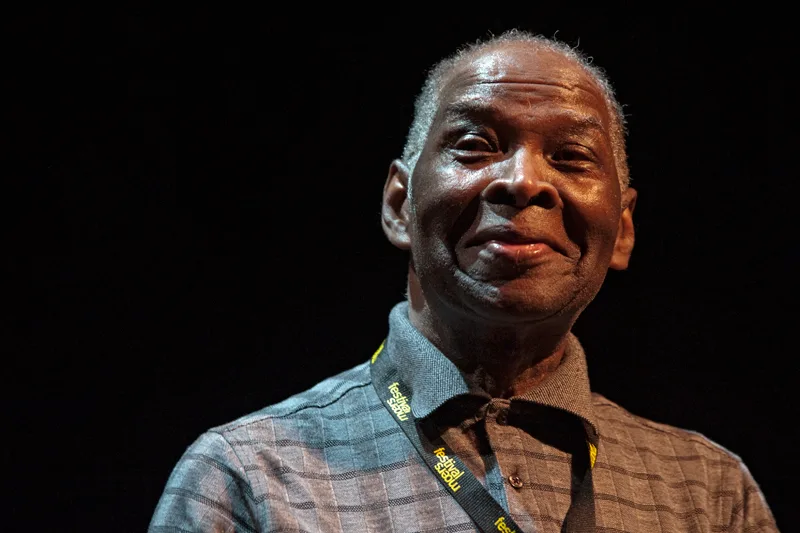
Muhal Richard Abrams performing at the Moers Festival, Germany, May 30, 2009 CC BY-SA 3.0 — Wikimedia Commons — https://commons.wikimedia.org/wiki/File:Muhal_Richard_Abrams_06N4854.jpg

Richard Lewis Abrams was born September 19, 1930, in Chicago, Illinois, the second of nine children of Milton and Edna Abrams. He attended DuSable High School, where classmates included future musicians Charles Davis, Richard Davis, John Gilmore, Johnny Griffin, Laurdine Patrick, and Julian Priester, though Abrams himself skipped the school's celebrated music program under Walter Dyett in favor of sports. In 1946 he left school to focus on music, beginning piano lessons with a classically trained church pianist before studying counterpoint, keyboard harmony, theory, and composition at Chicago's Metropolitan School of Music (later merged into Roosevelt University). He soon left formal study behind, teaching himself from books, including Joseph Schillinger's composition texts, while working a day job at a printing company and absorbing Art Tatum, Charlie Parker, Thelonious Monk, and especially Bud Powell from records.
Through the 1950s Abrams worked Chicago's blues, R&B, and hard-bop circuits, backing visiting leaders including Dexter Gordon, Max Roach, Ruth Brown, and Woody Shaw, and composing and arranging for pianist King Fleming. He co-founded the quintet MJT+3, recording Daddy-O Presents MJT+3 in 1957 with several of his own compositions. Around 1961 he organized a rehearsal big band, the Experimental Band, at Chicago's C&C Lounge, using it to test the Schillinger-influenced compositional ideas he was developing; the band drew in younger Chicago players, several of whom later credited Abrams directly with shaping their musical direction.
In May 1965 Abrams joined pianist Jodie Christian, composer Phil Cohran, and drummer Steve McCall to organize a new musicians' collective; at its second meeting Abrams was elected president, and by month's end the group had taken the name Association for the Advancement of Creative Musicians (AACM). Abrams led the AACM's composition classes when it opened a school in 1967 and served as the organization's first president. That same year he adopted the forename Muhal (a word he later said meant "number one," of unclear origin) and recorded his leader debut, Levels and Degrees of Light, for Chicago's Delmark Records; the album gave saxophonist Anthony Braxton, violinist Leroy Jenkins, and bassist Leonard Jones their recording debuts, and set a direction that AACM contemporaries including Henry Threadgill and the Art Ensemble of Chicago would follow.
Through the 1970s Abrams composed for symphony orchestras, string quartets, and big bands alongside a steady run of small-group leader dates, mostly for the Italian label Black Saint. He formed a sextet from AACM members in 1972 (with Threadgill, Wallace McMillan, Reggie Willis, Steve McCall, and Kalaparusha Difda) that played the Berlin Jazz Festival in 1973, followed by a solo concert at Montreux and a European tour with the Art Ensemble of Chicago in 1974. He recorded as a sideman during this period with Marion Brown (Sweet Earth Flying, 1974), reunited on record with Braxton for the duo album Duets 1976, and appeared on Roscoe Mitchell's Roscoe Mitchell Quartet (1976) alongside George Lewis. Abrams relocated to New York in 1976, moving his family the following year, and continued recording annually for Black Saint, including the sextet date 1-OQA+19 (1978) with Braxton and Threadgill and the duo album Sightsong (1976) with Art Ensemble bassist Malachi Favors. He also served on National Endowment for the Arts jazz peer-review panels in the late 1970s and helped establish the AACM's New York chapter, which began presenting concerts there in 1982.
The 1980s and 1990s brought Abrams's largest-scale work: three albums by the Muhal Richard Abrams Orchestra (Rejoicing with the Light, 1983; The Hearinga Suite, 1989; Blu Blu Blu, 1991) and one by his octet (View from Within, 1985), all on Black Saint, alongside duo recordings with pianist Amina Claudine Myers, violinist Leroy Jenkins, bassist Cecil McBee, and saxophonist Roscoe Mitchell. In 1990 he became the first recipient of the Jazzpar Prize, and in 1997 he received a Foundation for Contemporary Arts grant. His classical-side work included a String Quartet No. 2, performed by the Kronos Quartet at Carnegie Recital Hall in 1985, and a 1989 album of his compositions recorded by Finland's UMO Jazz Orchestra with Abrams conducting and arranging.
Abrams remained active into his eighties, reuniting on record with George Lewis and Roscoe Mitchell for the trio album Streaming (2006) and recording solo piano dates The Visibility of Thought (2001) and Vision Towards Essence (2007), plus duo sets with Mitchell (Spectrum, 2009) and with Lewis and saxophonist Fred Anderson (SoundDance, 2011). In 2013 he joined Jack DeJohnette, Mitchell, Threadgill, and bassist Larry Gray for a Chicago Jazz Festival reunion concert, later released as Made in Chicago (ECM, 2015). He was named a United States Artists Prudential Fellow in 2008 and a National Endowment for the Arts Jazz Master in 2010, and received the Vision Festival's Lifetime Achievement Award later that year. Muhal Richard Abrams died at his home in Manhattan on October 29, 2017, at age 87.
Abrams was almost entirely self-taught, building a personal harmonic and compositional language out of Schillinger technique, close listening to Bud Powell and Art Ellington-and-Henderson-style big-band writing, and a restless curiosity that ranged from stride and ragtime through bebop into fully open improvisation, often within a single performance. As a bandleader he moved comfortably between a lone piano, small collaborative units, and the dense, through-composed voicings of his orchestra, treating instrumentation itself as compositional material (harp, accordion, and extended woodwind doublings turn up across his catalog). His deepest influence, though, ran through people rather than records: as the AACM's founding president and the leader of its Experimental Band, he was, by his own younger colleagues' account, a constant source of scores, reading lists, and encouragement for a generation that came to include Braxton, Threadgill, Roscoe Mitchell, and the members of the Art Ensemble of Chicago, several of whom made their recorded debuts on his own albums.
- Levels and Degrees of Light (1968, Delmark) - Abrams's leader debut, recorded in 1967, and the recording debut of Anthony Braxton, Leroy Jenkins, and bassist Leonard Jones. Spotify - Levels and Degrees of Light
- Sightsong (1976, Black Saint) - A duo record with Art Ensemble of Chicago bassist Malachi Favors, recorded in 1975. Spotify - Sightsong Listen
- 1-OQA+19 (1978, Black Saint) - A sextet date pairing Abrams with Anthony Braxton and Henry Threadgill, mixing dense written passages with open improvisation.
- Mama and Daddy (1980, Black Saint) - A large-ensemble session with Baikida Carroll, George Lewis, Bob Stewart, and Leroy Jenkins among others. Spotify - Mama And Daddy Listen
- Spihumonesty (1980, Black Saint) - Features Roscoe Mitchell, George Lewis, and Amina Claudine Myers. Spotify - Spihumonesty Listen
- The Hearinga Suite (1989, Black Saint) - An 18-piece Muhal Richard Abrams Orchestra recording, among the most fully realized of his three orchestra albums for the label.
- Spectrum (2009, Mutable Music) - A duo reunion with longtime AACM colleague Roscoe Mitchell. Spotify - Spectrum Listen
- Made in Chicago (2015, ECM) - A live reunion at the 2013 Chicago Jazz Festival with Jack DeJohnette, Roscoe Mitchell, Henry Threadgill, and Larry Gray.
Muhal Richard Abrams: Full Discography
Identity confirmed via the live Discogs API - artist ID 295402 ("Muhal Richard Abrams," realname Richard Lewis Abrams, born September 19, 1930, Chicago; died October 29, 2017, New York, both matching Wikipedia and AllMusic). Discogs also lists two group entities for billings under his own working units - The Muhal Richard Abrams Orchestra (3 leader albums) and the Muhal Richard Abrams Octet (1 leader album) - both folded into the "As Leader / Co-Leader" table below. A separate Discogs entity, "Richard Abrams" (artist 582508), was checked and ruled out: its four credited releases are all 2009-2015 Swedish black-metal/ambient titles, an unrelated musician sharing the name. Across the main artist ID, Discogs credits 142 total releases (36 "Main"/leader-role entries, 4 "Producer," 83 "Appearance," 16 track-level "TrackAppearance," and 3 unofficial releases); one "Main"-tagged entry, the Art Ensemble of Chicago's live album Kabalaba (1978), was fetched at the release level and found to credit Abrams only as "Piano, Guest [Special]" rather than as leader, and is listed here as a guest appearance rather than a leader date, consistent with this catalog's general caution that Discogs's coarse role tag can overstate a credit. The table below itemizes his full confirmed leader and co-leader catalog (34 titles across his own name plus the Orchestra and Octet billings) and a representative set of his most significant sideman and guest credits, cross-checked against Wikipedia's own discography section and AllMusic.
As Leader / Co-Leader
| Album Title | Recording Date(s) | Release Date | Label | Catalog Number | Format(s) | Personnel | Role | Reissue History | Spotify | Buy | Notes |
|---|---|---|---|---|---|---|---|---|---|---|---|
| Levels And Degrees Of Light | Recorded June 7 & December 21, 1967 | 1968 | Delmark Records | DS-413 | Vinyl, LP, Album, Stereo | Muhal Richard Abrams (piano, clarinet), Anthony Braxton (alto sax), Maurice McIntyre (tenor sax), Leroy Jenkins (violin), Gordon Emmanuel (vibraphone), Charles Clark (bass), Leonard Jones (bass), Thurman Barker (drums), Penelope Taylor (vocals), David Moore (vocals/poetry) | Leader | None found | — | — | Abrams's leader debut; recording debut of Braxton, Jenkins, and Jones |
| Young At Heart / Wise In Time | Recorded 1969 | 1970 | Delmark Records | DS-423 | Vinyl, LP, Album | Side A: Abrams, solo piano. Side B: Abrams (piano) with Henry Threadgill (alto sax), Leo Smith (trumpet, flugelhorn), Lester Lashley (bass), Thurman Barker (drums) | Leader | None found | — | — | Pairs a solo piano side with a quintet side |
| Things To Come From Those Now Gone | Recorded 1972 | 1975 | Delmark Records | DS-430 | Vinyl, LP, Album | Multiple small-group configurations across seven tracks, including Wallace McMillan (alto sax, flute), Edwin Daugherty (alto/tenor sax), Reggie Willis and Rufus Reid (bass), Steve McCall and Wilbur Campbell (drums), Emanuel Cranshaw (vibraphone), Ella Jackson (vocals) | Leader | None found | — | — | Recorded 1972, not released until 1975 |
| Afrisong | Recorded 1975 | 1975 | India Navigation / Trio Records / Whynot | PA-7121 | Vinyl, LP, Album | Solo piano | Leader | None found | — | — | |
| Sightsong | Recorded October 13-14, 1975 | 1976 | Black Saint | BSR 0003 | Vinyl, LP, Album | Muhal Richard Abrams (piano), Malachi Favors (bass) | Co-leader (duo) | — | Spotify - Sightsong | — | Duo with Art Ensemble of Chicago bassist Malachi Favors |
| Duets 1976 | Recorded 1976 | 1976 | Arista | AL 4101 | Vinyl, LP, Album | Muhal Richard Abrams and Anthony Braxton (reeds, piano, percussion) | Co-leader (duo) | — | — | — | Duo reunion with Braxton, nine years after his recording debut on Levels and Degrees of Light |
| Roscoe Mitchell Quartet | Not specified in Discogs data | 1976 | Sackville Recordings | 2009 | Vinyl, LP | Roscoe Mitchell (reeds), Muhal Richard Abrams (piano), George Lewis (trombone), Spencer Barefield (guitar) | Co-billed (Mitchell-led quartet) | None found | — | — | Billed as a Mitchell-led quartet with shared cover billing; Abrams a full quartet member, not sole leader |
| Lifea Blinec | Recorded 1978 | 1978 | Arista Novus | AN 3000 | Vinyl, LP | Muhal Richard Abrams (piano), Joseph Jarman (reeds, bassoon, percussion, vocals), Douglas Ewart (reeds, bassoon, percussion), Amina Claudine Myers (piano), Thurman Barker (drums, percussion) | Leader | None found | — | — | |
| 1-OQA+19 | Recorded 1977 | 1978 | Black Saint | BSR 0017 | Vinyl, LP, Album | Muhal Richard Abrams (piano, voice), Anthony Braxton (alto/soprano sax, flute, clarinet, voice), Henry Threadgill (tenor/alto sax, flute, voice), Leonard Jones (bass, voice), Steve McCall (drums, percussion, voice) | Leader | None found | — | — | Title reportedly abbreviates the ensemble's instrumentation; mixes dense written passages with open improvisation |
| Spiral: Live At Montreux 1978 | Recorded live, Montreux Jazz Festival, 1978 | 1978 | Arista Novus | AN 3007 | Vinyl, LP | Solo piano | Leader | None found | — | — | |
| Spihumonesty | Recorded 1978 | 1980 | Black Saint | BSR 0032 | Vinyl, LP, Album | Muhal Richard Abrams (piano, organ), Roscoe Mitchell (alto sax, flute), George Lewis (trombone, synthesizer, sousaphone), Leonard Jones (bass), Amina Claudine Myers (piano, organ, electric piano), Youseff Yancy (theremin), Jay Clayton (vocals) | Leader | None found | Spotify - Spihumonesty | — | Title blends "spirit," "humanity," and "honesty" |
| Mama And Daddy | Recorded 1980 | 1980 | Black Saint | BSR 0041 | Vinyl, LP, Album, Stereo | Muhal Richard Abrams (piano), Baikida Carroll (trumpet, flugelhorn), Vincent Chancey (French horn), George Lewis (trombone), Wallace McMillan (alto/tenor sax, flute, congas), Bob Stewart (tuba), Leroy Jenkins (violin), Brian Smith (bass), Andrew Cyrille (percussion), Thurman Barker (drums, marimba, percussion) | Leader | None found | Spotify - Mama And Daddy | — | |
| Duet | Recorded 1981 | 1981 | Black Saint | BSR 0051 | Vinyl, LP, Album | Muhal Richard Abrams and Amina Claudine Myers (piano) | Co-leader (duo) | None found | — | — | Two-piano duo date |
| Lifelong Ambitions | Recorded 1977 | 1982 | Black Saint | BSR 0033 | Vinyl, LP, Album | Leroy Jenkins (violin), Muhal Richard Abrams (piano) | Co-leader (duo) | None found | — | — | Recorded 1977, not released until 1982; billed jointly to Jenkins and Abrams on Discogs |
| Blues Forever | Recorded 1981 | 1982 | Black Saint | BSR 0061 | Vinyl, LP, Album | 11-piece band: Baikida Carroll (trumpet, flugelhorn), Craig Harris (trombone), Wallace McMillan (baritone sax, flute), Jimmy Vass (alto sax, flute), Eugene Ghee (tenor sax, clarinet), Vincent Chancey (French horn), Howard Johnson (tuba, baritone sax), Jean-Paul Bourelly (guitar), Michael Logan (bass), Andrew Cyrille (drums) | Leader | None found | — | — | |
| Rejoicing With The Light | Recorded 1983 | 1983 | Black Saint | BSR 0071 | Vinyl, LP | Muhal Richard Abrams Orchestra, 15 pieces: Janette Moody (vocals), Warren Smith (percussion, timbales, vibraphone), John Purcell (clarinet, bass clarinet, piccolo, alto sax, oboe, flute), Jean-Paul Bourelly (guitar), Vincent Chancey (French horn), Eugene Ghee (clarinet, bass clarinet, tenor sax), Patience Higgins (clarinet, alto clarinet, baritone sax), Marty Ehrlich (clarinet, alto sax, bass clarinet, flute), Craig Harris (trombone), Baikida Carroll (trumpet, flugelhorn), Howard Johnson (tuba, baritone sax, contrabass clarinet), Abdul Wadud (cello), Rick Rozie (bass), Andrew Cyrille (drums) | Leader (Muhal Richard Abrams Orchestra) | None found | — | — | First of three Orchestra albums for Black Saint |
| View From Within | Recorded 1984 | 1985 | Black Saint | BSR 0081 | Vinyl, LP | Muhal Richard Abrams Octet: Abrams (piano, gongs), Stanton Davis (trumpet, flugelhorn), John Purcell (soprano/alto/tenor sax, bass clarinet, flute), Marty Ehrlich (alto sax, flute, piccolo, tenor sax, clarinet, bass clarinet), Warren Smith (vibraphone, marimba, gongs), Ray Mantilla (bongos, conga, percussion), Rick Rozie (bass), Thurman Barker (drums, orchestral bells, marimba, gongs) | Leader (Muhal Richard Abrams Octet) | None found | — | — | |
| Roots Of Blue | Recorded 1986 | 1986 | RPR Records | RPR 1001 | Vinyl, LP, Album | Muhal Richard Abrams (piano), Cecil McBee (bass) | Co-leader (duo) | None found | — | — | |
| Colors In Thirty-Third | Recorded 1986 | 1987 | Black Saint | BSR 0091 | Vinyl, LP | Varies by track: trio with John Purcell (soprano/tenor sax, bass clarinet) and Fred Hopkins (bass); some tracks add Andrew Cyrille (drums); other tracks add John Blake (violin) and/or Dave Holland (bass, cello) | Leader | None found | — | — | Personnel changes track to track; not resolved to per-track detail beyond Wikipedia's summary |
| The Hearinga Suite | Recorded 1989 | 1989 | Black Saint | 120 103-1 | Vinyl, LP / CD | Muhal Richard Abrams Orchestra, 18 pieces, including Ron Tooley, Jack Walrath, Cecil Bridgewater, Frank Gordon (trumpets), Clifton Anderson, Dick Griffin (trombones), Jack Jeffers, Bill Lowe (bass trombones), John Purcell, Marty Ehrlich, Patience Higgins, Courtenay Winter, Charles Davis (reeds), Diedre Murray (cello), Fred Hopkins (bass), Warren Smith and Andrew Cyrille (percussion/drums) | Leader (Muhal Richard Abrams Orchestra) | None found | — | — | Second Orchestra album; widely cited as among his most fully realized large-ensemble writing |
| UMO Plays The Music Of Muhal Richard Abrams | Recorded 1989 | 1989 | UMO Productions | UMOCD 101 | CD, Album | Umo Jazz Orchestra (Finland's national radio jazz orchestra), Muhal Richard Abrams (composer, conductor, arranger) | Composer/conductor (not a performing credit) | None found | — | — | Abrams did not play on this record; he composed, arranged, and conducted his own works for the Finnish orchestra |
| Blu Blu Blu | Recorded 1990 | 1991 | Black Saint | 120 117-2 | CD, Album | Muhal Richard Abrams Orchestra: Jack Walrath (trumpet), Alfred Patterson (trombone), John Purcell, Robert De Bellis, Eugene Ghee, Patience Higgins (reeds), Joe Daley (tuba), Brad Jones (bass), David Fiuczynski (guitar), Warren Smith (vibraphone, timpani), Joel Brandon (whistling), Thurman Barker (drums); Lindsey Horner (bass) added on three tracks, Mark Taylor (French horn) on one | Leader (Muhal Richard Abrams Orchestra) | None found | — | — | Third and final Orchestra album for Black Saint |
| Duets And Solos | Not specified in Discogs data | 1993 | Black Saint | 120 133-2 | CD, Album | Roscoe Mitchell and Muhal Richard Abrams | Co-leader (duo) | — | — | — | |
| Familytalk | Recorded 1993 | 1993 | Black Saint | 120132-2 | CD, Album | Muhal Richard Abrams (piano), Jack Walrath (trumpet), Patience Higgins (bass clarinet, tenor sax, English horn), Brad Jones (bass), Warren Smith (vibraphone, timpani, marimba, gongs), Reggie Nicholson (drums, marimba, bells) | Leader | None found | — | — | |
| Think All, Focus One | Recorded 1994 | 1995 | Black Saint | 120 141-2 | CD, Album | Septet: Eddie Allen (trumpet), Eugene Ghee (tenor sax, bass clarinet), Alfred Patterson (trombone), David Gilmore (guitar), Brad Jones (bass), Reggie Nicholson (drums) | Leader | None found | — | — | |
| One Line, Two Views | Recorded 1994 | 1995 | New World Records / CounterCurrents | 80469-2 | CD, Album | 10-piece band: Eddie Allen (trumpet), Patience Higgins (tenor sax, bass clarinet), Marty Ehrlich (alto sax, bass clarinet), Bryan Carrott (vibraphone), Mark Feldman (violin), Tony Cedras (accordion), Anne LeBaron (harp), Lindsey Horner (bass), Reggie Nicholson (drums) | Leader | — | — | — | Unusual instrumentation for a jazz date, including harp and accordion |
| The Open Air Meeting | Recorded 1996 | 1997 | New World Records / CounterCurrents | 80512-2 | CD, Album | Muhal Richard Abrams and Marty Ehrlich, in concert | Co-leader (duo) | — | — | — | |
| Song For All | Recorded 1996 | 1997 | Black Saint | 120161-2 | CD, Album | Octet: Eddie Allen (trumpet), Aaron Stewart (tenor/soprano sax), Craig Harris (trombone), Bryan Carrott (vibraphone, percussion), Brad Jones (bass), Reggie Nicholson (drums), Richarda Abrams (vocals) | Leader | None found | — | — | Features Abrams's daughter Richarda Abrams on vocals |
| The Visibility Of Thought | Recorded 2000 | 2001 | Mutable Music | 17502-2 | CD, Album | Various chamber configurations with Jon Deak (contrabass), Joseph Kubera (piano), Mark Feldman (violin), Thomas Buckner (baritone), Ralph Farris (viola), Dorothy Lawson (cello), Todd Reynolds and Mary Rowell (violin), Philip Bush (piano) | Leader | None found | — | — | Chamber-music-adjacent release |
| Streaming | Recorded January 8-9, 2005 | 2006 | Pi Recordings | PI22 | CD, Album | Muhal Richard Abrams (piano, percussion), George Lewis (trombone, laptop), Roscoe Mitchell (saxophones, percussion) | Co-leader (trio) | — | — | — | Billed as a "leaderless trio" of three AACM founders |
| Vision Towards Essence | Recorded 1998, in concert | 2007 | Pi Recordings | PI23 | CD, Album | Solo piano | Leader | — | — | — | Recorded live in 1998, not released until 2007 |
| Spectrum | Recorded 2009/2010 | 2009 | Mutable Music | 17536-2 | CD, Album | One track: duo with Roscoe Mitchell (alto sax); one track with the Janacek Philharmonic Orchestra and baritone Thomas Buckner; one track without Buckner | Co-leader (Muhal Richard Abrams and Roscoe Mitchell) | — | Spotify - Spectrum | — | Mixes small-group and orchestral settings |
| SoundDance | Recorded 2009-2010 | 2011 | Pi Recordings | Pi37 | 2xCD, Album | Muhal Richard Abrams (piano); first four tracks add Fred Anderson (tenor sax); remaining tracks add George Lewis (trombone, computer/laptop) | Leader | — | — | — | Two-disc set combining solo piano with duo/trio improvisation |
| Made In Chicago | Recorded live, August 29, 2013, Chicago Jazz Festival | 2015 | ECM Records | ECM 2392 | CD, Album | Jack DeJohnette (drums), Muhal Richard Abrams (piano), Larry Gray (bass, cello), Roscoe Mitchell (reeds), Henry Threadgill (reeds) | Co-leader (quintet) | — | — | — | Reunion concert; DeJohnette, Mitchell, and Threadgill had all passed through Abrams's Chicago Experimental Band decades earlier |
As Sideman / Guest (selected major credits)
| Year | Project (Leader) | Title | Label | Catalog | Role | Notes |
|---|---|---|---|---|---|---|
| 1957 | Walter Perkins's MJT+3 | Daddy-O Presents MJT+3 | Argo | Piano, composer | Several tracks are Abrams originals | |
| 1968 | Art Ensemble of Chicago | Kabalaba (Live at Montreux Jazz Festival) | AECO Records (AECO 004) | AECO 004 | Piano, Guest [Special] | Recorded/released 1978; Discogs tags Abrams's role explicitly as a guest appearance, not a leader credit, despite appearing under his artist page as "Main" |
| 1968 | Anthony Braxton | Three Compositions of New Jazz | Delmark | Piano | Per Wikipedia's Abrams discography; not independently re-verified track by track | |
| 1974 | Art Ensemble of Chicago | Fanfare for the Warriors | Atlantic | Piano | European tour year for Abrams and the Art Ensemble | |
| 1974 | Marion Brown | Sweet Earth Flying | Impulse! | Piano | ||
| 1976 | Anthony Braxton | Creative Orchestra Music 1976 | Arista | Piano | ||
| 1971-1975 | Eddie Harris | Instant Death / Eddie Harris Sings the Blues / Excursions / That Is Why You're Overweight | Atlantic | Piano/electric piano | Four albums across the period, per Wikipedia; not independently itemized here | |
| 1976-1977 | Chico Freeman | Morning Prayer / Chico | India Navigation | Piano | ||
| 1997 | Barry Harris (various artists) | Interpretations of Monk, Vol. 1 | Koch Jazz | KOC-CD-7838 | Piano | Various-artists Thelonious Monk tribute concert recording; billed jointly to Harris and Abrams on Discogs alongside Don Cherry, Steve Lacy, Charlie Rouse, and others |
| 1998 | Hamiet Bluiett | Saying Something For All | Just A Memory | JAM 9134-2 | Piano | Billed jointly to Bluiett and Abrams on Discogs; Wikipedia lists it under Abrams's sideman credits as a Bluiett-led date |
Abrams's sideman log also includes further work with Anthony Braxton (Duets 1976, Quintet (Basel) 1977, Live at the Rainbow Gallery '79), Roscoe Mitchell (Nonaah, Live at "A Space" 1975), the Creative Construction Company (two Muse albums, 1970), Barry Altschul, Kenny Dorham, Marty Ehrlich, Joseph Jarman, Clifford Jordan, Robin Kenyatta, George Lewis (Shadowgraph, 1978), Woody Shaw, and Sonny Stitt, per Wikipedia's discography section - not itemized exhaustively here.
- Anthony Braxton - made his recording debut on Abrams's Levels and Degrees of Light (1967/1968); the two later recorded the duo album Duets 1976 (Arista) and the sextet date 1-OQA+19 (1978, Black Saint).
- Henry Threadgill - member of Abrams's AACM sextet from 1972 and of 1-OQA+19 (1978); reunited with Abrams decades later on Made in Chicago (2015).
- Leroy Jenkins - violinist on Levels and Degrees of Light (1967/1968) and co-leader with Abrams on the duo album Lifelong Ambitions (1982, Black Saint). Jenkins profiled separately on JazzProfiles.com.
- Roscoe Mitchell - recurring collaborator across five decades: Roscoe Mitchell Quartet (1976), Duets and Solos (1993), the reunion trio Streaming (2006, with George Lewis), Spectrum (2009), and Made in Chicago (2015).
- George Lewis - trombonist on Spihumonesty (1980), Mama and Daddy (1980), the trio album Streaming (2006), and the duo/trio set SoundDance (2011, with Fred Anderson).
- Art Ensemble of Chicago - Abrams recorded Sightsong (1976) as a duo with the group's bassist Malachi Favors and toured Europe with the full ensemble in 1974; he also appeared as a guest pianist on the group's live album Kabalaba (Montreux, 1978).
- Jack DeJohnette - joined Abrams's Experimental Band as a young Chicago drummer in the early 1960s, decades before the two reunited on Made in Chicago (2015).
- Amina Claudine Myers - pianist/organist on Lifea Blinec (1978) and Abrams's duo partner on Duet (1981, Black Saint).
- Wikipedia: Muhal Richard Abrams
- Discogs: Muhal Richard Abrams (artist 295402)
- AllMusic: Muhal Richard Abrams biography
- National Endowment for the Arts: Muhal Richard Abrams, 2010 NEA Jazz Master
- Wikipedia: Levels and Degrees of Light
- Wikipedia: Young at Heart/Wise in Time
- Wikipedia: Sightsong
- Wikipedia: 1-OQA+19
- Wikipedia: Spihumonesty
- Wikipedia: Rejoicing with the Light
- Wikipedia: View from Within
- Wikipedia: The Open Air Meeting
- Wikipedia: Streaming (album)
- Wikipedia: Spectrum (Muhal Richard Abrams and Roscoe Mitchell album)
- Wikipedia: SoundDance
- Wikipedia: Made in Chicago
- Wikipedia: Roscoe Mitchell Quartet