 JAZZPROFILES lives in the music 1,572 Jazz Artists fully Profiled!
 Chava Alberstein
Last updated September 11, 2026
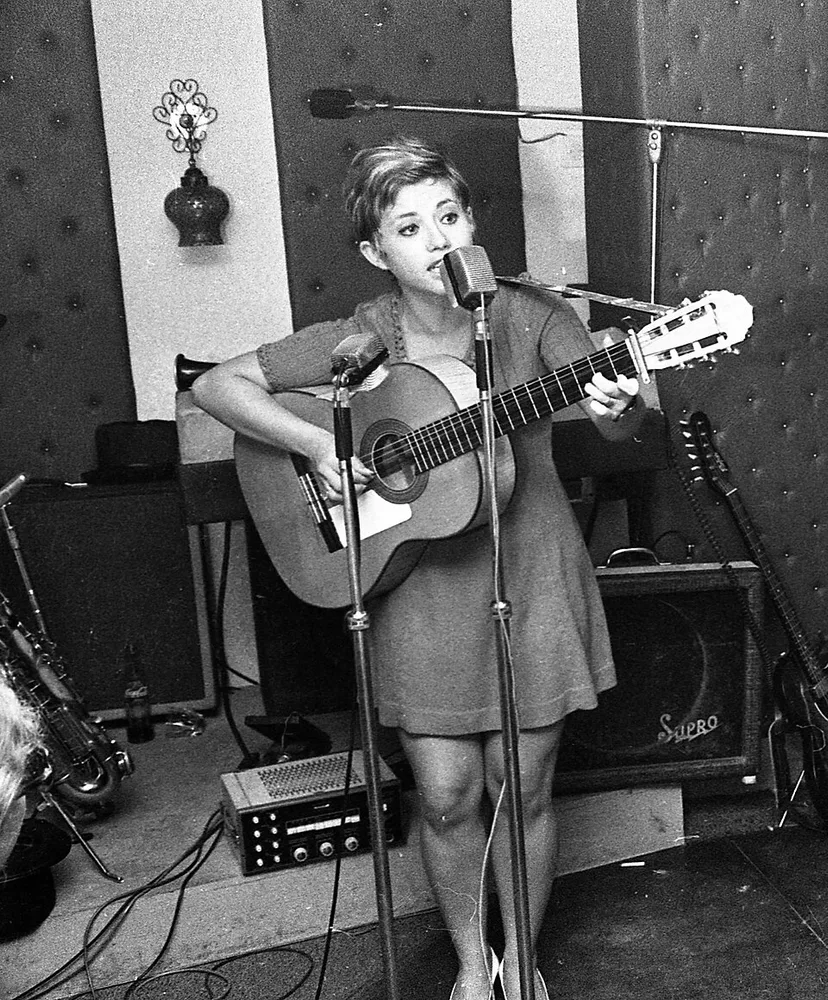
Chava Alberstein performing at an army base for Israeli soldiers, September 17, 1969. CC BY 4.0 — Wikimedia Commons — https://commons.wikimedia.org/wiki/File:Chava_Alberstein_performing_(cropped).jpg (Israel Press and Photo Agency / Dan Hadani collection, National Library of Israel)
Chava Alberstein is not a jazz musician. She was born December 8, 1946 in Szczecin, Poland, and immigrated to Israel with her parents in 1951. Over a career spanning more than 55 years she recorded more than 60 albums, including eight in Yiddish, more than any other Israeli singer, and became one of the most important performers of Hebrew music, Yiddish folk song, and children's music in Israel.
She has three documented jazz connections. The first is The Platina, the Israeli jazz group founded in 1971 by drummer Aharon Kaminski and Soviet emigre saxophonist Roman Kunsman. She toured with them from September 1973, a run interrupted by the Yom Kippur War and resumed that January, and the tour produced Chava Alberstein and the Platina (CBS Israel, CBS 70129, July 1974), twelve songs with Kunsman arranging most of the record. The second is The Klezmatics, the acclaimed New York klezmer band whose members bring real jazz training to their playing, with whom she recorded The Well (Di Krenitse) in 1998. Released on Xenophile Records on September 15, 1998, the album sets fifteen Yiddish poems to Alberstein's own melodies, arranged by the Klezmatics, and was named one of the ten best pop albums of 1998 by LA Weekly. The third connection is the most recent and the most complete: in April 2008 the Israeli trombonist, composer and arranger Avi Lebovich wrote the music, the arrangements and the production for her 45th studio album, טבע האדם (The Nature of Man, NMC), to lyrics by Nadav Levitan. After more than a year of sessions she sang on the record and did nothing else, giving up composing and playing on an entire album for the first time in four decades so that Lebovich's harmonic language could carry it.
Alberstein's core work sits in Hebrew and Yiddish folk song and protest song traditions, entirely outside jazz. The Well is the one point of real overlap with this project: a collaboration with a band that treats klezmer through a jazz-trained improviser's lens, applied to her own melodies and a set of somber, carefully chosen Yiddish texts about loneliness, loss, displacement, and death.
- The Well (1998, Xenophile Records, with The Klezmatics) - fifteen Yiddish poems set to her own melodies and arranged by the band, and the record this profile was originally built around. Spotify - The Well
- Chava Alberstein and the Platina (1974, CBS Israel) - the album drawn from her 1973-74 tour with The Platina, mostly arranged by Roman Kunsman. Spotify - Chava Alberstein and the Platina
- טבע האדם (2008, NMC) - her 45th studio album, written, arranged and produced end to end by Avi Lebovich.
Chava Alberstein: Full Discography
Scope note: Alberstein is a non-jazz artist (Hebrew/Yiddish folk) with a catalog of 60+ albums across a 55+ year career, included here for one specific jazz-adjacent record. This file covers her three documented jazz connections only, not her full discography. The 1974 Platina release, listed as unconfirmed in the original pass, was identified during the 2026-08-29 crosslink sweep.
Jazz-adjacent releases
| Release | Year | Label | Notes | Listen | Buy |
|---|---|---|---|---|---|
| Chava Alberstein and the Platina (חוה אלברשטיין והפלטינה) | 1974 | CBS Israel (CBS 70129) | Co-billed with The Platina. Released July 1974, 12 tracks, 47:43, drawn from a tour that began September 1973, was interrupted by the Yom Kippur War and resumed in January 1974. Roman Kunsman arranged most of the album. | Spotify | not found |
| The Well (Di Krenitse) | 1998 | Xenophile Records (Xeno 4052) | With The Klezmatics; 15 Yiddish poems set to Alberstein's melodies, arranged by the Klezmatics. Named one of the ten best pop albums of 1998 by LA Weekly. | Spotify | not found |
| טבע האדם (The Nature of Man) | 2008 | NMC | Her 45th studio album, April 2008. Avi Lebovich wrote the music, the arrangements and the production; lyrics by Nadav Levitan. Alberstein sang only, without composing or playing. Not logged on Lebovich's Discogs page; sourced from the Hebrew Wikipedia article on the album. | not confirmed | not found |
Other credits
- Discogs lists the band as an appearance credit on her 1973 album Lu Yehi (לו יהי), which predates the co-billed 1974 record. The personnel are not itemized on the Discogs master.
- She guests on the Avi Lebovich Orchestra's חיבורים (Hibburim, 2022), though Lebovich's own participation on that release is not confirmed.
Her broader 60+ album catalog (Hebrew folk, protest song, Yiddish song, children's music) is not itemized here; identity confirmed via Discogs artist ID 959097.
- The Klezmatics - collaborators on The Well (1998), which sets her own melodies to fifteen Yiddish poems in the band's arrangements.
- The Platina - her touring band from September 1973 and co-billed partners on the July 1974 CBS Israel album.
- Avi Lebovich - composer, arranger and producer of טבע האדם (2008) in full.


.jpg)