 JAZZPROFILES lives in the music 1,002 Jazz Artists fully Profiled!
 Eddie Palmieri
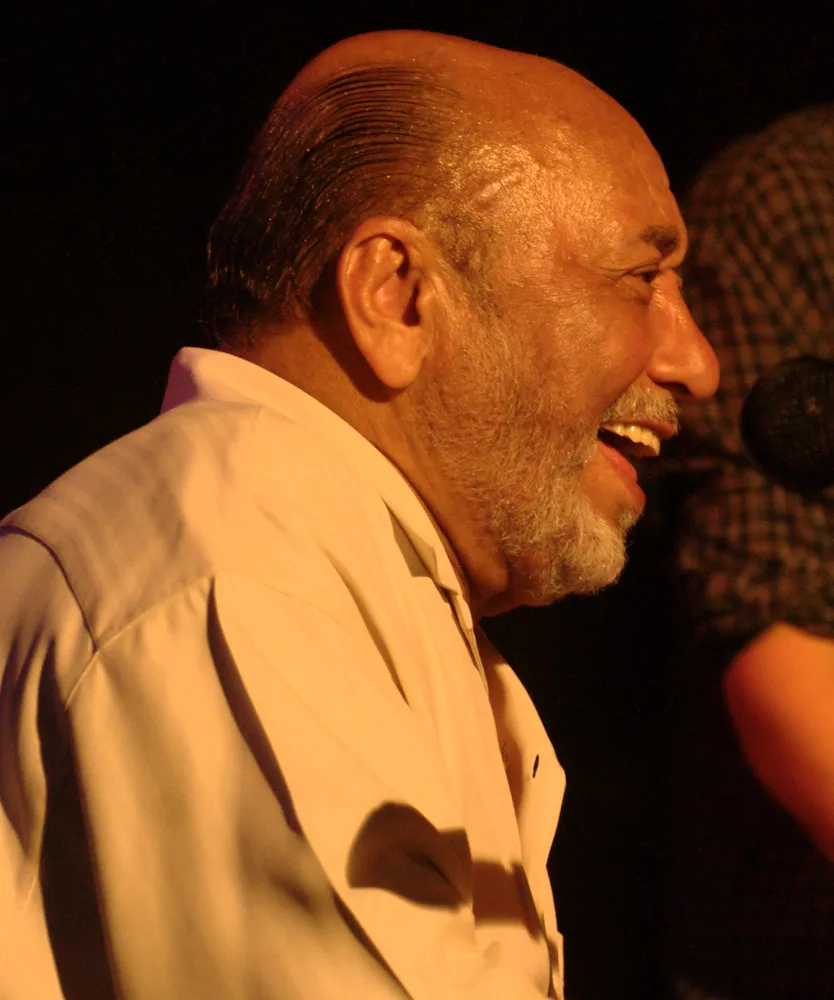
Eddie Palmieri on stage at the Bessunger Knabenschule in Darmstadt, Germany, in June 2013, the year he was named an NEA Jazz Master. His bassist Luques Curtis is visible behind him. CC BY-SA 4.0 — Wikimedia Commons — https://commons.wikimedia.org/wiki/File:Eddie_Palmieri_mit_Bassist_Luques_Curtis_(cropped)_(2).jpg
_(2).jpg)
Eduardo Palmieri was born in New York City on December 15, 1936, the second son of Isabel Maldonado and Carlos Manuel Palmieri, who had come north from Ponce, Puerto Rico and settled in the South Bronx in 1925 and 1926. His older brother by nine years, Charlie, was already a piano prodigy, and the two of them worked the talent-contest circuit together while Eddie was still a boy. He took lessons, played Carnegie Hall at eleven, and at thirteen joined an uncle's orchestra as a timbalero rather than a pianist, a detour that left a permanent mark on how he attacked a keyboard. He formed his first band at fourteen. Through the 1950s he worked as a sideman in the New York Latin dance orchestras, including Eddie Forrester's group, Johnny Segui's band and, most importantly, the orchestra of Tito Rodríguez.
In 1961 he left Rodríguez and started Conjunto La Perfecta with the singer Ismael Quintana. The pachanga craze was at its height and the standard vehicle was the charanga, a violins-and-flute ensemble, so Palmieri did the obvious thing backwards: he threw out the violins and put in two trombones. Charlie named the hybrid the "trombanga" in the liner notes of the first album, and the sound it produced, hard, low and blaring, was copied across New York within a few years, most conspicuously by Willie Colón. The founding band was Barry Rogers on trombone, George Castro on flute, Manny Oquendo on bongos and timbales, Tommy López on congas and Dave Pérez on bass. It was Rogers who, around 1964, put John Coltrane and McCoy Tyner records in front of Palmieri. Tyner became the reference point he named for the rest of his life, and the quartal voicings and the churning left hand that mark his playing from that moment forward come directly out of those records.
Two things happened in the middle of the decade that pulled the jazz half of his work into the open. On Mambo Con Conga Is Mozambique (Tico, 1966) he brought over the mozambique, a rhythm developed in Cuba after the revolution, and built a dance record on top of it that swung in a way Latin dance records generally did not. And in the same year he made El Sonido Nuevo with the vibraphonist Cal Tjader for Verve, his first record for a jazz label, with Julian Priester and Mark Weinstein in the trombone section, arrangements split between Palmieri and Claus Ogerman, and the lacquer cut by Rudy Van Gelder. A second Tjader album, Bamboleate, followed in 1967. Alongside this he was reading the Schillinger system, introduced to him by the singer Bob Bianco, which gave him a formal vocabulary for the harmonic experiments he was already making by ear.
The band broke up in 1968 over money, and what he built in its place was harder and stranger. Justice / Justicia (1969) put his politics on the sleeve. Superimposition (1970), made with Alfredo "Chocolate" Armenteros on trumpet, Andy Gonzalez on bass and Nicky Marrero on timbales, splits itself down the middle: a side of vocal dance numbers and a side of instrumentals, of which "17.1" and "Chocolate Ice Cream" are the two pieces jazz musicians still take off the record. Harlem River Drive (Roulette, 1971), billed to the band rather than to him, put salsa, soul, funk and jazz through the same arrangement and refused to separate them again. Vamonos Pa'l Monte, from the same year, had Charlie at the organ and Palmieri at a Fender Rhodes, the first salsa pianist to record on one. In 1972 he took a band into Sing Sing prison and recorded there. On July 21, 1979 he played the Amandla Festival in Boston alongside Bob Marley, Dick Gregory and Patti LaBelle.
The Coco Records years brought the first of the awards. The Sun Of Latin Music (1974), arranged by René Hernández with the eighteen-year-old Lalo Rodríguez singing, won the very first Grammy given in the newly created Best Latin Recording category, at the 18th Grammy Awards. Its centrepiece, "Un Día Bonito", opens with several minutes of unaccompanied free piano before the band arrives, which was not what the salsa market of 1974 expected from a hit record. Unfinished Masterpiece followed in 1975, released by the label over his objections while he still considered it incomplete, and won anyway. In 1978 Epic gave him a major-label budget and he spent it on Lucumi, Macumba, Voodoo, a record of Afro-Caribbean ritual rhythm under written string and horn parts. Three more Grammys came in the 1980s, all of them in the tropical dance category rather than a jazz one: Palo Pa' Rumba (1985), Solito (1986) and La Verdad (1988), the last made with the singer Tony Vega. Charlie died suddenly in 1988. In 1989 he made Sueño for the German jazz label Intuition, with David Sanborn on alto and Brian Lynch and Charlie Sepúlveda on trumpets.
From the mid-1990s the jazz work stopped being an occasional excursion and became a parallel career with its own working band. Palmas (Elektra Nonesuch, 1994) was the first, an instrumental quintet-plus record with Brian Lynch, Conrad Herwig and Donald Harrison in the front line, and it drew a nomination for Best Latin Jazz Performance in the category's first year. Arete (1995), Vortex (1996) and El Rumbero Del Piano (1998) continued it, Harrison's alto among the horns throughout. In 1998 the Berklee College of Music gave him an honorary doctorate. He announced his retirement in 2000 and then immediately recorded Masterpiece / Obra Maestra with Tito Puente, taped shortly before Puente's death and released in the year he died; it took two Grammys. In 2002 he revived the trombone front line as La Perfecta II for Concord Picante, and in 2005 Listen Here!, with Herwig, Lynch, Harrison, Giovanni Hidalgo and Horacio "El Negro" Hernandez, won Best Latin Jazz Album at the 48th Grammy Awards. The following year Simpático, co-billed to Brian Lynch, won it again at the 49th, on a session that ran Phil Woods, Yosvany Terry, Pedrito Martinez, Little Johnny Rivero, Dafnis Prieto and Lila Downs through his band.
In 2013 the National Endowment for the Arts named him an NEA Jazz Master, the highest honour the United States confers in jazz, in a class with Mose Allison, Lou Donaldson and Lorraine Gordon. He was eighty when he made Sabiduría (Ropeadope, 2017), his first leader album in eleven years, and eighty-one when he released two more in 2018: Full Circle, a set of re-recordings of his own early repertoire with the current band, and Mi Luz Mayor, a record of boleros and danzones dedicated to his wife Iraida, who had died in 2014, with Carlos Santana playing guitar on it. He kept working almost to the end: fronting the young band Sonido Solar in 2022, appearing in Spike Lee's Highest 2 Lowest in 2025, and playing on Conrad Herwig's Reflections: Facing South, issued the same year. He passed away at his home in Hackensack, New Jersey on August 6, 2025, at eighty-eight.
Palmieri played the piano like a percussionist who had been given a harmony textbook, which is close to what he was: he came up on timbales, and the dissonant, hammered, rhythmically displaced block chords he used to drive a band forward have more in common with a tumbao played on drums than with anything in the salsa piano tradition he grew out of. The named influences are Thelonious Monk and McCoy Tyner, with his brother Charlie ahead of both, and the debt to Tyner is specific and audible: quartal voicings, a heavy left hand, and a habit of letting harmony pile up until it strains. What he did with it was uncommon. Rather than laying jazz solos over a Latin rhythm section, he built pieces on the Cuban descarga, the open jam, and then "opened up" the arrangements so his sidemen soloed as jazz musicians inside a dance structure, which is why Superimposition can carry a vocal side and an instrumental side without sounding like two records. The Schillinger system gave the harmonic reaching a method, and by the 1970s he was writing free piano introductions into commercial salsa records and expecting the audience to follow. He never used the word salsa for his own music, holding with Tito Puente that it was a marketing term invented to sell New York Latin music rather than a description of anything. AllMusic files him under both Latin and jazz and lists Afro-Cuban Jazz, Cuban Jazz, Global Jazz and Latin Jazz ahead of New York Salsa among his styles, which is a fair summary of a career that ran the two side by side for sixty years.
- Superimposition (1970, Tico Records) - The clearest single statement of what he was doing: a vocal dance side and an instrumental side on one record, and the source of "17.1" and "Chocolate Ice Cream". Spotify Listen
- The Sun Of Latin Music (1974, Coco Records) - Winner of the first Grammy ever given for Best Latin Recording, and the record that opens with an extended free piano solo before the band comes in. Spotify Listen
- El Sonido Nuevo (1966, Verve Records) - His first record for a jazz label, co-led with Cal Tjader, with Julian Priester and Mark Weinstein in the trombones and arrangements shared with Claus Ogerman. Spotify Listen
- Listen Here! (2005, Concord Picante) - Winner of the Grammy for Best Latin Jazz Album at the 48th Grammy Awards, with Conrad Herwig, Brian Lynch, Donald Harrison and Giovanni Hidalgo. Spotify Listen
- Simpático (2006, ArtistShare) - Co-billed to Brian Lynch and a second Latin Jazz Grammy, with Phil Woods, Yosvany Terry and Pedrito Martinez among a very large cast. Spotify
- Palmas (1994, Elektra Nonesuch) - The start of the instrumental jazz band he ran in parallel for the next thirty years, and a nominee in the Latin Jazz category's first year. Spotify Listen
- Vamonos Pa'l Monte (1971, Tico Records) - Made with Charlie Palmieri at the organ, the first salsa record with a Fender Rhodes in the piano chair, and the source of the tune Avishai Cohen covered on 1970. Spotify Listen
- Full Circle (2018, Ropeadope Records) - At eighty-one, his own early repertoire re-cut with the current band and a horn section that grows to eleven pieces on the closing track. Spotify Listen
Eddie Palmieri: Full Discography
Eddie Palmieri led records for sixty-one years, and his Discogs artist entry (ID 10590) holds 1,011 entries, of which 146 carry a leader billing. Folding together pressings, territory repackagings and reissues leaves roughly 140 distinct leader titles, a large share of them 7-inch dance singles and compilations. Exhaustive coverage would serve nobody, so the table below curates the significant leader and co-led albums, and the sideman table that follows is a selection rather than a survey.
Every row was verified against the live Discogs API. Where an entry is filed as a master rather than a release, the master was resolved through its main_release and the returned title checked against the one requested, because a Discogs master carries no label or catalogue number of its own and can point at a different album than the one it is filed under. Recording dates are given only where a source states them: Palmieri's Tico-era and Coco-era sleeves generally do not, and a release year is not a recording date.
As Leader / Co-Leader
| Album Title | Recording Date(s) | Release Date | Label | Catalog Number | Format(s) | Personnel | Role | Reissue History | Spotify | Buy | Notes |
|---|---|---|---|---|---|---|---|---|---|---|---|
| Echando Pa'lante (Straight Ahead) | Not stated on the release | 1964 | Tico Records | LP 1113 (also TRLP-1113) | Vinyl LP, Mono | Eddie Palmieri (piano); Barry Rogers (trombone); Bobby Rodriguez (bass). The Discogs credit block is thin and lists no percussion, which is an omission rather than a complete record | Leader | Reissued by Tico as TRLP-1113 | Spotify | — | The second La Perfecta album, and the record that fixed the two-trombone "trombanga" front line in place of a charanga's violins |
| Azucar Pa' Ti | Not stated on the release | 1965 | Tico Records | LP 1122 (also SLP 1122, TRLP-1122) | Vinyl LP | Ismael Quintana (vocals); the rest of the La Perfecta personnel is not carried by Discogs | Leader | Reissued by Tico as TRLP-1122 | Spotify | — | Its eight-minute title track became the band's signature and one of the most durable New York Latin dance sides of the decade |
| El Sonido Nuevo | Not stated on the release | 1966 | Verve Records | V-8651 | Vinyl LP, Mono | Cal Tjader (vibraphone); Eddie Palmieri (piano); Barry Rogers, Jose Rodrigues, Julian Priester, Mark Weinstein (trombones); George Castro (flute, percussion); Bobby Rodriguez (bass); Manny Oquendo, Tommy Lopez Sr. (drums); Ismael Quintana (percussion). Arrangements split between Claus Ogerman (A1, A2, B1, B2) and Palmieri (A3, A4, B3, B4); lacquer cut by Rudy Van Gelder | Co-Leader | Later gathered onto Verve's Talkin' Verve and Soulful Vibes compilations | Spotify | — | His first record for a jazz label, co-led with a vibraphonist from the Latin jazz mainstream, and the point at which the two idioms in his playing stopped alternating and started overlapping |
| Mambo Con Conga Is Mozambique | Not stated on the release | 1966 | Tico Records | LP 1126 | Vinyl LP, Mono | Eddie Palmieri (piano); Barry Rogers, Jose Rodrigues (trombones); George Castro (flute); David Perez (bass); Manny Oquendo (bongos, timbales); Tommy Lopez Sr. (congas); Ismael Quintana (vocals) | Leader | Reissued on CD by Tico and Fania | Spotify | — | The record that carried the post-revolution Cuban mozambique rhythm into New York, and the clearest statement of what came to be called the Palmieri sound |
| Bamboleate | Not stated on the release | 1967 | Tico Records | LP 1150 (also TRLP-1150) | Vinyl LP, Mono | Eddie Palmieri (piano) and Cal Tjader (vibraphone), both credited on the sleeve as uncredited on the label itself; the supporting personnel is not carried by Discogs | Co-Leader | Reissued by Tico as TRLP-1150 and on CD by Fania | Spotify | — | The second and better-known Tjader collaboration, and a staple of later Latin jazz reissue programmes |
| Justice / Justicia | Not stated on the release | 1969 | Tico Records | SLP-1188 | Vinyl LP, Stereo | Eddie Palmieri (piano, leader); Jose Rodrigues (trombone); Nicky Marrero (timbales, percussion); Manny Oquendo (bongos); Francisco Aguabella, Chino Pozo, Ray Romero (congas and bongos); Bobby Thomas (drums); Robert Bianco (guitar); Dave Herscher, Lawrence Evans (bass); Roberto Franquiz (claves); chorus of Justo Betancourt, Jimmy Sabater, Elliot Romero, Arturo Campa and Caito | Leader | Reissued by Tico in 1974 and by Vivid Sound in Japan in 1984 | Spotify | — | The most overtly political record he made, and the one where his harmonic language starts to run well ahead of the dance floor |
| Superimposition | Not stated on the release | 1970 | Tico Records | LP 1194 | Vinyl LP, Mono | Eddie Palmieri (piano); Alfredo "Chocolate" Armenteros (trumpet); Jose Rodrigues, Lewis Kahn (trombones); Andy Gonzalez, Israel Feliu (bass); Nicky Marrero (timbales); Eladio Perez (congas); Tommy "Chuckie" Lopez Jr. (bongos); Manny Oquendo, Rudy Calzado (percussion); Ismael Quintana (vocals); coro of Justo Betancourt, Elliot Romero and Arturo Campa. No credit on this release carries a track restriction, so the block says nothing about who plays on what | Leader | Widely reissued on CD by Fania | Spotify | — | Half a dance record and half a jazz record, and the source of his two best-known instrumentals, "17.1" and "Chocolate Ice Cream" |
| Harlem River Drive | Not stated on the release | 1971 | Roulette | SR-3004 | Vinyl LP, Stereo | Eddie Palmieri (featured, credited for "theoretical arrangements"); Jimmy Norman (vocals, and credited with the concept behind A2); Ronnie Cuber (arrangement, A2). Discogs carries only four playing or writing credits on this release, which is a gap rather than the band | Leader | Reissued on CD and vinyl several times, most visibly by Tico and later specialist labels | — | — | Billed to the band rather than to him, and the record where salsa, soul, funk and jazz stop being separate materials. Not on Spotify under a searchable Palmieri billing |
| Vamonos Pa'l Monte | Not stated on the release | 1971 | Tico Records | LP-1225 | Vinyl LP, Mono | Eddie Palmieri (leader); Charlie Palmieri (organ); Alfredo "Chocolate" Armenteros (trumpet); Jose Rodrigues (trombone); Ronnie Cuber (baritone saxophone); Peter Yellin (tenor saxophone, special guest); Charles Camilleri (trumpet, special guest); Nicky Marrero (congas, timbales); Eladio Perez (congas); Bob Vianco (guitar); Raymond "Monchito" Muñoz (percussion); coro of Justo Betancourt, Elliot Romero, Marcelino Guerra, Santos Colón, Mario Muñoz Salazar, Yayo "El Indio" Pequero and Arturo Franquiz | Leader | Reissued on CD by Fania; a 2015 single edition pairs the title track with "Pa' la Ocha Tambó" | Spotify | — | Made with his older brother at the organ, and the first salsa record to put a Fender Rhodes in the piano chair. Its title track is the tune Avishai Cohen covered on 1970 in 2017 |
| Sentido | Not stated on the release | 1973 | Mango | MS 103 | Vinyl LP | Eddie Palmieri (piano); Barry Rogers (trombone, brass orchestration), Jose Rodrigues (trombone); Vitin Paz (trumpet); Mario Rivera (flute, saxophone, brass orchestration); Andy Gonzalez (bass); Jerry Gonzalez, Frankie Malabe (congas); Nicky Marrero (timbales, bongos, percussion); Tommy "Chuckie" Lopez Jr. (bongos); Rick Marotta, Paul Alicea (drums); Harry Viggiano (tres, guitar); coro of Jimmy Sabater, Willie Torres and Arturo Campa | Leader | Reissued on CD by Fania | Spotify | — | The record where the Gonzalez brothers, later the core of the Fort Apache Band, are in his rhythm section |
| The Sun Of Latin Music | Not stated on the release | 1974 | Coco Records | ELD 02.20.222 | Vinyl LP | Eddie Palmieri (piano); Lalo Rodriguez (lead vocals); Barry Rogers (trombone, tenor tuba), Jose Rodrigues (trombone); Vitin Paz (lead trumpet), Virgil Jones (trumpet); Ronnie Cuber, Mario Rivera (baritone saxophone, flute); Peter Gordon (French horn); Tony Price (tuba); Alfredo De La Fé (violin); Eddie Rivera (bass); Nicky Marrero (timbales, percussion); Eladio Perez (congas); Tommy "Chuckie" Lopez Jr. (bongos); coro of Jimmy Sabater and Willie Torres; arrangements by Rene Hernandez | Leader | Reissued on CD by Fania | Spotify | — | Winner of the first Grammy ever awarded for Best Latin Recording. "Un Día Bonito" opens with an extended unaccompanied free piano solo before the band enters |
| Unfinished Masterpiece | Not stated on the release | 1975 | Coco Records | CLP-120 (also CLP 120) | Vinyl LP, Stereo | Eddie Palmieri (piano, leader, arrangement theories and structure, writing); Lalo Rodriguez (lead vocals); Barry Rogers (trombone); Victor Paz (trumpet); Bobby Porcelli, Lou Marini (alto saxophone); Lou Orenstein (tenor saxophone); Ronnie Cuber (baritone saxophone, flute), Mario Rivera (baritone and tenor saxophone); Peter Gordon (French horn); Tony Price (tuba); Alfredo De La Fé (violin); Andy Gonzalez (bass); Nicky Marrero (timbales, percussion); Jerry Gonzalez, Eladio Perez (congas); Tommy "Chuckie" Lopez Jr. (bongos); coro of Ismael Quintana, Jimmy Sabater and Willie Torres; arrangements by Rene Hernandez | Leader | Reissued on CD by Fania | Spotify | — | Released by the label against his wishes while still unfinished, and a second Grammy winner in spite of it |
| Lucumi, Macumba, Voodoo | Not stated on the release | 1978 | Epic | JE 35523 | Vinyl LP, Stereo | Eddie Palmieri (piano, arrangements with Charles Camilleri); Ronnie Cuber (baritone saxophone, clarinet, solo); George Young (alto saxophone, flute, solo); Francisco Aguabella (congas, batá, claves); Tommy "Chuckie" Lopez Jr. (bongos, cowbell); Francisco Centeno (bass), Neil Stubenhaus (bass guitar); plus a string section including Kermit Moore, Jesse Levy, Anthony Sophos and Homer Mensch | Leader | Reissued on CD | Spotify | — | His major-label record, and the furthest he went toward orchestral writing over Afro-Cuban ritual rhythm |
| Palo Pa' Rumba | Not stated on the release | 1984 | Musica Latina International | ML 2001 | The main_release Discogs points at is a 7-inch; the album appeared on LP |
Not carried by Discogs on this pressing | Leader | Reissued on CD | Spotify | — | Winner of the Grammy for Best Tropical Latin Performance at the 27th Grammy Awards |
| Solito | Not stated on the release | 1985 | Musica Latina International | ML 59 | Vinyl LP | Not carried by Discogs on this pressing | Leader | Reissued on CD | Spotify | — | A second consecutive Grammy for Best Tropical Latin Performance, at the 28th Grammy Awards |
| La Verdad - The Truth | Not stated on the release | 1987 | Fania Records | FA-24 | Vinyl LP | Eddie Palmieri (piano); Tony Vega, Luis Vergara, Jerry Medina, Iris Martínez (lead vocals); Giovanni Hidalgo (congas, batá, percussion); Anthony Carillo (congas, batá, percussion); Jose Ramirez (batá, percussion); Charlie Cotto (timbales, drums); Polito Huertas (bass); Angie Machado (trumpet); Jesus Rafael Torres, Victor Candelario (trombones); Hector Veneros (saxophone) | Leader | Reissued on CD by Fania | — | — | His third Grammy in the tropical category, at the 30th Grammy Awards. Not located on Spotify under a confidently matched album ID |
| Sueño | Not stated on the release | 1989 | Intuition Records | INT 3011 1 (also 064 7913531) | Vinyl LP | Eddie Palmieri (piano, composition); David Sanborn (alto saxophone); Brian Lynch, Charlie Sepulveda (trumpets); Lewis Kahn, Alfredo Triff (violins); Johnny Torres (bass); Robby Ameen (drums); Francisco Aguabella (congas, batá); Milton Cardona (batá, coro); Anthony Carillo (bongos); Charlie Cotto (timbales); Luis Vergara (lead vocals) | Leader | Reissued on CD | Spotify | — | Made for a European jazz label, with a saxophonist from well outside the Latin circuit in the front line |
| Llegó La India... Via Eddie Palmieri | Not stated on the release | 1992 | Soho Sounds / Sony | CD-80864 | CD | India (lead vocals, choir); Milton Cardona (congas, batá, choir); Richie Flores (congas); Jimmy Delgado (bongos, bells, timbales); Johnny Torres (bass, choir); plus a choir including Pete Rodriguez, Benny Diggs and Connie Harvey | Leader / Producer | Reissued on CD | — | — | The record that introduced La India as a salsa singer, produced and directed by Palmieri |
| Palmas | Not stated on the release | 1994 | Elektra Nonesuch | 9 61649-2 | CD | Eddie Palmieri (piano; vocals on track 3 with Eddie Palmieri II); Brian Lynch (trumpet), Barry Danielian (trumpet, tracks 1 and 7); Conrad Herwig (trombone); Donald Harrison (alto saxophone, credited on the German pressing, Elektra Nonesuch 7559-61649-2, release 5087293; the US pressings list no saxophone credit at all); Johnny Benítez, Johnny Torres (bass); Richie Flores (congas) | Leader | Still in print on CD | Spotify | — | His first record for a jazz division of a major label, and a nominee for Best Latin Jazz Performance at the 37th Grammy Awards, the first year the category existed |
| Arete | Not stated on the release | 1995 | TropiJazz | CDDE 479908 | CD | Eddie Palmieri (piano, arrangements); Donald Harrison (alto saxophone, vocals); Brian Lynch (trumpet); Conrad Herwig (trombone); John Benitez (bass); Richie Flores (congas); Paoli Mejias (bongos); José "Cochise" Claussell (timbales, percussion); Adam Cruz (drums, guest) | Leader | Reissued on CD | Spotify | — | A second consecutive Latin Jazz nomination, at the 38th Grammy Awards |
| Vortex | Not stated on the release | 1996 | TropiJazz | RMD 82043 | CD | Eddie Palmieri (piano, composition, arrangements); Donald Harrison (saxophone); Brian Lynch (trumpet); Conrad Herwig (trombone); Oscar Partaya (bass); Adam Cruz (drums); Paoli Mejias (bongos, udu); José "Cochise" Claussell (timbales). One piece is credited to Beethoven | Leader | Reissued on CD | Spotify | — | The third of the run of instrumental jazz quintet-plus records he made in the mid-1990s |
| El Rumbero Del Piano | Not stated on the release | 1998 | RMM Records | RMM 82197 (also DAM 2456) | CD | Discogs carries no playing credits for this release, only art direction and cover concept | Leader | Reissued on CD | Spotify | — | Nominated for Best Tropical Latin Performance at the 41st Grammy Awards |
| Masterpiece / Obra Maestra (with Tito Puente) | Not stated on the release | 2000 | RMM Records | 0282840332 | CD | Eddie Palmieri and Tito Puente (conductors, with Ray Santos); Herman Olivera, Nestor Sanchez, Kevin Ceballo (vocals); Milton Cardona (batá, chanter); George Delgado, Johnny Rodriguez, José "Cochise" Claussell (congas); Javier Oquendo (bongos, batá); Luisito Quintero (percussion); Joe Santiago, Bernie Minoso (bass); Hector Del Curto (bandoneon); Ramón Ponce Jr. (guitarrón); Karlo Magno (vihuela) | Co-Leader | Reissued on CD; a promotional singles sampler exists separately | Spotify | — | Recorded shortly before Puente's death and released in the year he died. It took two Grammys |
| La Perfecta II | Not stated on the release | 2002 | Concord Picante | CCD-2136-2 | CD | Eddie Palmieri (piano); Conrad Herwig (trombone, tracks 1 to 5 and 7 to 11), Doug Beavers and Reynaldo Jorge (trombones, tracks 1, 3, 5, 8, 10); Brian Lynch (trumpet, tracks 2, 3, 4, 7, 9, 10, 11, and arrangements on 2 and 11); Herman Olivera (lead vocals and coro, tracks 1, 3, 5, 8, 10); Joe Santiago (bass); Dafnis Prieto (drums, tracks 2, 6, 7, 9, 11); George Delgado and Richie Flores (congas); John Rodriguez Jr. (bongos, guiro) | Leader | Still in print on CD | Spotify | — | The revival of the trombone front line forty years after the original band, with track-level credits precise enough to show which pieces are the dance band and which the jazz group |
| Ritmo Caliente | Not stated on the release | 2003 | Concord Picante | CCD-2180-2 | CD | Discogs carries no playing credits for this release beyond a guest appearance by the flautist Eddy Zervigon | Leader | Still in print on CD | Spotify | — | The second La Perfecta II record |
| Listen Here! | Not stated on the release | 2005 | Concord Picante | CCD-2276-2 | CD | Eddie Palmieri (piano); Donald Harrison (alto saxophone); Brian Lynch (trumpet); Conrad Herwig, Doug Beavers (trombones); John Benitez (bass); Horacio "El Negro" Hernandez (drums); Giovanni Hidalgo (congas) | Leader | Still in print on CD | Spotify | — | Winner of the Grammy for Best Latin Jazz Album at the 48th Grammy Awards |
| Simpático (The Brian Lynch/Eddie Palmieri Project) | Recorded at Bennett Studios, November and December 2005 | 2006 | ArtistShare | AS0057 | CD, Limited Edition | Eddie Palmieri and Edsel Gomez (pianos); Brian Lynch (trumpet); Phil Woods, Donald Harrison and Yosvany Terry (alto saxophones); Greg Tardy (tenor saxophone, clarinet); Mario Rivera (baritone saxophone); Conrad Herwig and Joe Fiedler (trombones); Adam Rogers (acoustic guitar); Boris Kozlov and Luques Curtis (double bass), Rubén Rodriguez (baby bass); Dafnis Prieto and Robby Ameen (drums); Giovanni Hidalgo (congas); Pedrito Martinez (congas, bongos, campana, coro); Little Johnny Rivero (bongos, campana); Marvin Diz (timbales); Pete Rodriguez (maracas, guiro); Lila Downs (vocals) | Co-Leader | Reissued in 2011 as an extended version on Hollistic MusicWorks | Spotify | — | Winner of the Grammy for Best Latin Jazz Album at the 49th Grammy Awards, and the record on which the largest cross-section of the current Latin jazz generation passes through his band |
| Sabiduría | Not stated on the release | 2017 | Ropeadope | RAD-347 (CD), RAD-347V (LP) | CD, LP, and a promotional CDr | Not carried by Discogs. All three pressings were checked through the master and every one of them has an empty credit block, so no personnel is asserted here | Leader | Issued simultaneously on CD and vinyl | Spotify | — | His first leader album in eleven years, cut at eighty and drawing on sessions recorded over several years |
| Full Circle | Not stated on the release | 2018 | Ropeadope Records | UPR-101 | CD, Stereo | Eddie Palmieri (piano, tracks 1 to 8); Herman Olivera (lead vocals and coro, 1 to 8); Luques Curtis (bass, 1 to 8); Nelson González (tres, 1 to 8); Camilo Molina (timbales, 1 to 8); Little Johnny Rivero (congas 1 to 8, cowbell 1 to 6, maracas 4); Nicky Marrero (bongos 1 to 6, timbalito 4); Anthony Carrillo (bongos, cowbell, 7 and 8); Jimmy Bosch (trombone, 1 to 8), Conrad Herwig (trombone, 1 to 6 and 8), with Doug Beavers, Joe Fiedler, Chris Washburne and Tokinori Kajiwara added on 8; Louis Fouché (alto saxophone, 1 to 8); Yosvany Terry, Ivan Renta and Jeremy Powell (tenor saxophones, 8); Ronnie Cuber (baritone saxophone, 7), Gary Smulyan (baritone saxophone, 8); Brian Lynch (trumpet, 8), John Walsh (trumpet, 7 and 8) | Leader | Current | Spotify | — | Re-recordings of his own early repertoire with the present-day band. The credits carry explicit track ranges throughout, so the core octet and the expanded track 8 horn section can be told apart exactly |
| Mi Luz Mayor | Not stated on the release | 2018 | Ropeadope / Uprising Music | UPR-102 | CD | Eddie Palmieri (piano); Carlos Santana (electric guitar); Luques Curtis (bass); Little Johnny Rivero (congas); Anthony Carrillo (bongos, cowbell, iyá); Gabriel Lugo (okónkolo); Louis Fouché and Ralph Moore (alto saxophones), Yosvany Terry (alto saxophone); Craig Handy, Ivan Renta and Jeremy Powell (tenor saxophones); Gary Smulyan and Ronnie Cuber (baritone saxophones); Jerry Medina and Juan Pablo Díaz (coro); arrangements by Ray Santos and José Madera | Leader | Current | Spotify | — | A record of boleros and danzones dedicated to his wife Iraida, who had died in 2014, and his second album of 2018 |
Also issued under his name and not itemised above: The Music Man (Tico JMTS-1420, 1977) and Exploration: Salsa-Jazz-Descarga (Coco CLP 151X, 1978), both compilations of earlier material rather than new sessions; Recorded Live At Sing Sing (Tico, two volumes, 1972 to 1974), taped at the prison with a band including Charlie Palmieri on organ, Cornell Dupree on guitar and Ronnie Cuber on saxophone; and a long tail of Tico, Coco, Alegre, Barbaro, Fania, Charly Latin and Alma Latina compilations, dance singles and territory repackagings.
As Sideman (selected major credits)
Palmieri worked far more often as a leader than as a sideman, and most of his non-leader entries are compilation appearances rather than sessions. The set below is limited to dates where he is a playing guest on someone else's record.
| Year | Project (Leader) | Title | Label | Catalog | Role | Notes |
|---|---|---|---|---|---|---|
| 1966 | Tico All-Stars | Descargas At The Village Gate, Live (three volumes) | Tico Records | Not resolved to a single release | Piano | The New York descarga summit sessions, later gathered onto a single CD |
| 1968 | Fajardo Y Sus Estrellas | Fajardo's Boogaloo | Not resolved from the master | — | Piano | A charanga leader's boogaloo date |
| 1987 | Cal Tjader | Cal's Pals | Not resolved from the master | — | Piano | A posthumous Tjader collection drawing on their 1960s Verve sessions |
| 1989 | Poncho Sanchez | La Familia | Concord Picante | Not resolved from the master | Piano, guest | The first of several appearances on the Concord Picante conguero's records |
| 1996 | Conrad Herwig | The Latin Side Of John Coltrane | Astor Place | Not resolved from the master | Piano, guest | The first instalment of Herwig's long-running series of Afro-Cuban reworkings of jazz repertoire |
| 1996 | TropiJazz All Stars | TropiJazz All Stars Volume 1 (and Volume 2, 1997) | RMM / TropiJazz | Not resolved from the master | Piano | The label's own all-star Latin jazz band |
| 1996 | Poncho Sanchez | Baila Mi Gente: Salsa! | Concord Picante | Not carried on the release | Piano, guest | — |
| 1998 | Dave Samuels | Tjaderized: A Cal Tjader Tribute | Verve | Not resolved from the master | Piano, guest | A tribute to the vibraphonist he had co-led two records with three decades earlier |
| 2003 | Poncho Sanchez | Out Of Sight | Concord Picante | Not resolved from the master | Piano, guest | — |
| 2007 | Conrad Herwig | A Jones For Bones Tones | Criss Cross Jazz | Not carried on the release | Piano, guest | A straight-ahead jazz label date, outside the Latin series |
| 2008 | Conrad Herwig | The Latin Side Of Wayne Shorter | Half Note | Not carried on the release | Piano, guest | — |
| 2010 | Conrad Herwig | The Latin Side Of Herbie Hancock | Half Note | Not carried on the release | Piano, co-billed | Billed on the sleeve as "Conrad Herwig with Eddie Palmieri and Randy Brecker" |
| 2012 | Savion Glover with McCoy Tyner, Eddie Palmieri and Jack DeJohnette | Fours | Half Note | Not carried on the release | Piano, co-billed | A tap dancer's record made with three pianists and a drummer, and the only documented meeting on record between Palmieri and the pianist he called his mentor |
| 2017 | Charlie Sepúlveda & The Turnaround | Mr. EP: A Tribute To Eddie Palmieri | HighNote Records | Not carried on the release | Guest | A jazz label tribute by the trumpeter who had played on Sueño |
| 2020 | Little Johnny Rivero | Golpe Duro | Mod Squad | Not carried on the release | Piano, guest | The conguero from his own band leading his own date |
| 2022 | Sonido Solar featuring Eddie Palmieri | Eddie Palmieri Presents Sonido Solar | Truth Revolution Records | Not carried on the release | Piano, presenter | A young Latin jazz band he fronted and put his name behind |
| 2025 | Conrad Herwig, Eddie Palmieri, Luques Curtis and others | Reflections: Facing South | Savant | Not carried on the release | Piano | Issued in the year of his death, and the last of the Herwig collaborations |
He also appears across a very large number of Fania All Stars, Tico All-Stars and Puerto Rico All Stars live and compilation releases, and on dozens of label anthologies of New York Latin music, none of which are itemised here.
- Barry Rogers - trombonist in the founding La Perfecta, half of the front line that defined the band's sound, and the man who introduced Palmieri to John Coltrane and McCoy Tyner around 1964. He stayed a presence into the 1970s, arranging brass on Sentido and The Sun Of Latin Music.
- Ismael Quintana - the singer of the original La Perfecta from 1961, on the run of Tico albums through Superimposition, and back in the band in the 1980s.
- Charlie Palmieri - his older brother, who named the trombanga, played organ on Vamonos Pa'l Monte, Exploration and the Sing Sing recordings, and was the subject of a Big Band Tribute Palmieri directed at Avery Fisher Hall on November 6, 2004.
- Cal Tjader - vibraphonist and co-leader of El Sonido Nuevo (Verve, 1966) and Bamboleate (Tico, 1967), the two records that first placed Palmieri squarely in a jazz context.
- Brian Lynch - trumpeter across the whole later jazz period: Sueño (1989), Palmas, Arete, Vortex, La Perfecta II, Listen Here!, Full Circle, and the co-billed Simpático, which the two of them won a Grammy for.
- Conrad Herwig - trombonist on Palmas onward, and the leader who used Palmieri as a guest across his Latin Side series, from The Latin Side Of John Coltrane (1996) through Wayne Shorter (2008) and Herbie Hancock (2010), and finally on Reflections: Facing South in 2025.
- Nicky Marrero - timbalero from Justice / Justicia and Superimposition through The Sun Of Latin Music and Unfinished Masterpiece, and still in the band on Full Circle nearly fifty years later.
- Andy Gonzalez and Jerry Gonzalez - bass and congas on Sentido (1973) and Unfinished Masterpiece (1975), a few years before they founded the Fort Apache Band. Andy had already played bass on Superimposition.
- Ronnie Cuber - baritone saxophone from Vamonos Pa'l Monte (1971) and the Harlem River Drive arrangements through The Sun Of Latin Music, Lucumi, Macumba, Voodoo and, forty-seven years on, Full Circle and Mi Luz Mayor.
- Donald Harrison - alto saxophone on the run of instrumental records from Arete (1995) to Listen Here! (2005), and on Simpático.
- Little Johnny Rivero - conguero on Simpático, then album-length on both 2018 records, with Palmieri returning the favour as a guest on Rivero's own Golpe Duro (2020).
- Yosvany Terry - alto saxophone on the Grammy-winning Simpático (2006) and on both 2018 albums.
- Lalo Rodríguez - the teenage lead voice on The Sun Of Latin Music and Unfinished Masterpiece, the two Grammy-winning Coco records.
- Tito Puente - a contemporary rather than a bandmate for most of both careers, until the co-led Masterpiece / Obra Maestra, recorded shortly before Puente's death in 2000 and the source of two more Grammys.
- Herman Olivera - lead vocalist of La Perfecta II from 2002, on Masterpiece / Obra Maestra and album-length on Full Circle.
- Luques Curtis - bassist on Simpático and on both 2018 records, and still in the band for the 2025 Herwig session.
- Wikipedia: Eddie Palmieri
- Wikipedia (Spanish): Eddie Palmieri
- Wikipedia (German): Eddie Palmieri
- Wikipedia (Italian): Eddie Palmieri
- National Endowment for the Arts: Eddie Palmieri, 2013 NEA Jazz Master
- Wikipedia: NEA Jazz Masters
- Discogs: Eddie Palmieri (artist 10590)
- AllMusic: Eddie Palmieri
- Wikipedia: Grammy Award for Best Latin Jazz Album
- Wikipedia: Grammy Award for Best Tropical Latin Album
- Wikipedia: Grammy Award for Best Latin Recording