 JAZZPROFILES lives in the music 1,002 Jazz Artists fully Profiled!
 Caterina Zapponi
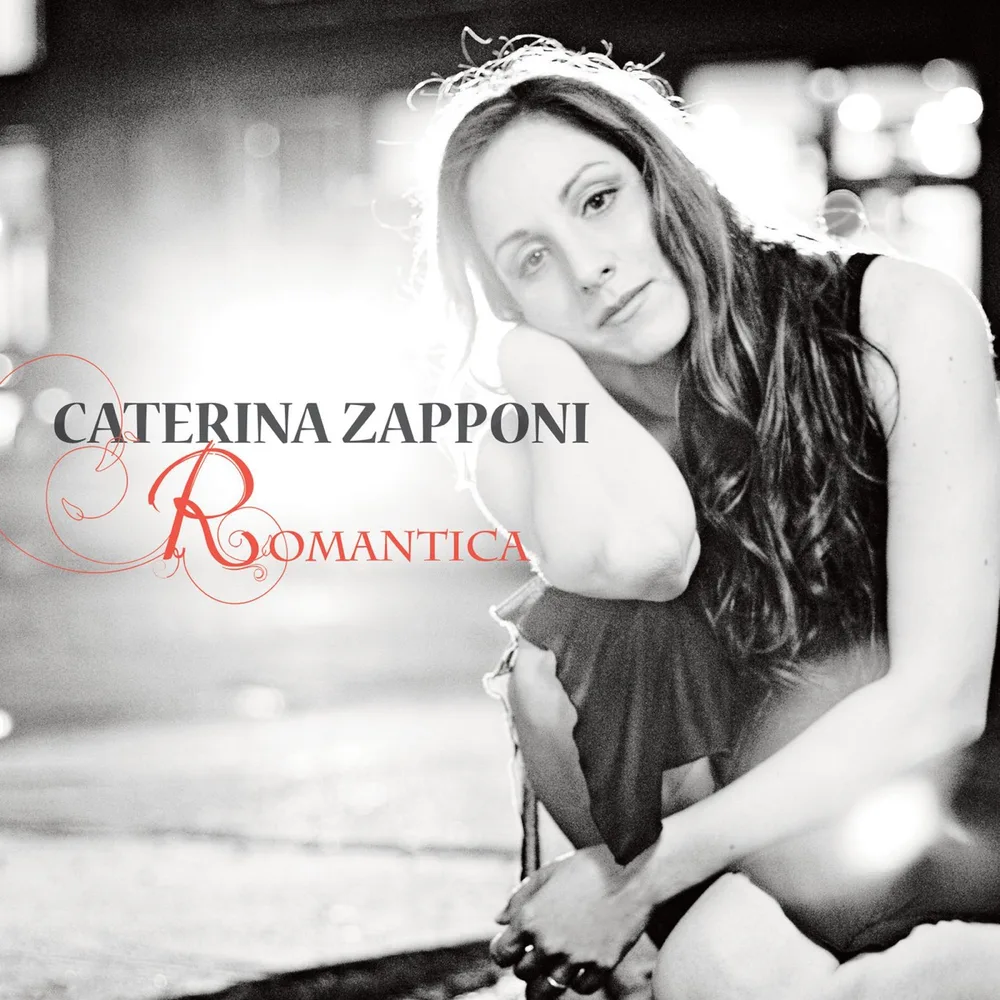
The front cover of Caterina Zapponi's second album, *Romantica* (Motema Music, May 13, 2014), which is a black-and-white photographic portrait of the singer herself, seated on a night street with the lights behind her thrown out of focus. Her name and the album title are set in the left of the frame. This is an album cover, not a press or documentary photograph of the artist, and it is used because no free photograph of her exists. Album cover art (not a CC-licensed artist photo). Used as the only available image showing the artist. Copyright is held by Motema Music LLC and the sleeve's photographer, who is not named on any source consulted. No Creative Commons or public-domain licence applies to this file. — Apple Music artwork CDN, the cover art served for Romantica, Apple Music collection 1248950140 (https://music.apple.com/us/album/romantica/1248950140), taken from https://is1-ssl.mzstatic.com/image/thumb/Music122/v4/3c/c6/c3/3cc6c3b3-5cef-95f1-017e-de2d08c091a9/886446438276.jpg/1400x1400bb.jpg . The same cover image appears on the Discogs release page for Motema MTM-146 (release 11549880) and on Spotify album 2MrCZuVHiS1tNobpjZDski. Apple's own CDN was used rather than a Discogs user upload, which sweep policy excludes.

Caterina Zapponi grew up inside Italian cinema. Her father was Bernardino Zapponi (1927 to 2000), the novelist and screenwriter who met Federico Fellini in July 1967 and wrote seven films with him over the thirteen years that followed, among them Toby Dammit, Satyricon, Roma, Fellini's Casanova and City of Women; her mother, Francoise Rambert, was a French-born chanteuse who sang in cabaret and kept the house piano in her daughter's bedroom, where she rehearsed. The French repertoire came from her mother directly, learned by overhearing it, and both Charles Trenet songs on her second album trace back to that house: "J'ai ta main" was part of Francoise's cabaret act, rehearsed at the piano in her daughter's room, and "Que reste-t-il de nos amours?" was what the actors and directors at her parents' dinner parties would ask Francoise to sing. What pushed her toward jazz was a film rather than a record. She has named the Cole Porter musical High Society as the thing that made her want to study the American songbook in the country that produced it.
She got there on a scholarship to Berklee College of Music, finished the degree in two years, and left with the Berklee Cleo Laine Award for vocal achievement and performance. In 1994 she entered the Thelonious Monk International Jazz Vocals Competition at the Kennedy Center, a year judged by Jon Hendricks, Shirley Horn, Cleo Laine, Abbey Lincoln, Dianne Reeves and Jimmy Scott. She reached the finals and placed fourth, behind Sara Lazarus, Lisa Henry and Carolyn Leonhart. She has been based in New York since that year. Both credentials predate the association she is usually introduced by: it was later in the 1990s that she met the Jamaican pianist Monty Alexander, who became her husband, her manager and the accompanist on nearly everything she has recorded. Their first documented joint credit is a film cue, "A Song for You," heard in Sam Raimi's For Love of the Game in 1999, which never made the soundtrack album.
Her first album came out on the German audiophile label Inak. Universal Love Songs was cut at Carlen Studios in March, Baden-Wurttemberg, between April 17 and June 15, 2000, and issued in 2001 with a quartet of Alexander on piano and melodica, the brothers Lorenzo and Davide Petrocca on guitar and bass, and Martin Drew, Oscar Peterson's drummer, at the kit. The fourteen songs run through five languages: Charles Aznavour and Edith Piaf in French, the Neapolitan "Passione" and Umberto Bindi's "Il Nostro Concerto" in Italian, Oscar Castro-Neves in Portuguese, "Acercate Mas" in Spanish, and Cahn and Van Heusen in English, with Bob Marley's "Waiting in Vain" set among them. Reviewing it for All About Jazz in June 2001, Dave Nathan called the singing "soft but very expressive" and the record a great album.
Thirteen years passed before the second one. In the interval she worked the rooms rather than the studios: Birdland and the Blue Note in New York, the Verbier and Saint Barthelemy festivals, and, touring with Alexander, Ronnie Scott's in London, the Marseille Jazz Festival, the New Morning and the Theatre des Champs Elysees in Paris, the Blue Note and the Cotton Club in Tokyo, the Cully and Bern festivals in Switzerland, the Moscow International House of Music, and Jazz at Lincoln Center. She also moved to the other side of the glass. On Alexander's Harlem-Kingston Express Vol. 2: The River Rolls On (Motema, April 2014) she is co-executive producer with him and sings the title track, cut at Avatar Studios in August 2013 on a record whose guests include George Benson, Joe Sample and Ramsey Lewis. Five years later she co-produced his Wareika Hill: Rasta-Monk Vibrations (2019), the album that plays Thelonious Monk over Rastafarian Nyabinghi drumming with John Scofield and Joe Lovano guesting.
Romantica, released by Motema on May 13, 2014 and produced by Alexander, is the record she is known by. It is thirteen French, Italian and Neapolitan songs, and Alexander built her a different band for almost every one of them: a swing quartet with Bucky Pizzarelli, Martin Pizzarelli and Frank Vignola for the Trenet and Salvador material; a trio with Hassan Shakur and Kevin Kanner for the two closing originals she wrote with him; Etienne Charles on cuatro for the calypso "Maladie d'amour"; an entirely Danish group of Jacob Fischer, Tomas Fonnesbaek, Kresten Osgood and the violinist Kristian Jorgensen for Bruno Martino's "Estate," a track Alexander sits out altogether; and two bare duets, "Fenesta vascia" with only his piano and "Que reste-t-il de nos amours?" with only the guitar of Yotam Silberstein. Will Friedwald wrote the liner notes. She launched it at the Blue Note on May 26 with Alexander, Bucky Pizzarelli and Houston Person. The reviews took it as jazz and took her seriously: MusicWeb International placed her voice near Stacey Kent's but with more power and singled out her "undoubted jazz sensibility," JazzTimes ran a full review that September, and RTE called the record highly recommended. Nothing has been documented since the 2019 production credit.
Zapponi is a repertoire singer in the European sense, which is to say the interesting question with her is never the tune but the language it arrives in. She sings in five, and the two she was raised in, French and Italian, are the ones she does something with: the chanson tradition through her mother, Trenet, Aznavour, Piaf and Henri Salvador, set against a Neapolitan and Italian songbook that jazz singers rarely go near, "Fenesta vascia," "Passione," "Torna a Surriento," "'Na voce, 'na chitarra." Her instrument is light and unforced, with very little vibrato and no scatting at all, and she works by placing a song in an unexpected setting rather than by rebuilding it from the inside: a Henri Salvador tribute to Count Basie stays a swing number, "Maladie d'amour" turns up as a calypso with a cuatro under it, "Estate" is handed to a Danish quartet with a violin. Critics have caught both the appeal and its limit. MusicWeb's James Poore heard "an appealing voice, rather in the style of Stacey Kent but with more power" and an evident jazz sensibility, while noting that she sings the two Neapolitan pieces almost straight, in a dramatic style at odds with the rest of the album. RTE's Paddy Kehoe made the opposite case, arguing that her "Estate" comes close to Joao Gilberto's for restraint. She also writes: "Redis-moi (You Can See)" and "Vorrei (Got to Go)" are her lyrics to Monty Alexander's tunes, in French and in Italian, and MusicWeb called the second of them the album's finest moment. Her own biography stakes out cabaret and musical theatre alongside jazz and the American popular song, and the mixture is the point rather than a hedge.
- Romantica (2014, Motéma Music) - Her defining record: thirteen French, Italian and Neapolitan songs with a band rebuilt track by track around Bucky Pizzarelli, Frank Vignola, Yotam Silberstein, Etienne Charles and Kristian Jorgensen, produced by Monty Alexander with liner notes by Will Friedwald. Spotify - Romantica Listen
- Universal Love Songs (2001, Inak) - The debut, cut in Germany in the spring of 2000 with Alexander, the Petrocca brothers and Martin Drew: fourteen love songs in five languages, from Aznavour and Piaf to Bob Marley and Oscar Castro-Neves. Apple Music - Universal Lovesongs Listen
- Monty Alexander, Harlem-Kingston Express Vol. 2: The River Rolls On (2014, Motéma) - She co-executive-produced it and sings the title track, recorded at Avatar Studios in August 2013, on a record that also brings in George Benson, Joe Sample and Ramsey Lewis. Spotify - Harlem-Kingston Express Vol. 2
- Monty Alexander, Wareika Hill: Rasta-Monk Vibrations (2019, MACD Records) - Her second production credit for Alexander, and his most ambitious record: Thelonious Monk's tunes over Nyabinghi drumming, with John Scofield and Joe Lovano. She does not sing on it. Spotify - Wareika Hill Rastamonk Vibrations
- For Love of the Game (1999, film) - Her earliest documented recording, "A Song for You" with Alexander, heard in the Sam Raimi picture. It is a film cue only; the MCA soundtrack album does not carry it.
Caterina Zapponi: Full Discography
Identity confirmed against the live Discogs API, artist ID 3848999, whose own profile text reads "Italian singer and producer. Daughter of Bernardino Zapponi, wife of Monty Alexander," and cross-checked against MusicBrainz artist 1a62e125-648d-4884-990a-7f1722eacc1d, which holds exactly one artist of this name and links out to Discogs 3848999 and IMDb nm0953302. There is no namesake to separate her from. She is not the multilingual singer Caterina Valente, whom a name search on MusicBrainz returns second.
The leader table is complete. Zapponi has made two albums under her own name, thirteen years apart, so nothing had to be curated away. The guest and production table covers every documented non-leader credit found, on Discogs and off it.
Discogs carries no personnel at all for either of her own albums, and this is the central source problem on this artist. Both releases were fetched individually with GET /releases/<id> rather than characterised from the artist index, and both came back with an empty extraartists block and an empty tracklist[].artists array on every track: no musicians, no producer, no engineer, no companies. Absence there is therefore not evidence of absence. Every personnel line below was read off a specific review that printed the CD booklet's credits, off the label's own release announcement, or off the artist's own site. Where those sources disagree, the conflict is named in the Notes column rather than resolved silently. Discogs was still the only usable source for the two Monty Alexander records at the foot of this file, where the credit blocks are well formed and track-restricted.
A note on the Spotify column. Spotify's catalogue could not be searched or listed. Its keyless oEmbed endpoint (https://open.spotify.com/oembed?url=...) does answer, and it was used to confirm three album IDs and one artist ID by their real titles, but it cannot enumerate a discography, so where an album's ID could not be recovered by other means, no Spotify URL is asserted. Apple Music collection IDs, each checked against the keyless iTunes Lookup API for artist 298097218, are given as well. The Buy column is a dash throughout, because no affiliate program is set up for this site.
As Leader
| Album Title | Recording Date(s) | Release Date | Label | Catalog Number | Format(s) | Personnel | Role | Reissue History | Spotify | Buy | Notes |
|---|---|---|---|---|---|---|---|---|---|---|---|
| Universal Love Songs | April 17 to June 15, 2000, at Carlen Studios, March, Germany | 2001 (Discogs dates the pressing 2000; Apple stamps April 3, 2001) | Inak (in-akustik) | INAK 9062 | CD, Album, Stereo | Caterina Zapponi (vocals), Monty Alexander (piano, melodica), Lorenzo Petrocca (guitar), Davide Petrocca (bass), Martin Drew (drums) | Leader | Re-flagged by in-akustik in 2009; Apple's copyright line reads "℗ 2009 INAKUSTIK" and All About Jazz's discography lists a separate 2009 Inakustik entry alongside the 2001 Inak one | Not verified; see header. Apple Music | — | Fourteen tracks sung in five languages, from Charles Aznavour's "For Me Formidable" and Edith Piaf's "Mon Dieu" through the Neapolitan "Passione" (Libero Bovio and Enrico Tagliaferri) and Umberto Bindi's "Il Nostro Concerto" to Bob Marley's "Waiting in Vain," Oscar Castro-Neves's "Morrer de Amor" and Cahn and Van Heusen's "All the Way." Personnel come from Dave Nathan's All About Jazz review of June 1, 2001, not from Discogs, which lists nobody. Spelling conflict: the artist's own site reads "David Petrocca," All About Jazz and the retail listings read "Davide Petrocca"; Davide is used here. Title conflict: Discogs, MusicBrainz and Apple all file it as one word, Universal Lovesongs; her own site, the label and both reviews read Universal Love Songs. Date conflict: the AllMusic session dates place the recording entirely in 2000, which explains why Discogs dates the pressing 2000 while everyone else calls it a 2001 release |
| Romantica | Not documented on any source consulted | May 13, 2014 | Motéma Music | MTM-146 | CD, Album | Caterina Zapponi (vocals); Monty Alexander (piano on 1 to 5, 7, 9, 11 to 13; melodica on 10; producer); Bucky Pizzarelli (guitar on 1, 2, 4, 5, 7, 10); Frank Vignola (guitar on 1, 5; mandolin on 7, 10); Yotam Silberstein (guitar on 6, 8); Jacob Fischer (guitar on 3); Martin Pizzarelli (acoustic bass on 1, 2, 4, 5, 7, 10, 11); Hassan Shakur (acoustic bass on 12, 13); John Lee (electric bass on 6); Tomas Fonnesbaek (bass on 3); Etienne Charles (cuatro on 11); Kristian Jorgensen (violin on 3); Kevin Kanner (drums on 12, 13); Kresten Osgood (drums on 3). Liner notes by Will Friedwald | Leader | None found | Spotify - Romantica · Apple Music | — | Thirteen tracks, 48:27, sung in French, Italian and Neapolitan. Charles Trenet's "J'ai ta main" and "Que reste-t-il de nos amours?", Henri Salvador's "Count Basie (Lil' Darlin')", "Bora Bora" and "Maladie d'amour", Hoagy Carmichael's "Stardust" as "Polvere di stelle", Bruno Martino's "Estate", "Torna a Surriento", "Non Dimenticar", "Fenesta vascia" and "'Na voce, 'na chitarra", closing on two Zapponi and Alexander originals, "Redis-moi (You Can See)" in French and "Vorrei (Got to Go)" in Italian. Catalogue-number conflict: the Discogs pressing reads MTM-146, MusicWeb International's review header reads "Motéma 233851." Both are real; 233xxx is Motéma's distribution numbering, and the label's promo pressing of Monty Alexander's Harlem-Kingston Express Vol. 2 the same year carries PROMO233828. The track-level personnel above are from MusicWeb's review (James Poore, 2014), which printed the booklet credits in full; Discogs has none. Track 3, "Estate", is cut with an entirely Danish band and no Alexander at all. Tracks 8 and 9 are duets, voice with guitar and voice with piano. Bonus-track conflict: her own site advertises three digital bonus tracks ("Syracuse (Rocksteady Style)", "Stay As Sweet As You Are" and "Syracuse"); the Apple Music edition currently carries only the first of the three, as track 14 |
As Guest, Vocalist and Producer (complete as documented)
Zapponi is a bandleader, and this list is short by nature. It covers every non-leader credit found on her Discogs index plus one film credit that sits outside it.
| Year | Project (Leader) | Title | Label | Catalog | Role | Notes |
|---|---|---|---|---|---|---|
| 1999 | Sam Raimi, dir. (film) | For Love of the Game | (no release) | (none) | Vocals, "A Song for You," with Monty Alexander | A cue heard in the Kevin Costner picture, credited to Monty Alexander and Caterina Zapponi. It is not on the soundtrack album: MCA's For Love of the Game (Music From The Motion Picture), 088 112 068-2, was checked track by track and its fifteen cues run from Lyle Lovett to Basil Poledouris with no Zapponi entry. The credit therefore exists only in the film itself and in film-music databases. Her own site names the film as "For the Love of the Game," which is not its title |
| 2002 | Various Artists | Ladies' Favorites | Zounds Music | 2700000082D | Vocals, track 13 | "For Me Formidable," lifted from Universal Love Songs. A compilation appearance, not a new recording |
| 2014 | Monty Alexander | Harlem-Kingston Express Vol. 2: The River Rolls On | Motéma | PROMO233828 (promo pressing) | Executive producer (with Alexander); vocals, track 7 | Released April 8, 2014. She sings the title track, "The River Rolls On," written by Alexander and Brian Jobson, cut at Avatar Studios in August 2013; Discogs's credit block restricts her vocal to that one track and files her featured billing on it. Guests elsewhere on the record include George Benson, Joe Sample and Ramsey Lewis, and Yotam Silberstein plays guitar on tracks 1 and 8. Soul Train Award nominated in 2014 |
| 2019 | Monty Alexander | Wareika Hill: Rasta-Monk Vibrations | MACD Records | (none on the pressing) | Producer (with Alexander) | Released August 23, 2019. Fourteen tracks setting Thelonious Monk's compositions against Rastafarian Nyabinghi drumming, with John Scofield and Joe Lovano guesting. Her production credit carries no track restriction, so it covers the album. Not a performing credit |
Compilation and sampler appearances
Her Inak track "Waiting in Vain" has been anthologised twice on the label's own audiophile samplers. These are reused masters from Universal Love Songs, not new recordings, and are listed for completeness rather than treated as discography entries: Dynaudio: Kissed By A Song (in-akustik INAK 7801 HQCD, Germany, 2014, track 4) and Great Ballads (in-akustik INAK 75105 UHQCD, Germany, February 24, 2023, track 12).
Known problems in the source data
| Item | Problem |
|---|---|
| Discogs releases 11549880 and 15813398 | Both of her leader albums carry zero personnel. Empty extraartists, empty tracklist[].artists on every track, no companies, no producer. On Romantica this means Discogs does not know that Monty Alexander produced and played on the record his wife made, and does not know that Bucky Pizzarelli is on it. Nothing in the leader table above came from Discogs |
| Discogs artist 3848999 | Seven index entries only, which understates her: the 1999 film cue is absent, and Discogs's coarse artist-index role for the two Monty Alexander records reads "Producer" and "Appearance," neither of which conveys that she is the co-executive producer of one and sings its title track |
| "John Lee," Romantica track 6 | MusicWeb's booklet transcription credits electric bass on "Bora Bora" to John Lee. The bassist, producer and engineer John Lee profiled on this site (Discogs 301667) is the obvious candidate, since he produced Monty Alexander's Uplift and Uplift 2 and Yotam Silberstein's Resonance and Brasil. It could not be confirmed. Discogs cannot arbitrate because the release carries no credits, no press item names which John Lee it is, and Discogs is documented to have merged a second working jazz bassist of the same name into artist 301667. The credit is printed here as the source prints it and no link is asserted |
| caterinazapponi.com, Romantica page | Its musician list omits four of the fourteen players MusicWeb prints (Jacob Fischer, Tomas Fonnesbaek, Kresten Osgood and John Lee), which is the whole of the Danish contingent on "Estate" plus the track 6 bassist, and it misspells her own name as "Caterina Zappini" in the credit block. The site's TLS certificate has expired; the pages serve fine over plain HTTP |
| motema.com | The label's own artist page now returns HTTP 500. The Wayback snapshot serves the complete release announcement, which is the only source that names her mother, Francoise Rambert, and the only one that dates the Blue Note launch show (May 26, 2014, with Alexander, Bucky Pizzarelli and Houston Person) |
| AllMusic | Serves through Wayback but its snapshots do not include the Credits panel, which loads client-side. Its Romantica page carries no recording date or location; its Universal Lovesongs page is the only source anywhere for that album's session dates and studio |
| MusicBrainz | Dates Romantica to June 17, 2014. The label, Discogs and Apple all give May 13, 2014, and Motéma's own announcement says May 13. The May date is used |
| Spotify | Its catalogue could not be searched or listed. The keyless oEmbed endpoint confirmed artist 5CaGCpJkOwoUKKJavdhatG and album 2MrCZuVHiS1tNobpjZDski by title, but cannot list a discography, so no Spotify URL is asserted for Universal Love Songs |
| All About Jazz, AllMusic, JazzMusicArchives, Dusty Groove, IMDb, Discogs web pages | All 403 to automated fetches. Note that Dusty Groove's 403 still served a page body, so only the status code was reliable. All About Jazz and AllMusic were recovered through Wayback; IMDb's identifier came from MusicBrainz instead |
Sources
- Discogs API: artist 3848999; releases 11549880, 15813398, 17342263, 15246866, 13529998, 9809947, 26372963, 5181442
- MusicBrainz API: artist 1a62e125-648d-4884-990a-7f1722eacc1d and its two release groups
- iTunes Lookup API, artist 298097218, collections 1248950140 and 1114556646
- Spotify oEmbed, artist 5CaGCpJkOwoUKKJavdhatG and albums 2MrCZuVHiS1tNobpjZDski, 75BWDNPogTgRsof7JgZKb7, 5HRe40l8IrYnRX4P3i0A85
- MusicWeb International, Romantica review by James Poore, 2014, for the full track-level personnel
- All About Jazz, Universal Love Songs review by Dave Nathan, June 1, 2001, for that album's personnel
- Motéma Music's Romantica release announcement (via the Wayback Machine)
- caterinazapponi.com, the
romanticaanduniversallovesongspages - RTE, Romantica review by Paddy Kehoe, October 2, 2014
- AllMusic album pages for Romantica and Universal Lovesongs (via the Wayback Machine)
- bandasonora.org, cue list for For Love of the Game (1999)
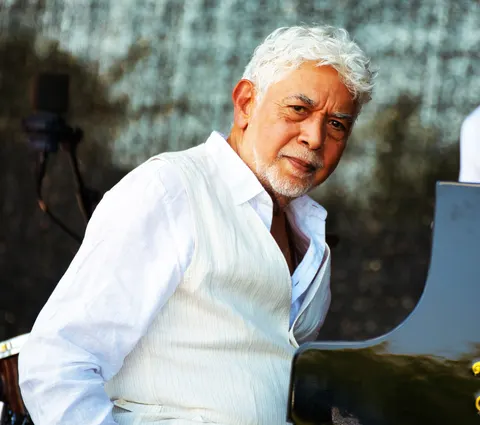
- Monty Alexander - her husband, manager, producer and pianist. He plays on both her albums, produced both, and she has reciprocated as co-executive producer of his Harlem-Kingston Express Vol. 2 (2014) and co-producer of Wareika Hill (2019). She wrote the lyrics to two of his tunes for Romantica.
- Bucky Pizzarelli and Martin Pizzarelli - the guitar and acoustic bass chairs on six of the thirteen Romantica tracks, and the core of the swing quartet that carries the Trenet and Salvador material. Bucky joined her onstage at the Blue Note for the album's launch on May 26, 2014.
- Frank Vignola - second guitar on tracks 1 and 5 of Romantica, and mandolin on tracks 7 and 10.
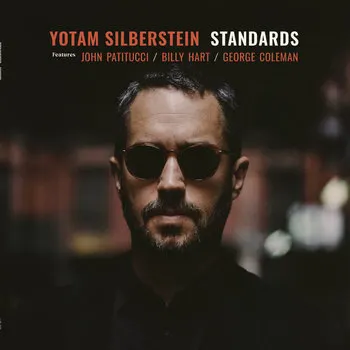
- Yotam Silberstein - guitar on two Romantica tracks, "Bora Bora" and "Que reste-t-il de nos amours?", the second of them a voice-and-guitar duet that two reviewers picked out. He also plays on tracks 1 and 8 of Harlem-Kingston Express Vol. 2, the Alexander record she co-produced.
- Lorenzo and Davide Petrocca - the Italian guitarist and bassist who, with Alexander, made up three quarters of the Universal Love Songs band in 2000.
- Martin Drew - the English drummer best known for twenty-odd years with Oscar Peterson, on Universal Love Songs.
- Kristian Jorgensen, Jacob Fischer, Tomas Fonnesbaek and Kresten Osgood - the Danish violinist, guitarist, bassist and drummer who record "Estate" on Romantica as a self-contained quartet with her, the one track Alexander does not appear on. MusicWeb's reviewer named it his favourite piece on the album and Jorgensen's violin as the reason.
- Hassan Shakur and Kevin Kanner - the bass and drums on the two closing Romantica originals, and Alexander's own working rhythm players.
- Etienne Charles - cuatro on the calypso reading of "Maladie d'amour."
- Houston Person - joined her, Alexander and Bucky Pizzarelli for the Romantica launch at the Blue Note.
- Will Friedwald - the jazz and popular-song critic who wrote Romantica's liner notes.
- Official site (the certificate has expired; the site loads over plain HTTP)
- Spotify artist page
- Apple Music artist page
- Discogs
- MusicBrainz
- Caterina Zapponi: official biography, and the site's own Romantica and Universal Love Songs credit pages
- Motéma Music: Caterina Zapponi artist page and Romantica release announcement (the live page now returns HTTP 500; read via the Wayback Machine)
- All About Jazz: Caterina Zapponi, musician page and biography
- All About Jazz: "Caterina Zapponi: Universal Love Songs," review by Dave Nathan, June 1, 2001
- JazzTimes: "Caterina Zapponi: Romantica," review by Christopher Loudon, September 12, 2014
- MusicWeb International: "Caterina Zapponi, Romantica, Motéma 233851," review by James Poore, 2014
- RTE: "Caterina Zapponi, Romantica," review by Paddy Kehoe, October 2, 2014
- CBS Texas: "The Foote Files: Caterina Zapponi," October 31, 2019
- AllMusic: Romantica and AllMusic: Universal Lovesongs (403 to direct fetches; read via the Wayback Machine, and the source of the 2000 session dates)
- Hancock Institute of Jazz: 1994 Thelonious Monk International Jazz Vocals Competition
- Discogs: Caterina Zapponi (artist 3848999)
- MusicBrainz: Caterina Zapponi
- Wikipedia: Bernardino Zapponi
- Wikipedia: Monty Alexander
- bandasonora.org: cue list for For Love of the Game (1999)