 JAZZPROFILES lives in the music 1,002 Jazz Artists fully Profiled!
 T-Square
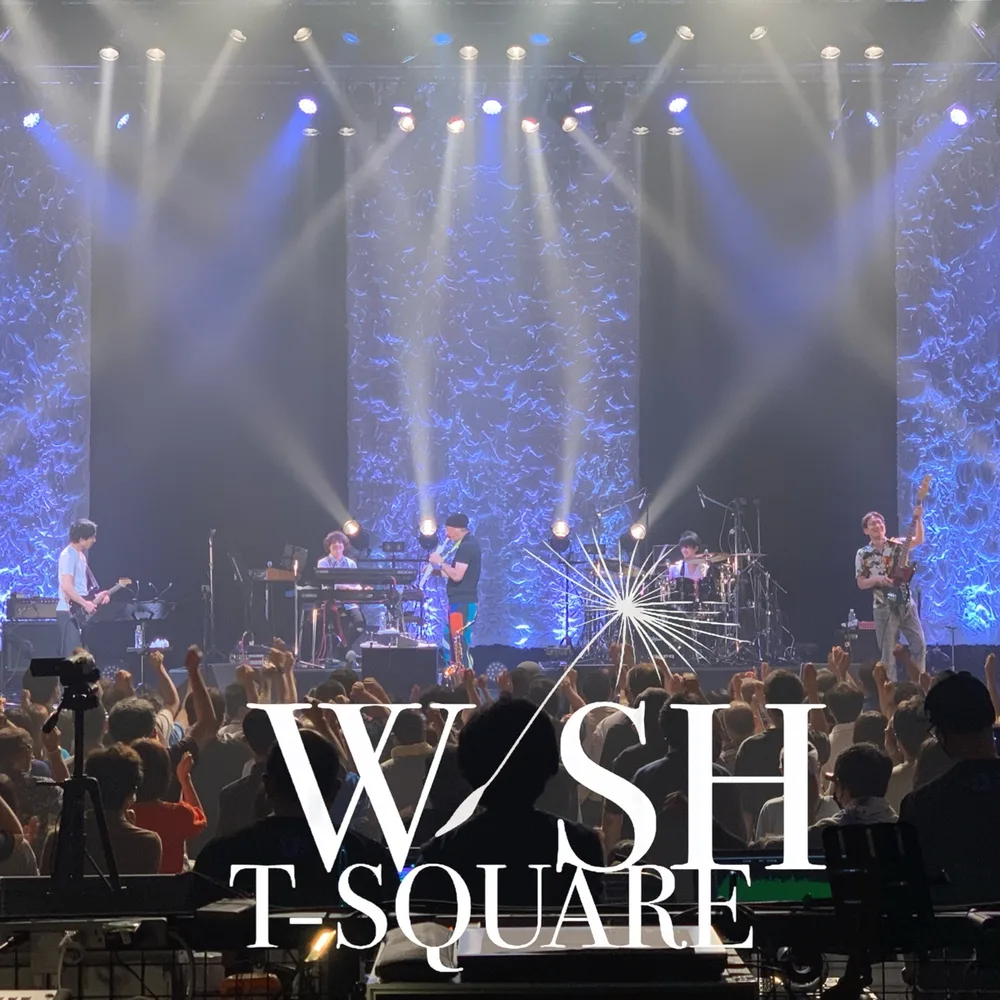
Cover art for T-Square's "WISH" live album (Hall Concert Tour 2022 @ Namba Hatch), a genuine live-performance photo of the band on stage — used as a stand-in, no free-licensed photo of T-Square could be located after a genuine search. Standard copyright, all rights reserved — held by the release's label/artist. This is not a Creative Commons–licensed image; it is used here as an honestly-disclosed editorial stand-in for a real photo. — Downloaded directly from the Apple Music/iTunes artwork CDN (https://music.apple.com), full-resolution cover scan. Saved locally as portrait.jpg in this folder.
T-Square formed in Tokyo in 1978 under the name The Square. Their classic, most successful lineup — guitarist Masahiro Andoh, bassist Mitsuru Sutoh, saxophonist/flutist/EWI player Takeshi Itoh, keyboardist Hirotaka Izumi, and drummer Hiroyuki Noritake — built a catalog through the late 1970s and 1980s that made them, alongside Casiopea, one of the two or three bands most responsible for defining Japanese jazz-fusion's commercial peak.
In 1988, ahead of a performance at the Roxy Theatre in Los Angeles, the band discovered an unrelated American act already called The Squares and changed their own name to T-Square, a transition fully carried through their catalog by the 1989 album Wave.
Their signature song, "Truth" (1987), became genuinely embedded in Japanese mainstream culture in a way few jazz-fusion instrumentals manage: it served as the official theme for Japan's Formula One broadcasts from 1989 to 2000, followed by a rearrangement, "Truth 21c," in 2001-2002, with further remixes carrying the association through 2006 — nearly two decades of a fusion instrumental as the sound of motorsport on Japanese television. Other well-known songs include "Japanese Soul Brothers," "Takarajima," and "Omens of Love."
A claim tied to their earlier, pre-rename catalog is worth stating with appropriate caution: Discogs's own artist profile for the band states that "Sister Marian," from their Square era, directly inspired the overworld theme of the original Super Mario Bros., composed by Koji Kondo — a claim the Discogs entry links directly to Kondo's own artist page. This is a genuinely notable piece of video-game-music trivia if it holds up, but it was not independently corroborated by a second source during this research.
What is directly confirmed on record: in 2004, T-Square and Casiopea performed a joint concert, released as Casiopea vs The Square Live — the two defining bands of an entire genre sharing a stage.
T-Square's sound bridges American jazz-fusion (Weather Report and Chick Corea's Return to Forever are commonly cited touchstones for this generation of Japanese fusion bands) with a melodic, radio-friendly songcraft that helped carry instrumental fusion into Japanese mainstream broadcasting via "Truth" and its F1 association.
T-Square: Full Discography
Discogs artist ID 1249160. Identity confirmed via matching profile facts plus a WebSearch synthesis independently corroborating the formation, classic lineup, and 1988-89 name change. 202+ credits across 3 pages, all Main role (100 on page 1 alone). Given the scale, only page 1 was individually reviewed; this discography selects landmark releases across the band's four-decade career rather than an exhaustive listing.
As The Square (1978-1988)
| Album | Year | Label | Notes | Listen | Buy |
|---|---|---|---|---|---|
| Lucky Summer Lady | 1978 | — | Debut album | Amazon | |
| Midnight Lover | 1978 | — | Amazon | ||
| Make Me a Star | 1979 | — | Amazon | ||
| It's Magic | 1981 | — | Includes "Sister Marian," per Discogs the inspiration for the Super Mario Bros. overworld theme (unconfirmed by a second source) | Amazon | |
| Adventures | 1984 | — | Spotify | Amazon | |
| R.E.S.O.R.T | 1985 | — | Amazon | ||
| S・P・O・R・T・S | 1986 | — | Amazon |
As T-Square (1989-present)
| Album | Year | Label | Notes | Listen | Buy |
|---|---|---|---|---|---|
| Truth | 1987 | CBS/Sony | Signature song, later the theme of Japan's F1 broadcasts 1989-2000 | Spotify | Amazon |
| Wave | 1989 | — | The album that fully unified the T-Square name change | Amazon | |
| Natural | 1990 | — | Amazon | ||
| Megalith | 1991/1992 | Sony | Multiple pressings | Amazon | |
| Truth (1991 New Version) | 1991 | Sony | Amazon | ||
| Human | 1993 | — | Amazon | ||
| Takarajima (宝島) | 1995 | Sony | Spotify | Amazon | |
| VICTORY | 1996 | Sony Records | Amazon | ||
| Gravity | 1998 | — | Amazon | ||
| Truth 21century | 2001 | — | F1 theme rearrangement era | Amazon | |
| 25th Anniversary The Square 帰還完了報告 | 2004 | Village Records | Amazon | ||
| Casiopea vs The Square Live | 2004 | — | Joint concert with Casiopea | Amazon | |
| Blood Music (ブラッド・ミュージック) | 2006 | Village Records | Amazon | ||
| 33 | 2007 | — | 33rd-anniversary release | Amazon |
Live and anthology releases (selection)
| Release | Year | Notes |
|---|---|---|
| The Square Live | 1985 | |
| Live In New York | 1988 | |
| Live At Roxy | 1989 | The show that prompted the name change |
| Live "Farewell & Welcome" | 1991 | |
| Live In Tokyo | 1995 | |
| Farewell & Welcome Live 1998 | 1998 | |
| Wordless Anthology I / II / V | 1999-2006 | Instrumental-focused anthology series |
| Visual Anthology I-III | 2005 | |
| T-Square Super Best | 2007 | SMEJ |
Scale note
202+ total Discogs credits across 3 pages were confirmed, all Main role. Only page 1 (100 credits) was individually reviewed given the scale; this discography selects landmark studio and live releases rather than attempting an exhaustive listing of the band's four-decade, still-ongoing catalog. Pages 2-3 were not parsed for additional titles.
- Masahiro Andoh, Mitsuru Sutoh, Takeshi Itoh, Hirotaka Izumi, Hiroyuki Noritake - The band's classic, most successful lineup.
- Casiopea - Fellow defining fusion band of the same era; the two shared a stage for a 2004 joint concert.
- Koji Kondo - Credited by Discogs as having drawn on "Sister Marian" for the Super Mario Bros. overworld theme (unconfirmed by a second source).
- T-Square — Discogs artist 1249160 (profile and partial paginated release list retrieved via the Discogs API; Koji Kondo entity cross-checked directly)
- WebSearch synthesis of last.fm, ultimatepopculture.fandom.com, and Wikipedia's "Wave (T-Square album)" article
- Spotify Web API catalog lookups