 JAZZPROFILES lives in the music 1,002 Jazz Artists fully Profiled!
 Hiroshi Fukumura
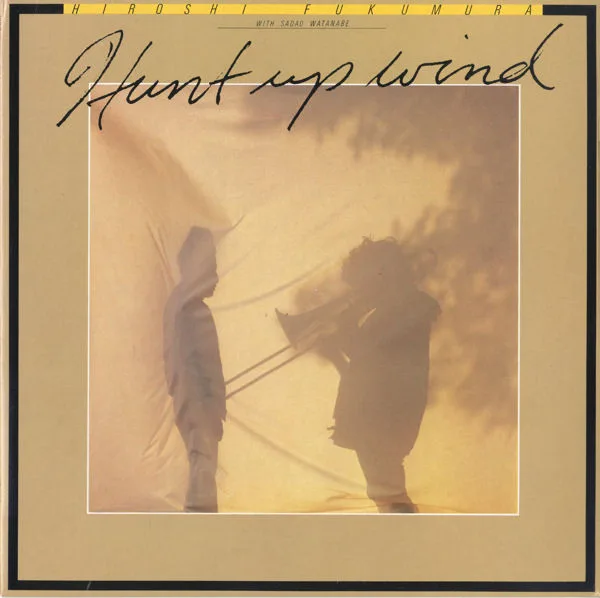
Hiroshi Fukumura playing trombone on the front cover of *Hunt Up Wind*, Flying Disk, 1978. Standard copyright, all rights reserved, held by Flying Disk / Victor Musical Industries. This is not a Creative Commons or public-domain image, and it is not presented as one. It is an album cover whose front photograph shows the artist himself playing, used here as an honestly disclosed editorial stand-in for a portrait. Cover photography is credited to Kazumi Kurigami (Discogs release 1862991). — Discogs release 1862991 (Hunt Up Wind, Flying Disk VIJ-6015, 1978), secondary image, the obi-free front cover scan, 600 x 598, downloaded via the Discogs API (59,822 bytes, verified under the 20MB Reddit ceiling via an HTTP HEAD request returning Content-Length: 59822). Saved locally as portrait.jpg in this folder, not hotlinked. Note for the site build: the i.discogs.com URL used in final-blog.md's embed is a signed CDN path and may not be stable long-term, so the local portrait.jpg is the authoritative asset for jazzprofiles.com.
Hiroshi Fukumura came into Japanese jazz through the side door that turned out to be the main one. He studied at the Yamaha music school run by Sadao Watanabe, and on graduation Watanabe took him straight into his own band. Fukumura stayed with him for most of the 1970s, which put a trombonist barely out of school on stage nightly with the most internationally visible musician in Japanese jazz.
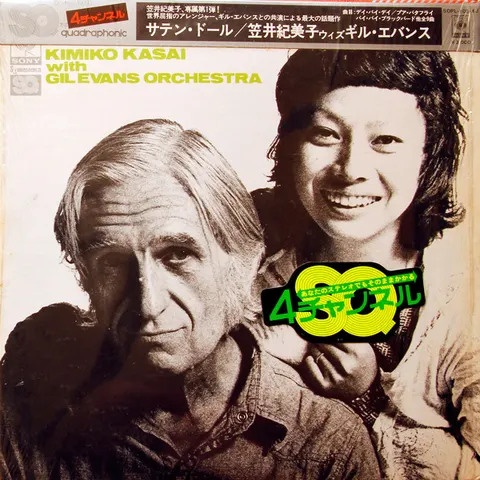
His first appearance on a record sleeve was not a Watanabe date. On 26 and 29 June 1972, at CBS/Sony's 1st Studio in Tokyo, Kimiko Kasai recorded Satin Doll with Gil Evans arranging, conducting, and playing piano and electric piano on his first visit to Japan. Evans brought Billy Harper on tenor saxophone and flute and Hannibal Marvin Peterson on trumpet. The Japanese half of the band was Kohsuke Mine on alto and soprano saxophone, Masayuki Takayanagi on guitar, Yoshio Suzuki on bass, Yoshiyuki Nakamura on drums, and a two-trombone section of Hiroshi Munekiyo and Fukumura. He was 23.
The following year he stepped out as a leader, twice in one week. On 22 August 1973 his quintet recorded Morning Flight at Aoi Studio in Tokyo for Three Blind Mice, the label founded in 1970 with the stated intention of doing for Japanese players what Blue Note had done for American ones. Five days later, on 27 August, the same five musicians played Toshi Center Hall in Tokyo, and Trio Records issued that concert as Live: First Flight. The band on both was Fukumura and Shigeharu Mukai on trombones, Hiroshi Tamura on piano, Tsutomu Okada on bass and Shinji Mori on drums. The twin-trombone front line, with no trumpet to set the register against, is the defining sound of both records, and the modal, long-form writing on Morning Flight (two of its five tracks run past eleven minutes) placed him closer to the spiritual jazz current of the period than to hard bop.
Part of the decade was spent in the United States. Fukumura studied at the New England Conservatory of Music in Boston and performed and recorded with its student jazz band in 1974, then returned to Japan and to Watanabe's band.
Hunt Up Wind (Flying Disk, 1978) is the record his name travels on. Rather than fly to New York, Fukumura assembled an American rhythm section in the studio and led it: Cornell Dupree on electric guitar, Chuck Rainey on electric bass, Harvey Mason on drums, Don Grusin on acoustic piano and Rhodes, and Paulinho Da Costa on percussion. Sadao Watanabe played alto and sopranino saxophone and flute and took co-billing on the sleeve; Hiromasa Suzuki and Watanabe wrote the arrangements. The album did something unusual for a Japanese jazz record of its moment: it crossed over while it was still new. Inner City Records released it in the United States in 1980 as IC 6067, and Jazz Unlimited pressed it in Mexico in 1982. Its seventh track, "Captain Caribe," was pulled as a single, issued as a UK twelve inch on Champagne in 1980, and has been anthologised repeatedly since, including on Classic Jazz-Funk Mastercuts Volume 6 in 1996 and DJ Spinna and BBE Soundsystem's Strange Games and Funky Things Volume 5 in 2010.
He kept moving. Nice Day (Insights, 1981) was recorded across four days in May and June 1980 at Sound Inn Studio in Tokyo, and Fukumura produced, arranged and wrote it, working with Nobuyoshi Ino on bass, Shuya Sato on saxophones, Hiroki Miyano on guitar, Naoki Kitajima on keyboards, Akira Doi on drums and Yuji Imamura on percussion. He joined Native Son, the fusion band keyboardist Takehiro Honda had formed in 1978 with Kohsuke Mine on saxophone, for its American tour, documented on Coast to Coast (Live in USA) in 1980, and stayed with the group through Shining (1982) and a run of 1983 releases that included Carnival: Live at Montreux. Hot Shot followed in 1985 on the Morning label, cut with Anthony Jackson on bass, Steve Ferrone on drums, Kenny Kirkland and Mark Gray on keyboards, Sammy Figueroa on percussion, and Barry Finnerty producing and playing guitar.
The later work sits well outside the jazz-funk frame he is filed under. He appears on Lisa Ono's bossa nova albums in 1993, 1994 and 2004. On 16 June 2002, at the 11th Yamaha Jazz Festival in Hamamatsu, he played trombone in Satoko Fujii's large ensemble on the concert released as Before the Dawn, thirty years after the Gil Evans session that opened his discography. He was still playing Tokyo clubs in 2022, including a June date at Shinjuku Pit Inn, and he turned 77 in February 2026.
Fukumura's signature as a leader is the twin-trombone front line. On both 1973 albums he pairs his own horn with Shigeharu Mukai's rather than setting it against a trumpet, and the two play in unison across the heads, which gives a quintet a weight closer to a small brass section. Reviewers of Morning Flight have described his tone as bitter and his phrasing as built on its own vocabulary rather than modelled on J.J. Johnson or Bob Brookmeyer, the two reference points a Japanese trombonist of his generation would ordinarily be measured against.
The writing on the 1973 records is modal and long-form, patient enough to let eleven-minute tracks develop, and it includes a reading of Coltrane's "Cousin Mary." By 1978 he had moved decisively toward jazz-funk, and the move was a matter of personnel as much as material: he built Hunt Up Wind around an American session rhythm section and let the groove carry the trombone rather than the reverse. Nice Day in 1981 is the record where all three roles are his, since he produced, arranged and composed it, and it is the clearest statement of his own writing voice away from a borrowed idiom.
What holds the career together is range rather than a single style. The same player is credited on a Gil Evans chart in 1972, a Three Blind Mice modal date in 1973, an American jazz-funk session in 1978, a Montreux fusion set in 1983, bossa nova records in the 1990s, and a Satoko Fujii large-ensemble concert in 2002.
- Morning Flight (1973, Three Blind Mice TBM-19) - The twin-trombone quintet in the studio, recorded 22 August 1973 at Aoi Studio, Tokyo. Modal, long-form, and the record that makes the case for him as a writer. YouTube - Morning Flight, full album Listen
- Live: First Flight (1973, Trio Records PA-3010) - The same quintet on stage at Toshi Center Hall five days later, for a different label. Worth hearing directly after Morning Flight. Apple Music - LIVE First Flight Listen · Buy
- Hunt Up Wind (1978, Flying Disk VIJ-6015, with Sadao Watanabe) - His best-known record, made with Cornell Dupree, Chuck Rainey, Harvey Mason, Don Grusin and Paulinho Da Costa, and the one that reached American and Mexican pressings inside four years. Spotify - Hunt Up Wind · YouTube - full album Listen · Buy
- Nice Day (1981, Insights RJL-8011) - Produced, arranged and written by Fukumura, and the least played of his leader records. YouTube - Nice Day, full album Listen · Buy
- Hot Shot (1985, Morning AM28-2) - The New York session, with Anthony Jackson, Steve Ferrone and Kenny Kirkland. YouTube - Hot Shot, full album Listen · Buy
Hiroshi Fukumura (福村博) — Full Discography
Japanese jazz trombonist, bandleader, composer and arranger. Born 21 February 1949, Tokyo. Discogs artist 323333.
Name variations on record: Fukumura, H. Fukumura, H. Fukuruma, Hiroshi Fukamura, 福村博.
Group affiliations: Sadao Watanabe Quintet, The Hiroshi Fukumura Quintet, Gil Evans and His Orchestra, Native Son, Jazz Battle Royal, Satoko Fujii Orchestra Tokyo.
Leader
| Album | Year | Label | Personnel | Notes | Listen | Buy |
|---|---|---|---|---|---|---|
| Morning Flight (as The Hiroshi Fukumura Quintet, sleeve title Fukumura, Hiroshi Quintet) | 1973 | Three Blind Mice, TBM-19 | Hiroshi Fukumura and Shigeharu Mukai (trombones), Hiroshi Tamura (piano), Tsutomu Okada (bass), Shinji Mori (drums) | Recorded at Aoi Studio, Tokyo, 22 August 1973. Five tracks, 48 minutes: "Morning Flight" (11:10), "Imagination, Opus 1" (12:57), "Winter Song" (5:18), "Cousin Mary" (6:53), "Soldier in the Rain" (11:26). Mixed by Yoshihiko Kannari, produced by Takeshi Fujii, cover by Tsutomu Nishizawa. Reissued on SACD by Three Blind Mice / Sony (MHCP-10037) in 2006. | Full album on YouTube | Amazon |
| Live: First Flight | 1973 | Trio Records, PA-3010 | Hiroshi Fukumura and Shigeharu Mukai (trombones), Hiroshi Tamura (piano), Tsutomu Okada (bass), Shinji Mori (drums); Shoichi Yui (MC) | Recorded live at Toshi Center Hall, Tokyo, 27 August 1973, five days after the Morning Flight studio session, with the same quintet. Four tracks: "Waltz for M", "Nancy", "The Shadow of Your Smile", "Mother Some Place". Produced by Kazuo Harada and Kuniya Inaoka, concert production by Hiroshi Yamashiro. Includes Japanese liner notes. | On Apple Music | Amazon |
| Hunt Up Wind (7 inch / 12 inch single) | 1980 | Inner City / Champagne | Credited to Hiroshi Fukumura | Two-track single pulled from the 1978 album: "Hunt Up Wind" backed with "Captain Caribe". Issued as a UK twelve inch on Champagne in 1980. Discogs master 498424. | Captain Caribe on YouTube | Amazon |
| Nice Day | 1981 | Insights, RJL-8011 | Hiroshi Fukumura (trombone, producer, arranger, writer), Shuya Sato (alto and soprano saxophone), Naoki Kitajima (keyboards), Hiroki Miyano (guitar), Nobuyoshi Ino (bass), Akira Doi (drums), Yuji Imamura (percussion) | Recorded 18 and 19 May and 16 and 17 June 1980 at Sound Inn Studio, Tokyo. Six tracks: "Racing Around", "Jaywalk", "Nice Day", "Drift", "Soft Breath of Air", "Lion's Step". Fukumura produced, arranged and wrote it. Liner notes by Yozo Iwanami, mastered by Tohru Kotetsu, mixed and recorded by Tomiji Iyobe. Executive producer Hiroshi Isaka. | Full album on YouTube | Amazon |
| Hot Shot | 1985 | Morning, AM28-2 | Hiroshi Fukumura (trombone, producer), Barry Finnerty (guitar, keyboards, producer), Kenny Kirkland and Mark Gray (keyboards), Anthony Jackson (bass), Steve Ferrone (drums), Sammy Figueroa (percussion), Sybil Thomas (lead vocals) | Eight tracks: "Heel Strike", "Waste Time", "The Only One for Me", "Manhattan Twilight", "Hot Shot", "Beat City", "Dreaming Street", "Ocean Magic". Engineered by Julian McBrowne. Also issued on CD (Discogs release 8921138). | Full album on YouTube | Amazon |
Co-Leader
| Album | Year | Label | Co-billed with | Personnel | Notes | Listen | Buy |
|---|---|---|---|---|---|---|---|
| Hunt Up Wind | 1978 | Flying Disk, VIJ-6015 | Sadao Watanabe | Hiroshi Fukumura (trombone), Sadao Watanabe (alto and sopranino saxophone, flute), Don Grusin (acoustic piano, Rhodes), Cornell Dupree (electric guitar), Chuck Rainey (electric bass), Harvey Mason (drums), Paulinho Da Costa (percussion) | Arranged by Hiromasa Suzuki and Sadao Watanabe. Produced by Akira Taguchi and Kiyoshi Itoh, engineered and remixed by Hideo Takada, mastered by Tohru Kotetsu. Cover photography by Kazumi Kurigami, inner sleeve photography by Masahiro Fujita, album design by Kaoru Watanabe. Eight tracks: "Hunt Up Wind", "That's Enough for Me", "Jongo", "Mr. Blue", "Pogo", "White Clouds", "Captain Caribe", "To Say Goodbye". Issued in the United States by Inner City Records (IC 6067) in 1980 and pressed in Mexico by Jazz Unlimited (JUN-4002) in 1982; Japanese reissues followed in 1982, 1986, 1990 and 2016. | Full album on YouTube | Amazon |
| Dear Friends | 1986 | CBS/Sony | Kazuo Yashiro Trio, with Kohsuke Mine and Yuri Tashiro | Kazuo Yashiro (piano), Kohsuke Mine (saxophone), Hiroshi Fukumura (trombone), Yuri Tashiro | Billed on Discogs as 八城一夫トリオ + 峰厚介, 福村博, 田代ユリ. CD album, Discogs release 4599349. | not found | Amazon |
Guest, sideman and compilation appearances
Chronological. Sixty releases carry Fukumura's name on Discogs artist 323333; the seven above are the leader and co-leader entries, and the remainder are below.
| Year | Release | Actual leader | Label | Listen | Buy |
|---|---|---|---|---|---|
| 1971 | 街を歩こう | Hiroshi Okazaki | Yamaha | not found | Amazon |
| 1972 | Satin Doll (サテン・ドール) | Kimiko Kasai with Gil Evans Orchestra | CBS/Sony, SOPL-108-XJ | Full LP on YouTube | Amazon |
| 1972 | Sadao Watanabe | Sadao Watanabe | not found | Amazon | |
| 1973 | Nemu Jazz Inn | Various | Yamaha | not found | Amazon |
| 1973 | Open Road | Sadao Watanabe | not found | Amazon | |
| 1975 | Project One: The National Association of Jazz Educators Presents | Various | NAJE | not found | Amazon |
| 1975 | NHK Transcription Programme No. 137: Modern Jazz in Japan | Various | NHK | not found | not found |
| 1976 | NHK Transcription Programme No. 162 and 163: Jam Session '76 | Various | NHK | not found | not found |
| 1976 | Pamoja | Sadao Watanabe | not found | Amazon | |
| 1977 | My Dear Life (マイ・ディア・ライフ) | Sadao Watanabe | Victor / Flying Disk | not found | Amazon |
| 1977 | Recital | Sadao Watanabe | not found | Amazon | |
| 1977 | Jazz of Japan: Live Under the Sky '77 | Various | not found | Amazon | |
| 1978 | Fly Like a Bird | Miyuki Maki (牧ミユキ) | not found | Amazon | |
| 1979 | Echo | Sadao Watanabe | not found | Amazon | |
| 1979 | You're Dancing | Hidefumi Toki | not found | Amazon | |
| 1980 | NHK Transcription Programme No. 181: Trend-Setters in Japanese Jazz | Various | NHK | not found | not found |
| 1980 | Autumn Dreams | Native Son | Victor / JVC | not found | Amazon |
| 1980 | Coast to Coast (Live in USA) | Native Son | Victor | not found | Amazon |
| 1981 | Sadao Watanabe | Sadao Watanabe | CBS/Sony | not found | Amazon |
| 1982 | Tweed | Ryohei Yamanashi (山梨鐐平) | not found | Amazon | |
| 1982 | Shining | Native Son | not found | Amazon | |
| 1983 | In New York | Native Son | Victor | not found | Amazon |
| 1983 | Wind Surfing | Native Son | not found | Amazon | |
| 1983 | Carnival: Live at Montreux (カーニバル / ライヴ・アット・モントルー) | Native Son | not found | Amazon | |
| 1983 | Resort (リゾート) | Native Son | not found | Amazon | |
| 1984 | Super Best | Native Son | JVC | not found | Amazon |
| 1984 | 夢戦士ウイングマン ヒット曲集 | Various | not found | not found | |
| 1984 | Jazz Thriller | Various | Jazz Unlimited Special Series | not found | not found |
| 1985 | Soft Disc | Various | Perina | not found | not found |
| 1987 | Jazz Crucero | Various | Lubata | not found | not found |
| 1988 | JVC Music After Hours, Vol. 2 | Various | JVC | not found | not found |
| 1993 | Namorada | Lisa Ono | not found | Amazon | |
| 1994 | Esperança | Lisa Ono | not found | Amazon | |
| 1995 | Jazz Battle Royal | Jazz Battle Royal | Paddle Wheel | not found | Amazon |
| 1995 | Jazz Funk and Fusion | Various | Connoisseur Collection | not found | Amazon |
| 1996 | Classic Jazz-Funk Mastercuts Volume 6 (The Definitive Jap-Jazz Mastercuts) | Various | Mastercuts | not found | Amazon |
| 2000 | Futuros Amantes | Ana Martins | Rip Curl Recordings | not found | Amazon |
| 2001 | Linda | Ana Martins | Rip Curl Recordings | not found | Amazon |
| 2003 | Before the Dawn | Satoko Fujii Orchestra East | Natsat Music / PJL | not found | Amazon |
| 2004 | Lisa's Ono Bossa Hula Nova | Lisa Ono | not found | Amazon | |
| 2005 | Shibuya Jazz Classics: Nobukazu Takemura Collection, Three Blind Mice Issue | Nobukazu Takemura (compiler) | Solid Records | not found | Amazon |
| 2006 | Broadcast Tracks '69-'72 | Sadao Watanabe | Victor | not found | Amazon |
| 2010 | The Pieces of Trio Records Mixed by Hiroko Otsuka | Hiroko Otsuka (compiler) | Art Union | not found | Amazon |
| 2010 | Strange Games and Funky Things Volume 5 | DJ Spinna and BBE Soundsystem | BBE | not found | Amazon |
| 2011 | Groove Collector Vol. 8 | DJ Yama | Groove Masters | not found | not found |
| 2015 | The Original Masters: Funky Soul and Much More Vol. 5 | Various | Milestone Records Ltd | not found | not found |
| 2016 | Live in Nemuro 1977 | Sadao Watanabe Quintet | JVC | not found | Amazon |
| 2016 | The Best of Inner City Records | Kev Beadle (compiler) | not found | Amazon | |
| 2018 | Diggin' Victor: Deep Into the Vaults of Japanese Fusion / AOR | Muro (compiler) | Victor | not found | Amazon |
| 2018 | Nippon Jazz | Various | Three Blind Mice | not found | Amazon |
| 2025 | Crossover City: Misty Morning | Various | Victor | not found | Amazon |
Sources
- Discogs: Hiroshi Fukumura, artist 323333
- Discogs: Fukumura, Hiroshi Quintet (Morning Flight), Three Blind Mice TBM-19
- Discogs: Live: First Flight, Trio Records PA-3010
- Discogs: Hunt Up Wind, Flying Disk VIJ-6015
- Discogs: Nice Day, Insights RJL-8011
- Discogs: Hot Shot, Morning AM28-2
- Discogs: Kimiko Kasai with Gil Evans Orchestra, Satin Doll, CBS/Sony SOPL-108-XJ
- Discogs: Satoko Fujii Orchestra East, Before the Dawn
- Wikipedia: Hiroshi Fukumura
- Sadao Watanabe - his teacher at the Yamaha music school, then his bandleader for most of the 1970s, then his co-billed partner on Hunt Up Wind (1978), where Watanabe played alto and sopranino saxophone and flute and co-wrote the arrangements. Fukumura also appears on Watanabe's Sadao Watanabe (1972), Open Road (1973), Pamoja (1976), My Dear Life (1977), Recital (1977), Echo (1979), Sadao Watanabe (1981), Broadcast Tracks '69-'72 (2006) and Live in Nemuro 1977 (2016).
- Shigeharu Mukai - the second trombone in Fukumura's 1973 quintet, on both Morning Flight and Live: First Flight. Mukai began leading his own dates three years later with You Wanna Rain (1976) and has fifteen leader releases on Discogs.
- Gil Evans - arranged, conducted and played piano on Satin Doll (1972), the session that gave Fukumura his first recorded credit. Discogs lists Fukumura's group affiliations as including Gil Evans and His Orchestra.
- Kimiko Kasai - the vocalist and leader on Satin Doll (CBS/Sony, 1972).
- Kohsuke Mine - on alto and soprano saxophone on the same 1972 Satin Doll session, and later a founding member of Native Son alongside Fukumura.
- Billy Harper - tenor saxophone and flute on Satin Doll (1972).
- Hiromasa Suzuki - arranger on Hunt Up Wind (1978), alongside Sadao Watanabe.
- Harvey Mason and Don Grusin - drums and keyboards respectively on Hunt Up Wind (1978), with Cornell Dupree, Chuck Rainey and Paulinho Da Costa completing that rhythm section.
- Native Son (1980-1983) - the fusion band formed by Takehiro Honda in 1978. Fukumura appears on Autumn Dreams and Coast to Coast (Live in USA) (1980), Shining (1982), and Wind Surfing, In New York, Resort and Carnival: Live at Montreux (1983).
- Satoko Fujii - trombone in Satoko Fujii Orchestra East on Before the Dawn, recorded 16 June 2002 at Act City Hamamatsu and released in 2003. Discogs also lists him as a member of Satoko Fujii Orchestra Tokyo.
- Lisa Ono - Namorada (1993), Esperança (1994) and Lisa's Ono Bossa Hula Nova (2004).
- Anthony Jackson, Steve Ferrone, Kenny Kirkland, Sammy Figueroa, Barry Finnerty - the Hot Shot band (1985).
- Hidefumi Toki - You're Dancing (1979).
- Jazz Battle Royal - the 1995 Paddle Wheel release of that name; listed on Discogs as one of his group affiliations.
- Spotify artist page
- Discogs: Hiroshi Fukumura
- Instagram: @hiroshifukumurai
- Hiroshi Fukumura on JazzProfiles.com
- r/JapaneseJazz
- Wikipedia: Hiroshi Fukumura
- Wikipedia (Japanese): 福村博
- Wikidata: Q30693094
- Discogs: Hiroshi Fukumura, artist 323333
- Discogs: Hunt Up Wind, Flying Disk VIJ-6015, 1978
- Discogs: Kimiko Kasai with Gil Evans Orchestra, Satin Doll, 1972
- LondonJazzCollector: Hiroshi Fukumura Quintet, Morning Flight (1973)
- Wikipedia: Native Son (band)
- All About Jazz: Hiroshi Fukumura
- Jazz Shiryokan performer listing: 福村博