 JAZZPROFILES lives in the music 1,002 Jazz Artists fully Profiled!
 Elad Levi
No portrait on file yet. Drop portrait.jpg and a media.md caption/license into this profile's folder.
Elad Levi was born in Ashkelon and started on the Moroccan musical tradition before he started on anything else. His instrument is the kamanja, the violin held upright on the knee and tuned to the Andalusian modes rather than the European ones, and he learned it from Yeshua Azoulay, the Andalusian violinist who was among the founding figures of the Israeli Andalusian Orchestra Ashdod and who is generally named as the finest Jewish player of the instrument of his generation. Levi also studied with Meir Elazar Attiah, Haim Biton, and Nino Biton. He was performing publicly while still young, and the line his own biographies draw is a straight one: from a childhood inside the repertoire to a career spent keeping it alive.
The orchestra his teacher helped build became his working life. Levi joined the Israeli Andalusian Orchestra Ashdod, rose to concertmaster, and took charge of its Young Ensemble. On July 27, 2022 the orchestra's board unanimously appointed him artistic director, a promotion he described as closing a circle: he had, in his words, grown up on the Andalusian orchestra and played in it for about a decade. Founded in Ashdod in the mid-1990s by roughly thirty musicians of Moroccan, Tunisian, and Russian background, the orchestra had by then filled out with younger Israeli players, and Levi's stated brief was to deepen its hold on the tradition while pushing it in front of audiences that had never heard it. He also runs two ensembles of his own, Jerusalem Tarab and Andaluches, the latter assembled from about a dozen young Jerusalem musicians whose backgrounds ranged from classical piano to jazz guitar to rock bass, and who converged on North African music from those separate directions. Andaluches toured Morocco early in 2019 and played the Inbal Dance Theater in Tel Aviv on July 29 that year with Levi on violin and in the director's chair. Beyond that he directs the ensemble of the Moroccan cantor Rabbi Haim Louk, founded Dialna as an international group devoted to Moroccan Jewish repertoire, heads the North African department at the Maqamat School of Eastern Music in Safed, where he teaches Moroccan-Andalusian violin and Foundations of Maghreb Music, and serves as artistic advisor to the Andalousies Atlantiques festival in Essaouira.
His route into jazz ran through Omer Avital, and it is older than most accounts suggest. After a collaboration at the first Piyyut Festival in 2008, Avital and the musician and educator Yair Harel founded the New Jerusalem Orchestra, an ensemble built to put top Israeli players from jazz and from the Andalusian, Middle Eastern, and Western traditions on the same stage. Levi was its kamanja player. The group was given the opening slot at the Israel Festival in May 2010, and the recording of that performance became its debut, the two-disc Ahavat 'Olamim, issued by the Jewish Music Research Centre at the Hebrew University as the third title in its Contemporary Jewish Music series. The album was launched at a concert in the Beit Avi Chai courtyard in Jerusalem on September 21, 2011, with Rabbi Haim Louk singing and the Ben Zvi Institute Piyyut Ensemble alongside. Avital directed, arranged, wrote melodies, conducted, and played double bass; the horn chairs went to Daniel Zamir on saxophone and Avishai Cohen on trumpets, with the American tenor saxophonist Greg Tardy guesting on the record. Levi sat in that band as the one player carrying the Moroccan instrument.
He has kept a second line running through Israeli jazz ever since. He arranged much of the repertoire of the Yohai Cohen Quintet, the Moroccan Andalusian and chaabi group the oud player and singer Yohai Cohen formed in Australia in June 2017 with a jazz rhythm section behind him, and travelled to appear with them as special guest, including at WOMADelaide in 2019. That September he turned up as a guest on violin and kamanche on "Of The Albanian," a track on the pianist Asaf Karaso's KarasOrchestra Project, a record filed under Israeli jazz and jazz fusion. Two singles followed in 2021: "Ya L'yahud Ou L'muslimin" in September, credited jointly to 12 Tribes Music, Yohai Cohen, and Levi, and in December "Waalach Majiti A Lala," on which La Casbah and Cohen brought in Levi and the pianist Omri Mor as their two special guests. Between them, that June, he took the violin chair in Tarabass, the septet the double bassist and composer Hagai Bilitzky fronts, for the seventh Jerusalem Jazz Festival in the Israel Museum's Sculpture Garden under the artistic direction of Avishai Cohen. The Jerusalem Post, previewing the June 24, 2021 set, called him a feted Andalusian-leaning violinist. Levi stayed with the group for its album New Sound of the Middle East, released December 9, 2022, whose track "Naama" was picked up for Songlines magazine's Top of the World 186 compilation the following year.
The largest of these crossings came from the orchestra he now runs. Avital wrote a piece for the Israeli Andalusian Orchestra Ashdod for the Sea Jazz festival in Ashdod in 2024, an experience he described as knowing everybody in the room, like a Moroccan synagogue. Out of that came North African Dream, a four-movement work Avital composed on commission for the orchestra, with movements titled "Piyut / Father," "The Dream," "Oriental Melancholy," and "Return of the African Jew." It premiered at Ashdod's Meridiano Festival in June 2025 with the orchestra under Levi's artistic direction, then went out around the country: Elma in Zichron Yaakov on August 27, the Jerusalem YMCA on August 28, and the Tel Aviv Museum of Art on August 29, with further dates in November 2025 and a United States tour planned for spring 2026. Avital has called Levi a close friend and a partner in the vision behind the piece, crediting him with a rare ability to hand North African tradition down a generation while staying committed to running it together with jazz, classical harmony, and rock. Levi's own programming says the same thing from the other side: his 2025 series "From West to East," touring Israel from May 16 to June 19, put Omri Mor, the Ethiopian-Israeli saxophonist Abatte Barihun, and a Moroccan singer playing rebab in front of the orchestra together, on the argument that all three repertoires run on pulse. Through the war years he has also kept the orchestra playing in hospitals, on army bases, and for evacuees, marking its thirtieth anniversary season under conditions that made even going ahead an open question. "As musicians, we miss playing for people who come to hear you," he told the Times of Israel.
Levi is a traditional-music specialist first, and the thing that makes him useful to jazz musicians is precisely that he has not diluted the tradition to get there. His instrument, the kamanja, is played upright and voiced through the Andalusian nubah rather than through anything Western, and his teaching post at Maqamat is in Maghreb music, not in improvisation as a jazz musician would recognise it. What he brings to a jazz bandstand is an authentic modal line and the authority to lead a section of players who can follow it. That is why the roles keep repeating: guest, arranger, section leader, artistic director. In the New Jerusalem Orchestra he was the Moroccan instrument in a room where Omer Avital wrote the charts; in Tarabass he is the violin voice inside Hagai Bilitzky's attempt to fold the double bass into Arabic orchestration without either side making concessions; in the Yohai Cohen Quintet he is the arranger who shapes what a jazz rhythm section plays underneath Moroccan chaabi. His own critical reputation is built on the tradition, not the crossover: the Krakow Jewish Culture Festival introduced him simply as the premiere kamanja player in Israel. But he is the rare figure in that world who keeps opening the door, and by 2025 he was commissioning jazz composers rather than merely accepting invitations from them.
- Hagai Bilitzky, New Sound of the Middle East (2022, self-released) - the fullest recorded document of Levi's playing, eight tracks with him on violin in the Tarabass septet, built on how the double bass entered Arabic orchestration in the 1940s and 1950s; the track "Naama" was selected for Songlines' Top of the World 186 (STWCD162, 2023). Spotify - New Sound of the Middle East Listen
- New Jerusalem Orchestra with Rabbi Haim Louk, Ahavat 'Olamim (2011, Jewish Music Research Centre) - the two-disc debut of the jazz-and-Andalusian orchestra co-directed by Omer Avital and Yair Harel, recorded at the Israel Festival in May 2010, with Levi on kamanja. (No Spotify release found; the album was issued by the Hebrew University's research centre rather than commercially.)
- Asaf Karaso, KarasOrchestra Project (2019, self-released) - Levi guests on violin and kamanche on "Of The Albanian," on a record tagged Israeli jazz and jazz fusion. Spotify - Karasorchestra Project Listen
- La Casbah featuring Yohai Cohen, Waalach Majiti A Lala (2021, single) - Levi and Omri Mor share the special-guest billing on the sleeve, violin against jazz piano over a Moroccan setting. Spotify - Waalach Majiti A Lala
- 12 Tribes Music, Yohai Cohen and Elad Levi, Ya L'yahud Ou L'muslimin (2021, single) - the one release where Levi is billed as a lead artist rather than a guest. Spotify - Ya L'yahud Ou L'muslimin Listen
- Neta Elkayam, Arénas (2026, produced by Amit Hai Cohen) - Levi on violin in a Moroccan-Jewish song cycle recorded in Jerusalem and mixed in New Orleans, with Dan Oestreicher on bass saxophone and Tal Avraham on trumpet. Spotify - Arénas Listen
Elad Levi - Full Discography
Elad Levi has never released a jazz album under his own name. He works as a guest soloist, a section player, an arranger, and an orchestra director, so there is no "As Leader" table below. He also has no Discogs artist page: searches of the Discogs database for both "Elad Levi" and "Elad Levy" return no matching artist entity, and none of the releases he appears on is indexed there under his name. What follows is therefore assembled release by release from label credits, Bandcamp credit pages, festival programmes, and streaming metadata, checked on August 31, 2026. Where a detail could not be confirmed it is marked as such rather than guessed.
The Buy column is uniformly —: no affiliate program is set up for this site yet.
Two further points to keep the record honest. First, a large part of Levi's recorded work sits inside the Israeli Andalusian Orchestra Ashdod's catalogue, where individual players are not credited at release level; those records are noted at the end rather than tabulated. Second, "Elad Levi" is a common Israeli name and at least three distinct people carry it on streaming services, so the credits below are limited to releases where the Moroccan-Andalusian violinist can be positively identified. See elad-levi_notes.md for the disambiguation and for the releases that were excluded.
As Sideman, Guest, and Co-Credited Artist
| Album Title | Recording Date(s) | Release Date | Label | Catalog Number | Format(s) | Personnel | Role | Reissue History | Spotify | Buy | Notes |
|---|---|---|---|---|---|---|---|---|---|---|---|
| New Jerusalem Orchestra with Rabbi Haim Louk, Ahavat 'Olamim (Andalusian Hebrew Song from the Maghreb to Jerusalem) | Recorded at the Israel Festival, Jerusalem, May 2010 | 2011 (launched at a concert in the Beit Avi Chai courtyard, Jerusalem, September 21, 2011) | Jewish Music Research Centre, Hebrew University of Jerusalem (Contemporary Jewish Music series, third title) | Not confirmed | 2 x CD, 117 minutes | Omer Avital (artistic director, arrangements, melodies, conductor, double bass); Yair Harel (artistic director, research, choir conductor, percussion); Rabbi Haim Louk (vocals); Ben Zvi Institute Piyyut Ensemble, directed by Avraham Cohen; Elad Levi (kamanja); Daniel Zamir (saxophone); Avishai Cohen (trumpets); Greg Tardy (tenor saxophone, guest on the recording); Armond Barel "Sabah" (oud, mandolin, accordion); Elad Gabbay (qanun); Yaniv Rabbah (oud); Itamar Shahar (Turkish nay); Keren Tennenbaum, Avner Kelmer (violin); Galya Chai (viola); Hila Epstein (cello); Yoram Azoulay (tar); Yochai Cohen (percussion); Yakir Sasson (clarinet, tenor saxophone) | Kamanja (Moroccan violin) | None known | No Spotify release found | — | Documents the orchestra's inaugural performance, which opened the Israel Festival in May 2010. Personnel list taken from the printed Piyyut Festival programme for the September 21, 2011 launch concert; the disc's own liner credits could not be inspected, so the roster is the concert roster. |
| Asaf Karaso and KarasOrchestra, KarasOrchestra Project | Recorded at Nagariya Studios (recorded, mixed and mastered by Thomas Ben Tov); dates not documented | September 16, 2019 | Self-released | None | Digital, 13 tracks | Core band: Asaf Karaso (compositions, piano); Nevo Castiel (guitar); Gilad Fried (bass); Amiel Wanszelbaum (drums); Ori Yossef (trumpet); Ioram Linker (saxophones); Diego Cossamores (violin, pandeiro); Itamar Panai (percussion). Guests include Elad Levi (violin, kamanche), Ron Schussheim (bassoon), Sari Dar (kamanche), Eliran Swissa and Nadav Ziamond (oud), Rony Iwryn (percussion) | Guest, violin and kamanche on track 3, "Of The Albanian" | None known | Spotify | — | Bandcamp genre tags include Israeli jazz, jazz, jazz fusion, Afrobeat, Afro-Cuban, and Moroccan. Levi appears on one track only; the track is billed "Of The Albanian ft. Elad Levi." |
| 12 Tribes Music, Yohai Cohen and Elad Levi, Ya L'yahud Ou L'muslimin | Not documented | September 2, 2021 | 12 Tribes Music | Barcode 198003198708 (Apple Music) | Digital single, 1 track | 12 Tribes Music, Yohai Cohen, Elad Levi (all three billed as lead artists) | Co-credited lead artist | None known | Spotify | — | The only release on which Levi carries a lead-artist credit. Instrument roles are not itemised in the release metadata. |
| La Casbah featuring Yohai Cohen, Waalach Majiti A Lala | Not documented | December 13, 2021 | Not confirmed | None | Digital single, 1 track | La Casbah; Yohai Cohen (featured); Elad Levi and Omri Mor (billed on the sleeve as "Special Guests") | Guest (violin; instrument not itemised in the release metadata, violin per the accompanying video) | None known | Spotify | — | Sleeve reads "La Casbah ft. Yohai Cohen / Special Guests - Elad Levi & Omri Mor." |
| Hagai Bilitzky, New Sound of the Middle East | Not documented; recorded and mixed by Nitzan Peri, mastered by Itzik Filiba | December 9, 2022 | Self-released | None | Digital, 8 tracks | Hagai Bilitzky (double bass, all compositions); Elad Levi (violin); Yousef Zoabi (oud); Elias Haddoub (buzuk); Sahar David (nay); Hillel Amsallem, Lev Elman (percussion) | Violin, full member of the Tarabass septet | Track 3, "Naama," reissued on Songlines Top Of The World 186 (Songlines, STWCD162, 2023) | Spotify | — | Tracks: Nicho, Riss, Naama, Takano, Tarabass, Taqsim Hijazz, Roshe, Junem. The same septet played the seventh Jerusalem Jazz Festival at the Israel Museum on June 24, 2021. |
| Neta Elkayam, Arénas | Recorded at Estwanat Hai Studio, Jerusalem; additional recording and mixing in New Orleans; mastered by Joe Causey at Voyager Mastering, New Orleans, March 2026 | May 7, 2026 | Not confirmed | None | Digital, 7 tracks | Neta Elkayam (vocals); Amit Hai Cohen (producer, programming, keyboards, guitars); Elad Levi (violin); Tal Avraham (trumpet); Dan Oestreicher (bass saxophone); Ada Ragimov (harp); Michael Roessler (bassoon); Idit Mintzer (French horn); Hillel Amsalem, Eilon Elikam (percussion); Yosef Abehsera, Avi Cohen (backing vocals) | Violin | None known | Spotify | — | Tracks: Shrbil, A Lalla Ya Ima, Hawa Hawa, Hna Jina, Juj Njimat, Ya Latif, Tkun Mbarka. |
Compilation Appearance
| Year | Compilation | Track | Source album | Label | Catalog | Role |
|---|---|---|---|---|---|---|
| 2023 | Songlines: Top Of The World 186 | 10. "Naama" (credited to Hagai Bilitzky) | New Sound of the Middle East (2022) | Songlines | STWCD162 | Violin (uncredited at compilation level; verified against the source album's credits) |
Work Not Represented by a Commercial Release Under His Name
These are documented, significant, and either unrecorded or recorded only under an institution's name rather than his own.
- Israeli Andalusian Orchestra Ashdod. Levi joined the orchestra, became its concertmaster, and heads its Young Ensemble; the board appointed him artistic director on July 27, 2022. The orchestra's own catalogue (for example the Judeo Arabic Music from Andalusia volumes, and its later collaborations with Israeli singers) does not credit individual players at release level, so no specific Levi credit on those discs can be asserted. The 2026 Shlomo Artzi collaboration Shlomo VeHaAndalusim, issued to the orchestra, Artzi, and Patrick Sebag, is the release Levi links from his own Instagram profile, but his role on it is not itemised in the credits.
- Omer Avital, North African Dream (2024-2025). A four-movement work Avital composed on commission for the Israeli Andalusian Orchestra Ashdod under Levi's artistic direction, in four movements: "Piyut / Father," "The Dream," "Oriental Melancholy," and "Return of the African Jew." Premiered at Ashdod's Meridiano Festival in June 2025, following a first Avital piece for the orchestra at Ashdod's Sea Jazz festival in 2024. Performed at Elma, Zichron Yaakov (August 27, 2025), the Jerusalem YMCA (August 28, 2025), and the Tel Aviv Museum of Art (August 29, 2025), with further dates in November 2025 and a United States tour announced for spring 2026. No commercial recording is documented.
- Yohai Cohen Quintet (formed in Australia, June 2017). Levi arranged much of the group's repertoire and appeared as its special guest, including at WOMADelaide in 2019 and at the Melbourne Recital Centre. The quintet's regular lineup was Cohen (oud, voice, percussion), Gid Preiss (keys), Simon Starr (bass), and Nick Martyn (drums). No commercial album is documented.
- Andaluches. The Jerusalem ensemble Levi founded and directs, drawn from about a dozen young musicians. Its July 29, 2019 concert at the Inbal Dance Theater in Tel Aviv listed Levi (violin, musical direction), Tamar Bloch (vocals), Yohai Cohen (vocals), Daria Mossenson (piano), Nevo Castiel (guitar), Roy Padida (mandolin), Adi Gigi (electric bass), and Yogev Levy (flute), among others. The group toured Morocco early in 2019. No commercial release is documented.
- Jerusalem Tarab, Dialna, and the Haim Louk Ensemble. Three further groups Levi founded or directs, all devoted to Moroccan and Andalusian repertoire. No commercial releases under those names could be confirmed.
- Maqamat Master Ensemble. Levi took the violin chair in this eight-to-thirteen-piece group from the Maqamat School of Eastern Music for its "Maqamat" programmes at the 33rd Jewish Culture Festival in Krakow and at the Museum of Engineering and Technology in Warsaw on June 28, 2024, alongside Nissim Lugasi (voice, Persian tar), Wassim Odeh (oud), Niri Sadeh (ney), Tamar Arad (qanun), Ido Levi (bass), and Amitai Ezroni (percussion). No commercial release is documented.
- Omer Avital - the longest of Levi's jazz relationships. Levi played kamanja in the New Jerusalem Orchestra, which Avital co-founded and directed with Yair Harel after 2008, and appears on its 2011 debut Ahavat 'Olamim. Fifteen years later Avital wrote for Levi's own orchestra: a piece for the Ashdod Sea Jazz festival in 2024, then the four-movement North African Dream, premiered at Ashdod's Meridiano Festival in June 2025.
- Yair Harel - Avital's co-director in the New Jerusalem Orchestra, its percussionist and choir conductor, and the researcher behind its piyyut repertoire.
- Rabbi Haim Louk - the Moroccan-born master of Andalusian piyyut who sang on Ahavat 'Olamim. Levi directs the Haim Louk Ensemble.
- Hagai Bilitzky - the Jerusalem double bassist and composer who leads Tarabass, in which Levi has held the violin chair since at least the 2021 Jerusalem Jazz Festival and through the album New Sound of the Middle East (2022).
- Yohai Cohen - oud player, singer, and percussionist. Levi arranged much of the Yohai Cohen Quintet's repertoire and toured with it as special guest, and the two are jointly credited on the 2021 single "Ya L'yahud Ou L'muslimin." Cohen has also recorded with Idan Raichel and Yemen Blues.
- Omri Mor - the two appear together as guests on La Casbah's "Waalach Majiti A Lala" (2021), and Levi later brought Mor in as a featured soloist with the Israeli Andalusian Orchestra Ashdod for the 2025 series "From West to East."
- Daniel Zamir and Avishai Cohen - saxophone and trumpet in the New Jerusalem Orchestra alongside Levi at the Ahavat 'Olamim launch concert on September 21, 2011. Cohen was also the artistic director of the 2021 Jerusalem Jazz Festival edition at which Levi played with Tarabass.
- Abatte Barihun - the Ethiopian-Israeli saxophonist Levi programmed into the orchestra's 2025 "From West to East" series; Barihun had performed with the Israeli Andalusian Orchestra as far back as December 2011.
- Yeshua Azoulay - Levi's teacher, an Andalusian violinist among the founding figures of the Ashdod orchestra. Levi is generally described as his leading pupil. He also studied with Meir Elazar Attiah, Haim Biton, and Nino Biton.
- Asaf Karaso - the Israeli pianist and composer who brought Levi in as a guest for "Of The Albanian" on KarasOrchestra Project (2019).
- Neta Elkayam and Amit Hai Cohen - the singer and the producer behind Arénas (2026), on which Levi plays violin.
- Nevo Castiel - guitarist in both Andaluches and the KarasOrchestra band, one of the few players documented on both sides of Levi's traditional and jazz work.
- Tamar Bloch (Lala Tamar) - vocalist in Andaluches at its 2019 Inbal Center concert.
- Yousef Zoabi, Elias Haddoub, Sahar David, Hillel Amsallem, and Lev Elman - oud, buzuk, nay, and the two percussion chairs in Tarabass.
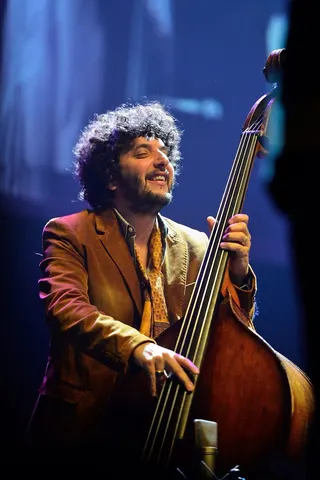
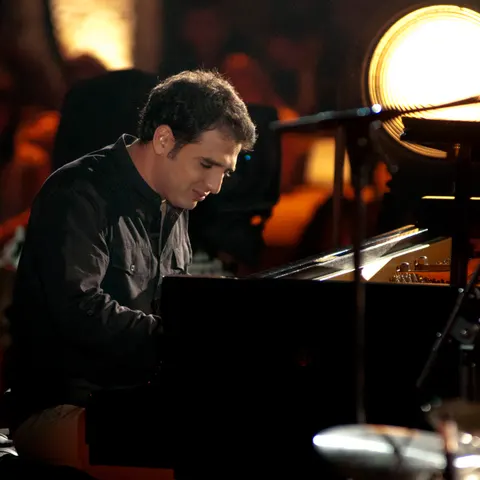
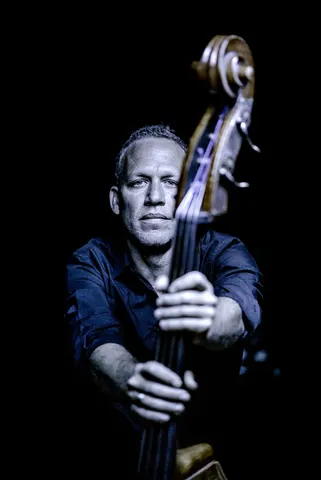
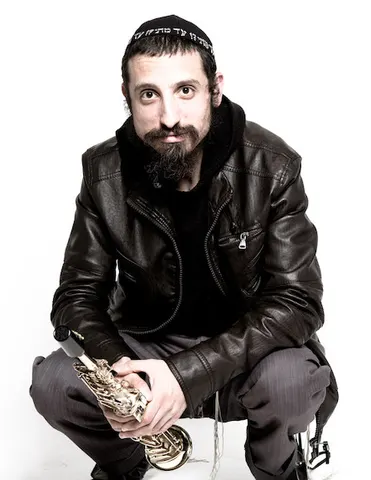
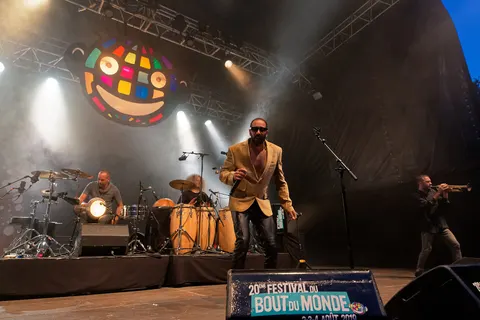
- Israeli Andalusian Orchestra Ashdod: Elad Levi
- Maqamat School of Eastern Music: teaching staff
- Israeli Andalusian Orchestra Ashdod: Elad Levi (orchestra player page)
- Maariv: new leadership at the Israeli Andalusian Orchestra Ashdod (July 27, 2022)
- Maqamat School of Eastern Music: teaching staff
- Krakow Jewish Culture Festival: Maqamat, An Eastern Jewish Fantasia
- Krakow Jewish Culture Festival: Maqamat, Adon Olam
- All About Jerusalem: Piyyut Festival programme, including the Ahavat Olamim launch concert and full New Jerusalem Orchestra personnel
- Jewish Review of Books: "No Greater Love" (review of Ahavat 'Olamim)
- Jewish Music Research Centre: Ahavat 'Olamim: Andalusian Hebrew Song from the Maghreb to Jerusalem
- MidnightEast: Jerusalem Jazz Festival 2021 programme
- Jerusalem Post: "Jerusalem Jazz Festival lights up Israel Museum"
- Hagai Bilitzky: New Sound of the Middle East (Bandcamp credits)
- Asaf Karaso: KarasOrchestra Project (Bandcamp credits)
- Neta Elkayam: Arénas (Bandcamp credits)
- WOMADelaide 2019: Yohai Cohen Quintet
- The Barefoot Review: interview with the Yohai Cohen Quintet
- Secret Tel Aviv: Andaluches live at the Inbal Center, July 29, 2019
- Jerusalem Post: "Omer Avital debuts 'North African Dream' at Ashdod's Meridiano Festival"
- Times of Israel: "Israeli jazz bassist in NYC comes home to compose North African sounds"
- Times of Israel: "Andalusian Orchestra Ashdod to host jazz pianist, Berber singer and Ethiopian saxophonist"
- Times of Israel: "Despite the times, Ashdod orchestra goes ahead with concerts to mark 30 years"
- Ashdod Net: interview with Elad Levi on the orchestra's 30th anniversary
- Yuval Erel (jazz blog): Omer Avital and the Ashdod Andalusian Orchestra dream together
- Discogs: Songlines Top Of The World 186 (STWCD162, 2023), track 10 "Naama" by Hagai Bilitzky