 JAZZPROFILES lives in the music 1,146 Jazz Artists fully Profiled!
 Edna Goren
Last updated September 10, 2026
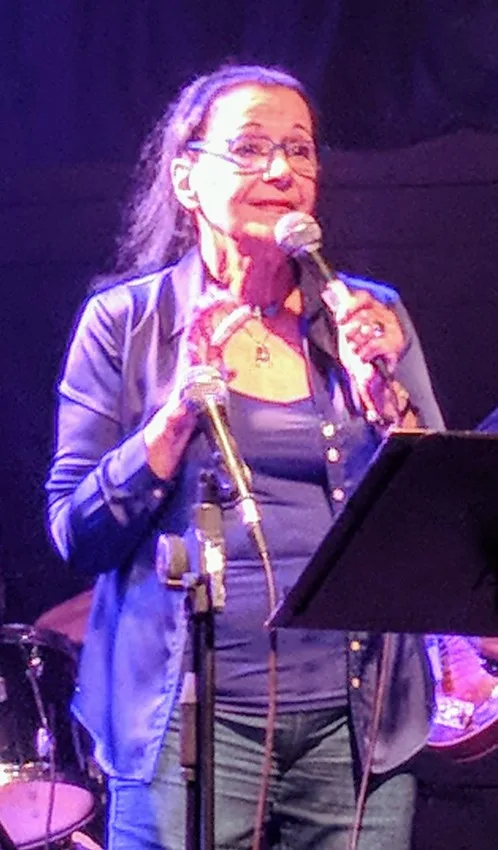
Edna Goren, photographed in Israel, July 13, 2018. CC BY-SA 4.0 (Creative Commons Attribution-ShareAlike 4.0 International). — Wikimedia Commons, https://commons.wikimedia.org/wiki/File:Edna_Goren.jpg, uploaded by Commons user Ijon, July 14, 2018, "own work."
Edna Goren was born Edna Badihi in Tel Aviv on October 27, 1943, and was discovered at sixteen by singer Benny Berman. Drafted in 1961, she served as a soloist with the Israeli Air Force band, where she has credited pianist Ziggy Skarbanik with teaching her jazz. Around 1964 she began performing with the ensemble of accordionist and jazz pioneer Maurice "Pisi" Osherowitz at Tel Aviv's Dan Hotel, and later recorded at the Studio 28 recording facility Osherowitz opened in 1967 — he has credited his encouragement with helping her into the Air Force orchestra in the first place. In 1969 or 1970 she recorded "His Wife" ("אשתו") with composer and arranger Albert Piamenta of the Piamenta ensemble, a specific and dated connection to the Piamenta family's own corner of early Israeli jazz.
Her recording career runs from a 1966 debut EP through decades of Hed-Arzi-label albums: Jerusalem of Gold (1967), a collection of Sasha Argov songs with longtime pianist and arranger Kobi Recht (1968, reissued 2003), an album of Burt Bacharach songs (1974), and further releases into the 2000s. Press profiles have called her "Israel's Ella Fitzgerald." She has also worked as a voice actor, with a Hebrew dubbing credit on Minions: The Rise of Gru (2022). As of a 2021 profile she had relocated from Givatayim to Ashdod and continued performing, including an appearance at a New Orleans-themed jazz festival. No death has been reported for her as of this writing.
Goren's career sits squarely in the vocal-jazz and Israeli-standards tradition — an interpreter of composers' songbooks (Sasha Argov, Bacharach) rather than a writer of her own material, in the mold of the "Israel's Ella Fitzgerald" comparison repeated in Israeli press coverage of her. Her earliest and most specifically jazz-adjacent credential is the 1969/1970 recording with Albert Piamenta, placing her inside the same small circle of Tel Aviv-based jazz arrangers and bandleaders — alongside Osherowitz and the Piamenta family — that produced some of Israel's first jazz recordings.
- His Wife / אשתו (1969 or 1970) — recorded with composer/arranger Albert Piamenta, her clearest documented jazz-scene connection.
- Sasha Argov Songs (1968, with Kobi Recht, Hed-Arzi; reissued 2003) — her long-running songbook partnership with pianist/arranger Kobi Recht.
- Sings Bacharach and Other Songs (1974, Hed-Arzi).
- Jerusalem of Gold (1967, Hed-Arzi) — an early solo release.
Edna Goren: Full Discography
Verified against the live Discogs API. Discogs artist ID 2199128. Spotify artist ID 0RyFNyse0zQDDjq1QHbDFp is reported via Wikidata but was not independently confirmed by directly loading the page in this research pass — treat as unverified until re-checked.
As Main Artist
| Year | Title | Label | Format |
|---|---|---|---|
| 1966 | "Edna" (EP) | — | 7" |
| 1967 | Jerusalem Of Gold | Hed-Arzi | LP |
| 1968 | כי מדברות עיניך | Hed-Arzi | |
| 1968 | Sasha Argov Songs (with Kobi Recht) | Hed-Arzi | |
| 1969 | שירים מתוך תעלת בלאומילך | Hed-Arzi | 7" |
| 1969 (or 1970) | His Wife / אשתו (with Albert Piamenta) | — | |
| 1969 | היי, תני לי הזדמנות (with Yoram Arbel) | Hed-Arzi | 7" |
| 1974 | Sings Bacharach And Other Songs | Hed-Arzi | LP |
| 1978 | Revival (הִתחַדְשׁוּת) | Hed-Arzi | LP |
| 1979 | טיול לדיסנילנד | Hataklit Ltd. | LP |
| 1995 | האוסף (compilation) | Hed Arzi Music | CD |
| 1997 | קולות | MCI | CD |
| 2003 | שירי סשה ארגוב (with Kobi Recht, reissue) | Hed-Arzi | CD |
| 2010 | סתיו (with Chana Levi) | — | CD |
Plus numerous additional "featured artist" credits on festival, soundtrack and tribute compilations spanning 1966–2023, not individually itemized here — see the live Discogs API for the complete list.
Data hazards
- No release in her Discogs catalog is credited to Platina or any of its named members (Roman Kunsman, Alona Turel, Aharon Kaminsky) — a claim in the source report that she sang with Platina traces to one vague, unelaborated sentence on Platina's own Wikipedia page, and is contradicted by omission from a more detailed specialist source (jazzrocksoul.com), which names a different vocalist, Ricky Manor, as the band's featured singer from 1976. This profile does not repeat the Platina connection as fact.
- The "His Wife" recording's exact year (1969 vs. 1970) is given differently across the two sources found (a specialist discography site vs. a YouTube upload date) and is not fully resolved.
- discogs.com's HTML artist page returned a 403 during this research; all data above was retrieved via the public Discogs API instead.
- Maurice "Pisi" Osherowitz — bandleader she performed with from around 1964, and whose Studio 28 she recorded at.
- Albert Piamenta — composer/arranger on her 1969/1970 recording "His Wife."
- Kobi Recht — her longtime pianist and arranger, most prominently on her Sasha Argov songbook album.
More Vocal Jazz Artists
See all 76 Vocal Jazz artists →More Israeli Jazz Artists
See all 228 Israeli artists →- Hebrew Wikipedia: עדנה גורן and Wikidata: Q6984741, source for birth name, date and career-start year
- Maariv, Sept 9, 2017 and Maariv, Oct 13, 2021, "78th birthday" profile — both independently corroborate the 1943 birth year by press-date arithmetic
- Hebrew Wikipedia: פיסי אושרוביץ (Pisi Osherowitz), which independently names her among the artists who recorded at his Studio 28
- stereo-ve-mono.com, Israeli discography listing and YouTube upload of "His Wife," dated 1970, source for the Piamenta recording connection
- Discogs: Edna Goren, artist 2199128, checked via the live API for her full release list
- Wikimedia Commons: File:Edna Goren.jpg, CC BY-SA 4.0, uploaded by Commons user Ijon, July 2018
