 JAZZPROFILES lives in the music 1,002 Jazz Artists fully Profiled!
 Jimsaku
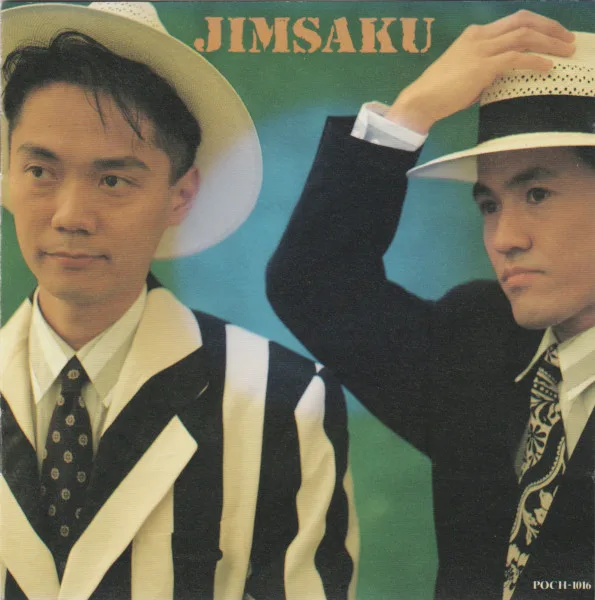
Cover art for Jimsaku's self-titled debut album "Jimsaku" (1990), used as a stand-in — no free-licensed photo of the duo could be located after a genuine search. The cover shows both members, Tetsuo Sakurai and Akira Jimbo. Standard copyright, all rights reserved — held by the label (Pony Canyon). This is not a Creative Commons–licensed image; it is used here as an honestly-disclosed editorial stand-in for a real photo. — Downloaded directly from the release's Discogs listing (https://www.discogs.com/release/10779250-Jimsaku-Jimsaku), full-resolution cover scan hosted at i.discogs.com. Saved locally as portrait.jpg in this folder.
Jimsaku is a bass-and-drums duo formed in 1990 by Tetsuo Sakurai and Akira Jimbo, both formerly of Casiopea. In 1989, the two had formed a separate side project, Shambara, with other musicians. When Casiopea guitarist Issei Noro demanded Shambara's dissolution, Sakurai and Jimbo refused and left Casiopea instead, wanting to return to an instrumental-band format — a departure that, according to Wikipedia, ended the original Casiopea lineup entirely rather than being a side-project footnote.
Their name is a portmanteau of Jimbo and Sakurai. Their early work drew heavily on Latin and Samba rhythm, traced directly to a trip Sakurai took to Brazil in the early 1980s — a real stylistic departure from the mainstream Japanese fusion sound both men had just left, which stayed popular in its own right. They kept up a punishing release schedule through the mid-1990s, at points releasing two albums a year, until the pace forced them to abandon the Latin influence in favor of a harder, drum-and-bass-heavy sound.
They played their final show under the Jimsaku name in February 1998, announcing the split during the concert itself. The breakup held for two decades. In 2019 they reunited at Akira Jimbo's 60th birthday celebration and kept performing, culminating in a new album, Jimsaku Beyond, in 2021. Both members now also play together with former Casiopea keyboardist Minoru Mukaiya in a group called the Katsushika Trio, formed 2021/2022 and initially focused on revisiting 1980s Casiopea material.
Jimsaku's sound moved across three distinct phases: Latin/Samba-influenced fusion in their earliest years (drawn from Sakurai's time in Brazil), a harder, more conventional fusion sound through the mid-1990s, and finally a drum-and-bass-heavy direction that led directly to the group's 1998 breakup.
Jimsaku: Full Discography
Discogs artist ID 5973357, members Akira Jimbo and Tetsuo Sakurai. Identity confirmed via a directly-fetched, successfully-read Wikipedia article. 15 credits total: 14 Main, 1 TrackAppearance.
As Jimsaku
| Album | Year | Label | Notes | Listen | Buy |
|---|---|---|---|---|---|
| Jimsaku | 1990 | — | Debut, self-titled; source of this profile's stand-in cover image | Amazon | |
| 45℃ | 1991 | Polydor | Amazon | ||
| Jade | 1992 | — | Amazon | ||
| Viva! | 1992 | Polydor | Live album | Amazon | |
| 100% Jimsaku | 1993 | — | Amazon | ||
| Wind Loves Us | 1993 | — | Amazon | ||
| Navel of the Earth / Navel | 1994 | Polydor | Amazon | ||
| Best Selection | 1995 | Polydor | Compilation | Amazon | |
| Blaze of Passion | 1995 | Polydor | Amazon | ||
| Dispensation | 1996 | BMG | From the duo's later, harder-edged period | Spotify | Amazon |
| Casiopea & Jimsaku Best | 1996 | Polydor | A direct joint compilation with Casiopea | Amazon | |
| Mega db | 1997 | Fun House | Final studio album before the 1998 disbandment | Amazon | |
| Jimsaku Beyond | 2021 | King Records | The 2019-reunion album | Spotify | Amazon |
Related act
| Release | Year | Notes |
|---|---|---|
| Toshiki Kadomatsu Works — Good Digger | 2020 | TrackAppearance credit |
The wider network
Both members left Casiopea to form Jimsaku in 1990. Both are also members of the Katsushika Trio (formed 2021/2022) with former Casiopea keyboardist Minoru Mukaiya, initially focused on revisiting 1980s Casiopea material — not a Jimsaku release, but a direct extension of the same web of relationships.
Scale note
All 14 Main-role credits and the single TrackAppearance credit found on Discogs are represented above, given the complete, manageable catalog size.
- Casiopea - Both members left the group to form Jimsaku, an event that ended the original Casiopea lineup.
- Minoru Mukaiya - Joined both members in the Katsushika Trio, 2021/2022.
- Issei Noro - The Casiopea guitarist whose demand that Shambara dissolve precipitated Sakurai and Jimbo's departure.
- Jimsaku's full profile on JazzProfiles.com
- r/JapaneseJazz
- Discogs artist page
- Spotify — Jimsaku Beyond
- Jimsaku — Wikipedia (fetched directly and successfully)
- WebSearch synthesis of deezer.com, katsushika-trio.com, and Grokipedia
- Jimsaku — Discogs artist 5973357 (profile and full paginated release list retrieved via the Discogs API)
- Spotify Web API catalog lookups