 JAZZPROFILES lives in the music 393 Artists Catalogued, 362 fully Profiled!
 Ehud Ettun
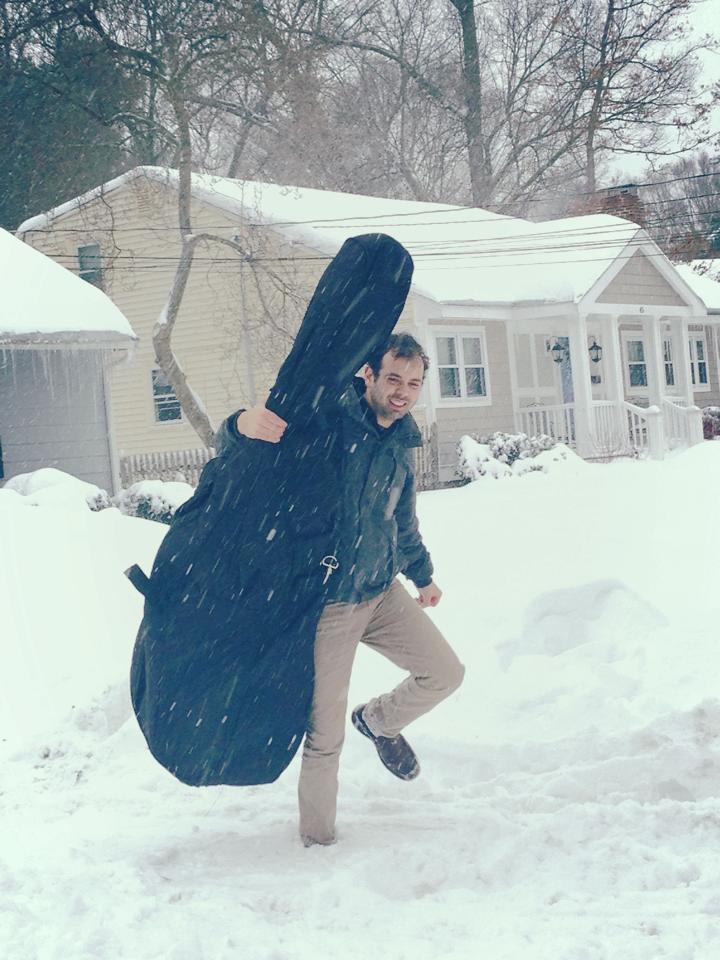
Ehud Ettun, 2014. (Photo: Jazzer12345) CC BY-SA 3.0 — Wikimedia Commons — https://commons.wikimedia.org/wiki/File:Ehud_Ettun.jpg
Ehud Ettun started on piano at six and picked up guitar at twelve, working through Jerusalem bands before he ever touched a bass. The switch came at sixteen, when he was accepted to the Israel Arts and Science Academy and began studying upright bass under Michael Klinghoffer, ear training under Professor Bat-Sheva Rubinstein, and composition under Andre Hajdu, a rigorous three-front education that shows up later in how deliberately his own records are put together. After the Jerusalem Academy of Music and Dance, he crossed the Atlantic for a master's degree at the New England Conservatory of Music in Boston, studying with saxophonist Donny McCaslin and pianist Fred Hersch.
His debut as a co-leader arrived in 2008: Half Colors, Half Voices, made with pianist Uriel Herman, setting original music to poems by the Israeli poet Rachel Bluwstein and pulling in a roster of Israeli vocalists and instrumentalists, including a young Eli Degibri on saxophone and vocals. Haaretz named it one of the top 15 Israeli albums of that year. It's the first entry in a catalog that's bigger than it looks from the outside: seven albums as bandleader or co-leader since, most of them self-released or issued through Internal Compass, the label Ettun founded himself in Boston with a stated mission built around music education and cross-cultural connection. Heading North (2012) came out the same year he finished his NEC degree. Raw Gestures followed as a trio record with pianist Daniel Schwarzwald and drummer Matan Asayag. Then, in 2014, came BiPolar, the first record in what's become the defining thread of his career as a leader: a duo with Japanese pianist Haruka Yabuno that the two of them have now sustained for fifteen years, through Collage of Moments (2016, with Serbian flutist Milena Jancuric added to the mix) and on to 2024's Knights of Silence, a record Yabuno herself has described as carrying meanings "that only the true knights of silence know."
The best story in the catalog belongs to Deep in the Mountains (2019). It came out of a 40-day artistic residency in the mountains of PyeongChang, South Korea, tied to the region's 2018 Winter Olympics cultural program, and the record mixes traditional Korean song and Argentine folk with Leonard Bernstein and modern Israeli jazz, an unlikely combination that somehow plays like a single, coherent idea rather than a tour itinerary set to music.
Alongside his own projects, Ettun has built a substantial career as a sideman and session player, recording with pianist Fred Hersch, saxophonists George Garzone and Eli Degibri, pianist Kenny Werner, and Anat Cohen, and documented studio credits with saxophonist/composer Tal Gur (Air Portrait, 2007), saxophonist Yoni Kretzmer (Yoni Kretzmer's New Dilemma, 2009), guitarist Guy Kark (4 Quarters, 2010), pianist Devin Roth (Childhood Places, 2012), and, more recently, Russian-Israeli saxophonist Lenny Sendersky's Moon Strings project (Blues Mizrahi, 2020). He's played the Blue Note in New York, the Kennedy Center in Washington, D.C., and Boston's Symphony Hall, with tour stops in Toronto, Berlin, Warsaw, Tokyo, and Seoul.
Back in 2019, Ettun told the Times of Israel he was giving himself ten years to make it in New York, with a longer-term plan to return to Israel and open a music school in the Negev desert. He's already acting on that second half: his newer project, the Internal Compass Collective, is based in Mitzpe Ramon, the desert town that now gives his label its full identity as a working hub rather than just an imprint. The bassist who's spent fifteen years commuting musically to Japan is also, in parallel, building something permanent at home.
Ettun's playing sits at the crossing point of a fairly traditional jazz education (Klinghoffer's classical bass discipline, Hajdu's composition training, McCaslin and Hersch at NEC) and a restless, specifically cross-cultural curiosity that keeps showing up in his choice of collaborators and material. Half Colors, Half Voices set his bass against Hebrew poetry and a chamber-pop vocal ensemble. Deep in the Mountains folded Korean traditional song and Argentine folk into a modern jazz frame built around a residency rather than a studio booking. The Yabuno Ettun Project, running fifteen years and four records deep as of 2024's Knights of Silence, is built on the specific chemistry of an Israeli bassist and a Japanese pianist finding common ground in original compositions, classical repertoire, and standards side by side.
That range is matched by a compositional streak that runs through nearly every one of his own records as leader: the vast majority of his leader and co-leader output, going back to his 2008 debut, is original material, not standards dates. Where he does turn to other people's songs, as on the duo work with Yabuno, the treatment stays personal rather than deferential. The double bass itself is described consistently, across reviews and his own bio, in melodic and expressive terms rather than purely functional ones, an emphasis that fits a player whose main portfolio is bandleading, not just anchoring other people's rhythm sections.
- Half Colors, Half Voices (2008, with Uriel Herman) - His debut as co-leader, setting original compositions to poems by Rachel Bluwstein, with a young Eli Degibri among the credited musicians. Named one of Haaretz's top 15 Israeli albums of the year. Spotify - Half Colors, Half Voices Listen · Buy
- BiPolar (2014, The Yabuno Ettun Project) - The record that started the 15-year Yabuno/Ettun duo, still running as of 2024. The clearest entry point into the partnership that defines his output as a leader. Spotify - Bipolar Listen · Buy
- Deep in the Mountains (2019) - Born from a 40-day PyeongChang artistic residency tied to the 2018 Winter Olympics; Korean and Argentine folk sit next to Bernstein and modern Israeli jazz. The most distinctive single record in his catalog as leader. Spotify - Deep in the Mountains Listen · Buy
- Knights of Silence (2024, The Yabuno Ettun Project) - The duo's newest record, deeper and more intimate than BiPolar, and the current end point of a partnership that started in 2014. Spotify - Knights of Silence Listen · Buy
Ehud Ettun: Full Discography
LEADER / CO-LEADER: full detail
All 7 albums as bandleader or co-leader:
| Album | Year | Label | Personnel | Notes | Listen | Buy |
|---|---|---|---|---|---|---|
| Half Colors, Half Voices | 2008 | Not On Label (self-released) | Uriel Herman (piano, keyboard, arrangements); Ehud Ettun (upright bass); vocalists Lianne Aharony, Ayala Engedeshet, Avi Belleli, Eli Degibri, Sivan Talmor, Eli Magen, Liora Itzhak, Nathalie Rosental; Pnini Grubner (flute), Eli Degibri (saxophone), Eran Weitz/Avi Singolda (guitars), Zohar Fresco/Asaf Roth (percussion), Dan Tzuker (violin), Peter Roth (electric bass), Gidi Raz (electric guitar/effects), Adi Rennert (piano/keys/trumpet, producer) | Debut as co-leader, with pianist Uriel Herman. Original music set to poems by Israeli poet Rachel Bluwstein. Named one of Haaretz's top 15 Israeli albums of the year. | Spotify | Amazon |
| Heading North | 2012 | Internal Compass (Ettun's own label) | Ehud Ettun (bass, composer); Haruka Yabuno (piano); Nathan Blankett, Tal Gur | All self-composed. First release on Ettun's own Internal Compass imprint, the same year he completed his NEC master's. | Spotify | Amazon |
| Raw Gestures | 2013 / 2014 | Internal Compass | Ehud Ettun (bass); Daniel Schwarzwald (piano); Matan Asayag (drums) | Trio record; opening track "Transparency" covered in a 2015 Boston Globe profile of Ettun. | YouTube ("Transparency," also on Spotify) | Amazon |
| BiPolar | 2014 | Not On Label (self-released, Yabuno Ettun Project) | Haruka Yabuno (piano); Ehud Ettun (bass) | Debut of the 15-year Yabuno/Ettun duo project. Original compositions, classical pieces, and standards. | Spotify | Amazon |
| Collage of Moments | 2016 | Internal Compass Records | Haruka Yabuno (piano); Milena Jancuric (flute); Ehud Ettun (bass) | Seven spontaneous compositions captured during a 2015 European tour. | Spotify | Amazon |
| Keep Calm (single) | 2018 | Not On Label (mastered by Burak Atas / Maven Mastering) | Ehud Ettun | Standalone single sharing its title with the later Deep in the Mountains track 10; the earliest Ettun release Discogs itself indexes. | Spotify | not found |
| Deep In The Mountains | 2019 | International Compass (catalog no. B07R8G868L) | Ehud Ettun (bass); Daniel Schwarzwald (piano); Nathan Blankett (drums) | Born from a 40-day artistic residency in PyeongChang, South Korea, tied to the 2018 Winter Olympics cultural program. Mixes traditional Korean song and Argentine folk with Bernstein and modern Israeli jazz. | Spotify | Amazon |
| Knights of Silence | 2024 | International Compass / The Yabuno Ettun Project | Haruka Yabuno (piano); Ehud Ettun (bass) | Second Yabuno Ettun Project album, 15 years after BiPolar; deeper and more intimate. | Spotify | Amazon |
GUEST / sideman & compilation credits (chronological)
Confirmed studio/session credits, in chronological order.
| Year | Album | Leader / Artist | Label | Role | Listen | Buy |
|---|---|---|---|---|---|---|
| 2007 | Air Portrait | Tal Gur | 1st CDs Productions | Electric Upright Bass | Spotify | Amazon |
| 2009 | Yoni Kretzmer's New Dilemma (self-titled) | Yoni Kretzmer's New Dilemma | Earsay | Double Bass | Bandcamp (2015 OutNow reissue of the 2009 original; not to be confused with the unrelated 2018 "Months, Weeks and Days" album by the same group with different personnel) | not found |
| 2010 | 4 Quarters | Guy Kark & Between Times | (self-released) | Double Bass | Bandcamp | Amazon |
| 2012 | Childhood Places | Devin Roth | (self-released) | Bass | not found | Amazon |
| c. 2014-2015 | The Why (self-titled) | Bert Seager (quartet, with Catherine Bent, Brian O'Neill) | (unspecified) | Double bass | not found | not found |
| 2020 | Blues Mizrahi | Lenny Sendersky & Moon Strings | Losen Records | Bass, Bass Solo (tracks 5, 8) | Spotify | Amazon |
Additional collaborators cited in artist bio/press
Named in Ettun's own site and press bio as collaborators/co-performers, consistent with his Blue Note and Kennedy Center performance history: Fred Hersch, George Garzone (billed together with Ettun as the "Pisco Trio," alongside percussionist Jorge Perez Albela), Kenny Werner, Anat Cohen, Danilo Perez, Ferenc Nemeth, Donny McCaslin, and Frank London. Eli Degibri's credit is independently confirmed above (as a vocalist/saxophonist on Half Colors, Half Voices, 2008).
- Haruka Yabuno - Japanese pianist, his longest-running duo partner. The Yabuno Ettun Project has run fifteen years and four albums deep as of 2024: BiPolar (2014), Collage of Moments (2016, with flutist Milena Jancuric added), and Knights of Silence (2024).
- Uriel Herman - pianist and composer, co-leader on Ettun's 2008 debut Half Colors, Half Voices, a collaboration built around poems by Rachel Bluwstein.
- Daniel Schwarzwald - pianist, plays on both Raw Gestures (2013) and Deep in the Mountains (2019), effectively Ettun's other long-running musical partnership alongside Yabuno.
- Nathan Blankett - drummer, appears on Heading North (2012) and Deep in the Mountains (2019).
- Milena Jancuric - Serbian flutist, third voice on Collage of Moments (2016), recorded during a 2015 European tour.
- Tal Gur - saxophonist/composer; Ettun plays electric upright bass on Gur's Air Portrait (2007), his earliest documented studio sideman credit.
- Yoni Kretzmer - tenor saxophonist; Ettun plays double bass on the 2009 self-titled debut of Kretzmer's chamber-improv group New Dilemma, alongside cellist Neta Cohen Shani, violist Daniel Tanchelson, and drummer Daniel Feingold.
- Guy Kark - guitarist/vocalist; Ettun plays double bass on 4 Quarters (2010, with Between Times).
- Devin Roth - pianist; Ettun plays bass on Roth's debut Childhood Places (2012), a record built around British Columbia landscapes.
- Bert Seager - pianist; Ettun's the double bassist in Seager's chamber-jazz quartet The Why, alongside cellist Catherine Bent and percussionist Brian O'Neill, active around 2014-2015.
- Lenny Sendersky & Moon Strings - Ettun contributes bass and a credited bass solo on two tracks of Blues Mizrahi (2020, Losen Records), a Middle Eastern folk/klezmer/jazz record led by St. Petersburg-born, Israel-based saxophonist Lenny Sendersky.
- Additional collaborators named in Ettun's own bio and press materials: Fred Hersch, George Garzone (billed together as the "Pisco Trio," with percussionist Jorge Perez Albela), Kenny Werner, Anat Cohen, Danilo Perez, Ferenc Nemeth, Donny McCaslin, and Frank London.