 JAZZPROFILES lives in the music 1,002 Jazz Artists fully Profiled!
 Gabriel Espinosa
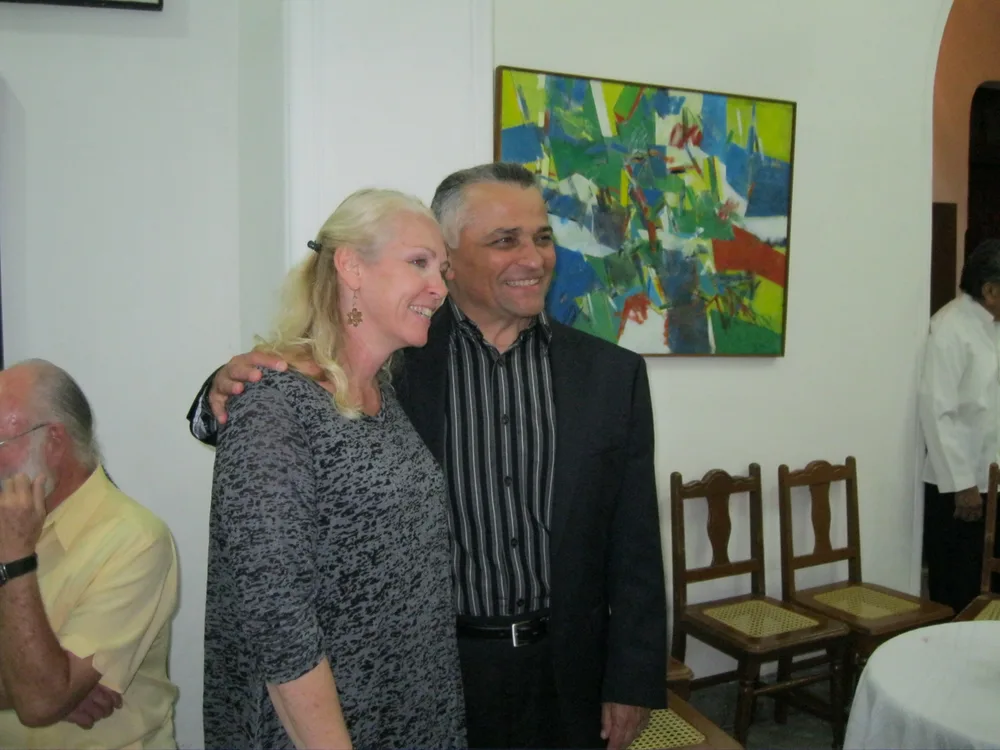
Gabriel Espinosa with Tammy Putnam during a Central College trip to Mérida, Yucatán, Mexico, January 12, 2011 CC BY-SA 2.0 (Creative Commons Attribution-ShareAlike 2.0 Generic), photograph by the Flickr user presidentPutnam — Flickr — https://www.flickr.com/photos/54974078@N02/5354216289 (file: https://live.staticflickr.com/5003/5354216289_f3900c7463_o.jpg)

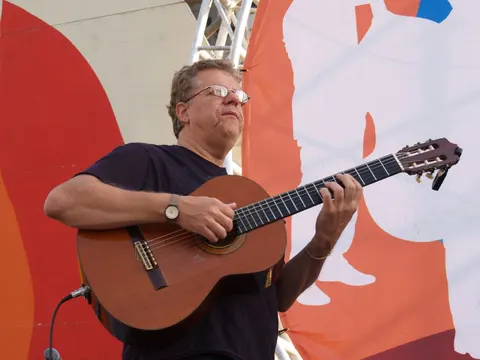
Gabriel Espinosa was born in Mérida, the capital of the Mexican state of Yucatán, in 1952, into a family where his mother encouraged him onto the guitar at six. By fourteen he had switched to electric bass and was working professionally with his brothers Victor and Patricio in the family group Los Deltons, whose first recording was Eric Germon's "Eres Joven," the winning song at Mérida's Dosis festival in 1971. The other formative sound arrived through the port city's touring circuit. Brazilian bands passing through Mérida on their way north brought bossa nova with them in the early 1960s, and he has dated his attachment to the music precisely: "I remember being 14 years old, listening to those great Brazilian players who would come through Merida on their tours." Boleros, the Beatles and Antonio Carlos Jobim all reached him in the same few years, and the combination has run through everything he has written since.
He came to the United States in 1976 on a music scholarship to Central College in the small Dutch-founded town of Pella, Iowa, and took a BA in music there. Berklee College of Music followed, and he graduated magna cum laude in 1983 with a degree in arranging. In his final Berklee year he co-founded the band Ashanti with the Swiss alto saxophonist George Robert, a classmate; they worked around Boston for a year before Espinosa relocated the group to Cancún, where it held down steady work from 1984 to 1991. He entered the jazz studies program at the University of North Texas in 1992, took a master's degree in 1995, and sang in the UNT Jazz Singers under Paris Rutherford, whose reading of Clifford Brown's "Daahoud" from the group's 1995 album Geraldine was picked for the school's fiftieth-anniversary box set; the vocal soloist on it is Alison Wedding, who would sing on his own records fifteen years later. During the same period he produced records for Mexican artists, working for six months alongside the Yucatecan songwriter Armando Manzanero as co-producer on a pair of Manzanero's own projects.
In 1996 he returned to Central College as Director of Jazz Studies. He ran the jazz band, taught applied lessons, and founded the Vocal Combos program, later renamed ALMA, which pairs a singer with a small band and pushes students to write their own material. From 2004 he also directed the Latin American Ensemble at Grinnell College, and he held both appointments for the better part of two decades. Iowa also gave Ashanti a second life. Espinosa rebuilt the band in Pella out of local rhythm-and-blues and jazz players and recorded three albums with it for Edgewater Group: En Fuego (2001), Sin Fronteras (2003) and Dyos Bo'otik (2004), the last titled with the Mayan phrase for "thank you." The band toured the Midwest and Mexico with guests including Alex Acuña, Anat Cohen, Gil Goldstein and Dave Samuels. In January 2008, marking forty years in music, he brought a version of the group billed as Ashanti Mundo to the Teatro José Peón Contreras in his native Mérida, with George Robert on saxophone, Edsel Gomez on piano, Claudio Roditi on trumpet and Tim Crumley on drums.
His first album under his own name was cut in Brooklyn in November 2008 and released as From Yucatán to Rio (ZOHO ZM 200907) on July 14, 2009. It set the pattern for everything after it: an international cast assembled around his own writing, with Roditi and George Robert on the front line, Helio Alves on piano, Romero Lubambo on guitar, Antonio Sánchez and Adriano Santos splitting the drum chair, Anat Cohen guesting on clarinet, Alison Wedding singing, and Darmon Meader and Kim Nazarian of the New York Voices on the opening "Agua de Beber." He was explicit about what the record was not. "I see myself more like a composer and an arranger than a soloist," he told the label, laughing off the idea of a bass-hero project.
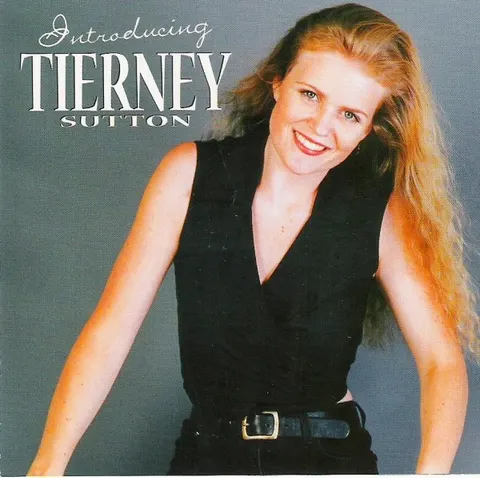
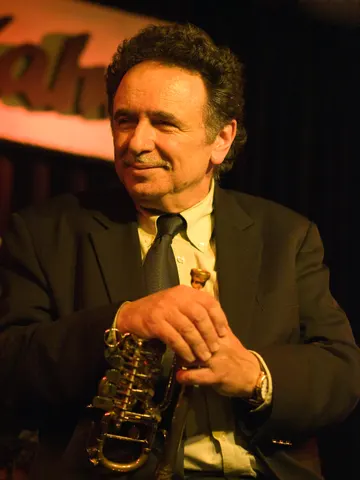
The partnership that made his name outside the Midwest began at Central College, where the German-born harmonica player Hendrik Meurkens came to perform in 2011. The two found a shared taste for songs with strong melodies, agreed to split the writing evenly, and recorded Celebrando in Brooklyn from May 24 to 27, 2011. Released on April 10, 2012 as ZOHO Music's hundredth CD, it carries Anat Cohen on clarinet for three pieces and tenor saxophone for a fourth, Antonio Sanchez sharing the drums with Mauricio Zottarelli, and Jim Seeley on trumpet and flugelhorn. The album spent twenty-six weeks on the JazzWeek chart and finished at number twenty-five on that publication's list of the year's records, and the group played it at Dizzy's Club Coca-Cola at Lincoln Center on July 15, 2013. A second Meurkens collaboration, Samba Little Samba, was recorded on December 10 and 11, 2013 and released on November 11, 2014, with Cohen again on clarinet and tenor, Tierney Sutton joining Espinosa to sing his arrangement of "Bésame Mucho," and Adriano Santos alternating with Sánchez at the kit. That same October the Greater Des Moines Community Jazz Center selected Espinosa unanimously for the Iowa Jazz Hall of Fame, and he was inducted at Altoona on October 19, 2014, citing his students as the reason for the award.
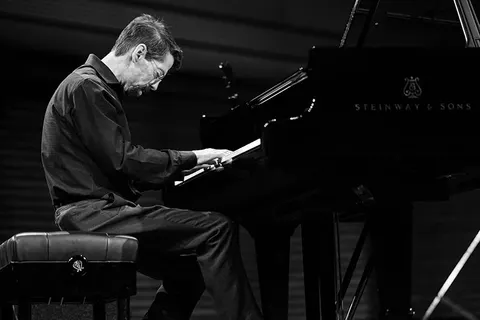
Four more albums followed on ZOHO. Songs of Bacharach and Manzanero (October 7, 2016), recorded across December 2015, January and March 2016, sets five Burt Bacharach songs sung by Tierney Sutton against five Manzanero boleros sung in Spanish by Espinosa, with Meurkens on harmonica for four tracks. Nostalgias De Mi Vida (October 5, 2018), taped in Brooklyn that March, is the most autobiographical of them, built around Kim Nazarian's voice, Joel Frahm's tenor and Christian Jacob's string arrangements, and it circles back to "Eres Joven," the first song he ever recorded with Los Deltons. Bossas & Boleros (June 23, 2023), cut in Brooklyn and in Cedar Falls, Iowa in September and December 2022, brought in Fred Hersch for two voice-and-piano boleros, the New York Voices for a vocal-quartet arrangement of "Sing," and Cohen on clarinet for the Yucatecan jarana "Mi Jarana." The Brazilian Project (Origin Records 82952), released on May 22, 2026, is the furthest he has taken the composer-first idea: assembled between 2022 and 2025, arranged by the trombonist Rafael Rocha and the flugelhornist Bruno Santos, recorded in Rio de Janeiro by a Brazilian nonet with strings added in Tallinn, and played entirely without him. He is now emeritus professor of music at Central College.
Espinosa is a bandleader whose instrument is really the arrangement. He plays electric and acoustic bass with a supporting player's economy, frequently hands the bass chair on his own records to Gustavo Amarante or Joe Martin, and on The Brazilian Project stepped off the bandstand entirely, which is an unusual thing for a bassist to do to his own music. What he keeps is the writing. His originals sit on the seam between the Yucatecan repertoire he grew up with, the Brazilian forms he adopted at fourteen, and jazz harmony, and the most distinctive of them are the jarana pieces, the 6/8 dance meter of Yucatán, which he has used to open a door onto material that has almost no other presence in jazz. "Encuentro Maya," "Maya Roots" and "Mi Jarana" all work that vein, and Hendrik Meurkens has said the Mayan atmosphere in Espinosa's songs was something he had not heard in jazz before. The other constant is the voice used as an instrument: Alison Wedding singing melodies wordlessly in the horn line on Celebrando, three-part vocal harmony carrying the theme where a horn section would, and the vocal-jazz craft he learned in the UNT Jazz Singers and teaches at Central. He sings the boleros himself in Spanish without any pretence about it. "I'm not trying to show that I have this tremendous voice," he has said. "It's about telling the story." He calls himself a hybrid composer rather than a purist of any one tradition, and reviewers have generally taken him at his word: Dan Bilawsky, writing in All About Jazz, credited him with delivering the Bacharach and Manzanero songbooks as he heard them without twisting either for the sake of a modern slant, and Bill Milkowski wrote that the auspicious ZOHO debut was bound to take him a giant leap forward in his career.
- Celebrando (2012, ZOHO) - Co-led with Hendrik Meurkens and released as ZOHO Music's hundredth CD, with Anat Cohen on clarinet and tenor saxophone and Antonio Sanchez sharing the drum chair; it spent twenty-six weeks on the JazzWeek chart. Spotify - Celebrando Listen
- From Yucatán to Rio (2009, ZOHO) - His debut as a leader, recorded in Brooklyn in November 2008 with Claudio Roditi, George Robert, Helio Alves, Romero Lubambo, Antonio Sánchez and Anat Cohen, and the record that took him from a regional reputation to an international one.
- Samba Little Samba (2014, ZOHO) - The second Meurkens collaboration, cut in December 2013, with Cohen on clarinet and tenor across four pieces and Tierney Sutton sharing his rebuilt "Bésame Mucho." Spotify - Samba Little Samba Listen
- Songs of Bacharach and Manzanero (2016, ZOHO) - A concept album splitting ten songs evenly between Burt Bacharach, sung by Tierney Sutton, and Armando Manzanero, sung in Spanish by Espinosa, with reharmonisations that make the two writers sound like one. Spotify - Songs of Bacharach and Manzanero Listen
- The Brazilian Project (2026, Origin Records) - Ten of his compositions arranged by Rafael Rocha and Bruno Santos, recorded in Rio de Janeiro by a Brazilian nonet with a string orchestra in Tallinn, and the one album he wrote without playing a note on it. Spotify - The Brazilian Project Listen
- Nostalgias De Mi Vida (2018, ZOHO) - A memoir in ten songs, from Los Deltons in 1970s Mérida to his daughters, with Kim Nazarian on vocals, Joel Frahm on tenor and strings arranged by Christian Jacob. Spotify - Nostalgias de Mi Vida Listen
- Bossas & Boleros (2023, ZOHO) - The widest guest list of his catalogue, with Fred Hersch accompanying two bolero vocals, the New York Voices on "Sing," and Anat Cohen on the Yucatecan jarana "Mi Jarana." Spotify - Bossas & Boleros Listen
- Dyos Bo'otik (2004, Ashanti) - The third and last album by the Iowa incarnation of the band he founded at Berklee, titled with the Mayan for "thank you," and the record that documents the working group behind two decades of his teaching.
Gabriel Espinosa: Full Discography
Identity confirmed via the live Discogs API, and it takes three artist IDs rather than one. The bassist's own entity is 2646664, which carries only three entries. The ZOHO leader catalogue is filed under 1148905, an entity whose own profile text points readers elsewhere for the bassist and which also holds the unrelated engineering credits of a different Gabriel Espinosa (Blondie, Fischerspooner, Casey Spooner). A third ID, 4003888, holds his single University of North Texas Jazz Singers credit. Every release below was fetched individually rather than read off an artist-releases listing.
Espinosa is a leader and a composer first: outside his own bands he has recorded almost nothing, so the sideman table below is short by nature rather than by selection. Where the Discogs entries carry no personnel at all, which is the case for Samba Little Samba and for four albums that Discogs does not list, the line-ups come from ZOHO Music's and Origin Records' own product pages, which print track-level credits and production data in full. Those cases are marked in the Notes column. The Buy column is — throughout.
As Leader / Co-Leader
| Album Title | Recording Date(s) | Release Date | Label | Catalog Number | Format(s) | Personnel | Role | Reissue History | Spotify | Buy | Notes |
|---|---|---|---|---|---|---|---|---|---|---|---|
| En Fuego | Not specified in Discogs data | 2001 | Edgewater Group | SR2702 | CD, Album | Gabriel Espinosa (bass, vocals), David Kobberdahl (trumpet, flugelhorn, electronic wind instrument), Dustin Bear (saxophone), Bob Long (saxophone, track 2), Eric Sickler (keyboards), Ross Vanderwerf (guitar), Tim Crumley (drums), Ryan Rumery (percussion), Tammy Brice (vocals, track 5) | Leader (billed to the band Ashanti) | None found | — | — | The first record by the Iowa incarnation of Ashanti, the Latin jazz band Espinosa founded at Berklee in 1983 and rebuilt in Pella after 1996 |
| Sin Fronteras | Not specified in Discogs data | February 5, 2003 | Edgewater Group | A6141 | CD, Album | Gabriel Espinosa (bass, vocals), David Kobberdahl (trumpet, electronic wind instrument), Bob Long and Bryan Schumacker (saxophones), Eric Sickler (keyboards, vocals), Patricio Espinosa (guitar), Tim Crumley (drums), Ryan Rumery (percussion) | Leader (billed to the band Ashanti) | None found | — | — | Eleven tracks. Espinosa's brother Patricio, of the family band Los Deltons, plays guitar. Release date from the iTunes Lookup API |
| Dyos Bo'otik | Not specified | September 1, 2004 | Not established | Not established | CD, Album | Ashanti, led by Gabriel Espinosa (bass, vocals); full personnel not documented in any source consulted | Leader (billed to the band Ashanti) | None found | — | — | Not listed on Discogs at all. The title is the Mayan phrase for "thank you." Release date from the iTunes Lookup API |
| From Yucatán to Rio | November 2008, Acoustic Recording, Brooklyn, New York (recorded and mixed by Michael Brorby) | July 14, 2009 | ZOHO | ZM 200907 | CD, Album | Gabriel Espinosa (bass, background vocals, producer, arranger), Claudio Roditi (trumpet, flugelhorn), George Robert (alto saxophone), Helio Alves (piano, keyboards), Romero Lubambo (guitar on tracks 3, 4, 6, 8 and 9), Alison Wedding (lead vocals on 4 and 9, background vocals, alto on 1), Antonio Sanchez (drums on 2, 5, 6, 8 and 9), Adriano Santos (drums on 1, 3, 4, 7 and 10), Anat Cohen (clarinet on 5), Darmon Meader and Kim Nazarian (vocals on 1), Jacinto Macedo (percussion), Patricio Espinosa (background vocals on 9); mastered by Michael Macdonald | Leader | None found | — | — | His debut as a leader. Eight of the ten pieces are his, with "We've Come Undone" and "Remain" by Alison Wedding. The Discogs credit block lists seven players with no track data; the track restrictions above are from ZOHO's own product page. Not available on Spotify |
| Celebrando | May 24 to 27, 2011, Acoustic Recording, Brooklyn, New York (recorded and mixed by Michael Brorby) | April 10, 2012 (digital release March 12, 2012) | ZOHO | ZM 201204 | CD, Album | Hendrik Meurkens (harmonica), Gabriel Espinosa (bass, vocals on tracks 5 to 9 and 11), Anat Cohen (clarinet on 3, 5 and 9; tenor saxophone on 6), Jim Seeley (trumpet, flugelhorn), Alison Wedding (vocals), Molly Blythe (backing vocals on 5, 7 and 11), Misha Tsiganov (piano, Fender Rhodes), Antonio Sanchez (drums on 2, 3, 5, 6, 7 and 9), Mauricio Zottarelli (drums on 1, 4, 8, 10 and 11; percussion); mastered by Jay Dudt | Co-leader (with Hendrik Meurkens; Cohen and Sanchez billed "With") | None found | Spotify - Celebrando | — | ZOHO Music's hundredth CD release, funded in part by Central College. Liner notes by Zan Stewart. Twenty-six weeks on the JazzWeek chart, finishing at number twenty-five for 2012. The Discogs credit block omits Jim Seeley entirely; ZOHO's page carries him and reproduces Cohen's and Sanchez's track restrictions exactly as Discogs has them |
| Samba Little Samba | December 10 and 11, 2013, Acoustic Recording, Brooklyn, New York (recorded by Michael Brorby); mixed and mastered by Dave Darlington at Bass Hit Recording, New York | November 11, 2014 | ZOHO | ZM 201410 | CD, Album | Gabriel Espinosa (bass, vocals), Hendrik Meurkens (harmonica, vibes), Anat Cohen (clarinet on tracks 2 and 5; tenor saxophone on 3 and 7), Alison Wedding (vocals on all tracks except 4 and 5), Tierney Sutton (vocals on 4), Misha Tsiganov (piano, Fender Rhodes), Antonio Sanchez (drums on 2, 4, 6, 8 and 10), Adriano Santos (drums on 1, 3, 5, 7 and 9; percussion), Serge Merlaud (guitar on 4) | Co-leader (with Hendrik Meurkens) | None found | Spotify - Samba Little Samba | — | Four pieces by Meurkens, four by Espinosa, one by Tsiganov and an arrangement of "Bésame Mucho." The Discogs release carries no personnel at all, in either the credit block or the tracklist; every name and track restriction above comes from ZOHO's own product page, and Meurkens's liner note independently identifies Cohen's clarinet on "Choro da Neve" and her tenor on "A Night in Jakarta" and "Give Me Five" |
| Songs of Bacharach and Manzanero | December 2015, January and March 2016, Acoustic Recording, Brooklyn, New York (recorded and mixed by Michael Brorby) | October 7, 2016 | ZOHO | ZM 201613 | CD, Album | Gabriel Espinosa (vocals on tracks 1, 3, 5, 7 and 9; electric bass on 1, 8 and 9; producer, arranger), Tierney Sutton (vocals on 2, 4, 6, 8 and 10), Misha Tsiganov (piano, Fender Rhodes), Mauricio Zottarelli (drums, percussion), Jim Seeley (trumpet, flugelhorn on 4 and 7), Hendrik Meurkens (harmonica on 3, 5, 8 and 10), Gustavo Amarante (electric bass on 2, 3, 4 and 7), Joe Martin (acoustic bass on 5, 6 and 10), Rubens De La Corte (acoustic guitar on 7 and 9), Itai Kriss (flute on 2), Jonathan Gomez (bongos on 5 and 9); mastered by Alan Silverman | Leader | None found | Spotify - Songs of Bacharach and Manzanero | — | Five Burt Bacharach songs and five by Armando Manzanero, alternating. The Discogs credit block gives six names with no instrument-level track data; the track restrictions above are from the All About Jazz review's personnel listing, which is fuller than ZOHO's page and corrects its "lute" credit for Kriss to flute |
| Nostalgias De Mi Vida | March 26 to 29, 2018, Acoustic Recording, Brooklyn, New York (recorded by Michael Brorby); mixed and mastered by Dave Darlington at Bass Hit Recording, New York | October 5, 2018 | ZOHO | ZM 201809 | CD, Album | Gabriel Espinosa (electric bass, vocals, producer), Kim Nazarian (vocals on tracks 1 to 4, 8 and 10), Misha Tsiganov (piano, keyboards), Adriano Santos (drums on all except 5), Mauricio Zottarelli (drums on 5), Jim Seeley (flugelhorn on 1 to 6, 8 and 10), Joel Frahm (tenor saxophone on 1 to 4, 6, 9 and 10), Rubens De La Corte (guitar on 1, 4, 8 and 10), Jay Ashby (trombone on 3, 7 and 8; percussion on 1, 4, 7, 8 and 10), Jonathan Gomez (bongos on 9), Christian Howes String Ensemble (on 2 and 5), strings arranged by Christian Jacob | Leader | None found | Spotify - Nostalgias de Mi Vida | — | Not listed on Discogs. Personnel and production credits from ZOHO's own product page. Seven of the ten pieces are Espinosa's; "Eres Joven" is the Eric Germon song he first recorded with Los Deltons in early-1970s Mérida |
| Bossas & Boleros | September 19 and 20, 2022, Acoustic Recording, Brooklyn, New York (Peter Karl), and December 3 and 4, 2022, Catamount Studios, Cedar Falls, Iowa (Travis Huisman); mixed and mastered December 9 and 10, 2022 by Dave Darlington at Bass Hit Recording, New York | June 23, 2023 | ZOHO | ZM 202306 | CD, Album | Gabriel Espinosa (bass on tracks 2, 6 and 8; vocals on 1, 4 and 10; producer), Kim Nazarian (vocals on 1 to 3 and 5 to 9), Misha Tsiganov (piano on 1 to 3 and 5 to 9), Mauricio Zottarelli (drums on 1 to 3 and 5 to 9), Jim Seeley (trumpet, flugelhorn on 2, 3, 6, 7 and 9), Jay Ashby (trombone on 1, 3, 6, 7 and 9; percussion on 1 and 9), Fred Hersch (piano on 4 and 10), New York Voices (vocals on 5), Gerardo Flores (vocals on 8), Anat Cohen (clarinet on 3), Itai Kriss (flute on 5), Gustavo Amarante (bass on 1, 3, 5 and 9), Enrique Toussaint (bass on 7), Cris Alcocer (percussion on 3), Aviana Gedler (background vocals on 1, 3, 6, 7 and 9); orchestral arrangements by Linwood Bell (2, 6, 8), vocal arrangement by Jeremy Fox (5) | Co-billed ("Gabriel Espinosa with Kim Nazarian") | None found | Spotify - Bossas & Boleros | — | Six of the ten pieces are Espinosa's. Partially funded by Central College and Grinnell College. Discogs and ZOHO agree on the track restrictions throughout, an unusual thing in this catalogue; Discogs gives the piano chair on tracks 4 and 10 to Hersch and the rest to Tsiganov, exactly as the label does |
| The Brazilian Project | 2022 to 2025, RB Recording Studio, Rio de Janeiro (recorded by Roger Rocha); strings recorded by Kira Malevskaia at ERR Studio, Tallinn, Estonia; mixed and mastered by Dave Darlington at Bass Hit Recording, New York | May 22, 2026 | Origin Records | 82952 | CD, Album | Gabriel Espinosa (composer and producer only, no instrument), Roger Rocha (alto and soprano saxophone, flute), Josue Lopez (tenor saxophone, flute), Daniel Freire (baritone saxophone), Bruno Santos (flugelhorn), Rafael Rocha (trombones), Joabe Reis (trombone on 2, 3 and 9), Giovani Malini (acoustic guitar on 9), Andre Lopez (piano on 1, 2 and 7), Felipe Silveira (piano on 3, 4 and 6), Eduardo Farias (piano on 5 and 8 to 10), Hugo Maciel (electric bass), Renato Rocha (drums), Rafael Barata (drums on 6), Mafran Maracana (percussion on 1 and 2), Tallinn Studio Orchestra conducted by Kleber Augustinho da Silva (on 6) | Leader (composer, not a performer) | None found | Spotify - The Brazilian Project | — | Not listed on Discogs. All ten pieces are his; Rafael Rocha arranged 1 to 4, 6 and 7, Bruno Santos arranged 5 and 8 to 10. Eight of the ten revisit pieces from his earlier albums: "Klavier Latino," "Nuevos Horizontes" and "Morning Breeze" from From Yucatán to Rio, "Fe," "Encuentro Maya" and "Euro 12" from Samba Little Samba, "Gabriela" from Nostalgias De Mi Vida and "Mi Jarana" from Bossas & Boleros. Only "Caramelo" and "Paz" appear here for the first time. Personnel and production credits from Origin Records' own product page |
As Sideman (selected major credits)
| Year | Project (Leader) | Title | Label | Catalog | Role | Notes |
|---|---|---|---|---|---|---|
| 1997 | University of North Texas Jazz Singers (Paris Rutherford, arranger) | North Texas Jazz: Fifty Years | North Texas Jazz | LA9702-NS | Vocals, on "Daahoud" (disc 4, track 6) only | The Clifford Brown tune, taken from the Jazz Singers' 1995 album Geraldine, with Alison Wedding as vocal soloist and Espinosa in the ensemble. Filed on Discogs under the third of his three artist IDs |
| 2021 | Cris Alcocer | Evil Eyes | Not established | none | Co-billed artist and composer on "Mi Jarana" (track 7) | The Yucatecan percussionist's own record. Espinosa is billed alongside Alcocer and the Esencia Mestiza Project on this track alone; he later recut the piece with Alcocer and Anat Cohen for Bossas & Boleros |
| Undated | Various Artists | Zoho: Latin Jazz New York | ZOHO | 233123 | Bass, on "Agua de Beber" (disc 1, track 12) | A label sampler box set. The track is lifted from From Yucatán to Rio; the release carries no year and no credit block beyond Joachim Becker's liner notes |
- Hendrik Meurkens - the closest partnership of his career, begun when Meurkens performed at Central College in 2011: two co-led ZOHO albums, Celebrando (2012) and Samba Little Samba (2014), with the writing split evenly between them, followed by Meurkens returning as a sideman on Songs of Bacharach and Manzanero (2016), where his harmonica appears on four tracks.
- Anat Cohen - a guest on four of his records across fourteen years, always as a featured voice rather than a band member: clarinet on "Nuevos Horizontes" on From Yucatán to Rio (2009), clarinet on three pieces and tenor saxophone on a fourth on Celebrando (2012), clarinet on two and tenor on two more on Samba Little Samba (2014), and clarinet on "Mi Jarana" on Bossas & Boleros (2023). She also appeared as a guest with Ashanti.
- Antonio Sanchez - the other Mexican-born musician on those dates, sharing the drum chair with Adriano Santos on From Yucatán to Rio, with Mauricio Zottarelli on Celebrando and with Santos again on Samba Little Samba; Espinosa gave him the drum solo on "Euro 12" and has called him the best Mexican jazz musician working today.
- Misha Tsiganov - the pianist on every ZOHO album from Celebrando onward, and a contributing composer as well: "Out of Reach" on Celebrando and "Give Me Five" on Samba Little Samba are his.
- Alison Wedding - a fellow University of North Texas student in the early 1990s who became the singing voice of his first three ZOHO records, often wordless and scored as a horn line; she also wrote two of the pieces on From Yucatán to Rio.
- Kim Nazarian - of the New York Voices, first heard on "Agua de Beber" in 2009, then the featured vocalist across Nostalgias De Mi Vida (2018) and Bossas & Boleros (2023), for which she also wrote lyrics to two of his melodies.
- Tierney Sutton - sings "Bésame Mucho" on Samba Little Samba and the five Bacharach songs on Songs of Bacharach and Manzanero; the two took the Bacharach and Manzanero project to Kauai in February 2018.
- George Robert - the Swiss alto saxophonist who co-founded Ashanti with him at Berklee in 1983, played the Cancún years, and returned for From Yucatán to Rio and the 2008 Ashanti Mundo and Doctors in Jazz concerts in Mérida and Avigliana.
- Jim Seeley - trumpet and flugelhorn on Celebrando, Songs of Bacharach and Manzanero, Nostalgias De Mi Vida and Bossas & Boleros, four consecutive albums.
- Claudio Roditi - the Brazilian trumpeter on From Yucatán to Rio, where "Maria" was written as a feature for him, and at the Teatro José Peón Contreras concert in January 2008.
- Mauricio Zottarelli and Adriano Santos - the two Brazilian drummers who have divided most of his recorded work between them, Zottarelli on Celebrando, Songs of Bacharach and Manzanero and Bossas & Boleros, Santos on From Yucatán to Rio, Samba Little Samba and Nostalgias De Mi Vida.
- Fred Hersch - accompanies Espinosa's voice alone on "Aquí Estoy Yo" and "No Me Platiques Más," the two duo tracks of Bossas & Boleros (2023).
- Jay Ashby - trombone and percussion on Nostalgias De Mi Vida and Bossas & Boleros, and the horn arranger on three pieces of the former.
- Gustavo Amarante and Joe Martin - the two bassists Espinosa hired to play in his place on the records where he concentrates on singing and writing, Amarante on four tracks of Songs of Bacharach and Manzanero and four of Bossas & Boleros, Martin on three of the former.
- Itai Kriss - flute on "(They Long To Be) Close To You" in 2016 and on the New York Voices feature "Sing" in 2023.
- Cris Alcocer - a percussionist from Yucatán who brings the jarana rhythm to "Mi Jarana," first on his own Evil Eyes (2021) and then on Bossas & Boleros.
- Spotify artist page
- Discogs, bassist entity (artist 2646664)
- Discogs, where the ZOHO leader catalogue is filed (artist 1148905)
- Official site
- Origin Records artist page
- All About Jazz: Gabriel Espinosa
- Origin Records: Gabriel Espinosa, artist biography
- Origin Records: The Brazilian Project, personnel and production credits
- Gabriel Espinosa, official biography
- All About Jazz: Gabriel Espinosa, musician page and album reviews
- Dan Bilawsky, "Gabriel Espinosa: Songs Of Bacharach And Manzanero," All About Jazz, December 12, 2016
- ZOHO Music: From Yucatán to Rio product page (archived)
- ZOHO Music: Celebrando product page (archived)
- ZOHO Music: Samba Little Samba product page (archived)
- ZOHO Music: Songs of Bacharach and Manzanero product page (archived)
- ZOHO Music: Nostalgias De Mi Vida product page (archived)
- ZOHO Music: Bossas & Boleros product page (archived)
- Rachel Bing, "Jazz musician Gabriel Espinosa selected to Hall of Fame," Central College News, October 2, 2014
- "Gabriel Espinosa Honored in Hall of Fame," Dutchology (Central College), Winter 2015
- "Gabriel Espinosa '79 Releases Brazilian Influenced Album," Central College News, May 26, 2026
- Grinnell College: Gabriel Espinosa, faculty biography
- Pablo Iván Argüello, "The Brazilian Project," El Heraldo de México, reprinted by Origin Records
- Discogs: Gabriel Espinosa (artist 1148905) and Gabriel Espinosa (2) (artist 2646664)
- Album personnel and dates verified against the live Discogs API; Spotify album and artist identifiers confirmed one by one against the Spotify catalogue, and release dates cross-checked against the keyless iTunes Lookup API. AllMusic refuses automated fetches and contributed nothing.