Kohsuke Mine
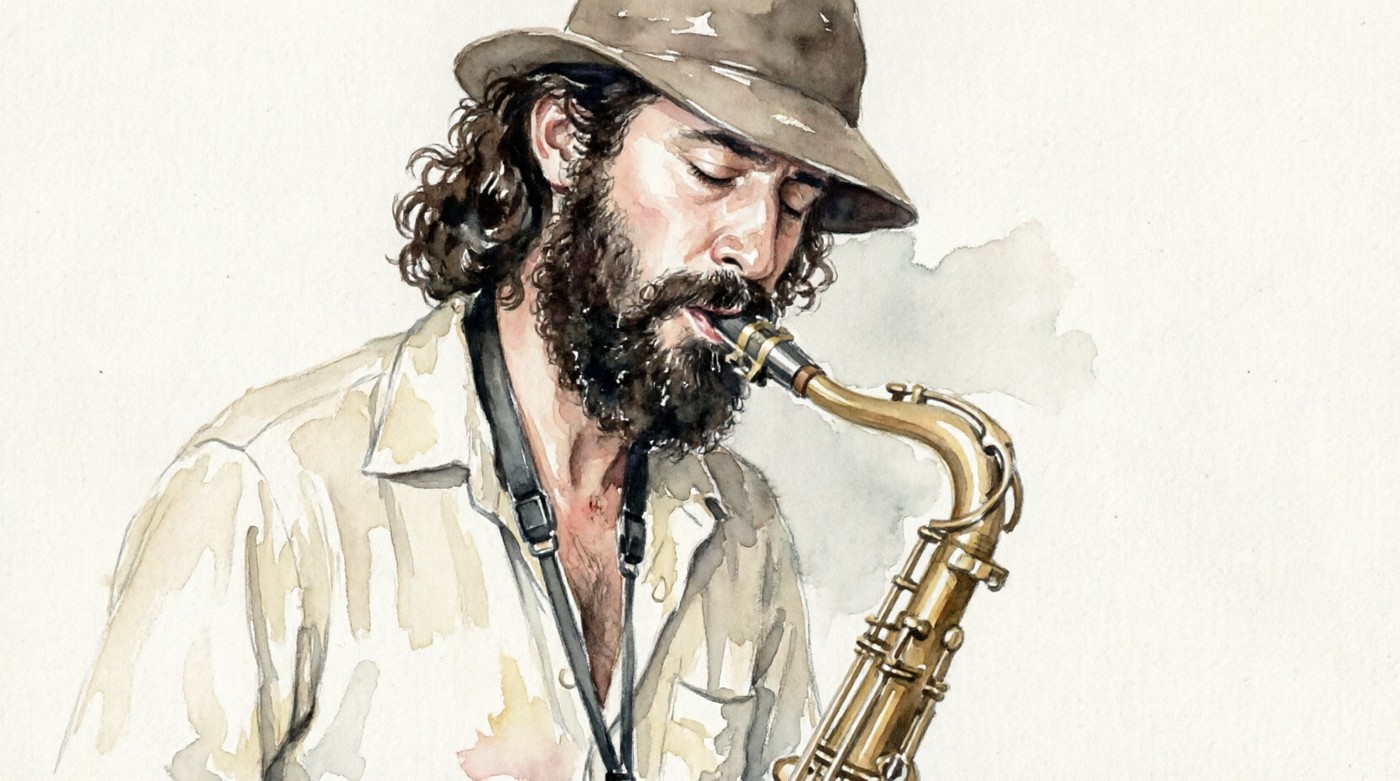
Kohsuke Mine, original watercolor illustration. Original artwork, commissioned for JazzProfiles.com — not a photograph; no rights-clear photo of Mine could be found. — JazzProfiles.com original commission
Kohsuke Mine (峰厚介) was born February 6, 1944, in the Yushima district of Tokyo's Bunkyō ward, the son of a sushi restaurant owner. His family evacuated to Miyako, Iwate during the war while he was still an infant, returning to Tokyo before he started elementary school. Music entered his life almost by accident twice over: a boys' choir at eight that his mother pushed him into to cure his shyness, and a middle-school brass band where a scheduling conflict, not a choice, assigned him to clarinet. He attended Toho College of Music's affiliated high school, and while still a student he was already working nights, playing in a seven-piece dance band at a cabaret called Chinatown atop the Nichigeki building in Yurakucho for around 3,000 yen a month.
He turned pro for real in 1962, at eighteen, leaving his high school's clarinet program behind to join a working quintet led by saxophonist Katō, playing alto saxophone nightly at the Milano Club, in the basement of Shinjuku's Milano-za theater. He stayed roughly six years, self-taught on the horn — "I didn't take lessons," he said later — and largely formed by what he heard at the jazz cafés of the era: Paul Desmond, and the funky-boom hard bop of Art Blakey, Horace Silver, and Donald Byrd.
By 1969 he was recognized as a member of pianist Masabumi Kikuchi's band, the relationship that shaped the next phase of his career. He debuted as a leader in 1970 with two records at once: First on Philips, and Mine on a brand-new label called Three Blind Mice, where his LP became TBM's very first catalog release. First paired him with Kikuchi on electric piano and two visiting American players, bassist Larry Ridley and drummer Lenny McBrowne, cut June 17 and 18, 1970 at Victor Studio in Tokyo — an internationally assembled rhythm section brought to him, three years before he went to them. The following year, on August 5, 1971, he joined Joe Henderson, Kikuchi, and trumpeter Terumasa Hino for a concert at Tokyo Toshi Center Hall, released on Philips as In Concert and later reissued as Sunrise in Tokyo. That same year he also co-billed a Three Blind Mice date with vocalist Kimiko Kasai, Yellow Carcass in the Blue.
Mine moved to New York in 1973, spending roughly two years there focused more on practicing than performing. His first recorded tenor saxophone appearance came that May, as a sideman on bassist Yoshio Suzuki's Friends; he'd taken up the horn in 1971 after becoming devoted to John Coltrane, and by the time he returned to Japan in 1975 it had become close to his primary voice, alto increasingly set aside. He came home with electric sounds in his ear, having absorbed soul and church music while in the States, and the mid-1970s East Wind run that followed shows it directly: Out of Chaos (1974), then Solid and Sunshower (both 1976), records that lean into Fender Rhodes, wah-wah, and a modal-to-fusion sound that's become one of the reissue era's most-cited threads. In between, in May and June 1976, he played tenor alongside George Adams, Lew Soloff, and Tom Malone in Gil Evans's orchestra for two nights at Tokyo's Nakano Sun Plaza Hall, later documented as Tokyo Concert.
In 1978 Mine co-founded Native Son, a jazz-funk band built around pianist Takehiro Honda's Fender Rhodes and clavinet, alongside guitarist Motonobu Ohde, bassist Tamio Kawabata, drummer Hiroshi Murakami, and percussionist Thomas Colon. It wasn't a side project: Native Son released eleven albums on JVC and Polydor between 1979 and 1987, debuting that first year with Savanna Hot-Line and the self-titled Native Son. Mine has since described the band with a certain lightness — "I was enjoying it" — rather than as his main commitment, even as it became one of the defining Japanese fusion catalogs of the period.
He kept a foot in straight-ahead jazz throughout, and by the 1990s it was back at the center. His Verve years produced Major to Minor (1993), recorded live at the Tokyo club Body And Soul and honored with the Japan Jazz Disc Award, followed by In a Maze (1995) with the same working quintet — guitarist Kazumasa Akiyama, pianist Junichiro Ohkuchi, bassist Tsutomu Okada, drummer Ryojiro Furusawa. In 1994 he also recorded Duo, a joint-billed session with Masabumi Kikuchi, the pianist who'd been a constant presence in his career since 1969. Balancez followed in 1997.
The catalog kept extending into the new century: the three-way session Rendezvous with pianist Takeshi Shibuya and altoist Eiichi Hayashi in 2004, With Your Soul in 2011 with a newer quartet built around pianist Eriko Shimizu, and Bamboo Grove in 2019, again with Shimizu, his first new leader session in seven years at that point. He remained a documented studio presence into 2025, well past his eightieth birthday and more than six decades after he first turned pro at eighteen in a Shinjuku basement club.
Mine's alto voice formed inside hard bop's funky-boom moment — Paul Desmond's tone on one side, Art Blakey, Horace Silver, and Donald Byrd's groove-forward hard bop on the other — absorbed entirely by ear in Tokyo's jazz cafés and on the bandstand rather than through formal lessons. The turn that reshaped his sound came in 1971, when devotion to John Coltrane pulled him onto tenor saxophone; within a few years alto had receded almost entirely from his own leader dates. Reviewers of his 1970 debut First have heard that hard-bop foundation clearly, alongside "scale-based themes that give way to expansive and exploratory improvisations" — an assessment that places him inside the same modernizing wave that was pulling Japanese jazz away from straight hard-bop repertoire circa 1970.
His mid-1970s East Wind records show the widest stylistic swing in the catalog: Solid has been described as carrying "Miles In a Silent Way vibes," while Sunshower mixes "dissonant funky riffs and intense energy" with synthesizer textures, Mine's sax lines running long and melodic against increasingly electric backing. That fusion period, and the Native Son years that followed it, sit in real contrast to his 1990s return to acoustic quintet writing: critics describe the 1993 Major to Minor as a shift "from a Wayne Shorter/Weather Report approach to Sonny Rollins's rhythmic bop style," his tenor delivering "fluid horn flights... soulful and jaunty" inside a straight-ahead frame. Few saxophonists from the same TBM/East Wind generation moved this deliberately between acoustic post-bop, electric fusion, and jazz-funk and then back again without ever fully leaving any of them behind.
- First (1970, Philips) - His debut, cut at Victor Studio in Tokyo with Masabumi Kikuchi on electric piano and visiting American players Larry Ridley and Lenny McBrowne, three years before Mine himself relocated to New York. Spotify - First Listen · Buy
- Mine (1970, Three Blind Mice) - Released the same year as First, and the very first catalog release for a label that became central to the Japanese jazz reissue revival. YouTube - Mine (full album) Listen
- Out of Chaos (1974, East Wind) - The clearest single entry point into his modal-to-fusion turn after returning from New York. YouTube - Out of Chaos (full album) Listen · Buy
- Savanna Hot-Line (1979, Native Son, JVC) - One of two simultaneous debut albums for the jazz-funk band Mine co-founded with Takehiro Honda; the saxophone-meets-Rhodes sound that carried into eleven albums through 1987. YouTube - Savanna Hot-Line (full album) Listen
- Bamboo Grove (2019, Days of Delight) - His first new leader session in seven years at the time, and the clearest recent evidence the catalog is still active into his seventh decade playing. Spotify - Bamboo Grove Listen · Buy
Kohsuke Mine (峰厚介) — Full Discography
Leader
Mine's own discography under his name or a named "Kosuke Mine" quartet/quintet, in full detail.
| Album | Year | Label | Personnel | Notes | Listen | Buy |
|---|---|---|---|---|---|---|
| Mine (Kosuke Mine Quintet) | 1970 | Three Blind Mice (TBM-1) | Kohsuke Mine (alto/soprano sax), Takashi Mizuhashi (bass), Hiroshi Murakami (drums), Hideo Ichikawa (Fender electric piano), Takashi Imai (trombone) | Three Blind Mice's very first catalog release | YouTube | Amazon search |
| First | 1970 | Philips (FX-8508) | Kohsuke Mine (alto sax), Masabumi Kikuchi (electric piano), Larry Ridley (bass), Lenny McBrowne (drums) | Recorded in New York, three years before Mine himself relocated there | Spotify | Amazon search |
| Yellow Carcass in the Blue (Kimiko Kasai with Kosuke Mine Quartet) | 1971 | Three Blind Mice (TBM-8) | Kohsuke Mine (alto/soprano sax), Kimiko Kasai (vocals), Yoshio Suzuki (bass), Hiroshi Murakami (drums), Masahiro Kikuchi (piano) | Co-billed vocal date; kept here (not Co-Leader) since it is credited under his own Quartet name on Discogs | YouTube | Amazon search |
| 2nd Album (Kosuke Mine Quintet) | 1971 | Three Blind Mice (TBM-4) | Kohsuke Mine (alto/soprano sax), Yoshio Suzuki (bass), Hiroshi Murakami (drums), Yoshiaki Masuo (guitar), Takashi Imai (trombone) | Recorded Nov 29 & Dec 2, 1970 at AOI Studio | YouTube | Amazon search |
| Daguri (Kosuke Mine Quintet) | 1973 | Victor (MJ-7145) | Kohsuke Mine (tenor/soprano sax), Fumio Itabashi (piano), Hideo Miyata (tenor sax), Hideaki Mochizuki (bass), Hiroshi Murakami (drums) | YouTube | Amazon search | |
| Out of Chaos | 1974 | East Wind (EW-7003) | Kohsuke Mine (sax), Tsutomu Okada (bass), Motohiko Hino (drums) | YouTube (full album) | Amazon search | |
| Solid (Kosuke Mine Quartet) | 1976 | East Wind (EW-8031) | Kohsuke Mine (soprano/tenor sax), Mikio Masuda (Fender Rhodes, organ), Hideaki Mochizuki (bass), Arihide Kurata (drums) | Some discographies list this as 1975; East Wind catalog and Discogs both date it 1976 | YouTube | Amazon search |
| Sunshower | 1976 | East Wind (EW-8038) | Kohsuke Mine (soprano/tenor sax), Mikio Masuda (clavinet, organ, synth), Hiroshi Yasukawa (electric guitar), Hideaki Mochizuki (bass), Arihide Kurata (drums) | Recorded Feb 9-10, 1976, Onkio Haus, Tokyo | YouTube | Amazon search |
| Major to Minor (Kosuke Mine Quintet) | 1993 | Verve (POCJ-1195) | Kohsuke Mine (tenor sax, composer), Kazumasa Akiyama (guitar), Junichiro Ohkuchi (piano), Tsutomu Okada (bass), Ryojiro Furusawa (drums) | Recorded live at Body And Soul, Tokyo | not found | Amazon search |
| In a Maze (Kosuke Mine Quintet) | 1995 | Verve (POCJ-1280) | Kazumasa Akiyama (guitar), Junichiro Ohkuchi (piano), Tsutomu Okada (bass), Ryojiro Furusawa (drums) | Same working quintet as Major to Minor | not found | Amazon search |
| Balancez (Kosuke Mine Quintet) | 1997 | Media Rings (MGCJ-1003) | Kohsuke Mine (tenor sax), Junichiro Ohkuchi (piano, organ), Kazumasa Akiyama (guitar), Tsutomu Okada (bass), Ryojiro Furusawa (drums) | not found | Amazon search | |
| With Your Soul (Mine Kosuke Quartet) | 2011 | Song X Jazz (SONG X 008) | Kohsuke Mine (tenor sax), Eriko Shimizu (piano), Tomokazu Sugimoto (bass), Hiroshi Murakami (drums) | YouTube | Amazon search | |
| Bamboo Grove | 2019 | Days of Delight (DOD-002) | Kohsuke Mine (tenor/soprano sax, composer), Eriko Shimizu (piano), Takashi Sugawa (bass), Kazunori Takemura (drums) | Spotify | Amazon search | |
| Alto Sax N.1 (Sadao Watanabe Quartet / Kosuke Mine Quartet) | year unresolved | Toshiba (TW-6046) | (credits not returned by Discogs for this release) | Flagged, unresolved: split billing with the Sadao Watanabe Quartet, no year in Discogs' record. Genuinely his own Quartet's side of a two-artist LP, not a compilation, but could not confirm the date | not found | Amazon search |
Co-Leader
Billed alongside another named leader, not under his own group name.
| Album | Year | Co-billed with | Actual leader | Listen | Buy |
|---|---|---|---|---|---|
| Duo | 1994 | Masabumi Kikuchi | Joint billing, duo recording | not found | Amazon search |
| Dear Friends | 1986 | Kazuo Yashiro Trio, Hiroshi Fukumura, Yuri Tashiro | Kazuo Yashiro (pianist, trio leader) | YouTube | Amazon search |
| Rendezvous (Kohsuke Mine Meets Takeshi Shibuya & Eiichi Hayashi) | 2004 | Takeshi Shibuya (piano), Eiichi Hayashi (alto sax) | Joint billing, no bass/drums, three-way session | not found | Amazon search |
Guest / Appearance / Compilation credits (chronological)
Discogs lists 137 total credits under Mine's personal artist page across "Appearance" and "TrackAppearance" roles once the Leader/Co-Leader albums above are excluded (those are correctly credited to his own name or group aliases but were pulled out above for accuracy). Per the 2026-07-27 scale-note precedent (Herbie Hancock build), individual Listen/Buy verification was not run for each of the ~95 remaining sideman/compilation/broadcast credits below — that volume is genuine but secondary to his own catalog, which got full treatment above. Flagging this clearly rather than silently truncating: if Erik wants Listen/Buy on any specific title below, it can be added on request.
Two titles worth calling out specifically: Savanna Hotline and the self-titled Native Son (both JVC, 1979) are the debut releases of the jazz-funk supergroup Native Son referenced in the spotlight post; Native Son is its own Discogs artist entity and released 11 albums through 1987, only its 1979 debuts appear in Mine's own credit list here.
- 1970 - Trumpet in Modern Jazz (Discogs)
- 1970 - Summer Jazz in Tokyo (Discogs)
- 1970 - Collaboration (Discogs)
- 1970 - Poo-Sun (Discogs)
- 1970 - Jazz in Tokyo '69 (Discogs)
- 1970 - Re-confirmation (Discogs)
- 1971 - All About Dancing Mist (Discogs)
- 1971 - All Japan Jazz Festival '71 (Discogs)
- 1971 - Jazz Festival with '71 Poll Winners (Discogs) - various artists, Philips FX-8522, featuring Sadao Watanabe, Terumasa Hino, Masabumi Kikuchi, Kimiko Kasai and others alongside Mine
- 1971 - Masabumi Kikuchi in Concert (Discogs)
- 1971 - First Album (Discogs)
- 1971 - Q (Discogs)
- 1971 - Mal: Live 4 to 1 (Discogs) - Mal Waldron
- 1971 - In Concert (Discogs)
- 1972 - Masabumi Kikuchi + Gil Evans (Discogs)
- 1972 - Satin Doll (Discogs)
- 1972 - Hairpin Circus / A Short Story for Image (OST) (Discogs)
- 1973 - Nemu Jazz Inn (Discogs)
- 1973 - Open Road (Discogs)
- 1973 - End for the Beginning (Discogs)
- 1973 - Friends (Discogs)
- 1973 - What's Going On (Discogs)
- 1974 - East Wind Special Digest Album (Discogs)
- 1974 - Left Alone - Mal Waldron Live 1 (Discogs)
- 1974 - East Wind (Discogs)
- 1975 - NHK Transcription Programme No. 137 - Modern Jazz in Japan (Discogs)
- 1976 - Mickey's Mouth (Discogs)
- 1977 - NHK Transcription Programme No. 164 - Japanese Jazz Scene '77 (Discogs)
- 1977 - Love Is Around (Discogs)
- 1977 - Recital (Discogs)
- 1977 - Jazz of Japan Live Under the Sky '77 (Discogs)
- 1978 - Solaris / Burning Super Session II (Discogs)
- 1978 - Tokyo Fusion Night (feat. Shuichi "Ponta" Murakami) (Discogs)
- 1978 - Moritat (Discogs)
- 1978 - Dancing Sphinx (Discogs)
- 1978 - Hip Seagull (Discogs)
- 1979 - Savanna Hotline (Native Son) (Discogs)
- 1979 - Native Son (Native Son) (Discogs)
- 1980 - NHK Transcription Programme No. 181 - Trend-Setters in Japanese Jazz (Discogs)
- 1980 - Coast to Coast (Live in USA) (Discogs)
- 1982 - Shining (Discogs)
- 1983 - In New York (Discogs)
- 1983 - Carnival: Live at Montreux (Discogs)
- 1983 - Introducing (Discogs)
- 1983 - Once in a While (Discogs)
- 1983 - Wind Surfing (Discogs)
- 1983 - Resort (Discogs)
- 1984 - Super Best (Discogs)
- 1984 - Gumbo (Discogs)
- 1984 - Sahara (Discogs)
- 1984 - Square Game (Discogs)
- 1985 - Bass Cookin' (Discogs)
- 1985 - Daybreak (Discogs)
- 1985 - Keep You Satisfied (Discogs)
- 1987 - Transparent (Discogs)
- 1988 - Nora Neko no Koya (Discogs)
- 1988 - New York (Discogs)
- 1988 - Paul Jackson's Jazz for Kids (Discogs)
- 1989 - Live at Mobs (Discogs)
- 1990 - Ma-Pa (Discogs)
- 1990 - Randooga (Select Live Under the Sky '90) (Discogs)
- 1990 - All Night, All Right, Off White Boogie Band (Discogs)
- 1991 - Christmas Jazz (Discogs)
- 1991 - Plays Be Bop Vol. 1 (Discogs)
- 1991 - Plays Be Bop Vol. 2 (Discogs)
- 1992 - Randooga - Kam-Nabi (Discogs)
- 1993 - Step to Next (Discogs)
- 1993 - Randooga - Ma Ho Ro Ba (Discogs)
- 1994 - (untitled, Japanese title) (Discogs)
- 1995 - So What - Live at Pit Inn Shinjuku (Discogs)
- 1996 - Update (Live at Pit Inn Shinjuku, Dec 16 1995) (Discogs)
- 1996 - Open the Gate (Discogs)
- 1997 - Trip (Discogs)
- 1997 - Kotetsu (Discogs)
- 1998 - Live at Dolphy (Discogs)
- 1998 - Haru ni Shite Kimi wo Omou (Discogs)
- 1999 - Golden Circle "6" (Discogs)
- 1999 - Essential Ellington (Discogs)
- 2001 - Palette (Discogs)
- 2001 - Spread (Discogs)
- 2002 - Fusion Paradise Orange Selection (Discogs)
- 2002 - Sublimation (Discogs)
- 2004 - Day Dream Sings Duke Ellington (Discogs)
- 2004 - Quiet Storm - Live at Jazz Inn Lovely (Discogs)
- 2005 - Shibuya Jazz Classics (Nobukazu Takemura Collection - Three Blind Mice Issue) (Discogs)
- 2005 - Live at Moers (Tribute to Masahiko Togashi) (Discogs)
- 2005 - Island Virgin Essential Ellington 2 (Discogs)
- 2006 - Oma Sound (Discogs)
- 2007 - Happiness (Discogs)
- 2007 - Earthian All Star Ensemble (Discogs)
- 2008 - Japan Album Sampler EP (Discogs)
- 2008 - Dr. Rain (Discogs)
- 2009 - My Wonderful Life: Togashi Masahiko Ballad Collection (Discogs) - various-artists tribute, also featuring Sadao Watanabe, Terumasa Hino, Yosuke Yamashita, Masahiko Satoh
- 2010 - Bassin' (Discogs)
- 2010 - Zan Zaux (Discogs)
- 2010 - Tokyo Concert (Discogs)
- 2016 - More Better Days (Discogs)
- 2016 - O-X-O (Discogs)
- 2018 - Instant Rasta+ (Discogs)
- 2018 - Nippon Jazz (Discogs)
- 2019 - J Jazz: Deep Modern Jazz from Japan 1969-1983 Vol. 2 (Discogs)
- 2020 - Scenery of Japanese Jazz (Discogs)
- 2020 - Spirit of "Days of Delight" Vol. 1 (Discogs)
- 2021 - J Jazz: Deep Modern Jazz from Japan Vol. 3 (Discogs)
- 2021 - Transient Tones for Timeless Spirits (Discogs)
- 2021 - BBE Staff Selections 2021 (Discogs)
- 2022 - Another Side of "Days of Delight" Vol. 1 (Discogs)
- 2022 - Breathe Beneath the Sun (Discogs)
- 2022 - Destruction and Lyricism (Discogs)
- 2022 - Five Dance (Yoshio "Chin" Suzuki's "The Blend") (Discogs) - Mine as featured guest, not leader, despite showing on the "Main" role filter
- 2023 - Live 1989 / Live '91 (Discogs)
- 2024 - East Wind: Revolutionary Japanese Jazz in the 70s (Discogs)
- 2024 - J Jazz (Free and Modern Jazz Albums from Japan 1954-1988) (Discogs)
- 2025 - Crossover City - Mint Breeze (Discogs)
- 2025 - Expectation (Discogs)
- Year unresolved - Tamasa (Discogs)
- Year unresolved - East Wind Cross Over Music (Discogs)
- Masabumi Kikuchi - pianist; his most consistent collaborator, from joining Kikuchi's band in 1969 through First (1970) and the joint-billed Duo (1994, Verve).
- Larry Ridley and Lenny McBrowne - American bassist and drummer flown in for First (1970), recorded at Victor Studio, Tokyo.
- Joe Henderson and Terumasa Hino - co-billed with Mine and Kikuchi at Tokyo Toshi Center Hall, August 5, 1971, released as In Concert (Philips) and later reissued as Sunrise in Tokyo; Hino is profiled separately in this system.
- Kimiko Kasai - vocalist; co-billed with Mine's Quartet on Yellow Carcass in the Blue (1971, Three Blind Mice).
- Gil Evans - Mine played tenor in Evans's orchestra alongside George Adams, Lew Soloff, Tom Malone, and Bob Stewart for two nights at Tokyo's Nakano Sun Plaza Hall, May 24 and June 8, 1976, documented on Tokyo Concert.
- Native Son (1978-1987) - the jazz-funk band Mine co-founded with pianist Takehiro Honda, guitarist Motonobu Ohde, bassist Tamio Kawabata, drummer Hiroshi Murakami, and percussionist Thomas Colon; eleven albums on JVC and Polydor.
- Mal Waldron - documented sideman/co-appearance credits including Mal: Live 4 to 1 (1971) and Left Alone - Mal Waldron Live 1 (1974).
- Kazumasa Akiyama, Junichiro Ohkuchi, Tsutomu Okada, Ryojiro Furusawa - his working quintet across the Verve years, Major to Minor (1993) and In a Maze (1995).
- Eriko Shimizu - pianist in his more recent working quartet, on With Your Soul (2011) and Bamboo Grove (2019).
- Sadao Watanabe and Terumasa Hino - alongside Mine and Masabumi Kikuchi on the various-artists Jazz Festival with '71 Poll Winners (1971, Philips); both are profiled separately in this system.
- Yosuke Yamashita, Sadao Watanabe, and Terumasa Hino - all four, plus pianist Masahiko Satoh, appear on the 2009 various-artists tribute My Wonderful Life: Togashi Masahiko Ballad Collection, honoring drummer Masahiko Togashi; all three are profiled separately in this system.
- A further roughly 95 confirmed sideman, compilation, and broadcast credits run 1970-2025; full list with sources in
discography-full.md.
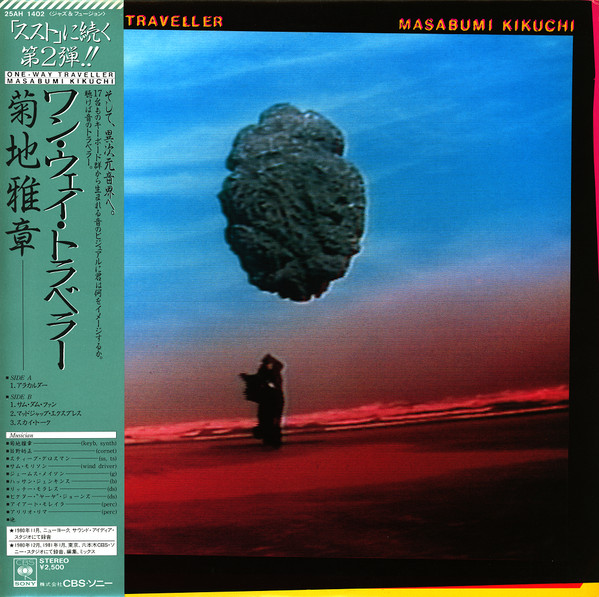
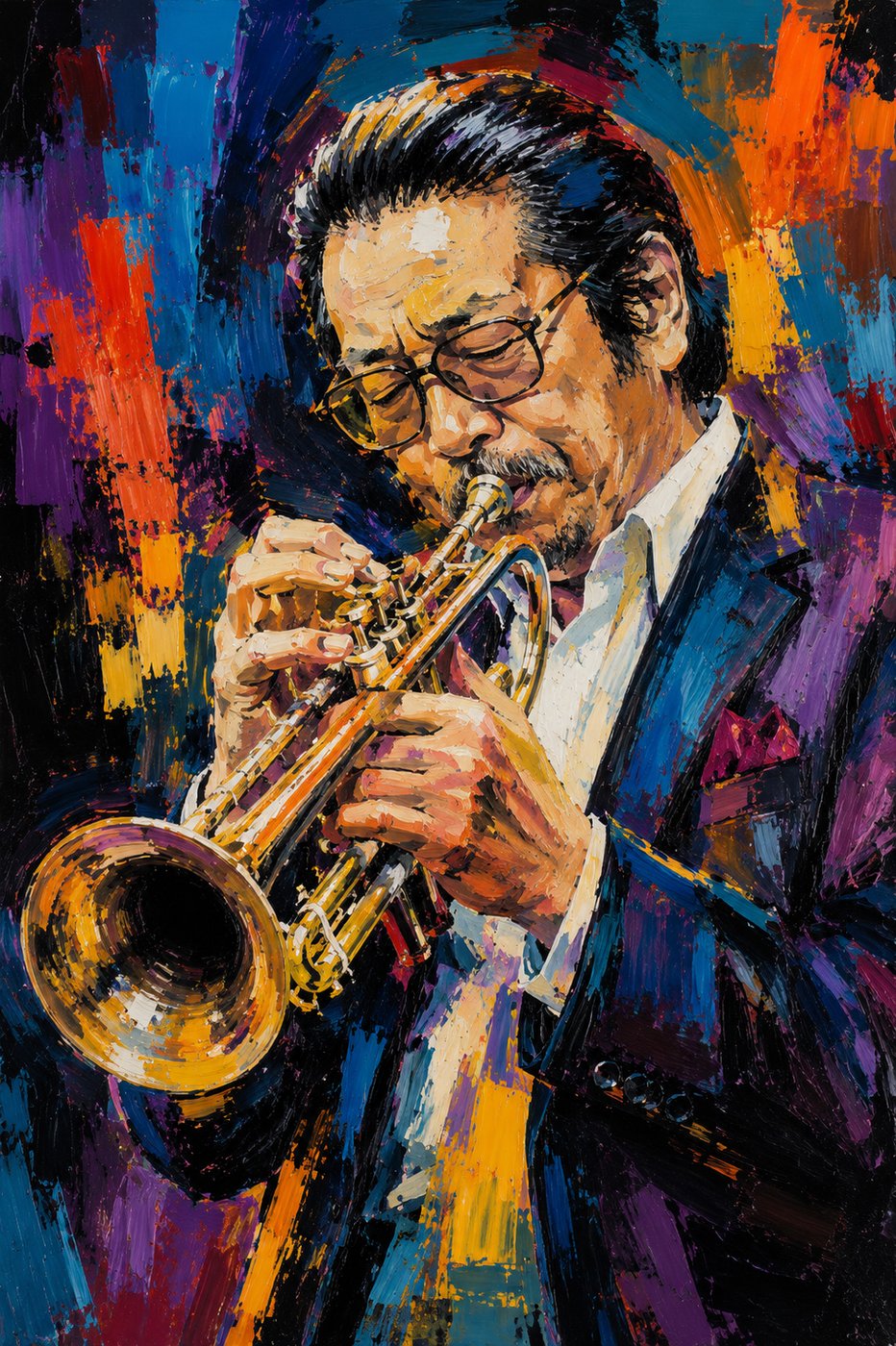
- Wikipedia: Kosuke Mine
- Japanese Wikipedia: 峰厚介
- Wikidata: Kōsuke Mine (Q11476118)
- ARBAN Magazine: 証言で綴る日本のジャズ - 峰厚介 (oral history interview)
- Jazz Journal: Kohsuke Mine, "First"
- ukvibe: Kohsuke Mine "First" 2LP@45rpm/CD (BBE Music) review
- HHV Magazine: Kohsuke Mine - First
- progressreview: Kohsuke Mine in Out of Chaos (1974), Solid (1975), Sunshower (1976)
- Jazz of Japan: Kohsuke Mine Quintet - Major to Minor
- Wikipedia: Native Son (band)
- Discogs: Kohsuke Mine