Casiopea
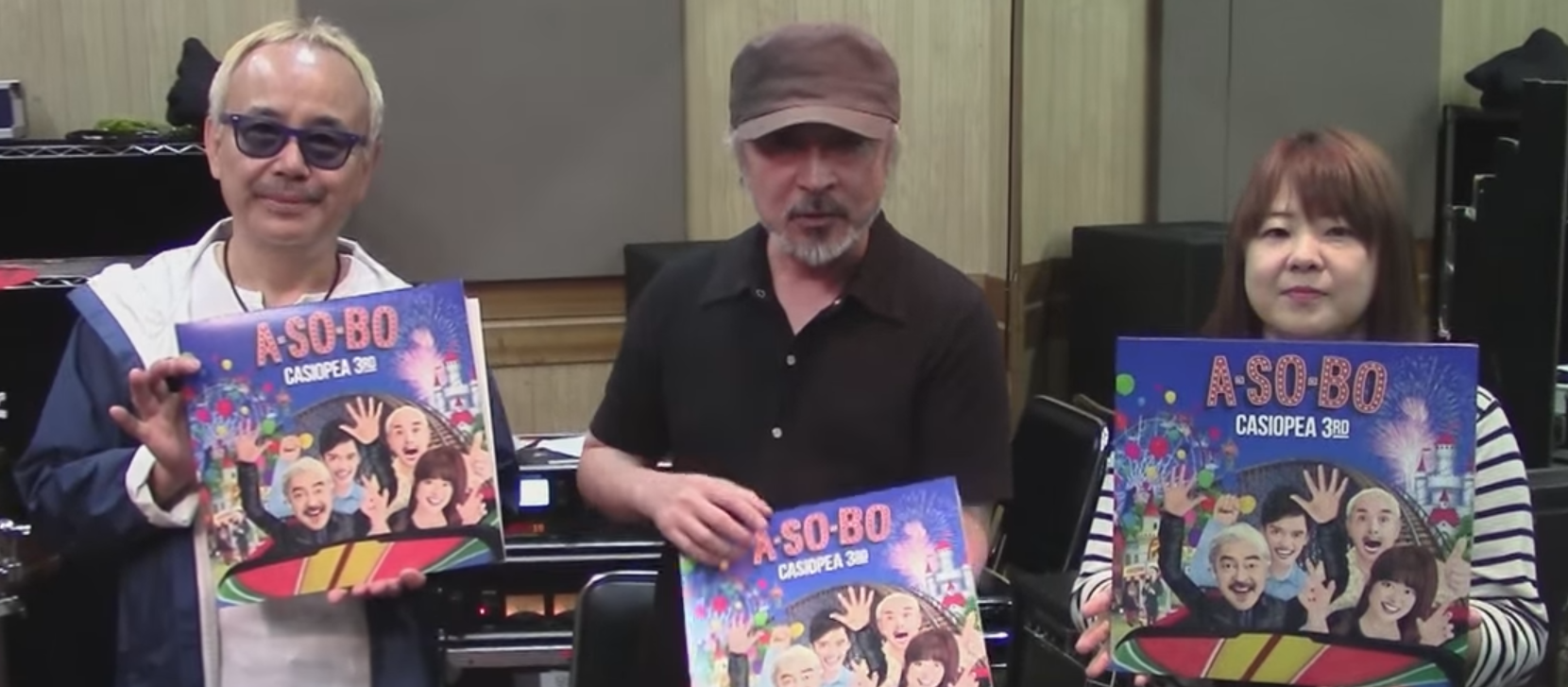
Casiopea, 2015 lineup, promotional still. (Source: Paddock Music Co.) CC BY 3.0 — Wikimedia Commons — https://commons.wikimedia.org/wiki/File:Casiopea_3rd_promo.png
Issei Noro and Tetsuo Sakurai met in Tokyo in 1974, still in high school. Two years later they started a band, using a different name for each early gig until a magazine profile forced them to settle on one; Noro's mother suggested picking a constellation, and Cassiopeia became Casiopea. That first 1976 lineup paired Noro and Sakurai with keyboardist Hidehiko Koike and drummer Tohru Suzuki, but both left later that year after an EastWest amateur band contest.
Keyboardist Minoru Mukaiya and drummer Takashi Sasaki joined in 1977, and the band's self-titled debut arrived May 25, 1979, with Randy Brecker, Michael Brecker, and David Sanborn all sitting in as guests. That's before the rhythm section most fans picture first was even in place. Drummer Akira Jimbo didn't join until 1980, replacing Sasaki and completing the lineup that carried Casiopea through its most influential run.
Mint Jams is the record most listeners start with. Recorded live over two nights at Tokyo's Chuo Kaikan Hall (February 23 and 24, 1982) and released that May on Alfa Records, it was named one of the year's best by Japan's own jazz press, including the magazines Adlib and Jazzlife. It's the sound of a band that had spent three years touring together, caught on tape before a live audience instead of smoothed out in a studio.
The lineup kept moving after that. Sakurai and Jimbo left in 1989 over conflicts with their side projects, Sakurai's Shambara and a planned duo, Jimsaku, that the two eventually formed together once they'd left. Bassist Yoshihiro Naruse and drummer Masaaki Hiyama replaced them in 1990; Noriaki Kumagai then replaced Hiyama on drums from 1993 to 1996, before Jimbo returned as a supporting member in 1997, the same year Casiopea, T-Square, and Jimsaku shared a bill at Tokyo Jam. Noro froze the band's activities entirely in 2006, then brought it back as "Casiopea 3rd" in 2012 with Kiyomi Otaka replacing Mukaiya on keyboards, renamed it "Casiopea-P4" in 2022 when Yoshinori Imai replaced Jimbo on drums, and reverted to the original name in 2025 with pianist Jun Abe replacing Otaka. They released a new album, True Blue, in August 2025, and have tour dates booked across Japan and Los Angeles through 2026.
Mint Jams wasn't done being discovered, either. Around 2018, YouTube's recommendation algorithm started pushing the album hard as part of the site's City Pop rediscovery wave, handing a 1982 concert tape to listeners who weren't alive when it was recorded. A limited clear-green vinyl repress followed in 2025.
Casiopea's earliest sound was aimed squarely at emulating Beck, Bogert & Appice's hard rock-funk, before the band settled into the more purely instrumental, jazz-inflected fusion it became known for. Noro summed up the early approach as "thrills, speed, super technique," a catchphrase that stuck to the band even as he later pulled back toward musicality over pure chops. The American guest list on their records places them in direct dialogue with the U.S. fusion and session scene of the same period: the Brecker Brothers and David Sanborn on the 1979 debut, producer Harvey Mason and percussionist Paulinho Da Costa on Eyes Of The Mind (1981), and Los Angeles studio players Nathan East, Lee Ritenour, and Don Grusin on 4×4 (1982).
Casiopea's own influence runs the other direction too. The band is often cited as the reference point for a "Casiopea-like" style among later fusion musicians, and it's credited with helping spark Indonesia's own fusion scene, directly influencing bands like Krakatau, Karimata, and Indonesia 6. Within Japan, Casiopea is most often paired with fellow 1976-founded band T-Square as one of two pillars of the era's jazz fusion boom, Casiopea built around Noro's guitar and T-Square around saxophone, a comparison borne out by how often the two bands have actually shared a stage rather than just a genre tag.
- Casiopea (1979, Alfa) - Their self-titled debut, with Randy Brecker and Michael Brecker guesting. Spotify - Casiopea Listen
- Mint Jams (1982, Alfa, Live) - Recorded live at Chuo Kaikan Hall, Tokyo; named album of the year by Japan's jazz press and rediscovered via YouTube's City Pop wave decades later. Spotify - Mint Jams Listen
- 4×4 (Four By Four) (1982, Alfa) - An LA-session all-star pairing with Nathan East, Harvey Mason, Lee Ritenour, and Don Grusin. Spotify - 4×4 Listen
- True Blue (2025, Hats Unlimited) - Their newest release, marking the band's return to its original name. Spotify - True Blue Listen · Buy
Casiopea: Full Discography
Leader / Studio & Live Albums
| Album | Year | Label | Personnel | Notes | Listen | Buy |
|---|---|---|---|---|---|---|
| Casiopea (debut) | 1979 | Alfa (ALR-6017) | Issei Noro (guitar, vocals), Tetsuo Sakurai (bass), Minoru Mukaiya (keyboards), Takashi Sasaki (drums); guests Randy Brecker and Michael Brecker | Released May 25, 1979. Formed by Noro and Sakurai in 1976; Mukaiya joined 1977 | Spotify | Amazon |
| Super Flight | 1979 | Alfa (ALR-6029) | Noro, Sakurai, Mukaiya, Sasaki; guests Kanya Kazama (drums), Penny Itoh (percussion) | Released November 25, 1979, same year as the debut | Spotify | Amazon |
| Make Up City | 1980 | Alfa (ALR-28007) | Noro, Sakurai, Mukaiya; Akira Jimbo (drums, replacing Sasaki); Hideki Matsutake (synthesizer manipulation) | Billed as Japan's first digitally recorded album, using a newly developed 32-track digital tape recorder | Spotify | Amazon |
| Eyes Of The Mind | 1981 | Alfa (ALR-28016) | Noro, Sakurai, Mukaiya, Jimbo; guests Harvey Mason and Paulinho Da Costa (percussion); produced by Harvey Mason | Recorded at Kendum Studio D, Los Angeles | Spotify | Amazon |
| Cross Point | 1981 | Alfa (ALR-28029) | Noro, Sakurai, Mukaiya (full band; Jimbo not separately extra-credited on this release) | Released October 21, 1981 | Spotify | Amazon |
| Mint Jams (Live) | 1982 | Alfa (ALR-20002) | Noro, Sakurai, Mukaiya, Jimbo | Recorded live Feb 23-24, 1982, Chuo Kaikan Hall, Tokyo; released May 21, 1982. Voted album of the year by major Japanese jazz publications; rediscovered via YouTube's algorithm around 2018 as part of the City Pop revival, and repressed on limited clear-green vinyl in 2025 | Spotify | Amazon |
| 4 X 4 (Four By Four) | 1982 | Alfa (ALR-28045) | Noro, Mukaiya; guests Nathan East (bass), Harvey Mason (drums), Lee Ritenour (guitar), Don Grusin (keyboards), alongside Sakurai and Jimbo | An LA-session all-star pairing released December 16, 1982 | Spotify | Amazon |
| Photographs | 1983 | Alfa (ALR-28049) | Noro, Sakurai, Mukaiya, Jimbo | Recorded at Studio A, Shibaura, Tokyo, Jan 24-Mar 8, 1983 | Spotify | Amazon |
| Jive Jive | 1983 | Alfa (ALR-28052) | Noro, Sakurai, Mukaiya, Jimbo; Jackie Challenor (backing vocals) | Recorded and remixed in London, Sep 12-Oct 8, 1983 | Spotify | Amazon |
| Down Upbeat | 1984 | Alfa (ALR-28063) | Noro, Sakurai, Mukaiya, Jimbo | Recorded at Secret Sound Studio, New York City | Spotify | Amazon |
| Halle | 1985 | Alfa (ALR-28071) | Noro (also producer), Sakurai, Mukaiya, Jimbo | Limited edition pressing, Sep 10 1985 | Spotify | Amazon |
| Sun Sun | 1986 | Alfa (ALR-28085) | Noro, Sakurai, Mukaiya, Jimbo; Pablo Rosario (Latin percussion); produced by Carlos Alomar | Recorded at The Hit Factory, New York City, Jun 8-29, 1986 | Spotify | Amazon |
| Platinum | 1987 | Aura Records (28MX-2544) | Noro (also producer), Sakurai, Mukaiya, Jimbo | Recorded in New York and Los Angeles, June 1987 | Spotify | Amazon |
| Euphony | 1988 | Aura Records (28MX-2549) | Noro (also producer), Sakurai, Mukaiya, Jimbo | Recorded at Studio Jive, Tokyo, Jan-Feb 1988 | Spotify | Amazon |
| The Party | 1990 | Pioneer (PICL-1006) | Noro, Mukaiya, Yoshihiro Naruse (bass) and Masaaki Hiyama (drums), replacing Sakurai and Jimbo, who left in 1989 | New rhythm section debut, released June 25, 1990 | Spotify | Amazon |
| Full Colors | 1991 | Pioneer (PICL-1016) | Noro, Mukaiya, Naruse, Hiyama; Carlos Kanno and Gen Date (percussion) | Released May 25, 1991 | Spotify | Amazon |
| Active | 1992 | Pioneer (PICL-1036) | Noro, Mukaiya, Naruse, Hiyama; Alex Pertout (percussion) | Released May 25, 1992 | Spotify | Amazon |
| Dramatic | 1993 | Alfa (ALCA-487) | Noro, Mukaiya, Yoshiki Murayama and Naruse (bass), Noriaki Kumagai (drums, replacing Hiyama) | Another rhythm-section shift; released May 21, 1993 | Spotify | Amazon |
| Answers | 1994 | Alfa (ALCA-1001) | Noro, Mukaiya, Naruse, Kumagai; Michael Muldoon (percussion) | Recorded at Audio Resource Honolulu | Spotify | Amazon |
| Freshness | 1995 | Pony Canyon (PCCR-00150) | Noro, Mukaiya, Naruse, Kumagai; Maniam (percussion) | Released May 19, 1995 | Spotify | Amazon |
| Flowers | 1996 | Pony Canyon (PCCR-00230) | Noro, Mukaiya, Naruse, Kumagai | Released September 20, 1996 | Spotify | Amazon |
| Light And Shadows | 1997 | Pony Canyon (PCCA-01123) | Noro, Mukaiya, Naruse; Harvey Mason and Akira Jimbo (drums, Jimbo's first credit back since his 1989 departure) | Released September 3, 1997 | Spotify | Amazon |
| Be | 1998 | Pony Canyon (PCCR-00285) | Noro, Mukaiya, Naruse, Jimbo (now full-time again); Ogimi Gen (percussion) | Released September 18, 1998 | Spotify | Amazon |
| Material | 1999 | Pony Canyon (PCCR-00304) | Noro, Mukaiya, Naruse, Jimbo | Released May 19, 1999 | Spotify | Amazon |
| Bitter Sweet | 2000 | Pioneer (PICL-1206) | Noro, Mukaiya, Naruse, Jimbo | Released June 14, 2000 | Spotify | Amazon |
| Main Gate | 2001 | Pioneer (PICL-1219) | Noro, Mukaiya, Naruse, Jimbo | Released July 11, 2001 | Spotify | Amazon |
| Inspire | 2002 | Pioneer (PICL-1257) | Noro, Mukaiya, Naruse, Jimbo | Released July 17, 2002 | Spotify | Amazon |
| Places | 2003 | Pioneer (PICL-1276) | Noro, Mukaiya, Naruse (also percussion), Jimbo | Released July 2, 2003 | Spotify | Amazon |
| Marble | 2004 | Geneon Entertainment (GNCL-1015) | Noro, Mukaiya, Naruse (also percussion), Jimbo | Released November 25, 2004 | Spotify | Amazon |
| Signal | 2005 | Geneon Entertainment (GNCL-1041) | Noro, Mukaiya, Naruse (also percussion); Jimbo and Hiroyuki Noritake, credited as dual left/right-channel drummers | Released December 21, 2005, credited to "Casiopea + Sync DNA." Last studio album before Noro froze band activity in 2006 | Spotify | Amazon |
| Ta・Ma・Te・Box | 2013 | Hats Unlimited (HUCD-10149/B) | Noro, Naruse, Kiyomi Otaka (keyboards, replacing Mukaiya); Jimbo (drums, "special support" credit) | First release after the band's 2012 return as "Casiopea 3rd" | Spotify | Amazon |
| A・So・Bo | 2015 | Hats Unlimited (HUCD-10182/B) | Noro, Naruse, Otaka; Jimbo (special support) | Released April 22, 2015, as "Casiopea 3rd" | Spotify | Amazon |
| I・Bu・Ki | 2016 | Hats Unlimited (HUCD-10221) | Noro, Naruse, Otaka; Jimbo (special support) | Released March 16, 2016, as "Casiopea 3rd" | Spotify | Amazon |
| A・Ka・Ri | 2018 | Hats Unlimited (HUCD-10263) | Noro, Naruse, Otaka; Jimbo (special support) | Released July 18, 2018, as "Casiopea 3rd"; concluded the three-word-title series begun with A・So・Bo | Spotify | Amazon |
| Panspermia | 2019 | Hats Unlimited (HUCD-10284/B) | Noro, Naruse, Otaka, Jimbo (band lineup per continuing "Casiopea 3rd" credit; individual instrument credits not itemized on this release's Discogs entry) | Released July 17, 2019, as "Casiopea 3rd" | Spotify | Amazon |
| New Topics | 2022 | Hats Unlimited (HUCD-10315) | Noro, Naruse, Otaka; Yoshinori Imai (drums, replacing Jimbo) | Released October 12, 2022, as "Casiopea-P4" (the band's second rename) | Spotify | Amazon |
| Right Now | 2024 | Hats Unlimited (HUCD-10328) | Noro, Naruse, Otaka, Imai | Released July 3, 2024, as "Casiopea-P4" | Spotify | Amazon |
| True Blue | 2025 | Hats Unlimited (HUCD-10344) | Noro, Naruse, Imai, Jun Abe (keyboards, replacing Otaka) | Released August 27, 2025. Band reverted to its original "Casiopea" name this year, with Abe rounding out the current lineup | Spotify | Amazon |
Compilations, Guest/Track Appearances & Unofficial Releases (chronological summary)
Per the standing rule for prolific catalogs, these are listed chronologically rather than in full personnel detail; they are various-artist samplers, Alfa/Sony/Pioneer label compilations carrying one or two Casiopea tracks, or unofficial (bootleg) live/compilation releases, not distinct Casiopea studio works.
- 1977: East West '77 (label sampler, TrackAppearance, predates the band's own debut album)
- 1979-1985: Smash Hits On Alfa 1979, East West Live!, Alfa America, Alfa '81 Autumn Hit Tune, Parking Lot Live '82 (Appearance), Sony In Action, New Japanese Music, Masae A La Mode (Appearance), Debut Zeitschrift Mit LP Nummer 09, I Love Compact Disc
- 1986-1990: HDX Direct Digital: Introducing (Appearance), Sporting Sound Box, Hawaiian Dream, Winter Beach, Sony's Digital Collection 2, Catching The Sun, Walking In Town, From Resort, On The Beach, Sunset Cruising
- 1993-2000: West Coast, LA Arirang, Alfa Twins Compilation Sampler, Disgusting (Appearance), Pure Jazz
- 2001-2004: DJ Convention Dynamit Edition Part 2 (Remix), Made In Melbourne & The Party (Unofficial), Casiopea Perfect Live II (Unofficial), Fusion Paradise Orange/Skyblue Selection, Crossover Japan, J-Fusion Compilation, Shibuya Jazz Clash, Feels So Good: The Smoothest Hits
- 2009-2011: Fusion Senkoku Jidai "Ai"/"Gi" (J-Fusion history compilations), Fusion! Ultimate 30 Selection, Breezin' (The Best Of Fusion), Drive Music, Tokyo 1980s
- 2015-2019: Alfa Record - We Believe In Music, Light Mellow - Wave, Logic Chronicle, Jazz 100-nen Fusion Jazz Vocal, Absolutely Fusion! (Vol. 1 and 2), Elegant Funk: Japanese Edition, Best Of Michael Brecker Works (guest credit)
- 2021-2023: Mutual Attraction Vol. 2 (Appearance), Aldelight City - A New Standard For Japanese Pop 1975-2021, BMW M1: Dynamic Yet Refined (sync placement), Ignition (J-Guitars Selection); 2023 also carries unofficial reissues of both Mint Jams and the 1979 Casiopea debut
- 2025-2026: Crossover City -Asayake-, Kintsugi (Appearance), Diggin' Alfa Selected By Muro (two volumes)
- Undated (no year metadata on Discogs): Ambon Jazz Rock, Original Bata Volume 2, and several unofficial "Very Best Of" / greatest-hits bootlegs (Late Night Jazz 2, Live In Tokyo Japan August 30th 1984, two "Very Best Of Casiopea" variants, and unofficial pressings of Platinum, Photographs, Best Of Best, and Super Flight)
Nothing in this list was left unresolved; every title above is a genuine Discogs credit under artist ID 259140, cross-checked against the confirmed member roster.
- Issei Noro - guitar; founding member, the only musician present across all five decades and every lineup and name change, 1976-present.
- Tetsuo Sakurai - bass; co-founder, 1976-1989; later formed the duo Jimsaku with drummer Akira Jimbo.
- Hidehiko Koike (keyboards) and Tohru Suzuki (drums) - the band's original 1976 lineup alongside Noro and Sakurai; both departed later that year after an EastWest amateur band contest.
- Minoru Mukaiya - keyboards; joined 1977, through the band's classic-era run to the 2006 hiatus; did not return for the 2012 revival.
- Takashi Sasaki - drums; joined 1977 alongside Mukaiya, replaced by Akira Jimbo in 1980.
- Akira Jimbo - drums; joined 1980, completing the lineup behind Mint Jams and the band's most influential run; left 1989, returned as a supporting member from 1997 through the Casiopea 3rd era, replaced by Yoshinori Imai in 2022.
- Yoshihiro Naruse - bass; joined 1990 replacing Sakurai, and remains in the band's current lineup.
- Masaaki Hiyama - drums; joined 1990 alongside Naruse, replaced by Noriaki Kumagai in 1993.
- Noriaki Kumagai - drums, 1993-1996, before Jimbo's 1997 return.
- Kiyomi Otaka - keyboards; joined 2012 with the "Casiopea 3rd" revival, replacing Mukaiya; replaced by Jun Abe in 2025.
- Yoshinori Imai - drums; joined 2022 with the "Casiopea-P4" rename, replacing Jimbo.
- Jun Abe - keyboards; joined 2025, replacing Otaka, rounding out the current lineup under the restored "Casiopea" name.
- Randy Brecker, Michael Brecker, and David Sanborn - guests on the band's 1979 self-titled debut. Sanborn is profiled separately elsewhere in this system (the-system CrossoverJazz).
- Harvey Mason and Paulinho Da Costa - guests on Eyes Of The Mind (1981); Mason also produced the album.
- Nathan East, Lee Ritenour, and Don Grusin - Los Angeles studio-scene guests on 4×4 (1982).
- Kiyohiko Semba - percussionist, and a member of rival band T-Square, guested on Dramatic (1993).
- Jimsaku - the duo Sakurai and Jimbo formed together after both left Casiopea in 1989.
- Discogs: Casiopea
- Discogs API research pass in this project (
discography-full.md), artist ID 259140 - Wikipedia: Casiopea
- Wikipedia: T-Square (band)
- AllMusic: Casiopea
- Wikimedia Commons: File:Casiopea 3rd promo.png
