 JAZZPROFILES lives in the music 393 Artists Catalogued, 362 fully Profiled!
 Roy Ayers
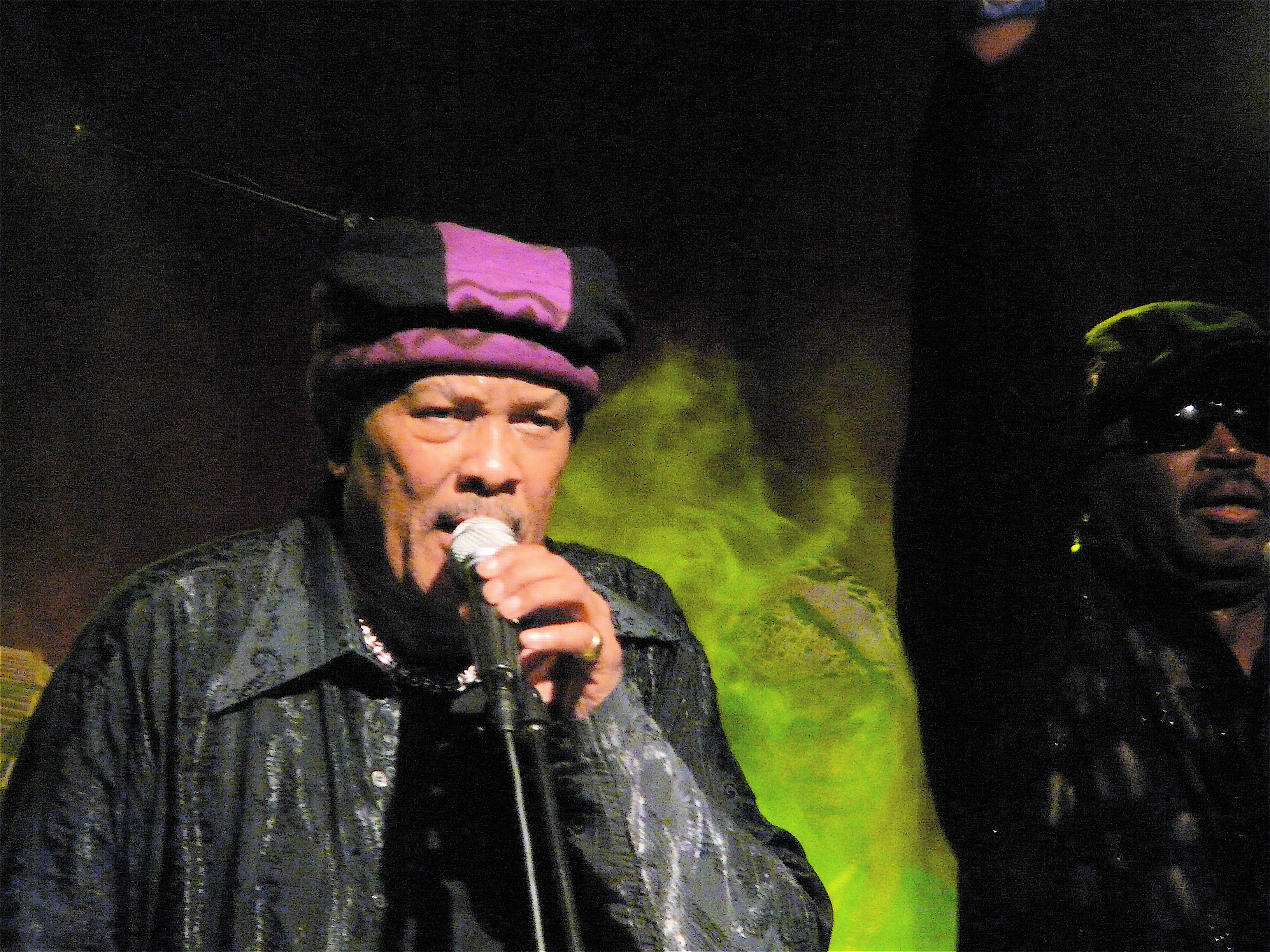
Roy Ayers performing at Cabaret Sauvage, Paris, July 22, 2009. CC BY-SA 3.0 — Wikimedia Commons — https://commons.wikimedia.org/wiki/File:Roy_Ayers.JPG (photographer: Legermi)
Roy Ayers grew up in a musical household in Los Angeles's South Park section, the son of a trombone-playing father and a piano-playing mother. At five years old he was given his first pair of vibraphone mallets by Lionel Hampton, jazz's first great star on the instrument. He attended Thomas Jefferson High School, part of the Central Avenue jazz scene that also produced Dexter Gordon, and by 1962 was working as a bebop sideman around Los Angeles. His debut album, West Coast Vibes, came out in 1963 on United Artists alongside saxophonist Curtis Amy, real jazz credentials laid down years before anyone called what he'd do next "crossover."
The break came in 1966, when he joined flautist Herbie Mann's band and picked up his first national exposure; Mann, known for his own strong groove instinct, helped Ayers land his early solo recording contracts. By the early 1970s Ayers had formed Roy Ayers Ubiquity, choosing the name because he wanted his music to be everywhere at once. The band became one of the defining acts of the emerging jazz-funk sound across a run of Polydor albums: He's Coming (1972), Red Black & Green (1973), Change Up The Groove (1974), and both Mystic Voyage and A Tear to a Smile in 1975. In 1973 he also wrote and produced the score for Coffy, the Pam Grier blaxploitation classic, working with New York session players including trumpeter Jon Faddis and bassist Richard Davis.
That run of albums built toward 1976's Everybody Loves the Sunshine, his signature record. The title track hit number 10 on the R&B chart and number 51 on the pop chart on release, modest numbers for a song that's since become something closer to a standard: it has been streamed more than 130 million times on Spotify and sampled over 100 times by producers working decades after it came out. Ayers followed it the same year with Vibrations, and in 1977 with Lifeline, which featured vocalist Dee Dee Bridgewater.
He kept moving through the rest of the decade and beyond, both as a genre stylist and as a producer for other artists. In the late 1970s he toured Nigeria for six weeks with Fela Kuti, an experience that fed into 1980's joint album Music of Many Colours with Kuti's band, Africa '70. He produced RAMP's Come Into Knowledge (1977) and Sylvia Striplin's Give Me Your Love (1980), both now regarded as jazz-funk touchstones in their own right, and kept releasing his own albums across Polydor, Elektra, and Columbia through the 1980s, including 1984's In the Dark, produced by Stanley Clarke. A 1982 session with Rick James put his vibraphone on "Dance Wit' Me," and in 1988 he soloed on Whitney Houston's "Love Will Save the Day," the same crossover instinct that had scored a Pam Grier film in 1973 still finding new rooms fifteen years later.
Ayers spent his later decades as a genuine bridge between jazz-funk and the genres that grew out of sampling it. He guested on Guru's Jazzmatazz, Volume 1 in 1993, one of hip-hop's earliest formal jazz collaborations, recorded Mahogany Vibe with Erykah Badu and Betty Wright in 2003, and played vibraphone on Tyler, the Creator's Cherry Bomb in 2015. In 2020 he returned to a full studio band setting for Roy Ayers JID002, a complete album of new material made with Adrian Younge and Ali Shaheed Muhammad for their Jazz Is Dead series, proof that the vibraphonist who scored a 1973 blaxploitation soundtrack was still finding new collaborators to work with in his eighties. He kept performing live until 2023.
Roy Ayers passed away on March 4, 2025, at his home in Manhattan, after a long illness. He was 84. He earned the nickname "The Godfather of Neo Soul" the honest way, by staying a working musician across six decades and nearly every genre that would have him, without ever losing the vibraphone lines that started with Lionel Hampton's mallets.
Ayers built his sound on a foundation of real bebop jazz training. His path ran through post-bop sideman work in early-1960s Los Angeles and a stint with Herbie Mann before he moved into jazz-funk with Roy Ayers Ubiquity, and that grounding is why his crossover-era records never abandoned improvisation the way later, more codified radio formats did. His stated musical philosophy was simple: "I like that happy feeling all of the time, so that ingredient is still there. I try to generate that because it's the natural way I am." That pursuit of a consistently upbeat, groove-forward feeling, rather than technical display, is the throughline connecting a jazz-funk classic like Everybody Loves the Sunshine to his disco-era singles, his 1980s R&B production work, and his late-career hip-hop and neo-soul collaborations.
As a vibraphonist, Ayers is most directly in the lineage of Lionel Hampton, the player who put the mallets in his hands, filtered through the electrified, groove-centered production style Polydor-era jazz-funk demanded. He is widely credited as one of the architects of jazz-funk in the 1970s and, later, as a foundational influence on neo-soul and on hip-hop production generally, a legacy built less on any single innovation than on six decades of staying a working, improvising musician inside whatever genre would have him.
- Everybody Loves the Sunshine (1976, Polydor) - His signature album and title track; the song has been streamed more than 130 million times on Spotify and sampled over 100 times. Spotify - Everybody Loves The Sunshine Listen · Buy
- Coffy (1973, Polydor) - The soundtrack to the Pam Grier blaxploitation classic, written and produced by Ayers three years before his signature hit. Spotify - Coffy Baby Listen
- Mystic Voyage (1975, Polydor) - A high point of the Roy Ayers Ubiquity run immediately preceding Everybody Loves the Sunshine. Spotify - Mystic Voyage Listen · Buy
- Roy Ayers JID002 (2020, Jazz Is Dead) - A full late-career studio album with Adrian Younge and Ali Shaheed Muhammad, proof the crossover instinct never stopped. Spotify - Roy Ayers JID002 Listen · Buy
Roy Ayers: Full Discography
Sourced from the Discogs API. Buy links are plain (non-affiliate) Amazon search links.
Studio Albums (Leader)
| Album | Year | Label | Personnel | Notes | Listen | Buy |
|---|---|---|---|---|---|---|
| West Coast Vibes | 1963 | United Artists | Curtis Amy (tenor sax) | Debut album; recorded as a bebop sideman date before any crossover move. | Spotify | Amazon |
| Ramblin' | 1966 | Vault | not found | Amazon | ||
| Virgo Vibes | 1967 | Atlantic | not found | Amazon | ||
| Stoned Soul Picnic | 1968 | Atlantic | Spotify | Amazon | ||
| Daddy Bug | 1969 | Atlantic | not found | Amazon | ||
| Ubiquity | 1970 | Polydor | First album billed under the Roy Ayers Ubiquity name. | not found | Amazon | |
| He's Coming | 1972 | Polydor | Ron Carter (bass), Billy Cobham (drums), Sonny Fortune (sax) | Spotify | Amazon | |
| Red Black & Green | 1973 | Polydor | not found | Amazon | ||
| Coffy (Original Motion Picture Soundtrack) | 1973 | Polydor | Jon Faddis, Cecil Bridgewater (trumpets), Garnett Brown, Wayne Andre (trombones), Richard Davis (bass), Dennis Davis (drums), Harry Whitaker (arranger/keys) | Score for the Pam Grier blaxploitation film, written and produced by Ayers. | Spotify (track: "Coffy Baby") | Amazon |
| Change Up The Groove | 1974 | Polydor | Spotify | Amazon | ||
| Mystic Voyage | 1975 | Polydor | Edwin Birdsong, Byron Miller, Ricky Lawson, Onzy Matthews | Spotify | Amazon | |
| A Tear to a Smile | 1975 | Polydor | Spotify | Amazon | ||
| Everybody Loves the Sunshine | 1976 | Polydor | Edwin Birdsong, Doug Rhodes, Philip Woo | Signature album; title track has 130M+ Spotify streams and 100+ known samples. | Spotify | Amazon |
| Vibrations | 1976 | Polydor | Edwin Birdsong, William Allen | Spotify | Amazon | |
| Lifeline | 1977 | Polydor | Dee Dee Bridgewater (vocals), Edwin Birdsong, William Allen | not found | Amazon | |
| You Send Me | 1978 | Polydor | not found | Amazon | ||
| Let's Do It | 1978 | Polydor | not found | Amazon | ||
| Starbooty | 1978 | Elektra | not found | Amazon | ||
| Fever | 1979 | Polydor | not found | Amazon | ||
| No Stranger to Love | 1979 | Polydor | Spotify | Amazon | ||
| Prime Time | 1980 | Polydor | not found | Amazon | ||
| Love Fantasy | 1980 | Polydor | Spotify (title track) | Amazon | ||
| Africa, Center of the World | 1981 | Polydor | Spotify (title track) | Amazon | ||
| Feeling Good | 1982 | Polydor | Recorded at Electric Lady Studios and Sigma Sound Studios, NYC; his last album for Polydor. | Spotify | Amazon | |
| Fast Money | 1982 | not found | Amazon | |||
| Silver Vibrations | 1983 | UK-only release, shares material with Lots of Love. | not found | Amazon | ||
| Lots of Love | 1983 | US counterpart to Silver Vibrations. | not found | Amazon | ||
| Drivin' On Up | 1983 | Vinyl mini-album, 5 tracks. | not found | Amazon | ||
| In the Dark | 1984 | Columbia | Produced by Stanley Clarke. | Spotify | Amazon | |
| You Might Be Surprised | 1985 | Columbia | not found | Amazon | ||
| Hot | 1985 | not found | Amazon | |||
| I'm the One (For Your Love Tonight) | 1987 | Columbia | not found | Amazon | ||
| Drive | 1988 | Ichiban Records | not found | Amazon | ||
| Wake Up | 1989 | not found | Amazon | |||
| Searchin' | 1991 | Ronnie Scott's Jazz House / Carlsberg | Live album, recorded at Ronnie Scott's, London. | not found | Amazon | |
| Spoken Word | 1998 | Groovin' High / AFI-CD | Featuring Bonita Brisker. | not found | Amazon | |
| Mahogany Vibe | 2003 | Rapster Records | Featuring Erykah Badu, Betty Wright; contemporary re-recordings of Ayers classics with guest vocalists. | not found | Amazon |
Co-Leader / Collaborative Albums
| Album | Co-billed with | Actual leader | Year | Label | Notes | Listen | Buy |
|---|---|---|---|---|---|---|---|
| Music of Many Colours | Africa '70 | Joint billing (Roy Ayers / Africa '70) | 1980 | Phonodisk | Recorded around Ayers's late-1970s Nigeria tour with Fela Kuti's band. | not found | Amazon |
| Roy Ayers JID002 | Adrian Younge & Ali Shaheed Muhammad | Joint billing | 2020 | Jazz Is Dead | Full album of new material for the Jazz Is Dead series; late-career return to a full jazz-funk session band format. | Spotify | Amazon |
Compilations & Archival Reissues (selected)
| Title | Year | Label | Notes | Listen | Buy |
|---|---|---|---|---|---|
| Daddy Bug & Friends | 1976 | Compiles earlier Atlantic-era material. | Spotify | Amazon | |
| Virgin Ubiquity: Unreleased Recordings 1976-1981 | 2003 | Rapster/BBE | Archival release of unreleased 1976-1981 session material. | not found | Amazon |
| Virgin Ubiquity II: Unreleased Recordings 1976-1981 | 2005 | Rapster/BBE | Second volume of the same archival series. | not found | Amazon |
| Double Trouble | 1992 | not found | Amazon | ||
| Get On Up Get On Down | 1993 | not found | Amazon |
Also in Roy Ayers' catalog: dozens of further "Best Of," anthology, live, and remix compilations (The Best of Roy Ayers, Evolution: The Polydor Anthology, several Virgin Ubiquity Remixed EPs, and others) not itemized here.
As Producer (for other artists)
| Artist | Album | Year | Label | Listen | Buy |
|---|---|---|---|---|---|
| RAMP (Roy Ayers Music Production) | Come Into Knowledge | 1977 | ABC | not found | Amazon |
| Sylvia Striplin | Give Me Your Love | 1980 | Uno Melodic | not found | Amazon |
| Eighties Ladies | Turned On to You | 1981 | not found | Amazon | |
| Bobbi Humphrey | "Baby Don't You Know" | 1982 | not found | Amazon |
Co-produced with William Allen and Edwin Birdsong on several of the above, per Discogs credits.
Guest Appearances & Notable Collaborations (curated highlights)
| With | Release | Year | Ayers' role | Listen | Buy |
|---|---|---|---|---|---|
| Fela Kuti & Africa '70 | "Africa Center of the World" | Africa '70-era, released later | Featured performer | Spotify | Amazon |
| Rick James | Throwin' Down, "Dance Wit' Me" | 1982 | Vibraphone solo | not found | Amazon |
| Whitney Houston | "Love Will Save the Day" | 1988 | Vibraphone solo | not found | Amazon |
| Guru | Jazzmatazz, Volume 1 | 1993 | Featured performer | not found | Amazon |
| Tyler, the Creator | Cherry Bomb, "Find Your Wings" | 2015 | Vibraphone | not found | Amazon |
Roy Ayers is also credited across roughly 1,780 further compilation, sampler, and hip-hop sample-clearance entries on Discogs (led by "Everybody Loves the Sunshine," sampled 100+ times), not itemized here.
- Curtis Amy - saxophonist on Ayers's 1963 debut, West Coast Vibes.
- Herbie Mann - bandleader who brought Ayers his first national exposure in 1966.
- Edwin Birdsong - a recurring collaborator across the classic Roy Ayers Ubiquity records, including Mystic Voyage, Everybody Loves the Sunshine, Vibrations, and Lifeline.
- Dee Dee Bridgewater - vocalist on Lifeline (1977).
- Jon Faddis, Cecil Bridgewater, Richard Davis, Harry Whitaker - session players on the 1973 Coffy soundtrack.
- Fela Kuti and Africa '70 - six-week Nigeria tour in the late 1970s, leading to the joint album Music of Many Colours (1980).
- RAMP - produced their album Come Into Knowledge (1977).
- Sylvia Striplin - produced her album Give Me Your Love (1980).
- Stanley Clarke - produced Ayers's own album In the Dark (1984).
- Rick James - vibraphone solo on "Dance Wit' Me," from Throwin' Down (1982).
- Whitney Houston - vibraphone solo on "Love Will Save the Day" (1988).
- Guru - featured performer on Jazzmatazz, Volume 1 (1993).
- Erykah Badu, Betty Wright - guest vocalists on Mahogany Vibe (2003).
- Tyler, the Creator - vibraphone on "Find Your Wings," from Cherry Bomb (2015).
- Adrian Younge and Ali Shaheed Muhammad - co-billed on Roy Ayers JID002 (2020), his late-career return to a full studio band album.

- Wikipedia: Roy Ayers
- Downbeat: Vibraphonist Roy Ayers Dies at 84
- Variety: Roy Ayers Dead: 'Everybody Loves the Sunshine' Musician Was 84
- Rolling Stone: Roy Ayers, Jazz-Funk Virtuoso, Dead at 84
- OPB: Roy Ayers, whose 'Everybody Loves The Sunshine' charmed generations, dies at 84
- Draft source:
final-blog.mdin this folder (this project's r/CrossoverJazz post, used as a starting point and cross-checked against the sources above)